Where the GDH-CE38 Fits Best
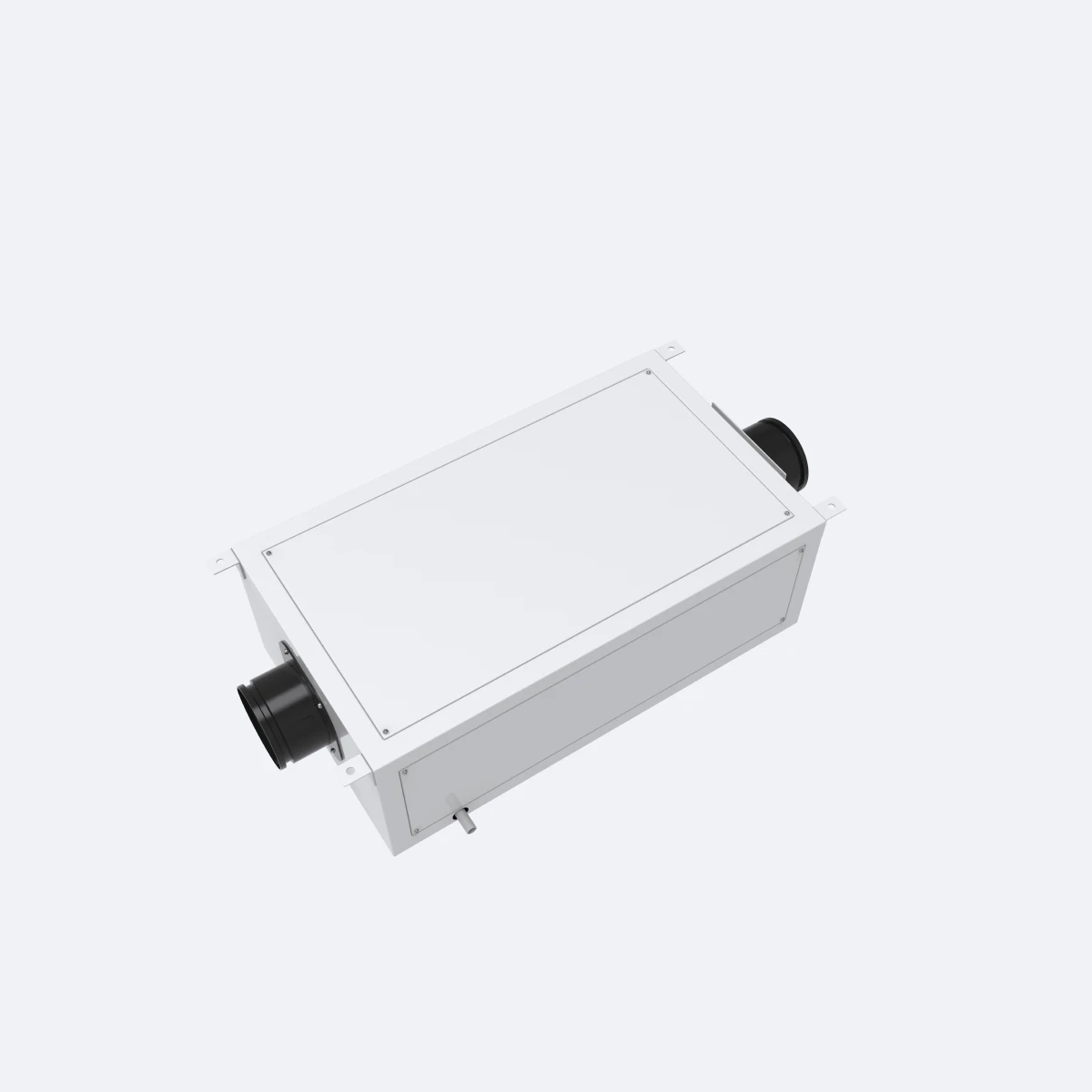
The GDH-CE38 is sized for 50 m² per unit — individual office rooms, hotel guest rooms, small retail areas, archive rooms, vaults, switchgear bays, small drying rooms and similar single-zone applications. The 38 L/day extraction handles moderate moisture loads in rooms where humidity control matters but the room itself has no space for floor equipment. For larger areas, multiple units deployed in a distributed pattern provide better coverage than oversizing a single machine. Hotels often spec one unit per guest floor wing, retail spaces use one unit per zone, and archive facilities deploy them per room.
Applications where the ceiling-mounted format works particularly well: commercial buildings with suspended ceilings already in place (the majority of commercial interiors fall here), retrofits where adding floor-standing equipment is awkward, multi-room installations where central ducted systems would be over-engineered, and spaces with strict aesthetic requirements such as lobbies, premium retail and medical waiting areas.
Hidden Ceiling Installation — The Space-Saving Logic
The space-saving angle of a ceiling mounted dehumidifier is concrete, not just marketing. Compared with a floor-standing cabinet unit of similar capacity:
- Floor footprint. The GDH-CE38 occupies zero usable floor area. A floor-standing 40 L/day cabinet takes roughly 0.16–0.20 m² of floor plus clearance for air intake and service access.
- Visual presence. The unit is invisible from the room below. Only the intake and discharge grilles installed in the suspended ceiling are visible — typically 200–300 mm square grilles that match other ceiling diffusers in the room.
- Acoustic isolation. The suspended ceiling tiles attenuate operating noise. The ≤50 dB(A) rating is measured at the unit; in-room noise at the ceiling diffuser is typically 5–8 dB lower.
- Service access from above. Service access is through a removable ceiling tile rather than rolling the unit out of the room. For occupied spaces — hotels during peak season, healthcare areas, retail in business hours — this is a real operational advantage.
220 mm Cabinet Height — Fitment in Standard Ceiling Voids
The cabinet is 220 mm tall, which is the spec that determines whether the unit fits a given ceiling. Standard suspended ceiling voids in commercial buildings range from 250 mm (tight retrofit) to 500 mm+ (purpose-built office floors with full plenum returns). At 220 mm cabinet height, the GDH-CE38 fits comfortably in ceiling voids from 250 mm clear upward, allowing 30 mm for vibration isolation mounts and structural clearance.
For retrofits in tight ceiling voids below 250 mm, the unit may not fit — measure actual void depth at the intended installation point before ordering, accounting for any existing services (electrical conduits, sprinkler pipes, ductwork) that reduce available clearance. Most modern commercial buildings will accommodate the unit; clearance concerns arise mainly in older buildings or low-clearance retrofits.
Dual Copper Coil with Titanium Foil Fins — Heat Exchanger Detail
The heat exchanger uses dual oxygen-free copper coils — separate evaporator and condenser circuits — with titanium foil treatment applied to the fin surfaces. The dual-coil arrangement increases active heat exchange surface per unit volume, which matters in a slim cabinet where vertical space for coil stacking is limited. The titanium foil treatment on the fins provides corrosion resistance in damp ambient air well beyond what hydrophilic aluminum coatings deliver on standard portable dehumidifier coils.
For comparison: standard portable dehumidifier coils use copper tubing with hydrophilic-coated aluminum fins, which last roughly 5–7 years in continuous facility duty before measurable performance decline. Titanium foil fin treatment extends that service life closer to 10–12 years under similar conditions. For a ceiling-mounted unit that buyers expect to leave in place through the building's ceiling lifecycle (typically 15–20 years between major renovations), coil longevity matters more than it does for replaceable floor units.
R134A Refrigerant — Why This Choice
The GDH-CE38 uses R134A refrigerant with a 150 g factory-sealed charge. R134A has a GWP of 1430 — lower than R410A's 2088 but higher than R290's 3. Two reasons drive the R134A choice for ceiling-mounted applications specifically:
- Safety in concealed installations. R290 (propane) is mildly flammable. In ceiling installations, a refrigerant leak would pool downward into the room below before being detected — the wrong scenario for a flammable refrigerant. R134A is non-flammable, eliminating that risk profile for hidden installations.
- Charge volume vs regulation thresholds. The 150 g charge sits below the principal regulatory thresholds for HFC controls in commercial fixed equipment, including under the revised EU F-gas Regulation (EU 2024/573). The unit remains importable to the EU for the foreseeable future without R290 conversion.
For EU markets requiring lower-GWP refrigerant in ceiling-mounted applications, R32 (GWP 675) is available as a special-order ODM option from MOQ 200 units. R290 is not offered on the GDH-CE38 because of the flammability concern in concealed installations.
Plumbed Drainage Only — Installation Requirement
The GDH-CE38 has no internal water tank — drainage is plumbed only. Condensate flows from the cabinet drain pan through a flexible drain hose to either a gravity drain line, where one is available at or below ceiling void level, or a condensate pump. Because the unit installs above the ceiling, gravity drainage works only if a drain endpoint exists at or below ceiling void level, which is uncommon in standard building layouts.
In practice, most installations use a small external condensate pump rated 100–200 L/h, mounted nearby in the ceiling void or above an adjacent service area. The pump lifts condensate to a suitable drain endpoint, typically a sanitary stack or HVAC condensate line elsewhere in the building. The condensate pump is not included with the unit; specify it in the OEM BOM if your installation channel needs the kit factory-bundled.
Compressor-Cycle Refrigeration in Concealed Format
The GDH-CE38 uses a sealed R134A compressor refrigeration cycle in a horizontal cabinet layout. Air enters through one side via ducted intake, passes across the oxygen-free copper evaporator coil where moisture condenses to liquid water, is reheated across the condenser coil, and exits through the opposite side via ducted discharge. The unit is designed for direct duct connections (typically 150 mm diameter circular duct), with intake and discharge grilles installed in the ceiling at convenient locations within the room.
Operating Temperature and Auto Defrost
Working range is 5 to 38 °C. The hot-gas bypass defrost system clears coil frost through the 5–18 °C range where unprotected refrigerant-cycle units would stall. Minimum working temperature is 5 °C — below that, the evaporator coil ices faster than the defrost cycle clears it, and extraction drops to near zero. For sustained operation below 5 °C — unheated cold storage, walk-in chillers — use a desiccant-type rotary dehumidifier instead.
Build and Safety
1.0 mm cold-rolled steel housing with electrostatic powder coating. Internal electrical components receive moisture-proof conformal coating before assembly. Each unit is leakage-tested at full extraction conditions prior to shipping — the leakage-free design point is critical for ceiling installations, where any water leak would damage the ceiling tiles and the floor below. Built-in safety: high-pressure cut-out, overcurrent protection, defrost interlock, fault self-protection logic and compressor thermal cut-out.
OEM and ODM Service
OEM MOQ is 10 units — branding, color for any visible cabinet surfaces (most installations leave the cabinet hidden above the ceiling), power cord and plug type for the destination market, packaging artwork. For installation-channel buyers, common OEM specifications include extended power cord length, factory-bundled condensate pump and drain hose kit, and dedicated mounting brackets matching the destination market ceiling grid standard (15/16" T-bar, 9/16" T-bar, or custom). ODM with structural changes, alternative refrigerant (R32 special-order from MOQ 200) or BMS integration such as Modbus RTU output and dry-contact alarm is quoted per project. Production lead time is 25–35 days after artwork sign-off, FOB Ningbo or Shanghai.
For higher capacity floor-standing models, browse our full commercial dehumidifier lineup.