


Search
Enter keywords to search for products, blog posts, and more.
Enter keywords to search for products, blog posts, and more.





Built on SHISHUO's ceiling-ducted dehumidification (GDH-CE) platform together with our humidification and refrigeration technology, these concealed units integrate all four functions overhead. They are configured by room size, heat load, and target conditions; the four configurations below show the typical range. (Specific model codes are assigned per project specification.)
Series
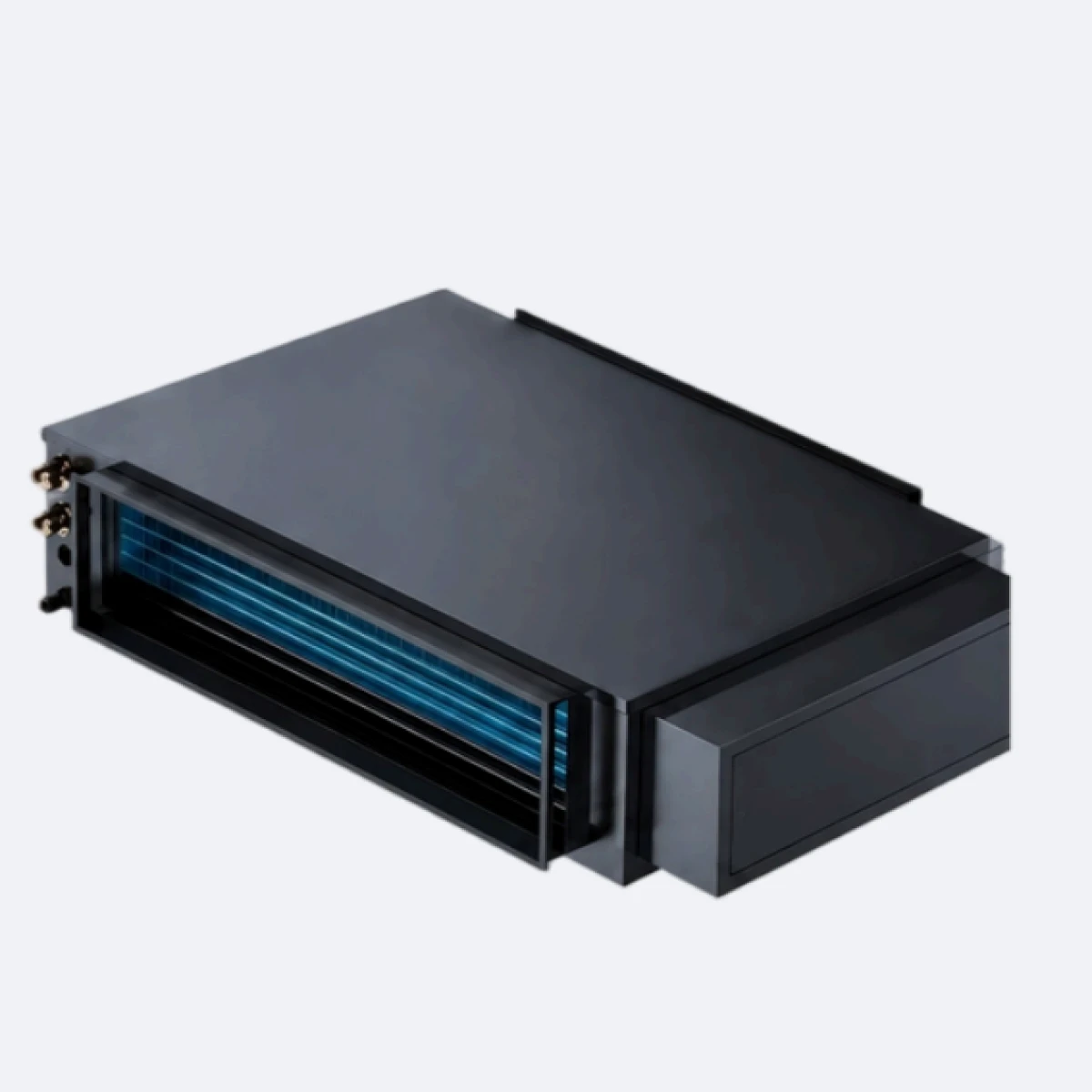
Capacity & Application
Cooling capacity: 3–68 kW. Concealed ceiling-ducted unit integrating cooling, heating, dehumidifying, and humidifying with zero floor footprint. Touch control interface and industrial-grade component protection. Models: DXHW-3 to DXHW-70.
Series
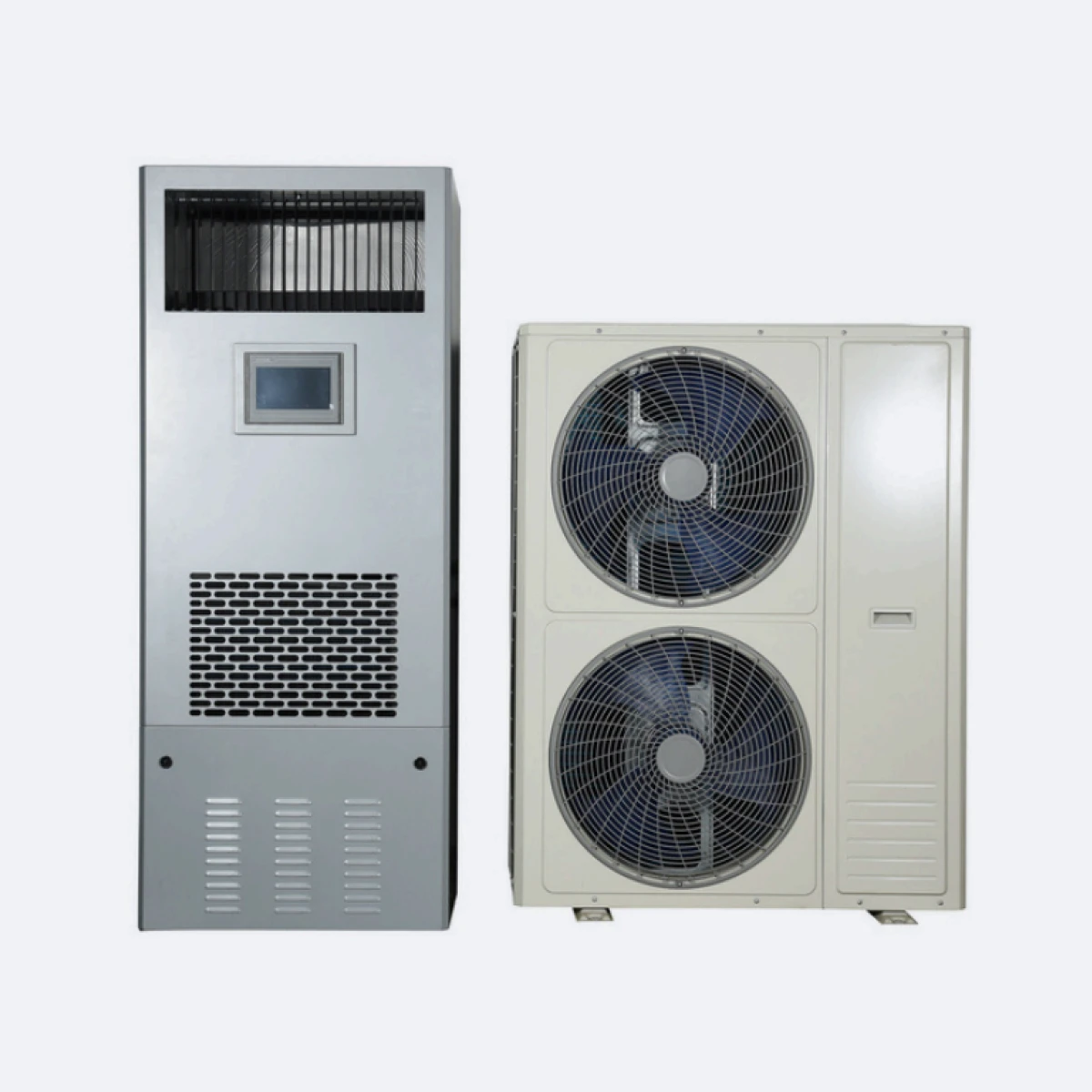
Capacity & Application
Cooling capacity: 3–68 kW. Holds ±1°C and ±5% RH for 24/7 commercial and industrial facilities. Powder-coated corrosion-resistant shell. Models: DXHW-3 to DXHW-70.
Series
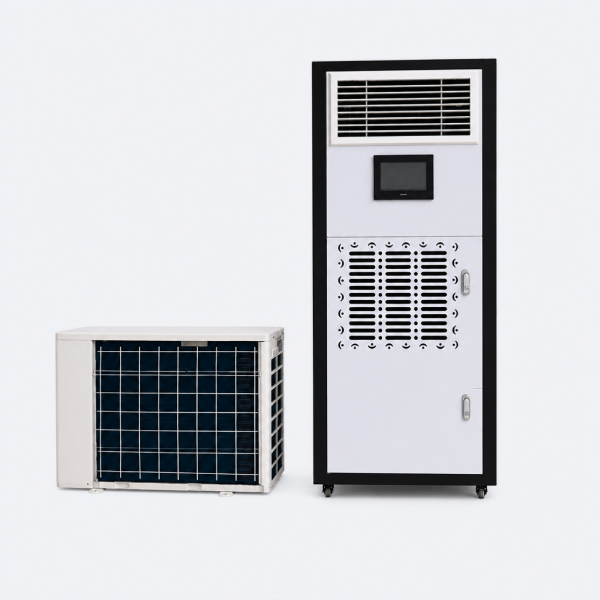
Capacity & Application
Humidification: 2–15 kg/h (220V/380V). Split precision air conditioner with heating, cooling, and dehumidification; PLC touchscreen control; rated for continuous data center and server room duty. Models: HSJ-03 to HSJ-60.
Series
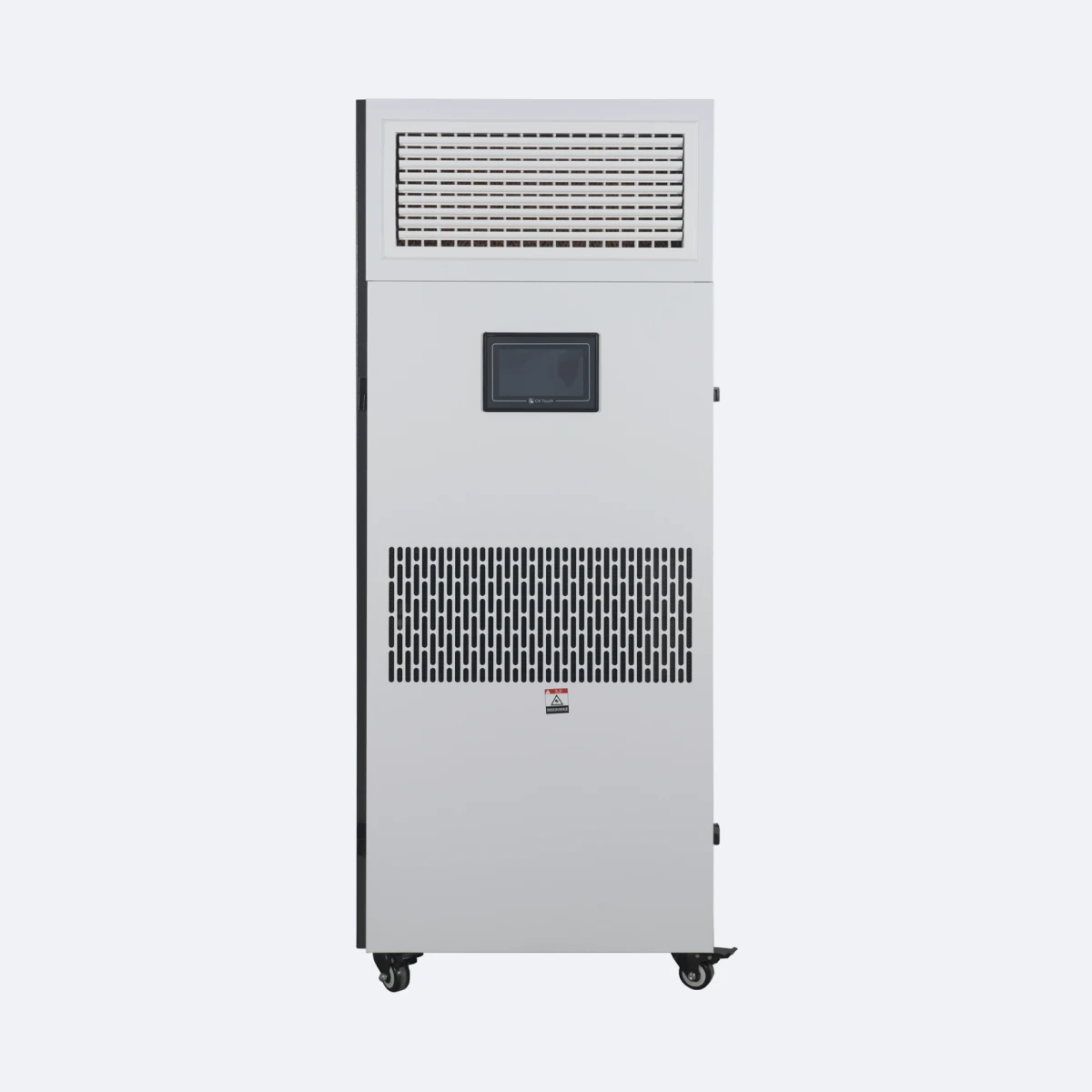
Capacity & Application
Humidification: 96–480 L/day; dehumidification: 72–300 L/day (220V/380V). Industrial 2-in-1 combo unit with air purification and ion sterilization, microcomputer LCD control, for server rooms, cleanrooms, and laboratories. Models: DS-03HS to DS-20HS.
• GDH and GDH-CE Dehumidifiers (38–1,440 L/day) plus ROD Rotary Desiccant — standalone moisture removal
• UH-DS Ultrasonic Humidifiers (2–30 kg/h) — standalone humidification
• SSPAC Portable Air Conditioners (2,700–5,000 W) — directional spot cooling




Send us your greenhouse dimensions, cultivation stage, target humidity, and operating temperature. Our engineering team will recommend the right SHISHUO model and capacity.
Request Sizing Download Catalog amy@shishuodehu.comSwitch between the tabs below to learn more. Each tab links to a dedicated page.
Company Overview
Founded 2015 ; Jiaxing production base 2023 (Zhejiang Shishuo); R&D, production, technical service integration; Shanghai-based international sales team
LEARN MORE
Quality Inspection
Functional testing and 100% final inspection before shipment (per catalog Step 5); workshop-level inspection at heat exchanger and assembly stages
LEARN MORE
OEM & ODM Solutions
6-step customization flow per catalog: requirement analysis → solution & model selection → specification confirmation → production & assembly → testing → packaging & shipping
LEARN MORE
Certifications
Quality, environmental, and occupational health management system certifications; product safety certifications (CCC and CE class) shown in catalog
LEARN MORE
It is a concealed, ceiling-installed air conditioner that holds both temperature and humidity to a setpoint at the same time — a constant temperature and humidity unit mounted above the ceiling. Unlike a comfort AC, which only removes moisture incidentally, it dehumidifies when too humid and humidifies when too dry while cooling or heating to hold temperature, distributing conditioned air through ducting and ceiling grilles to a tight tolerance, typically ±1°C and ±5% RH.
Choose ceiling-mounted when floor space is at a premium or the unit must stay hidden — server/computer rooms, cleanrooms, labs, retail, and offices. Choose floor-standing when you need higher single-unit capacity, simpler service access, or there is no ceiling void to conceal the unit. Both hold the same precision; the difference is form factor and installation. See our floor-standing air conditioner with humidity control for that option.
Yes — that is the defining feature. The unit dehumidifies when humidity is above the setpoint and humidifies when below, holding the target RH in both directions across seasons, under unified control with the temperature. A standard AC and a standalone dehumidifier can only remove moisture; this unit also adds it.
Standard configurations hold approximately ±1°C on temperature and ±5% RH on humidity, across a controllable range of roughly 18–30°C and 40–70% RH. Tighter tolerances are available on specification — tell us the required band and stability at the inquiry stage and we configure the control and component staging to match.
Because a ceiling unit usually cannot drain by gravity, it uses a built-in condensate drain pump that lifts condensate up and over to the building drain line. At installation, provide a condensate route within the pump's lift capacity and a continuous water-supply connection for the humidification stage. We confirm the drain and water-supply requirements for the chosen model at the inquiry stage.
Ceiling-mounted units suit any space where floor area is scarce or the unit must stay concealed: computer/server rooms and network closets, electronics and semiconductor rooms, laboratories and metrology rooms, cleanrooms and pharma spaces, telecom/equipment rooms, archives and museums, and precision retail or office spaces. All need both temperature and humidity held tightly, delivered overhead.
Yes. SHISHUO is a manufacturer and configures each unit to the project — capacity staging, concealed ceiling or split configuration, low-profile option, control and logging, and tolerance band. We support OEM (your branding) and ODM (modified hardware) for cleanroom and lab contractors, facility builders, and distributors. Process follows our catalog 6-step flow from requirement analysis through testing and shipping.
Standard units run on 220V/50Hz and 380V three-phase; 110V/60Hz and 240V/50Hz are available on ODM specification. We are an export manufacturer and ship internationally — contact us with your room conditions, target temperature and humidity band, ceiling void depth, and destination market for a configured recommendation, certificates where applicable, and a quotation.
Ceiling-Mounted Constant Temperature and Humidity Units: Engineering Reference
A ceiling-mounted constant temperature and humidity unit solves two problems at once: it holds temperature and humidity to a tight tolerance (±1°C / ±5% RH), and it does so without occupying any floor area. In server rooms, laboratories, and cleanrooms — where floor space is allocated to racks, benches, and process equipment — the climate system must disappear into the ceiling void while still delivering four coordinated functions: cooling, heating, dehumidification, and humidification. The control logic is identical to the floor-standing configuration; what changes is the installation engineering, which is where ceiling projects succeed or fail.
Installation Requirements Specific to Ceiling Units
| Requirement | Specification Basis | What to Confirm at Inquiry |
|---|---|---|
| Ceiling-void clearance | Unit body + duct connections + service access must fit the void above the suspended ceiling | Void depth (mm); low-profile option available where clearance is limited |
| Condensate drainage | A concealed unit cannot drain by gravity; a built-in condensate pump lifts water to the building drain line | Drain route length and rise, within the pump's lift capacity |
| Humidification water supply | The humidification stage consumes water continuously during dry seasons | A permanent treated-water connection near the unit location |
| Ducted air distribution | Supply and return grilles laid out so conditioned air washes the room evenly from above | Room plan and grille positions; one unit can serve multiple grilles or zones |
| Service access | Filters, humidifier, and control board require periodic access | Access panel position in the ceiling design |
Why Ducted Overhead Distribution Matters for Precision
A floor cabinet conditions the air nearest to itself first, creating a gradient across the room — acceptable for comfort, unacceptable for a ±1°C tolerance band. A ducted ceiling unit delivers supply air through multiple grilles distributed across the room plan and draws return air from a separate grille location, so the sensor reads representative room conditions rather than the discharge stream. This distribution pattern is what allows a single concealed unit to hold uniform conditions across a long equipment room, and it is the reason ceiling-mounted precision units are the standard choice for computer rooms and network closets. The server-room load profile — high sensible heat, continuous duty, no floor space — is detailed on the data center cooling and humidity control page.
Ceiling-Mounted vs. Floor-Standing: the Decision Criteria
Choose ceiling-mounted when floor space is scarce, the unit must stay hidden (cleanrooms, retail, customer-facing technical spaces), or ducted overhead distribution is needed for uniformity. Choose floor-standing when higher single-unit capacity, simpler service access, or the absence of a ceiling void makes a cabinet the practical answer. Both configurations hold the same ±1°C / ±5% RH tolerance — the decision is form factor and installation, not precision.
Manufacturing and Project Configuration
Concealed units are built on the GDH-CE ceiling-ducted platform at our Jiaxing production base, on 220V/50Hz or 380V power, with condensate-pump drainage and real-time temperature and humidity display as standard. Project-level configuration — capacity staging, low-profile housing, BMS integration, tighter tolerance bands — is handled through the OEM/ODM process. For sizing against your room plan, heat load, and ceiling-void dimensions, contact SHISHUO Engineering.
Configuration Matrix by Scenario
Step up cooling and dehumidification stages for high internal heat loads (server racks, equipment, lighting), add capacity for high air exchange, and specify a low-profile unit where ceiling-void depth is limited.
| Scenario | Typical Size | Control Target | Recommended Configuration |
| Server room / network closet / small lab | Up to 30 m² | 18–30°C / 40–70% RH | Compact ceiling-concealed unit (220V) |
| Mid-size lab / electronics workshop / computer room | 30–80 m² | ±1°C / ±5% RH | Standard ceiling ducted unit (220V/380V) |
| Production hall / large controlled space | 80 m²+ | ±1°C / ±5% RH | Large-capacity ducted unit, or multiple (380V) |
| Condenser must sit outside the building | Any | ±1°C / ±5% RH | Ceiling indoor + outdoor split |
| Limited ceiling void / low plenum | Any | ±1°C / ±5% RH | Low-profile unit; confirm clearance at inquiry |
We support industrial temperature and humidity control projects with clear specifications, stable equipment, and practical system advice. Share your application details and capacity requirements—our team will respond with a suitable solution and quotation.
Get a Quick QuoteHi! Click one of our member below to chat
on WhatsApp
General Manager
Business Development Manager