Search

Enter keywords to search for products, blog posts, and more.

Server Room Portable Air Conditioner — Spot Cooling for IT Rooms, Network Closets, and Edge Data Centers

Server Room Portable Air Conditioner — Spot Cooling for IT Rooms, Network Closets, and Edge Data Centers


Why Server Rooms Need Dedicated Cooling — and When a Portable Unit Is the Right Answer

Server rooms differ from offices in one decisive way: the heat is constant, concentrated, and generated by the equipment itself, 24 hours a day. The target for any server-room cooling is the rack inlet temperature — ASHRAE TC 9.9 recommends 18–27°C for Class A1 equipment, with an allowable ceiling of 32°C — not the room's general air temperature. A portable spot cooler earns its place by filling the gaps a building HVAC system leaves. Three of those gaps:

Server rooms are heat-dense environments

IT equipment converts nearly 100% of its electrical input into heat. Five racks at 3 kW each generate 15 kW of continuous heat — like five space heaters running in a 15–20 m² room. Unlike office heat (lights, people, solar) that fluctuates, server-room heat is constant and concentrated. Standard building HVAC is designed for office densities (50–100 W/m²) and often cannot hold the 18–27°C rack-inlet temperature ASHRAE TC 9.9 recommends for Class A1/A2 equipment as density rises.

HVAC failures are the leading cause of IT environmental downtime

When building cooling fails, a sealed room packed with active equipment can exceed the 32°C allowable maximum within 15–30 minutes; servers then throttle and trip thermal protection. A portable AC stored on-site and wired to a thermostat can activate automatically when the room exceeds a set threshold, buying critical time to repair the primary HVAC or perform a controlled shutdown.

Off-hours gaps, hot spots, and maintenance bridges

Many buildings cut HVAC outside business hours, but server rooms produce heat 24/7 — a Friday-to-Monday shutdown can accumulate 60+ hours of unmanaged heat, which a 24-hour-timer unit can cover independently. Portable spot coolers also fix localized hot spots from clustered high-density racks or obstructed airflow, and provide a temporary cooling bridge during chiller replacement, duct work, or renovation.

SHISHUO Portable Air Conditioners for Server Room Applications

The SSPAC series is SHISHUO's portable spot-cooling range in five capacity levels — SSPAC-27 (2,700 W, ~10 m²), SSPAC-35 (3,500 W, ~15 m²), SSPAC-40 (4,000 W, ~20 m²), SSPAC-45 (4,500 W, ~25 m²), and SSPAC-50 (5,000 W, ~30 m²). All share compressor cooling, a directional cold air outlet (120 mm), a hot air exhaust duct (180–220 mm), a 24-hour cycle timer, touch-screen automatic temperature control, high/low fan speed, and heavy-duty casters. All run on 220V/50Hz single-phase power, with a 10 L or 20 L condensate tank and an external drain hose connection for continuous operation.

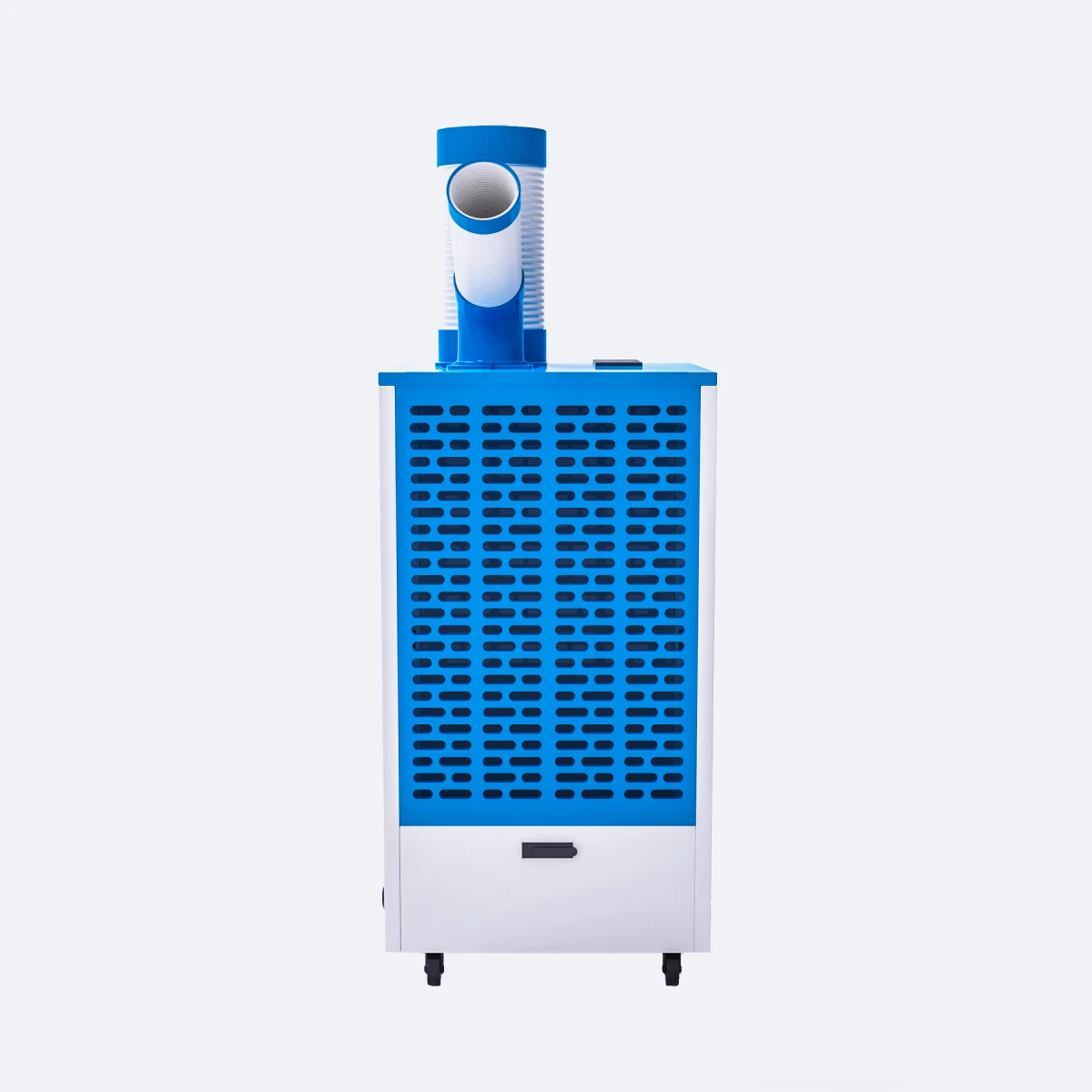
Option 1 — SSPAC Portable Spot Cooler for Server Rooms

For server rooms needing fast, targeted cooling at a specific rack or hot-spot without a full HVAC retrofit, our SSPAC delivers on-demand relief:

Fully moveable spot cooling unit with no fixed installation required, built-in air filtration removes dust and particulates that threaten sensitive electronics, lower upfront cost than central AC.

SSPAC-27

SSPAC-27
Cooling Capacity: 2700W
Air Circulation: 500 m³/h
Power:220V / 50Hz

view details

SSPAC-40

SSPAC-40
Cooling Capacity: 4000W
Air Circulation: 1200 m³/h
Power:220V / 50Hz

view details

SSPAC-50

SSPAC-50
Cooling Capacity: 5000W
Air Circulation: 1500 m³/h
Power:220V / 50Hz

view details

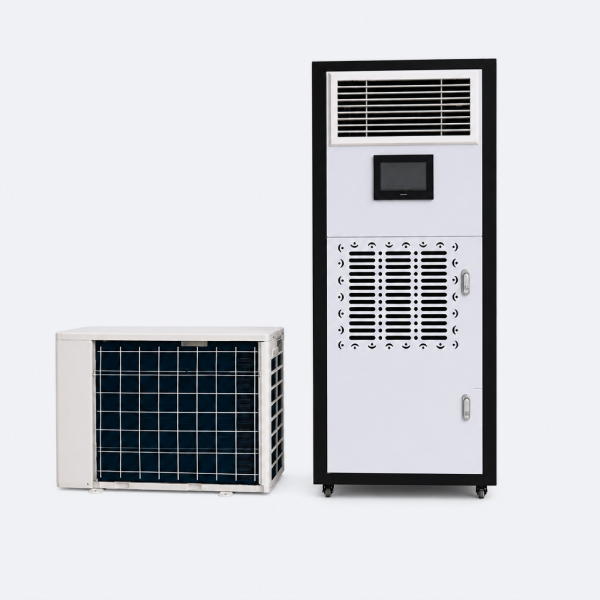
Option 2 — HSJ Precision Air Conditioner for Server Rooms

Explicitly rated by the manufacturer for Data Centers, Server Rooms, and UPS Rooms, this precision tier scales from small rack rooms to full data halls:

CPU smart control with self-diagnosis and power-off memory, imported sensors for real-time temperature/humidity monitoring, auto defrost, drainage and overflow protection — built for 24/7 unattended operation.

bt6:

bt6:
Cooling Capacity (kW): 2
Coverage Area:10–15 m²
Power:220V/50Hz

view details

HSJ-03

HSJ-03
Cooling Capacity (kW): 12
Coverage Area:60–80 m²
Power:380V/50Hz 3-Phase 5-Wire

view details

HSJ-12

HSJ-12
Cooling Capacity (kW) :32
Coverage Area:200–240 m²
Power:380V/50Hz 3-Phase 5-Wire

view details

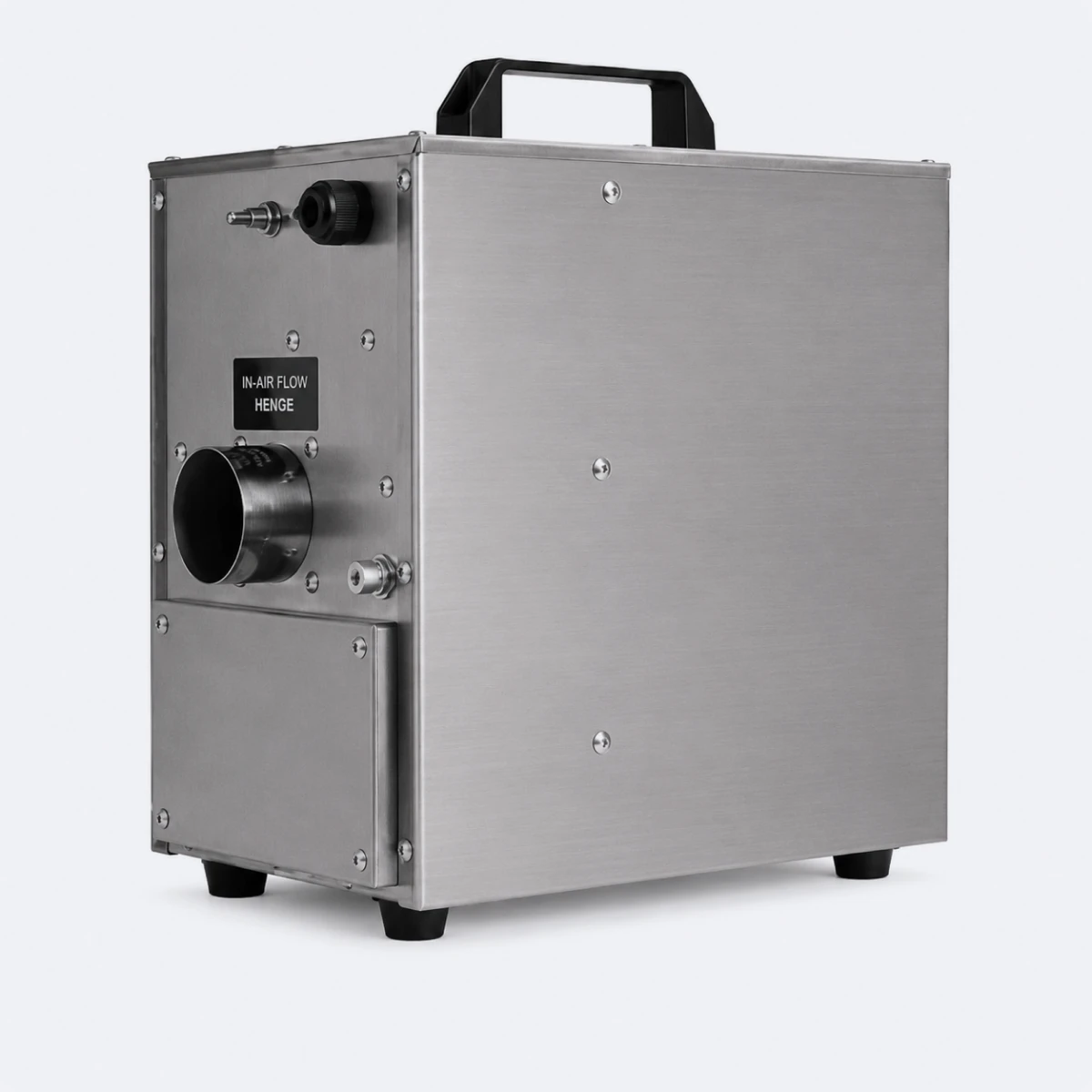
Option 3 — XR Commercial Desiccant Dehumidifier for Server & Telecom Closets

For small server rooms, network closets, and equipment cabinets where a ceiling-mounted temperature-and-humidity unit is oversized and a commercial refrigerant unit can't hold a tight enough RH set point:

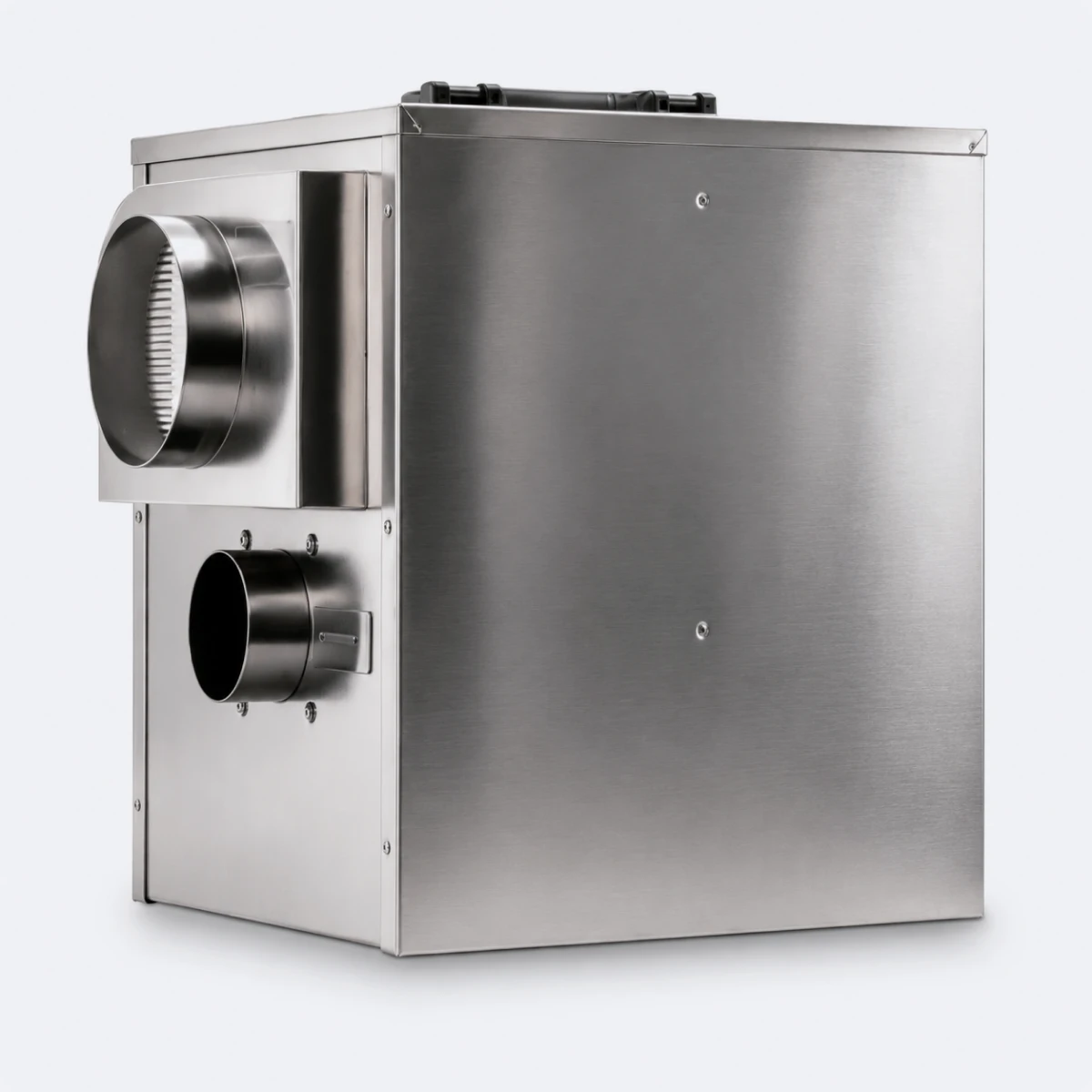
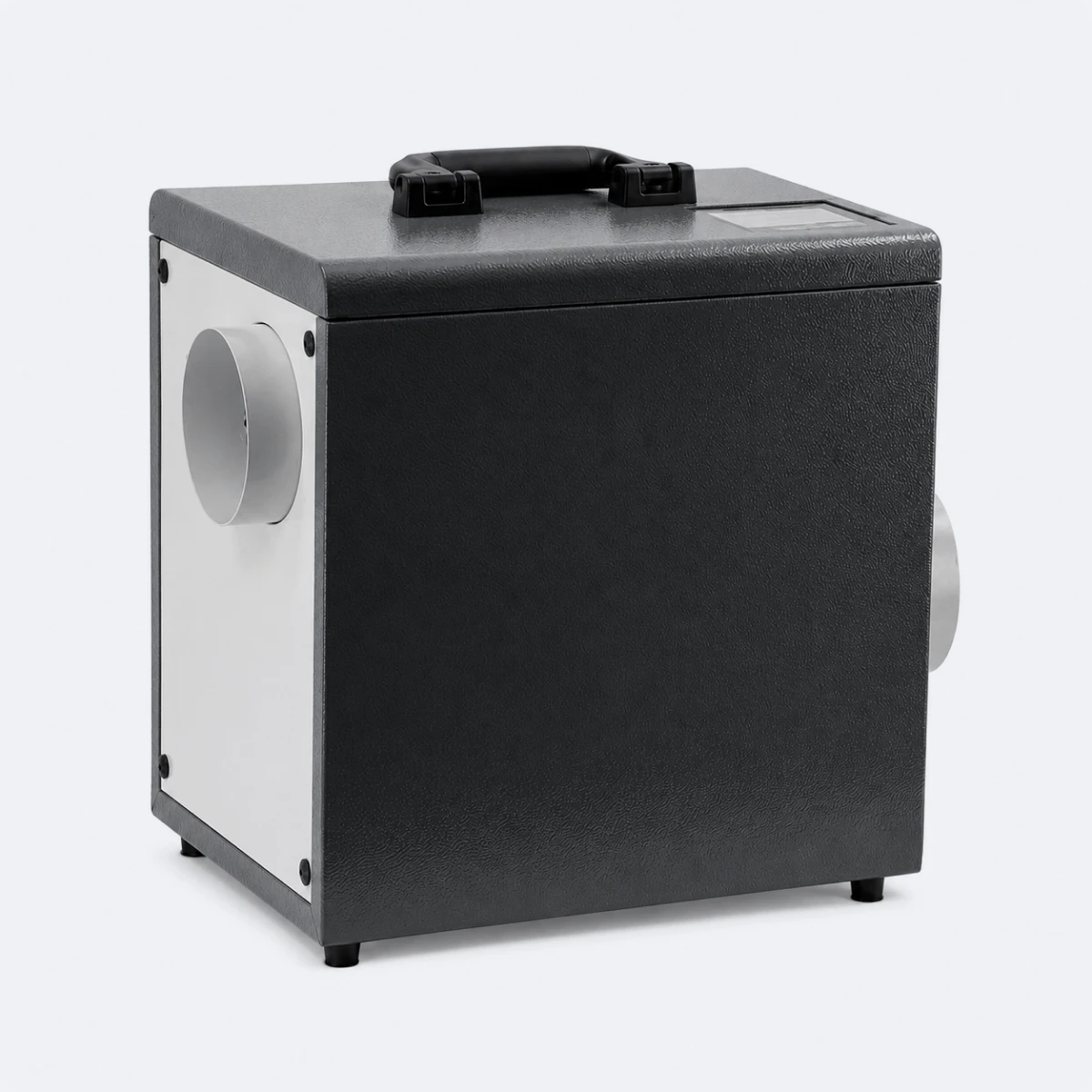
Explicitly built for server and telecom closets and electrical/switchgear cabinets: a handle-carried desiccant case with stainless-steel or powder-coated corrosion-resistant construction, RS-485 and DI signal for remote monitoring, and a low, stable RH target held anywhere from 5% to 95% under fully automatic control.

XR-80XF-01

XR-80XF-01
Capacity (Kg/h):0.4
Regeneration Airflow:30 m³/h
Power:220V/50Hz

view details

XR-100XF-01

XR-100XF-01
Capacity (Kg/h):0.45
Regeneration Airflow:60 m³/h
Power:220V / 50Hz

view details

XR-100XF-02

XR-100XF-02
Capacity (Kg/h):0.5
Regeneration Airflow:60 m³/h
Power:220V / 50Hz

view details

How to Choose the Right Portable AC for Your Server Room

The primary sizing factor is the heat load generated by IT equipment — every watt consumed by a server becomes heat that must be removed. The matrix below maps common server-room scenarios, from a 1–2 rack network closet to an edge data center, to the SSPAC model best suited for each, with the typical use case. For loads above 5 kW, consider two units for both capacity and N+1 redundancy.


Server Room ScenarioEstimated Heat LoadRecommended ModelUse Case
Small network closet, 1–2 racks1–3 kWSSPAC-27Primary or backup cooling for IT closets
Small server room, 2–4 racks3–5 kWSSPAC-35 or SSPAC-40Emergency backup; supplemental hot-spot cooling
Medium server room, 4–6 racks5–8 kWSSPAC-45 or SSPAC-50Backup cooling; multiple units for redundancy
High-density rack hot spot3–5 kW localizedSSPAC-40 or SSPAC-45Directional spot cooling at hot-spot racks
Telecom equipment room2–5 kWSSPAC-35 to SSPAC-45Primary or supplemental; low-noise at low fan speed
Edge / micro data center2–8 kWSSPAC-35 to SSPAC-50Primary cooling for remote or temporary IT deployments
Off-hours / weekend coolingSame as operating loadMatch to room heat loadRuns on 24-hour timer while building HVAC is off
HVAC maintenance temporary bridgeSame as operating loadMatch to room heat loadDeployed for days/weeks during planned HVAC downtime


Server Room Portable AC Sizing — Matching Cooling Capacity to Heat Load

The core rule is simple: the AC's cooling capacity must equal or exceed the IT heat load in the room. The three steps below turn that into a worked calculation, followed by a quick rule of thumb for margin.
01

Step 1 — Total IT Heat Load

Add the rated power (W) of all IT equipment — servers, switches, storage, UPS losses.

e.g. 5 servers × 600 W + 2 switches × 200 W = 3,400 W

02

Step 2 — Add Supplemental Loads

Add lighting, personnel, and solar gain — typically 5–10% in a windowless LED-lit room.

3,400 W + 10% = 3,740 W total

03

Step 3 — Match to an SSPAC Model

Pick a unit whose cooling capacity exceeds the total load.

SSPAC-40 (4,000 W) covers 3,740 W; choose SSPAC-45 if it is the sole cooling source

04

Rule of Thumb & Margin

1 kW IT load ≈ 1 kW cooling, plus 10–20% margin for non-IT loads.

Apply a 30% margin for mission-critical environments

Key considerations for server room spot cooling:

Four principles keep a server-room portable AC reliable: size to the rack inlet, build in redundancy, route the heat out, and protect unattended operation.
Size and aim to the rack-inlet temperature (ASHRAE 18–27°C, target 20–25°C), not the room's general air temperature.
For loads above 5 kW or mission-critical rooms, deploy two units (N+1) so a single failure leaves partial cooling, not total loss.
The hot exhaust must leave the room — into a ceiling plenum, through a wall/window, or to an adjacent space; exhausting into the same room gives zero net cooling.
For unattended or backup operation, use continuous drainage and connect the unit to UPS/generator-backed power so it keeps cooling during a power event.

Need a Sizing Calculation for Your Greenhouse?

Send us your greenhouse dimensions, cultivation stage, target humidity, and operating temperature. Our engineering team will recommend the right SHISHUO model and capacity.

Request Sizing Download Catalog amy@shishuodehu.com

Installation and Operation Notes for Server Room Use

Heat Exhaust Routing

A portable AC moves heat, it does not eliminate it — the hot exhaust duct must discharge outside the room. Common routes: up through a removable ceiling tile into the plenum (the usual server-room method), through a window or wall penetration to the exterior, or ducted to an adjacent hallway or mechanical space. Exhausting into the same room yields zero net cooling, so plan the route before positioning the unit.

Cold Air Outlet Positioning

Point the 120 mm cold outlet directly at the rack inlets that need cooling. In hot-aisle/cold-aisle layouts, place the unit in the cold aisle with the outlet aimed along the row of rack fronts. The directional outlet targets localized hot spots more effectively than general room cooling; with multiple hot spots, use one unit per zone rather than one large unit in a corner.

Condensate & Power Planning

Server-room floors must stay dry. Use the internal 10 L / 20 L tank with auto-shutoff for short-term use, or connect an external drain hose (or a condensate pump where no gravity drain exists) for 24/7 operation. For power, all models run on 220V/50Hz single-phase; the SSPAC-50 draws 2,300 W — put the AC on a separate circuit from IT, and for mission-critical backup wire it to the same UPS/generator-backed panel as the servers.

Thermostat & Timer Configuration

All units have touch-screen automatic temperature control. Set the target to your rack-inlet temperature (typically 20–25°C); the compressor cycles on above the set-point and off when reached. The 24-hour timer schedules off-hours runs (e.g. 6 PM Friday to 7 AM Monday). For emergency backup, set the unit a few degrees above the normal HVAC set-point (e.g. 25°C when HVAC holds 22°C) so it stays idle and activates only if the room warms.

Frequently Asked Questions

How many BTU do I need to cool a server room?

The required BTU/h equals the total heat load of your IT equipment plus 10–20% for non-IT loads. Convert watts to BTU/h by multiplying by 3.412. For example, a 3 kW heat load equals approximately 10,200 BTU/h. The SHISHUO SSPAC-35 provides approximately 11,900 BTU/h of cooling, which would cover this load with margin. For critical environments, apply a 30% safety margin.

Can a portable air conditioner be used as primary cooling for a server room?

Yes, for small server rooms and network closets with heat loads under 5 kW. The SSPAC-27 through SSPAC-50 covers rooms from approximately 10 to 30 m². For larger rooms or heat loads above 5 kW, a portable AC is better used as supplemental or emergency backup cooling alongside a dedicated CRAC (computer room air conditioner) or precision cooling system.

What temperature should a server room be kept at?

ASHRAE TC 9.9 recommends maintaining server inlet temperatures between 18°C and 27°C (64–81°F) for Class A1 equipment. Most IT managers target 20–25°C for a balance between equipment reliability and energy efficiency. The allowable range extends up to 32°C, but sustained operation above 27°C may increase fan speed, noise, and component wear.

How do I exhaust the hot air from a portable AC in a windowless server room?

The most common method in commercial buildings is to route the hot air exhaust duct through a removable ceiling tile into the plenum space above the drop ceiling. This is quick to install, reversible, and does not require wall penetration. Alternatively, the exhaust can be routed through a duct to an adjacent hallway, mechanical room, or exterior wall vent. The key requirement is that the hot exhaust air exits the server room — discharging heat into the same room provides no net cooling.

Can I leave a portable AC running unattended in a server room over the weekend?

Yes. SHISHUO SSPAC units include a 24-hour cycle timer and automatic temperature control. For unattended operation, connect an external drain hose for continuous condensate drainage so the unit does not shut down due to a full water tank. Set the target temperature and the timer, and the unit will cycle automatically. For additional safety, pair the unit with a remote temperature monitor that sends alerts if room temperature exceeds a threshold.

How quickly can a portable air conditioner cool down a server room?

A portable AC begins delivering cold air immediately upon startup. The time to bring a room to the target temperature depends on the room's thermal mass, current temperature, and the balance between heat load and cooling capacity. In a typical small server room (15 m²) with a 3–4 kW heat load and an SSPAC-40 (4,000 W cooling), you can expect a noticeable temperature drop within 10–15 minutes and stabilization within 30–60 minutes.

What is the difference between a portable air conditioner and a spot cooler?

In practice, the terms are used interchangeably in the IT cooling industry. A spot cooler is a portable air conditioner designed for directional, targeted cooling of a specific area rather than uniform room cooling. SHISHUO SSPAC units function as spot coolers — the directional cold air outlet delivers cooling to a specific rack row or hot spot, and the hot exhaust is ducted out of the room.

Do SHISHUO portable air conditioners support OEM and ODM customization?

Yes. We manufacture all units at our Jiaxing production base and support OEM branding and ODM modifications, including voltage adaptation (110V/60Hz for North America, 220V/50Hz standard), custom control interfaces, modified duct configurations, and color or housing changes. Contact our team with your requirements.

Get the Right Climate Control
Solution for Your Application

We support industrial temperature and humidity control projects with clear specifications, stable equipment, and practical system advice. Share your application details and capacity requirements—our team will respond with a suitable solution and quotation.

Get a Quick Quote

Amy

General Manager