Search

Enter keywords to search for products, blog posts, and more.

Greenhouse Humidifier — Humidity and VPD Control for Greenhouses, Mushroom Farms, and Indoor Grow Rooms

Greenhouse Humidifier — Humidity and VPD Control for Greenhouses, Mushroom Farms, and Indoor Grow Rooms


Why Humidity Control Matters for Both Plants and Fungi

A greenhouse humidifier serves two biologies with one machine. For plants, the right metric is VPD, not relative humidity, because RH changes with temperature while VPD reflects the air's true drying power and the plant's actual transpiration demand. For mushrooms, RH is the direct control variable, and the targets run far higher than any plant would tolerate. Both depend on non-wetting delivery to avoid the fungal diseases that wet surfaces invite. Three principles frame the page:

Why VPD matters more than RH for plant growers

Relative humidity misleads because it changes with temperature — air at 25°C/60% holds far more water than 15°C/60%. Vapor pressure deficit (VPD) expresses the air's actual drying power. Most crops want 0.8–1.2 kPa in active growth; below 0.8 kPa nutrient transport stalls (blossom-end rot, tip burn), above 1.2 kPa stomata close and CO₂ assimilation stops. The humidifier adds moisture when midday heat pushes VPD too high. Targets shift by stage: propagation 0.2–0.5 kPa (80–90% RH), vegetative 0.8–1.0 kPa, flowering 0.9–1.2 kPa.

Mushrooms — a different biology, a higher target

Mushrooms have no roots or stomata. A fruiting body is 85–95% water, absorbed directly from the air. At 85–95% RH during fruiting it develops full caps and market weight; below 80% it dries faster than the mycelium can resupply, so pins abort, caps crack, and stipes hollow. Mushroom rooms need 70–80% RH at incubation, 95–100% at pinning, and 85–95% at fruiting — levels that would be dangerous in a greenhouse.

The fungal disease tradeoff — why non-wetting matters

Humidity is double-edged in horticulture: too low and plants wilt, too high and Botrytis, powdery mildew, and downy mildew flourish — especially on wet leaf surfaces. This is why non-wetting delivery matters. A humidifier that produces large droplets or saturates the air to condensation creates exactly the conditions pathogens exploit. The UH-DS's 0.5–5 micron mist evaporates in the air column before reaching surfaces, raising RH without wetting leaves or mushroom caps.

SHISHUO Ultrasonic Humidifiers for Greenhouse and Grow Room Use

The UH-DS series produces 0.5–5 micron droplets that evaporate in the air before settling on crop surfaces — non-wetting delivery is critical because wet leaves invite Botrytis and wet mushroom caps invite bacterial blotch. The units support automatic, manual, and timed control and can pair with external VPD or RH controllers for stage-based management. UH-DS-03E to UH-DS-06E suit individual mushroom fruiting rooms (20–80 m²); UH-DS-09E to UH-DS-15E serve large mushroom halls and greenhouse zones. Use purified or RO water to extend plate life and avoid mineral residue on crops.

Option 1 — UH-DS Commercial Ultrasonic Humidifier for Propagation & Nursery Zones

For seedling propagation zones, cutting benches, and small nursery sections needing precise low-volume humidification:

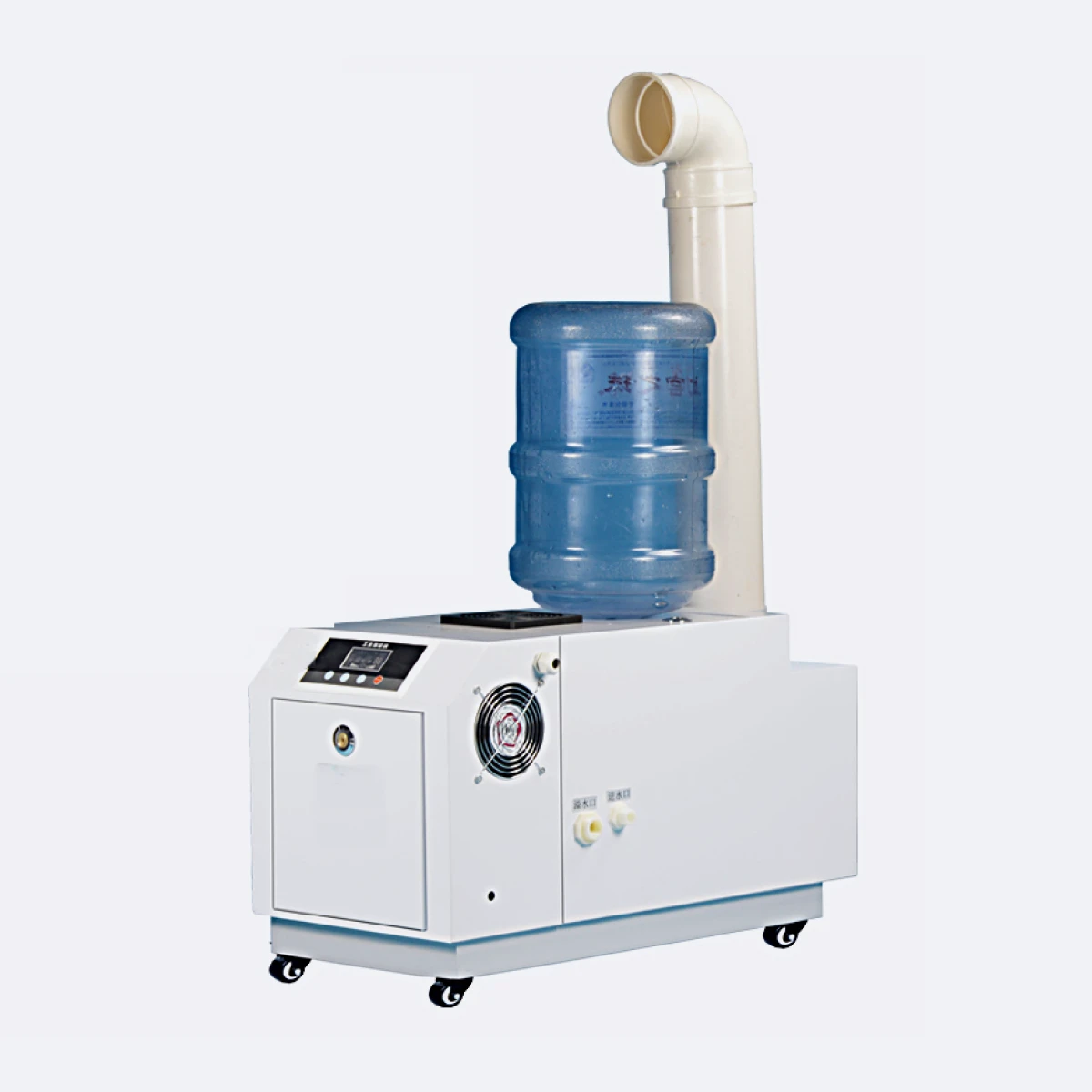
Compact 2-6 kg/h atomization core producing 0.5-5 micron droplets — fine enough to raise humidity around seedlings without wetting leaves or growing medium. Automatic dry-burn protection, low noise, supports fixed or mobile setup.

UH-DS-02E

UH-DS-02E
Humidification Capacity (kg/h):2
Atomizing Particles (μm) :6 (Max Output Range)
Power:220V / 50Hz

view details

UH-DS-03E

UH-DS-03E
Humidification Capacity (kg/h):3
Atomizing Particles (μm) :10 (Max Output Range)
Power:220V / 50Hz

view details

UH-DS-06E

UH-DS-06E
Humidification Capacity (kg/h):6
Atomizing Particles (μm) :20 (Max Output Range)
Power:220V / 50Hz

view details

Option 2 — UH-DS Industrial Ultrasonic Humidifier for Mid-Size Greenhouse Zones

For mid-size greenhouse zones and grow rooms (mushroom cultivation, leafy greens, tissue culture) where holding a consistent RH directly affects yield:

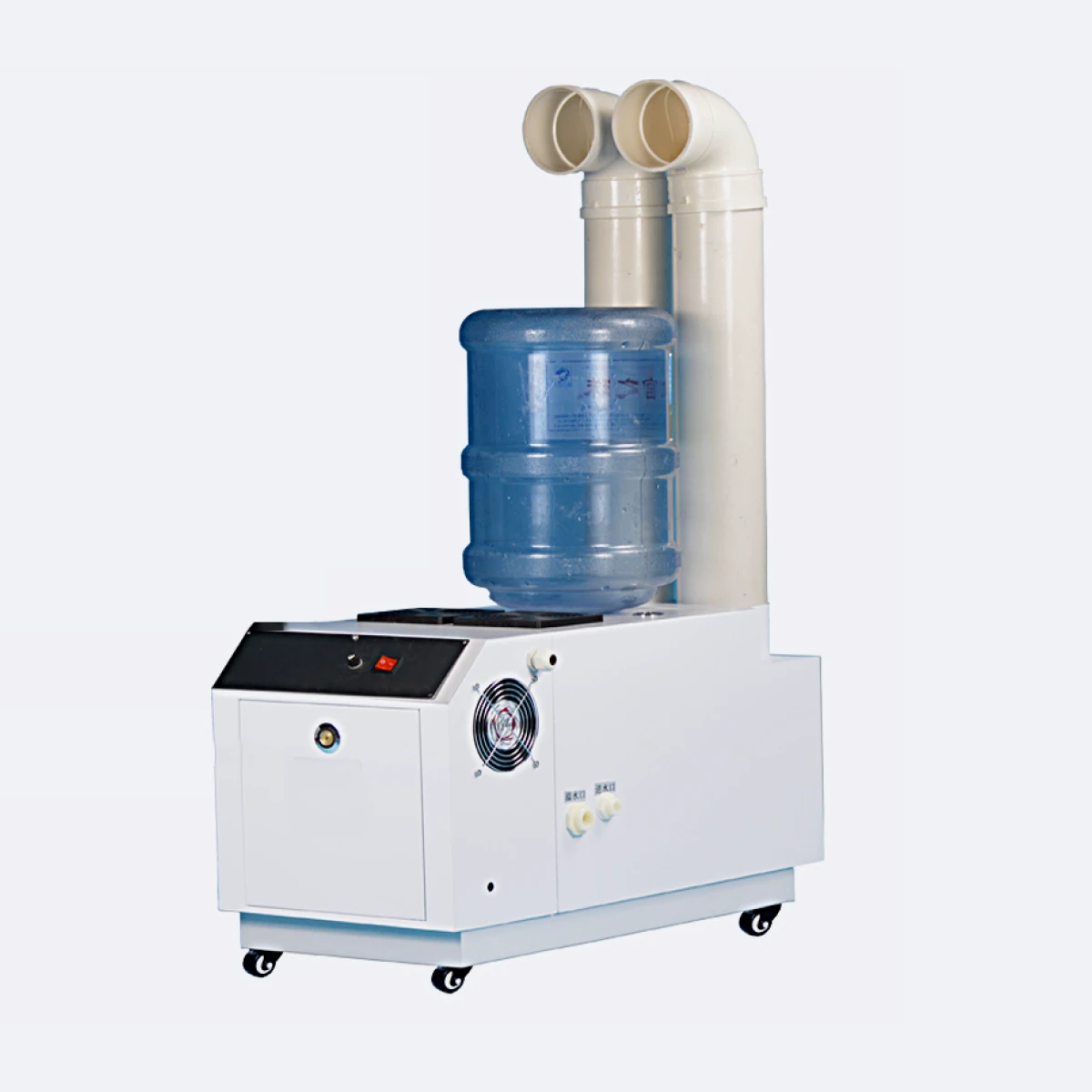
Waterproof sealed atomization core with 3,500-5,000 hour replaceable plates, 0.5-5 micron droplets for rapid vaporization, automatic water-level dry-burn protection. Manual, timed, and automatic control modes.

UH-DS-09E

UH-DS-09E
Humidification Capacity (kg/h):9
Atomizing Particles (μm) :30 (Max Output Range)
Power:220V / 50Hz

view details

UH-DS-12E

UH-DS-12E
Humidification Capacity (kg/h):12
Atomizing Particles (μm):40 (Max Output Range)
Power:220V / 50Hz

view details

Option 3 — UH-DS Heavy-Duty Ultrasonic Humidifier for Large Commercial Greenhouses

For large commercial greenhouse operations, mushroom farms, and multi-bay grow facilities needing whole-house humidity coverage:

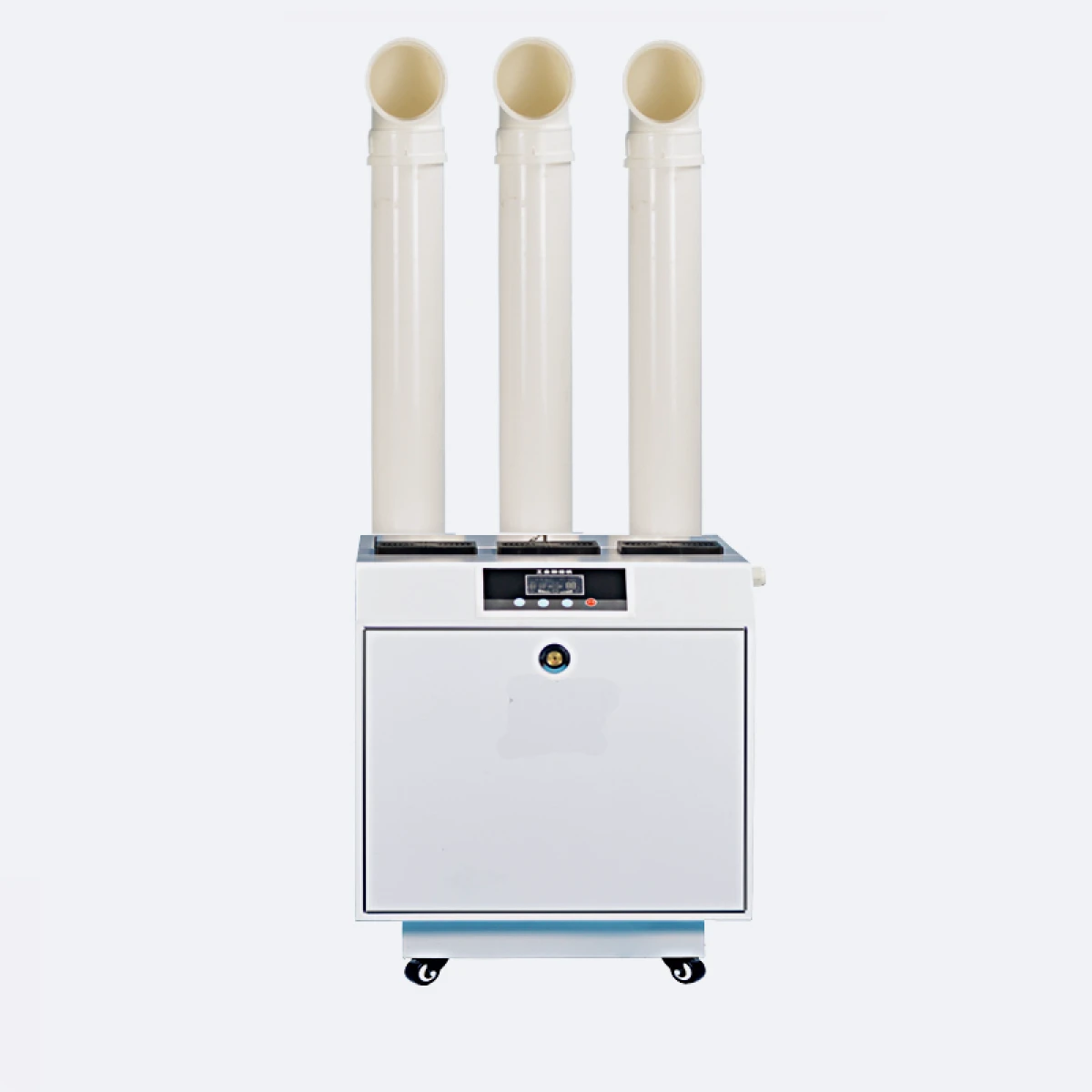
15-21 kg/h atomization output covers large open-canopy floor areas; quiet operation with flexible fixed, mobile, or pipeline installation across long greenhouse spans; overload and dry-burn protection built in.

UH-DS-15E

UH-DS-15E
Humidification Capacity (kg/h):15
Atomizing Particles (μm) :50 (Max Output Range)
Power:220V / 50Hz

view details

UH-DS-18E

UH-DS-18E
Humidification Capacity (kg/h):18
Atomizing Particles (μm) :60 (Max Output Range)
Power:220V / 50Hz

view details

UH-DS-21E

UH-DS-21E
Humidification Capacity (kg/h):21
Atomizing Particles (μm) :70 (Max Output Range)
Power:220V / 50Hz

view details

Humidity Targets by Crop Type and Growth Stage

The table below maps each crop and growth stage to its target RH, the VPD where applicable, and the key concern. VPD values are given for plant crops only — mushrooms do not transpire, so VPD is not a meaningful control parameter for fungal cultivation; RH is the direct control variable.


ApplicationGrowth StageTarget RHVPD (kPa)Key Concern
Propagation (cuttings/seedlings)Rooting80–90%0.2–0.5Prevent desiccation of unrooted tissue
Vegetable greenhouse (tomato, pepper)Vegetative60–75%0.8–1.0Active transpiration; nutrient uptake
Vegetable greenhouseFlowering/fruiting55–65%0.9–1.2Disease prevention; fruit set
Leafy greens (lettuce, herbs)All stages65–80%0.6–0.9Prevent tip burn; maintain leaf quality
Ornamental flowersProduction60–75%0.8–1.0Petal quality; extend vase life
CannabisVegetative55–70%0.8–1.2Active growth; prevent mold
CannabisFlowering40–55%1.0–1.4Dense bud — Botrytis prevention critical
Mushroom (oyster, shiitake, lion's mane)Incubation70–80%Mycelium colonization
MushroomPinning initiation95–100%Trigger primordia formation
MushroomFruiting85–95%Full cap development; prevent cracking
Indoor vertical farmVaries by crop60–80%0.6–1.0Uniform conditions across racks


Matching Humidifier Capacity to Growing Facility Type

Capacity depends on facility type, area, target RH, and ventilation rate. The four representative facilities below show typical model selection, from a small propagation bench to a large vegetable greenhouse bay.
01

Propagation Bench / Mist Chamber

10–50 m² · 80–90% RH

UH-DS-02E to UH-DS-03E — high RH for unrooted cuttings; fine mist essential

02

Mushroom Fruiting Room

20–80 m² · 85–95% RH

UH-DS-03E to UH-DS-06E — high output; do not aim mist at fruiting bodies

03

Vegetable Greenhouse Bay

200–800 m² · 55–75% RH

UH-DS-09E to UH-DS-18E — place near intake; let ventilation distribute mist

04

Indoor Vertical Farm / Grow Room

50–300 m² · 60–80% RH

UH-DS-06E to UH-DS-12E — uniform distribution across rack tiers

Key considerations for greenhouse and grow room humidification:

Four factors determine whether a growing-facility humidification system performs: VPD-based control for plants, non-wetting delivery, continuous operation against mushroom-room ventilation, and the honest recognition that some scenarios need a dehumidifier instead.
For plants, control by VPD, not RH — VPD reflects true transpiration demand independent of temperature, and shifts by growth stage.
Non-wetting 0.5–5 micron mist raises RH without wetting leaves or caps, preventing Botrytis on plants and bacterial blotch on mushrooms.
Mushroom rooms exchange air 1–3×/hour for CO₂ control, which strips humidity — the humidifier must run almost continuously during fruiting.
Honest exception: a cannabis flower room is usually too humid, not too dry — that calls for a SHISHUO GDH dehumidifier, not a humidifier.

Need a Sizing Calculation for Your Greenhouse?

Send us your greenhouse dimensions, cultivation stage, target humidity, and operating temperature. Our engineering team will recommend the right SHISHUO model and capacity.

Request Sizing Download Catalog amy@shishuodehu.com

Deployment Notes for Greenhouses, Mushroom Rooms, and Grow Rooms

Greenhouse Placement

Humidity drops fastest at midday when ventilation peaks and solar heat lowers RH. Place the humidifier near the air intake or a circulation fan so existing airflow distributes the mist. Deploy a separate unit per bay/zone when crops differ, each with its own sensor and set-point. Keep at least 2 m clearance between the outlet and the nearest canopy to prevent localized over-humidification.

Mushroom Room Placement

Fruiting rooms need 85–95% RH while exchanging air 1–3×/hour to keep CO₂ below 1,000 ppm — each exchange pulls the room below target within minutes, so the humidifier runs almost continuously. Position it near the fresh-air intake so incoming dry air mixes with mist immediately. Never point the outlet at fruiting bodies; aim upward toward the ceiling so the air mixes thoroughly before reaching the crop (concentrated mist causes bacterial blotch).

Grow Room / Indoor Farm Placement

In sealed grow rooms the challenge reverses by stage: vegetative phase often needs added humidity (intense lighting drives VPD up), while flowering/fruiting transpiration can push RH too high, needing a dehumidifier. Plan for both. The UH-DS can run in tandem with a SHISHUO GDH dehumidifier on one RH controller — humidifier on below the low set-point, dehumidifier on above the high set-point.

Water Quality & Stage-Based Adjustment

Use purified or RO water to prevent mineral deposits that block leaf stomata or alter mushroom-substrate pH, and to extend plate life toward the rated 3,500–5,000 hours. Demand is seasonal in greenhouses (peaks in dry, hot weather) and more constant in year-round mushroom rooms. Program automatic mode to the current stage's target RH; give each crop-stage room its own unit and set-point.

Frequently Asked Questions

What is the best humidity level for a greenhouse?

There is no single answer — it depends on the crop, growth stage, and temperature. For most vegetable crops during active growth, 60–75% RH (VPD 0.8–1.2 kPa) is optimal. During propagation, 80–90% RH (VPD 0.2–0.5 kPa) prevents desiccation of unrooted cuttings. During flowering, 55–65% RH reduces fungal disease pressure. Use VPD as the control parameter rather than RH alone, because RH changes with temperature while VPD reflects actual transpiration demand.

What humidity do mushrooms need?

During incubation (mycelium colonization), 70–80% RH. During pinning initiation, 95–100% RH to trigger primordia formation. During fruiting, 85–95% RH for full cap development. Below 80% during fruiting, pins abort and caps crack. Species-specific ranges vary — tender species like lion's mane require the upper end (90–95%), while tougher species like reishi tolerate the lower end (80–90%). Maintain a 10% RH differential (e.g., max 95%, min 85%) to allow slight surface drying that helps prevent bacterial blotch.

Will the humidifier wet plant leaves or mushroom caps?

No, under normal operation. The SHISHUO UH-DS produces 0.5–5 micron droplets that evaporate in the air before settling on surfaces. Maintain 2+ meters of clearance between the mist outlet and the nearest crop surface. Do not point the outlet directly at mushroom fruiting bodies or plant canopy — aim upward to allow thorough air mixing. The goal is to raise ambient humidity, not to mist the crop directly.

Can I use the same humidifier for both plants and mushrooms?

Yes, the UH-DS hardware is the same. The difference is the set-point. Plants typically need 55–80% RH depending on stage; mushrooms need 85–95% during fruiting. If you run separate rooms for each, deploy a dedicated unit in each room with its own RH target. The automatic control adjusts output to maintain whatever set-point you configure.

My cannabis flower room is too humid — do I need a humidifier or dehumidifier?

If RH in your flower room is consistently above 55–60%, you need a dehumidifier, not a humidifier. During late flowering with dense canopy, plant transpiration often pushes RH above safe levels, creating Botrytis risk. A SHISHUO GDH commercial dehumidifier removes excess moisture and brings RH back into the safe range for flowering. The humidifier is for earlier growth stages or dry-climate conditions where RH drops below the target.

How do I size a humidifier for my mushroom fruiting room?

Mushroom rooms require high humidity (85–95% RH) while exchanging air 1–3 times per hour for CO₂ management. Each air exchange removes moisture. A 50 m² room with 3 m ceilings (150 m³ volume) exchanging air twice per hour replaces 300 m³ of humidified air with outside air every hour. Depending on outdoor RH, this can require 3–6 kg/h of moisture replacement. The UH-DS-06E (6 kg/h) is a common starting point for this size room. For larger rooms or higher air exchange rates, step up or deploy multiple units.

Can the humidifier also cool my greenhouse?

Yes, partially. Ultrasonic humidification produces an evaporative cooling effect as the fine droplets absorb heat from the air during evaporation. This can reduce air temperature by 2–6°C depending on conditions. It is a supplemental cooling benefit, not a replacement for dedicated greenhouse cooling systems (shade cloth, ventilation, evaporative pad-and-fan). But in dry climates where both humidity and temperature are challenges, the cooling effect is a meaningful bonus.

Do SHISHUO humidifiers support OEM and ODM?

Yes. We support OEM branding and ODM modifications including capacity adjustments, voltage adaptation, custom housing for integration into greenhouse climate control systems, and pipeline distribution configurations for multi-zone coverage. Contact our team with your requirements.

Get the Right Climate Control
Solution for Your Application

We support industrial temperature and humidity control projects with clear specifications, stable equipment, and practical system advice. Share your application details and capacity requirements—our team will respond with a suitable solution and quotation.

Get a Quick Quote

Amy

General Manager