
Search

Enter keywords to search for products, blog posts, and more.

Humidifier for Electronics Manufacturing — ESD Prevention and Process Stability for PCB Assembly, Semiconductor Production, and Component Handling

Humidifier for Electronics Manufacturing — ESD Prevention and Process Stability for PCB Assembly, Semiconductor Production, and Component Handling


How Humidity Affects Electronics Manufacturing — The Dual Risk of Too Dry and Too Wet

Electronics manufacturing occupies a narrow humidity window. Too low and static destroys components; too high and moisture corrodes contacts, weakens solder joints, and causes delamination. The target is a controlled 40–60% RH band that balances ESD prevention against moisture-related defects. Humidity also varies by production zone — SMT reflow, hand soldering, component storage, and conformal coating each have different targets, detailed in the production-zone table further down. Three principles define the dual risk:

Low humidity and ESD: the invisible production killer

ESD is the single largest cause of latent defects — damage that does not fail immediately but weakens a component so it fails prematurely in the field. When dissimilar materials separate (a component lifted from a tray, a hand from a bench), electrons transfer and create a charge imbalance. Above 40% RH a surface moisture film bleeds the charge away in milliseconds; below 30% RH surfaces insulate, charge accumulates, and may discharge through the gate oxide of a costly integrated circuit.

High humidity risks: corrosion, solder defects, and moisture sensitivity

Above 60–70% RH, moisture condenses on cold metallic surfaces, oxidizing copper traces, leads, and solder pads. Solder paste absorbs moisture and produces voids, tombstoning, and solder balls during reflow. Moisture-sensitive devices (J-STD-033) absorb ambient moisture that vaporizes at reflow temperature and cracks the package — 'popcorning.' The upper humidity boundary matters as much as the lower one.

The 40–60% RH operating window

Industry consensus — ANSI/ESD S20.20, IEC 61340, IPC-A-610, and NASA guidelines — converges on 40–60% RH. At 40% RH surface conductivity dissipates triboelectric charge; at 60% RH moisture absorption stays within limits. Many facilities target 45–55% for margin on both sides. Note that humidity also varies by zone — see the production-zone table below.

SHISHUO Ultrasonic Humidifiers for Electronics Production Environments

The UH-DS series uses ultrasonic atomization to produce 0.5–5 micron droplets that evaporate in the air before settling on surfaces — critical in electronics manufacturing, where surface moisture on PCBs, components, or solder paste is unacceptable. The mist raises ambient humidity uniformly without depositing water on workpieces or ESD-sensitive materials. UH-DS-02E to UH-DS-06E suit individual production zones; UH-DS-09E to UH-DS-15E (or multiple distributed units) serve larger production halls. DI or RO water is mandatory to prevent mineral contamination.

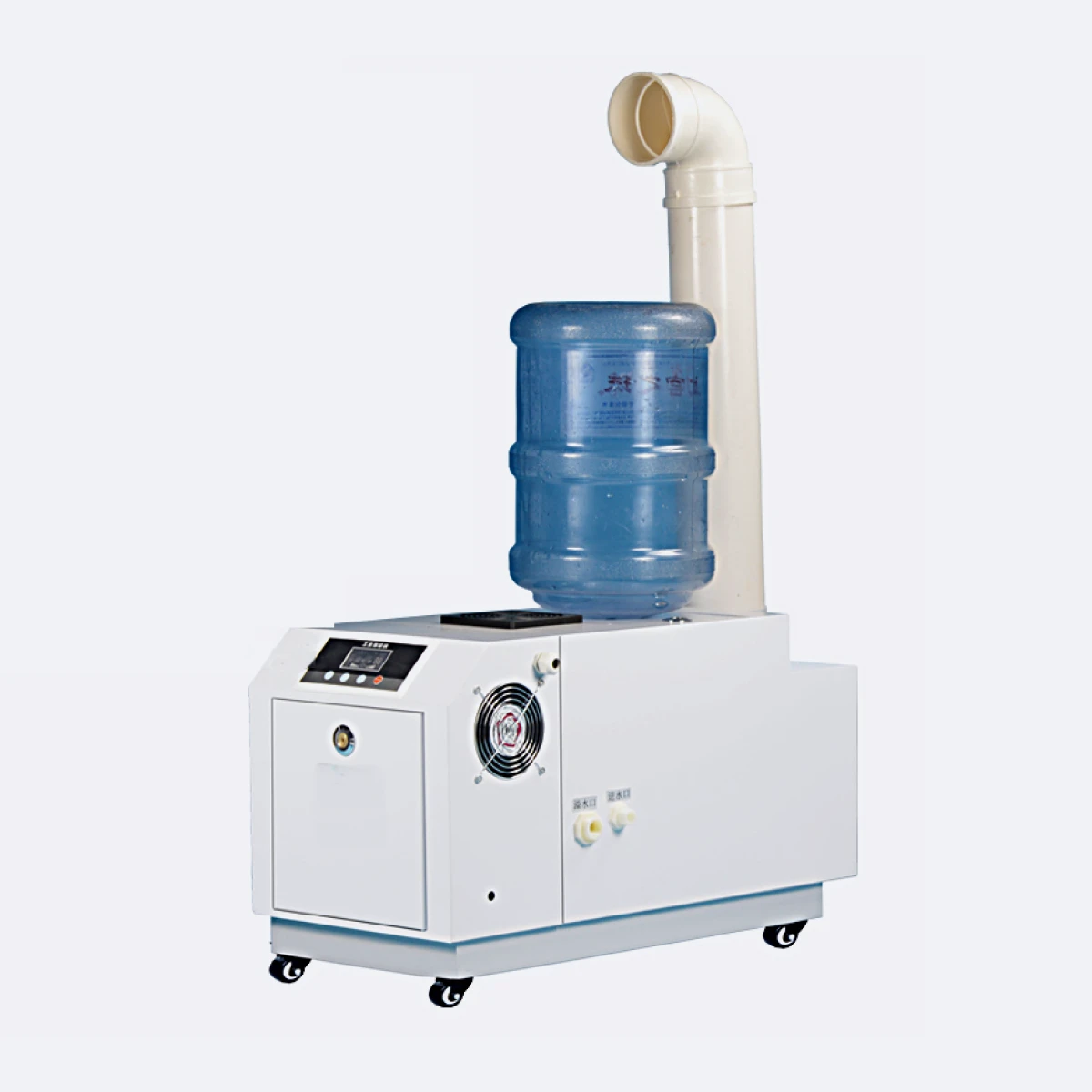
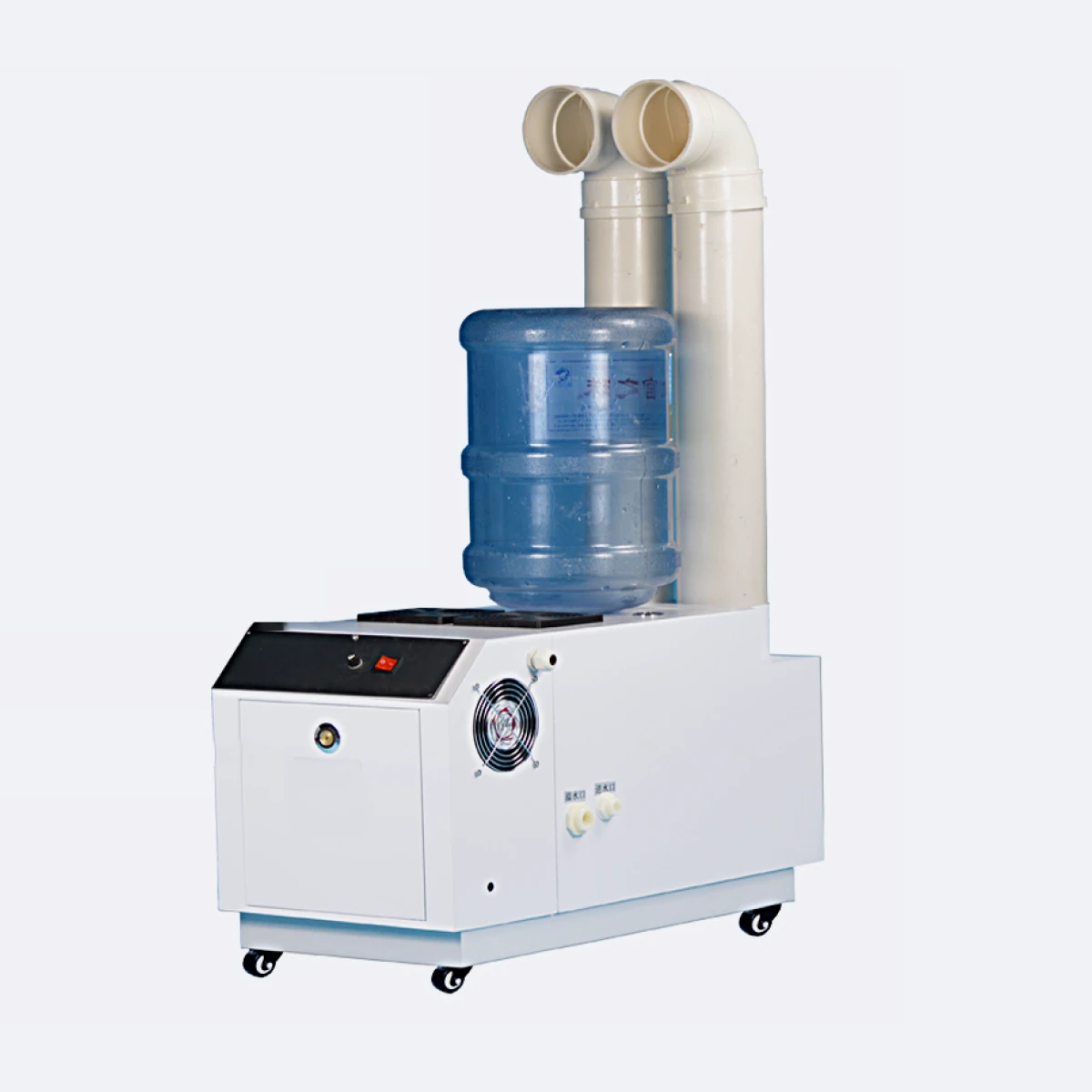
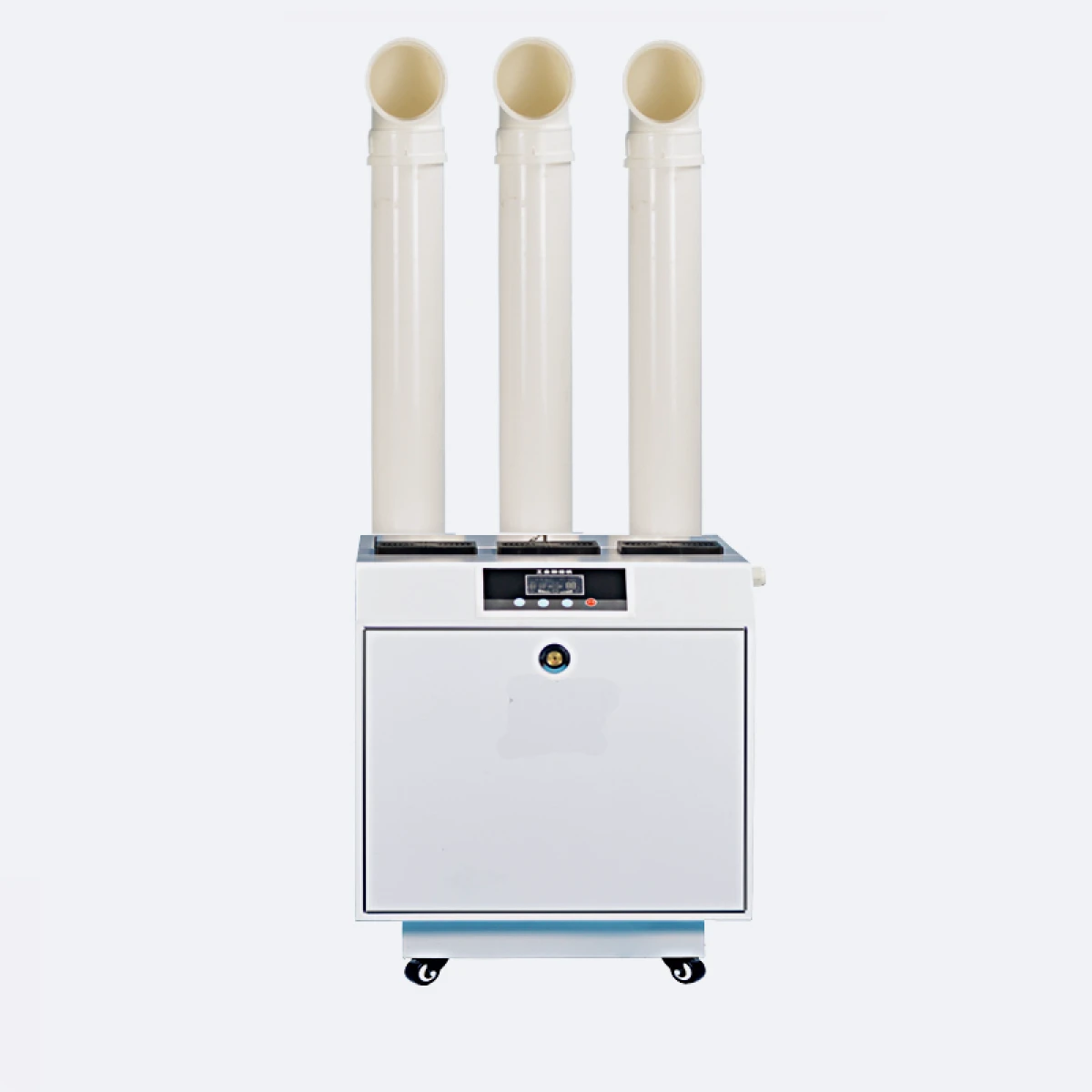
Option 1 — UH-DS Commercial Ultrasonic Humidifier for Individual Production Zones

For individual electronics production zones, SMT lines, and small assembly rooms where static and low humidity threaten sensitive components, our 2-6 kg/h commercial tier provides precise, non-wetting humidification:

Ultrasonic atomization produces 0.5-5 micron droplets that evaporate in the air before settling on surfaces — critical in electronics manufacturing, where surface moisture on PCBs, components, or solder paste is unacceptable. The mist raises ambient humidity uniformly without depositing water on workpieces or ESD-sensitive materials. DI or RO water is mandatory to prevent mineral contamination.

UH-DS-02E

UH-DS-02E
Capacity (kg/h):2

Machine Dimensions (mm): 540 × 250 × 320

Power:220V/50Hz

view details

UH-DS-03E

UH-DS-03E
Capacity (kg/h):3

Machine Dimensions (mm): 690 × 340 × 400

Power:220V/50Hz

view details

UH-DS-06E

UH-DS-06E
Capacity (kg/h):6

Machine Dimensions (mm): 730 × 340 × 400

Power:220V/50Hz

view details

Option 2 — UH-DS Industrial Ultrasonic Humidifier for Large Production Halls

For large electronics production halls and semiconductor assembly floors, this 9-12 kg/h tier maintains stable RH across the whole footprint — or distributes as multiple units for even coverage:

Same non-wetting 0.5-5 micron atomization scaled up to 9-12 kg/h output, with sealed atomization core and automatic dry-burn protection. For very large halls, deploy multiple distributed units rather than a single large one in a corner.

UH-DS-09E

UH-DS-09E
Humidification Capacity (kg/h):9
Atomizing Particles (μm) :0.5-5
Power:220V / 50Hz

view details

UH-DS-12E

UH-DS-12E
Humidification Capacity (kg/h):12
Atomizing Particles (μm):0.5-5
Power:220V / 50Hz

view details

Option 3 — UH-DS Heavy-Duty Ultrasonic Humidifier for Multi-Line Semiconductor Facilities

For multi-line semiconductor fabs and large electronics campuses where a single production hall exceeds the capacity of the 9-12 kg/h tier, or where multiple halls share a distributed ultrasonic humidification system:

Same 0.5-5 micron non-wetting atomization scaled to 15-21 kg/h with waterproof sealed atomization core, low energy consumption per kg of output, intelligent control with overload and dry-burn protection. Supports fixed, mobile, or pipeline installation for distributed deployment across multi-hall facilities.

UH-DS-15E

UH-DS-15E
Capacity (Kg/h):15
Atomizing Particles (μm): 0.5-5
Power:220V/50Hz

view details

UH-DS-18E

UH-DS-18E
Capacity (Kg/h):18
Atomizing Particles (μm): 0.5-5
Power:220V/50Hz

view details

UH-DS-21E

UH-DS-21E
Capacity (Kg/h):21
Atomizing Particles (μm): 0.5-5
Power:220V/50Hz

view details

Recommended Humidity Levels by Electronics Production Zone

Not every area of an electronics factory needs the same humidity. The table below maps each production zone to its recommended RH range, the primary concern driving that range, and the reference standard. These ranges represent the overlap between ESD prevention (minimum ~40% RH) and moisture sensitivity limits (maximum ~55–60% depending on process).


Production ZoneRecommended RHPrimary ConcernReference Standard
SMT / reflow line40–55%Solder paste moisture; ESDIPC-A-610; J-STD-033
Hand soldering / rework45–60%Operator ESD risk; component handlingANSI/ESD S20.20
Wave soldering40–55%Flux activation; moisture in solder potIPC-A-610
PCB bare board handling40–55%ESD; oxidation of copper tracesIPC-A-610; IEC 61340
Component storage (non-MSD)40–50%Oxidation prevention; static safetyANSI/ESD S20.20
Component storage (MSD)Dry cabinet (<5% RH) or controlled exposurePopcorning preventionJ-STD-033
Incoming inspection / test45–55%Frequent handling; ESD during unpackingANSI/ESD S20.20
Semiconductor die attach / wire bond40–50%ESD; bond pad oxidationSEMI standards
Conformal coating / potting30–45%Coating cure performanceMaterial TDS
Final assembly / box build40–55%ESD during system integrationANSI/ESD S20.20
Cleanroom (Class 100K / ISO 8)40–55%Particle behavior; ESDISO 14644; SEMI


Matching Humidifier Capacity to Electronics Facility Zones

Capacity depends on zone area, ceiling height, HVAC air-change rate, and local climate. The four representative zones below show typical model selection; a 200 m² PCB assembly hall with standard HVAC in a moderate climate typically needs 6–12 kg/h.
01

Single SMT Line

50–150 m² · 40–55% RH

UH-DS-03E to UH-DS-06E — place upstream of reflow oven

02

PCB Assembly Hall (multi-line)

200–800 m² · 40–55% RH

UH-DS-09E to UH-DS-15E or multiple smaller units distributed across the floor

03

Component Warehouse

100–500 m² · 40–50% RH

UH-DS-06E to UH-DS-12E — supplement dry cabinets for MSDs

04

Cleanroom (ISO 7–8)

50–300 m² · 40–55% RH

UH-DS-06E to UH-DS-12E — DI water mandatory; coordinate with HVAC

Key considerations for electronics humidification:

Four factors determine whether an electronics humidification system protects production reliably: water quality, non-wetting delivery, its correct role within the ESD program, and compliance logging.
DI or RO water is mandatory — atomized tap-water minerals deposit on PCBs and cause dendritic growth and electrochemical migration.
0.5–5 micron non-wetting mist evaporates in the air before settling, raising ambient RH without wetting boards, components, or solder paste.
Humidity is one layer of an ANSI/ESD S20.20 program — it lowers facility-wide charge generation but does not replace grounding, ionizers, or wrist straps.
Log humidity continuously at workstation height (≈1 m) per zone, with ±5% RH alarms, to demonstrate ESD-control-plan compliance.

Need a Sizing Calculation for Your Greenhouse?

Send us your greenhouse dimensions, cultivation stage, target humidity, and operating temperature. Our engineering team will recommend the right SHISHUO model and capacity.

Request Sizing Download Catalog amy@shishuodehu.com

Deployment Notes for Electronics Manufacturing Environments

Placement Within the ESD Protected Area

Position the humidifier inside the EPA but away from open component trays, bare PCBs, and solder paste stencils. The 0.5–5 micron mist evaporates before settling, but keep 1.5–2 m clearance from any ESD-sensitive workpiece. Place it where the air handling system distributes humidified air across the zone; with laminar/HEPA supply, position downstream of the diffusers so mist is carried across the work area.

HVAC & Cleanroom Integration

Where a zone has dedicated humidity-controlled HVAC, the UH-DS serves as supplemental or zone-level correction near dry spots — beside reflow ovens or wave solder machines, or in high-air-change zones the central system cannot keep up with. Set the UH-DS target 2–3% below the HVAC set-point so it supplements without conflicting with the building system.

Water Quality — DI Mandatory

Ultrasonic units atomize everything dissolved in the water. Tap-water calcium, magnesium, silica, and chloride deposit as micro-particles that promote dendritic growth, electrochemical migration, and corrosion on assemblies — the very defects humidity control is meant to prevent. Feed the UH-DS exclusively with DI or RO water; branch from an existing DI supply if available.

Monitoring & Maintenance

Install calibrated sensors at workstation height (≈1 m), not at ceiling level. Automatic mode cycles to the set-point; for critical zones (die attach, cleanroom) pair with an external ±1–2% RH controller in manual mode. Log continuously per ANSI/ESD S20.20. Clean the basin weekly (sanitize with IPA in cleanrooms), replace atomization plates at 3,500–5,000 h, and inspect the mist outlet monthly.

Frequently Asked Questions

What is the ideal humidity for electronics manufacturing?

The industry-standard target is 40–60% RH, with most facilities aiming for 45–55% as a tighter operational band. This range balances ESD prevention (minimum ~40%) against moisture-related risks like component corrosion and solder defects (maximum ~60%). Standards from ANSI/ESD S20.20, IEC 61340, and NASA guidelines converge on this window. Specific zones like conformal coating may require lower humidity (30–45%), while hand-soldering stations with high operator handling benefit from the upper end of the range.

Will the humidifier deposit moisture on PCBs or components?

No. The SHISHUO UH-DS series produces 0.5–5 micron droplets that evaporate in the ambient air before they can settle on surfaces. The humidifier raises the moisture content of the air, not of the product. Maintain a clearance of 1.5–2 meters between the mist outlet and the nearest open workpiece, and use DI water to prevent any mineral residue. Under these conditions, no surface wetting or contamination occurs.

Can I use tap water in an electronics production humidifier?

No. Tap water contains dissolved minerals (calcium, magnesium, silica, chlorides) that are atomized into the air and deposited as micro-particles on surfaces. In electronics manufacturing, these residues cause contamination, dendritic growth, and electrochemical migration on PCBs. Use deionized (DI) or reverse osmosis (RO) water exclusively. This is a mandatory requirement for electronics applications, not a recommendation.

Does humidity control replace ionizers and wrist straps for ESD prevention?

No. Humidity is one layer of a multi-layer ESD control program defined by ANSI/ESD S20.20. Grounding (wrist straps, heel grounders, conductive flooring), ionization, ESD packaging, and personal protective equipment are all still required. What humidity control does is lower the rate at which electrostatic charge is generated across the entire facility, making all other ESD controls more effective and providing a safety margin for lapses in discipline.

How do I size a humidifier for my PCB assembly floor?

Start with the floor area and ceiling height to determine the air volume. Factor in the HVAC air-change rate (which continuously removes humidified air and replaces it with drier supply air) and the local climate (dry climates require more humidification capacity). As a starting point: a 200 m² PCB assembly hall with standard HVAC in a moderate climate typically needs 6–12 kg/h of humidification capacity. Send us your floor plan and HVAC details for a specific recommendation.

Can the humidifier be used inside a cleanroom?

Yes, with precautions. Use DI water exclusively to prevent particulate contamination. Position the unit so the mist disperses with the cleanroom's airflow pattern, not against it. Coordinate the humidifier's set-point with the cleanroom HVAC to avoid conflicting humidity control loops. In higher-class cleanrooms (ISO 5–6), humidification is typically integrated into the air handling unit itself. The UH-DS is most commonly used as supplemental zone-level control in ISO 7–8 cleanrooms.

How do I log humidity data for ESD program compliance?

The UH-DS includes automatic humidity control with a built-in sensor. For compliance logging per ANSI/ESD S20.20, install calibrated humidity data loggers at representative locations in each EPA zone. Record data continuously and review weekly. Set alarms at ±5% RH of your target set-point. If humidity drops below 40% or exceeds 60%, the log provides evidence to trigger corrective action.

Do SHISHUO humidifiers support OEM and ODM?

Yes. We support OEM branding and ODM modifications including voltage adaptation, control system integration (4–20 mA or RS485 output for BMS connection), custom cabinet materials or colors, and capacity adjustments. Contact our team with your specifications.

Get the Right Climate Control
Solution for Your Application

We support industrial temperature and humidity control projects with clear specifications, stable equipment, and practical system advice. Share your application details and capacity requirements—our team will respond with a suitable solution and quotation.

Get a Quick Quote

Amy

General Manager