
Search

Enter keywords to search for products, blog posts, and more.

Data Center Cooling & Humidity Control — Precision Air Conditioners, Constant Temperature-and-Humidity Units and Desiccant Dehumidifiers for Server Rooms and IT Facilities

Data Center Cooling & Humidity Control — Precision Air Conditioners, Constant Temperature-and-Humidity Units and Desiccant Dehumidifiers for Server Rooms and IT Facilities


Why a Data Center Controls Temperature and Humidity Together

A server room is defined by two limits at once: the heat its equipment generates, and the humidity band that equipment tolerates. ASHRAE TC 9.9 sets the recommended envelope at 18–27°C and 40–60% RH, dew point 5–15°C. Miss the temperature and servers throttle, error, or shut down; miss the humidity and you get one of two failures. This is why data-center environmental control isn't just cooling — it's coordinated temperature and moisture control, and it matters three ways:

Too Humid Causes Condensation and Corrosion

When humidity is too high, moisture condenses on cold components and inside connectors, causing electrical shorts, corrosion of contacts and traces, and creeping hardware failure. It's worst where cool supply air meets warm surfaces, in below-grade rooms, and in humid seasons when outside air infiltrates. Removing that moisture — holding the room below the condensation point — protects the hardware before a fault appears.

Too Dry Causes Static Discharge

When humidity is too low, static electricity builds and discharges (ESD) through boards and drives as staff move and handle equipment, degrading or destroying components. This is why ASHRAE sets a lower humidity limit even though modern equipment tolerates a wide band: the room, its staff, and its door traffic all introduce static risk that steady humidity control suppresses.

The Right Equipment Holds Both, and Handles Dehumidification

A precision air conditioner holds temperature and humidity together as its normal job. But dehumidification is the hard part — at the high chilled-water and air temperatures data centers now run for efficiency, a cooling coil removes little moisture, so humid seasons and below-grade rooms can drift wet. That's where a desiccant dehumidifier comes in, handling the moisture removal a precision unit can't. Matching the equipment to the room is what keeps both limits held.

SHISHUO Equipment for Data Center and Server Room Environments

Three platforms cover a data center's environmental control, organized by what the room needs held. Precision air conditioners are the core — they remove the sensible heat servers generate while holding temperature and humidity in one coordinated, self-diagnosing system, for data centers, server rooms, telecom rooms, and UPS rooms. Constant temperature-and-humidity units lock both temperature and RH to a tight set point for rooms that need it. Rotary desiccant dehumidifiers handle the dehumidification a precision unit can't — low dew point, humid seasons, and below-grade or cool rooms where a cooling coil removes little moisture. All run 24/7 with continuous drainage and support OEM/ODM.

Option 1 — HSJ Precision Air Conditioner for Server Rooms & IT Facilities

For server rooms, telecom rooms, and UPS rooms needing to hold ASHRAE TC9.9 targets (18-27°C, 40-60% RH, 5-15°C dew point) year-round — where comfort AC simply isn't built for the load:

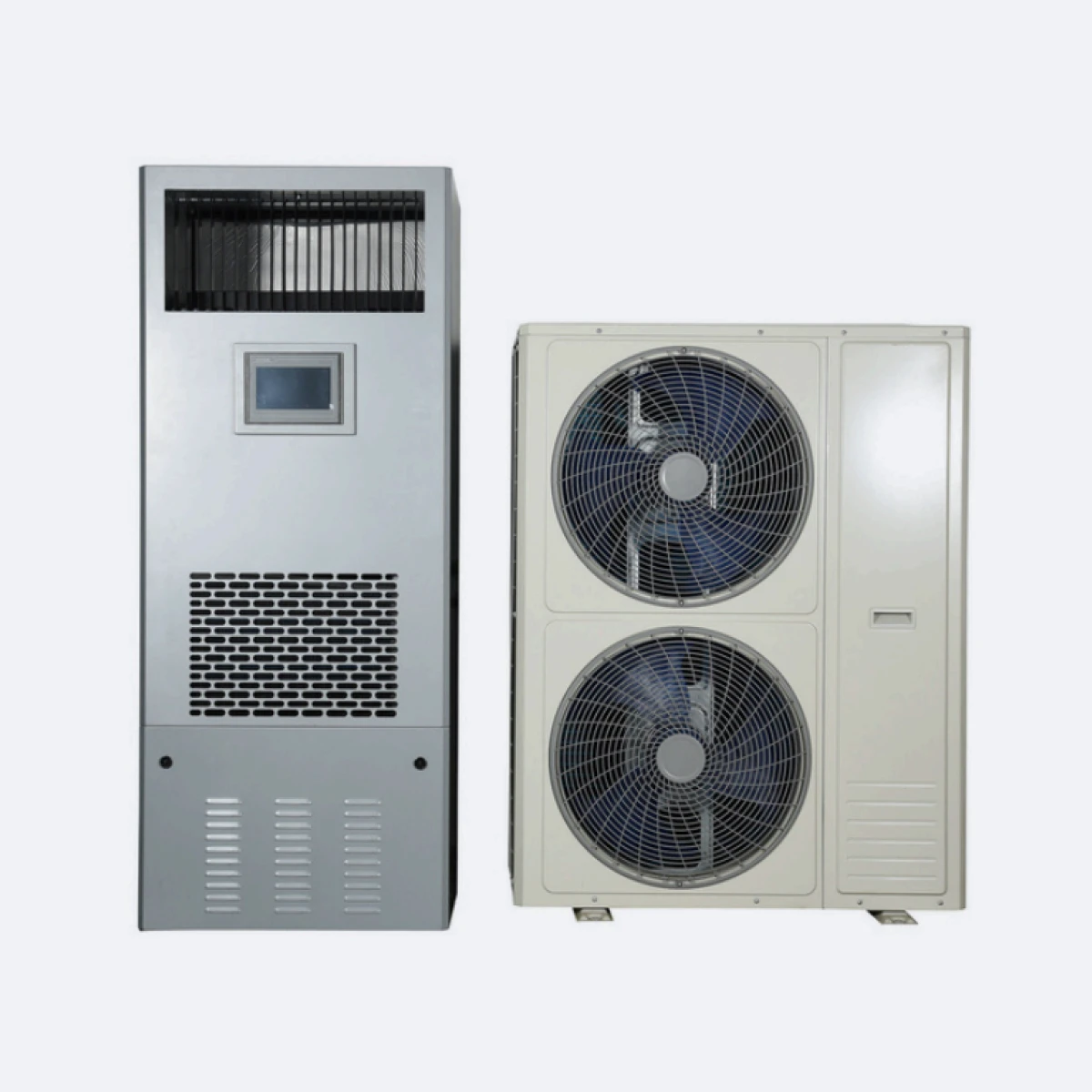
The core cooling platform for a data center — removes the concentrated, year-round sensible heat that racked equipment generates while holding temperature and humidity in one coordinated system. CPU smart control with self-diagnosis and power-off memory, imported sensors for real-time temperature/humidity monitoring, copper heat exchanger, auto defrost/drainage/overflow protection. Built for 24/7 unattended operation with continuous drainage; CE, ETL, and RoHS certified.

HSJ-03

HSJ-03
Cooling Capacity (kW): 2
Coverage Area:10–15 m²
Power:220V/50Hz

view details

HSJ-20

HSJ-20
Cooling Capacity (kW): 12
Coverage Area:60–80 m²
Power:380V/50Hz 3-Phase 5-Wire

view details

HSJ-60

HSJ-60
Cooling Capacity (kW) :32
Coverage Area:200–240 m²
Power:380V/50Hz 3-Phase 5-Wire

view details

Option 2 — DXHW Constant Temperature-and-Humidity Unit for Precision IT Rooms

For rooms that must hold both temperature and humidity tighter than a standard precision AC — high-density compute rooms, network cores, financial trading floors, and mission-critical control rooms:

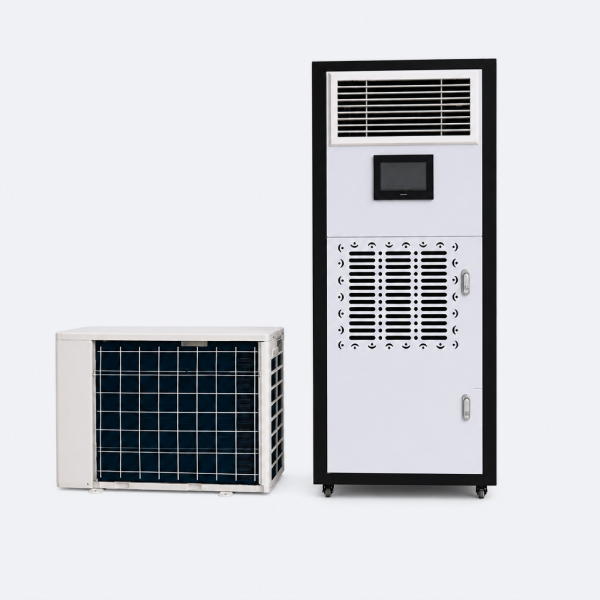
PLC intelligent system with 7-inch touchscreen — locks both temperature AND humidity to tight simultaneous set points, not just one or the other. Ceiling-concealed ducted or floor-standing vertical configurations available; industrial-grade components rated for continuous 24/7 operation. Continuous drainage, OEM/ODM support.

DXHW-9

DXHW-9
Capacity (L/day):288
Cooling Capacity (kW):9
Power:380V / 50Hz

view details

DXHW-25

DXHW-25
Capacity (L/day):480
Cooling Capacity (kW):25
Power:380V / 50Hz

view details

DXHW-70

DXHW-70
Capacity (L/day):720
Cooling Capacity (kW):70
Power:380V / 50Hz

view details

Option 3 — XR Rotary Desiccant Dehumidifier for Low-Dew-Point & Cool IT Rooms

Where a precision AC can't pull enough moisture out on its own — high chilled-water temperatures, humid seasons, or below-grade server rooms — this desiccant tier handles the dehumidification the compressor struggles with:

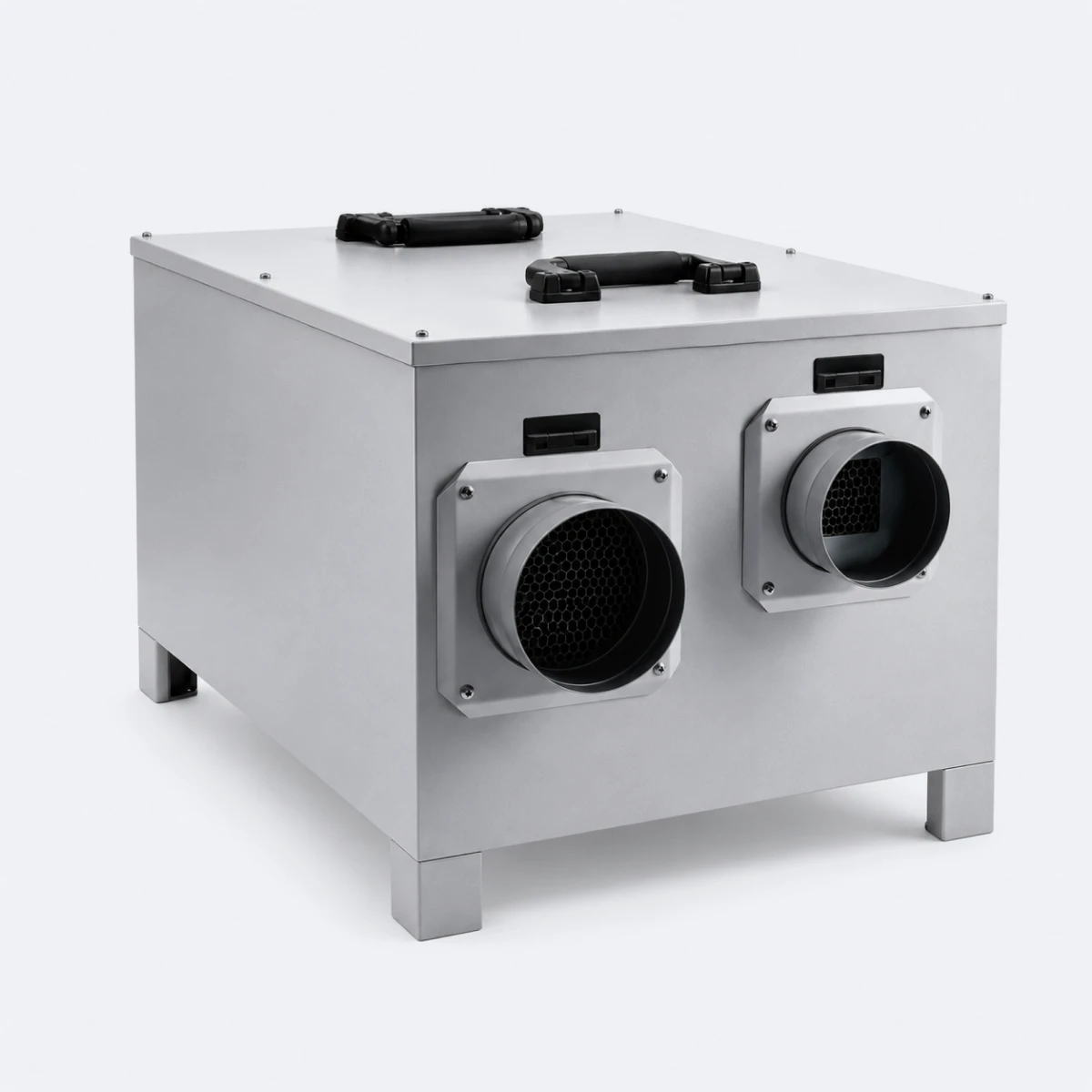
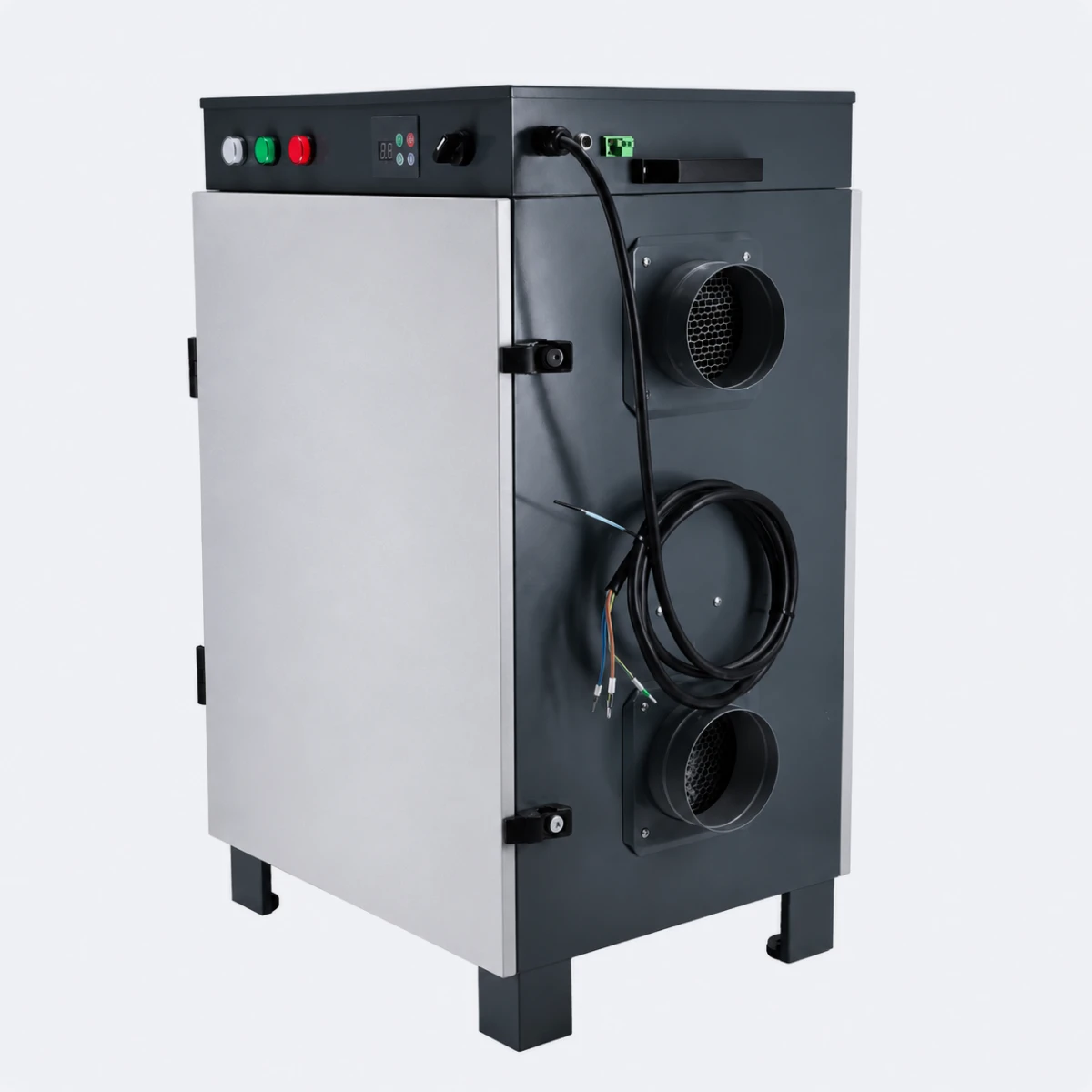
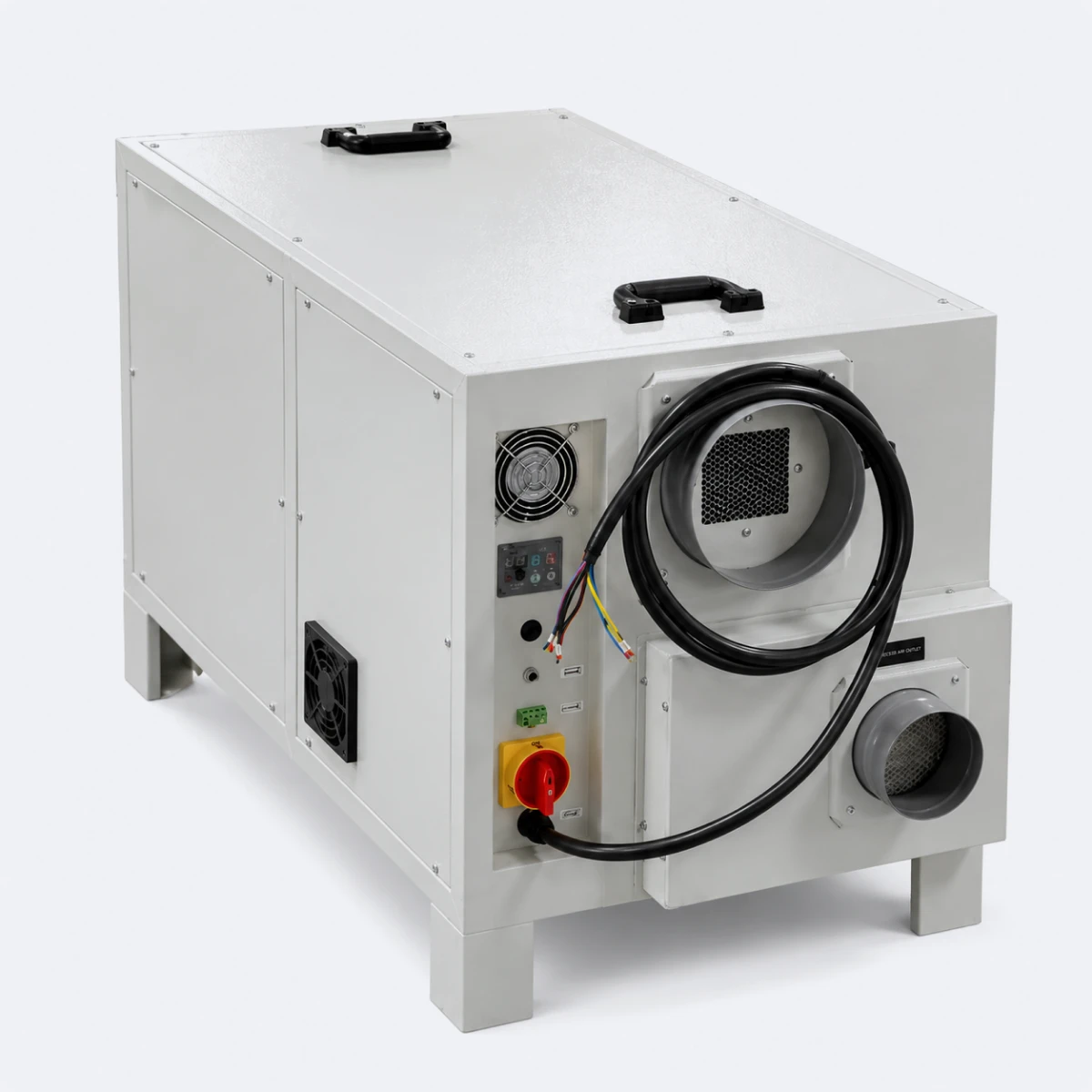
For the low-dew-point and cold-room dehumidification a compressor unit can't reach — a rotary desiccant adsorbs moisture on a fire-resistant rotor rated for -20°C to 50°C, holding humidity from 5% to 95% RH under fully automatic control. RS-485 Modbus and DI signal for BMS integration.

XR-350-02

XR-350-02
Capacity (Kg/h):2.5
Airflow:400 m³/h
Power:220V / 3Ph / 50Hz

view details

XR-600XF-01

XR-600XF-01
Capacity (Kg/h):3
Airflow:600 m³/h
Power:220V / 3Ph / 50Hz

view details

XR-750XF-01

XR-750XF-01
Capacity (Kg/h):4.5
Airflow:750 m³/h
Power:380V / 3Ph / 50Hz

view details

Matching Equipment to Data Center Facility Type

The right equipment depends on the room's heat load, its humidity risk, and its layout. The table below maps common data-center and IT facility types to the recommended platform. The precision air conditioner is the core in almost every room; a desiccant dehumidifier is added where dehumidification is the challenge; a constant temperature-and-humidity unit is used where both must be locked tightly. An integrated humidifier-and-dehumidifier unit is an option where a single room swings between too-dry and too-humid across seasons.


Facility TypePrimary ChallengeRecommended Equipment
Enterprise data center / server roomHigh sensible heat, hold temp + RH 24/7HSJ precision air conditioner
Colocation / high-density hallConcentrated heat load, tight toleranceHSJ precision A/C, multiple units
Room needing both temp + RH lockedPrecise set point, not just a bandDXHW constant temp & humidity unit
Below-grade / basement server roomGround moisture, condensation, high RHPrecision A/C + XR desiccant dehumidifier
Edge / telecom site, humid climateHumid-season infiltration, dehumidificationPrecision A/C + XR desiccant dehumidifier
UPS & battery roomTemperature and humidity limits for batteriesHSJ precision A/C, or DXHW unit
Room swinging dry ↔ humid by seasonBoth under- and over-humidity across the yearIntegrated humidifier-and-dehumidifier unit


When Does a Data Center Need Added Humidity Control?

Modern IT equipment tolerates a wide humidity band, so in a sealed, stable room a precision air conditioner alone often holds everything within limits. Added equipment is specified when the room's conditions push beyond what the cooling can correct on its own. The four cases below show when a dedicated dehumidifier or a combined unit earns its place.
01

Humid Climate or Season

Humid climate or season

In coastal or monsoon regions, outside air infiltrating through doors and gaps carries enough moisture to push a room above its humidity limit, and a precision coil at efficient temperatures removes little of it. A XR desiccant dehumidifier handles the moisture removal, holding the room below the condensation point through the humid season.

02

Below-Grade or Basement Room

Below-grade or basement server room

Rooms below grade take on ground moisture and sit cooler, so humidity climbs and a cooling coil struggles to dehumidify. A XR desiccant unit holds a low, stable RH regardless of temperature, stopping condensation on equipment and structure that a precision unit alone can miss.

03

High-Efficiency Cooling at High Coil Temperatures

High-efficiency cooling at high coil temperatures

Data centers run high chilled-water and air temperatures for efficiency and free cooling, which is good for energy but means the coil does almost no dehumidification. When the room still needs moisture removed, a desiccant dehumidifier does it without fighting the cooling strategy.

04

Room That Also Runs Too Dry

Room that also runs too dry

Where a room swings between too-dry (static risk) in one season and too-humid in another, an integrated humidifier-and-dehumidifier unit handles both directions in one system, or a DXHW constant temperature-and-humidity unit holds a fixed set point year-round.

Key Considerations for Data Center Environmental Control

Four things set the specification: hold the ASHRAE envelope, treat dehumidification as the hard part, build in redundancy and monitoring, and plan around the room's cooling architecture.
Hold the ASHRAE envelope — 18–27°C and 40–60% RH, dew point 5–15°C, keeps equipment reliable and energy efficient. A precision air conditioner holds this as its core function; added equipment is specified where the room drifts outside what the cooling can correct.
Treat dehumidification as the hard part — at the high coil temperatures data centers run for efficiency, cooling removes little moisture, so humid seasons and below-grade rooms need a desiccant dehumidifier to hold the humidity limit. This is the moisture problem most cooling-only designs miss.
Build in redundancy and monitoring — equipment runs 24/7, so units carry self-diagnosis, fault and overflow protection, and power-off memory, and tie into a facility BMS for real-time temperature and humidity logging and remote alarms. Multiple units give the redundancy uptime requires.
Plan around the cooling architecture — raised-floor rooms suit concealed and ducted units that preserve floor space, high-density halls need units placed for the heat load, and the humidity equipment should support, not fight, the room's free-cooling and chilled-water strategy.

Need a Sizing Calculation for Your Greenhouse?

Send us your greenhouse dimensions, cultivation stage, target humidity, and operating temperature. Our engineering team will recommend the right SHISHUO model and capacity.

Request Sizing Download Catalog amy@shishuodehu.com

Deployment Notes for Data Center and Server Room Environments

Placement and Airflow

Place cooling to match the heat load — hot-aisle/cold-aisle layouts, units positioned so cold supply air reaches rack inlets and hot exhaust returns cleanly. Desiccant dehumidifiers are placed to treat the rooms and zones where humidity drifts, especially below-grade areas and door and infiltration points.

Redundancy and Continuous Operation

Equipment runs continuously, so size for redundancy — multiple units so a single failure or a service window doesn't leave the room unprotected. Units carry self-diagnosis, automatic fault and overflow protection, and power-off memory so they restart to their set point after an outage.

Drainage and Raised-Floor Rooms

All units support continuous drainage for unattended running. In raised-floor server rooms, concealed and ceiling-mounted units preserve the floor space below, and drainage and ducting route through the plenum; plan condensate routing so it can't pool or back up.

Monitoring and BMS Integration

Tie equipment into the facility BMS for real-time temperature and humidity logging, remote alarms, and coordinated control across units. Continuous monitoring catches a drift toward a humidity or temperature limit before it reaches the equipment, and gives the verifiable environmental record a data center's SLAs and audits require.

Frequently Asked Questions

What temperature and humidity should a data center maintain?

Follow ASHRAE TC 9.9: 18–27°C and 40–60% RH, with a dew point between 5°C and 15°C. Within that envelope, equipment runs reliably and efficiently; the allowable range is wider (RH roughly 20–80%), but the recommended band gives margin against both condensation at the high end and static discharge at the low end. A precision air conditioner holds temperature and humidity to this envelope as its core function, and monitoring by dew point rather than RH avoids false swings from temperature gradients.

Why isn't comfort air conditioning enough for a server room?

Comfort air conditioning is built for people, not for the concentrated, round-the-clock heat load of racked servers or for holding humidity to a set point. It cycles on temperature alone and can't maintain the tight, stable conditions IT equipment needs. A precision air conditioner is designed for the sensible heat load servers generate and holds temperature and humidity together in one coordinated, self-diagnosing system built for continuous 24/7 duty.

Does my data center need a separate dehumidifier?

Not always. Modern equipment tolerates a wide humidity band, so a sealed, stable room with a precision air conditioner often holds everything within limits on its own. A separate dehumidifier is specified when the room drifts above its humidity limit in ways the cooling can't correct — humid climates and seasons, below-grade and basement rooms, and high-efficiency cooling at coil temperatures too high to remove moisture. In those cases a rotary desiccant dehumidifier handles the dehumidification.

Why is dehumidification the hard part in a data center?

Because the way data centers cool for efficiency works against moisture removal. To save energy and use free cooling, they run high chilled-water and air temperatures — but a cooling coil only removes moisture when it's cold enough to condense it, so at high temperatures it dehumidifies very little. Humidification is easy to add; dehumidification is the difficult part. A rotary desiccant unit solves it by adsorbing moisture regardless of coil temperature, holding the humidity limit without fighting the cooling strategy.

What equipment does a below-grade or humid-climate server room need?

A precision air conditioner for the heat load, plus a rotary desiccant dehumidifier for the moisture. Below-grade rooms take on ground moisture and sit cooler; humid-climate and edge sites take on moisture through infiltration — and in both, a precision coil at efficient temperatures removes little of it. The desiccant unit holds a low, stable RH down to -20°C regardless of temperature, stopping condensation on equipment and structure that cooling alone can miss.

Can these units run 24/7 with redundancy and BMS monitoring?

Yes. Equipment is built for continuous 24/7 duty with self-diagnosis, automatic fault, defrost, drainage, and overflow protection, and power-off memory so units restart to their set point after an outage. They tie into a facility BMS for real-time temperature and humidity logging, remote alarms, and coordinated control, and multiple units give the redundancy uptime SLAs require. We design the unit count and control approach for the room's availability target.

Do SHISHUO data center units support OEM and ODM?

Yes. We support OEM branding and ODM changes: voltage adaptation (220V single-phase and 380V three-phase standard, 110V/60Hz for North America), unit configuration (floor-standing, ceiling-concealed, or ducted for raised-floor rooms), control interface and BMS protocol, redundancy layout, and custom colors and labeling. Units are built to CE, ETL, and RoHS with ISO 9001 manufacturing, and we export worldwide. Contact our team with your facility type, heat load, target conditions, and layout for a specification and quotation.

Get the Right Climate Control
Solution for Your Application

We support industrial temperature and humidity control projects with clear specifications, stable equipment, and practical system advice. Share your application details and capacity requirements—our team will respond with a suitable solution and quotation.

Get a Quick Quote

Amy

General Manager