


Search
Enter keywords to search for products, blog posts, and more.
Enter keywords to search for products, blog posts, and more.
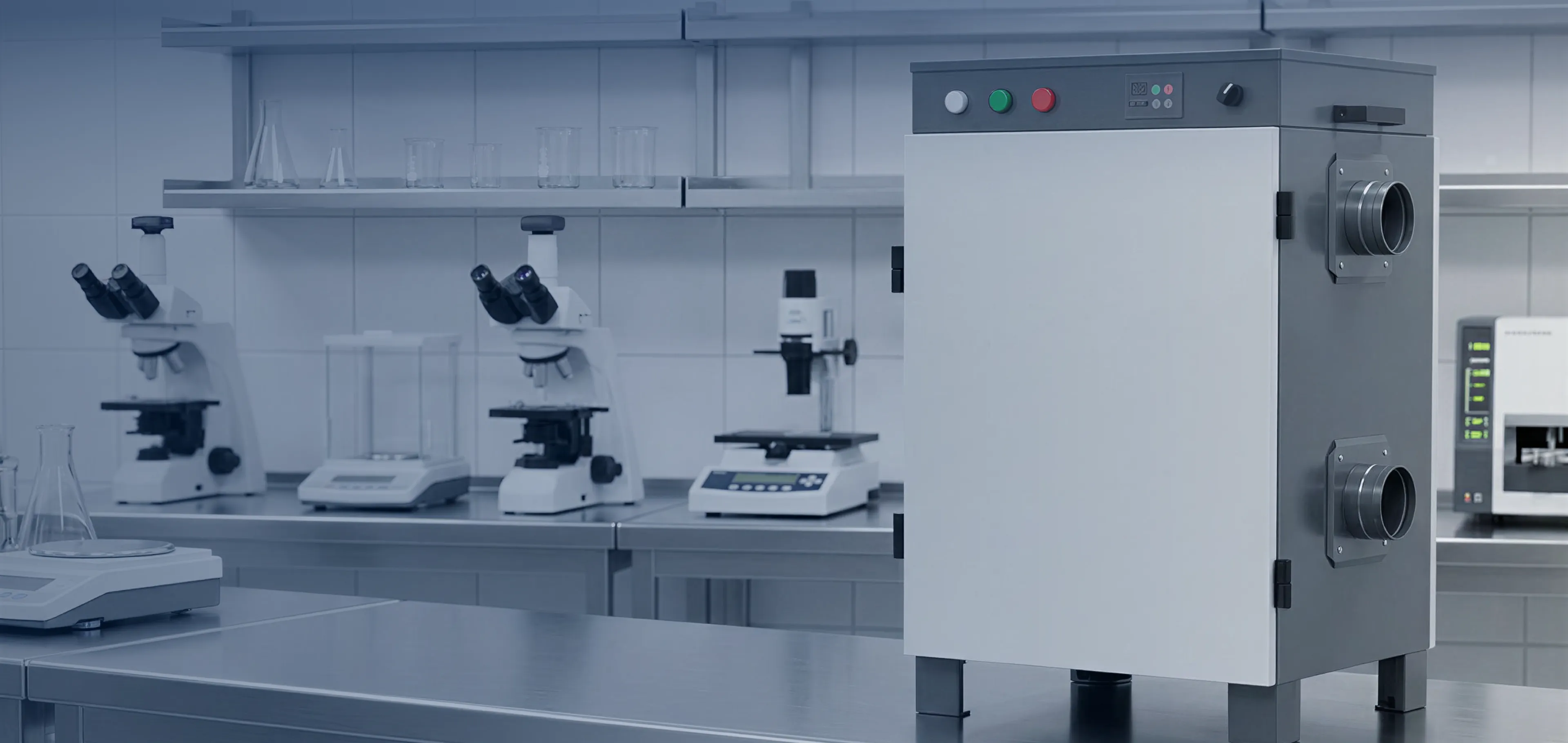




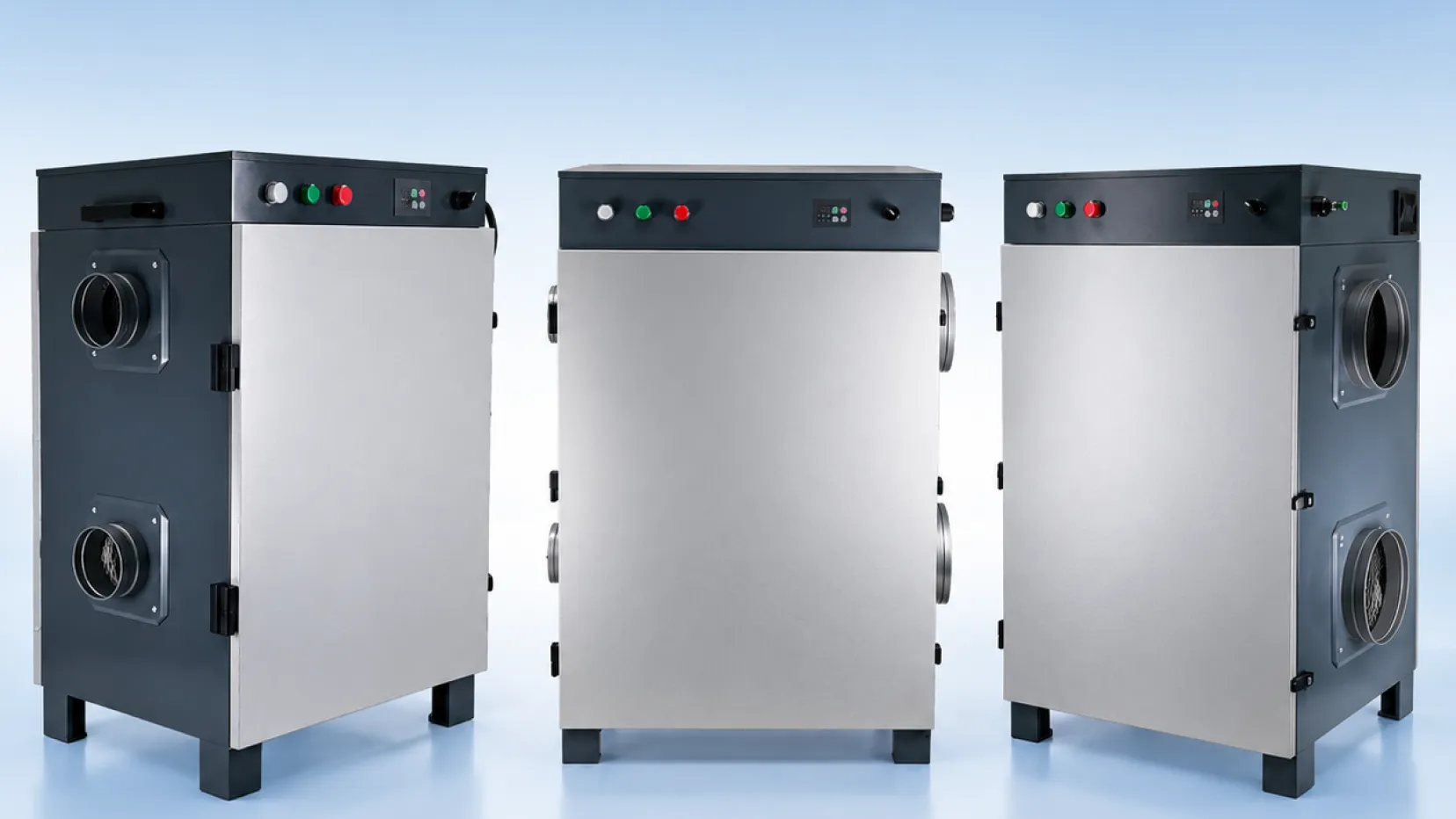
We engineer four primary configurations of desiccant dehumidification equipment, classified by extraction capacity and application scale. Navigate the series below for detailed technical specifications.
Series
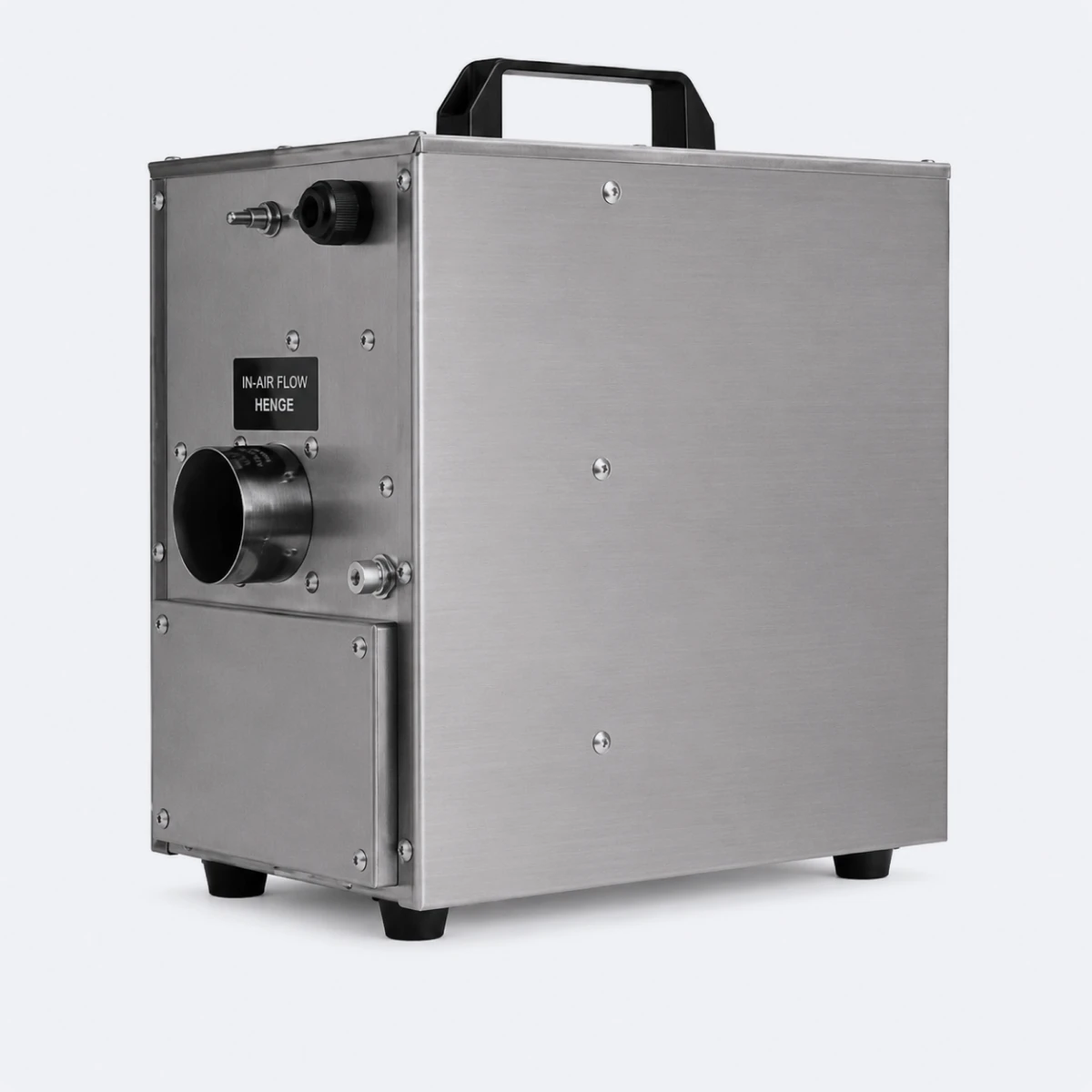
Capacity & Application
Extraction Capacity: 0.4–0.5 kg/h. Voltage: 220V. Target Applications: Cold rooms, laboratories, and specialized enclosures. Engineered for confined spaces requiring stringent moisture stabilization, this commercial unit maintains operational efficiency down to -20°C. Standard features include plug-and-play installation, G4 filtration, and a corrosion-resistant chassis. Models: XR-60XF-01 / XR-100XF-01 / XR-100XF-02.
Series
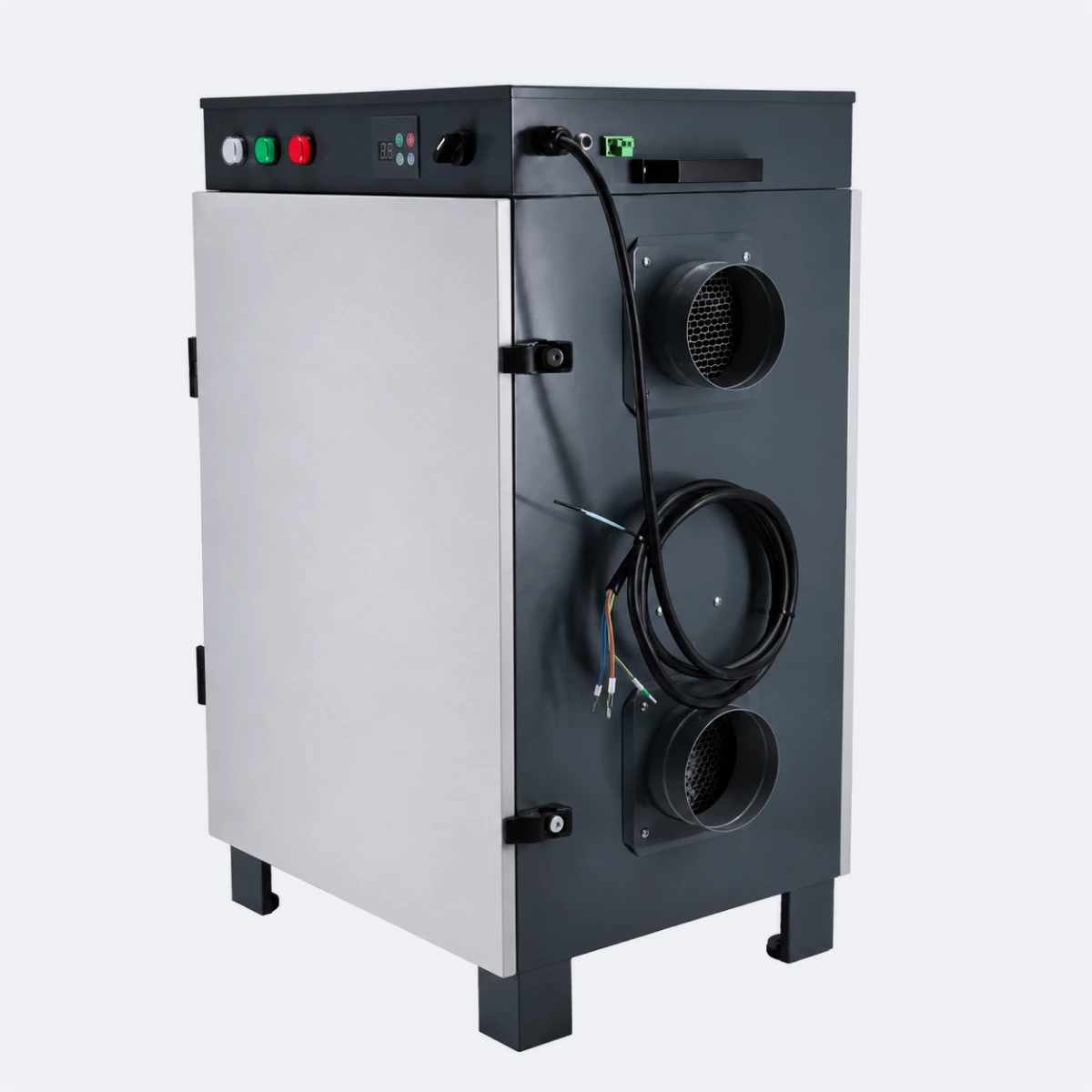
Capacity & Application
Extraction Capacity: 0.8–0.83 kg/h. Voltage: 220V. Target Applications: Archival storage, precision component warehousing, and low-temperature process rooms. This compact unit bridges commercial and industrial requirements, providing continuous deep-drying capability down to -20°C. Features include a G4 pre-filter and simplified deployment. Models: XR-200XF-01 / XR-200XF-02 / XR-200XF-03.
Series
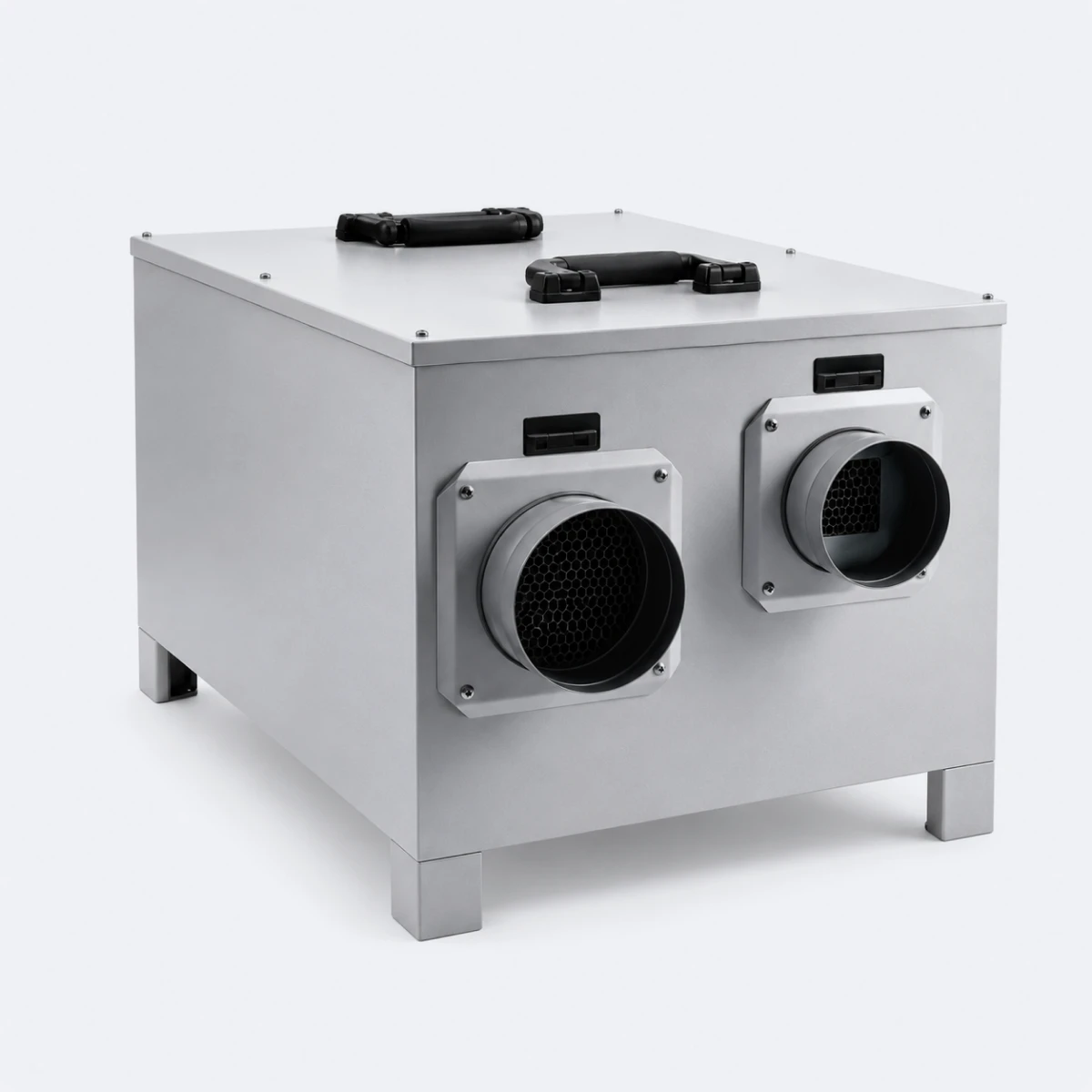
Capacity & Application
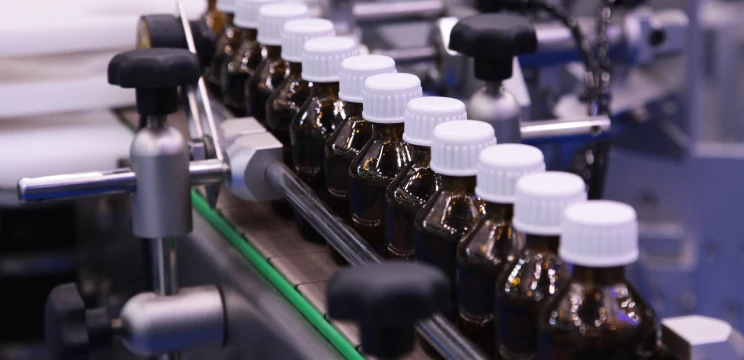
Extraction Capacity: 2.5–8 kg/h. Voltage: 220V/380V. Target Applications: Low-humidity process environments. Designed for rigorous manufacturing tolerances such as lithium battery assembly and pharmaceutical production, this industrial unit delivers continuous-duty moisture extraction down to 5% RH. Models: XR-350-02 / XR-600XF-01 / XR-1000XF-01.
Series
Capacity & Application
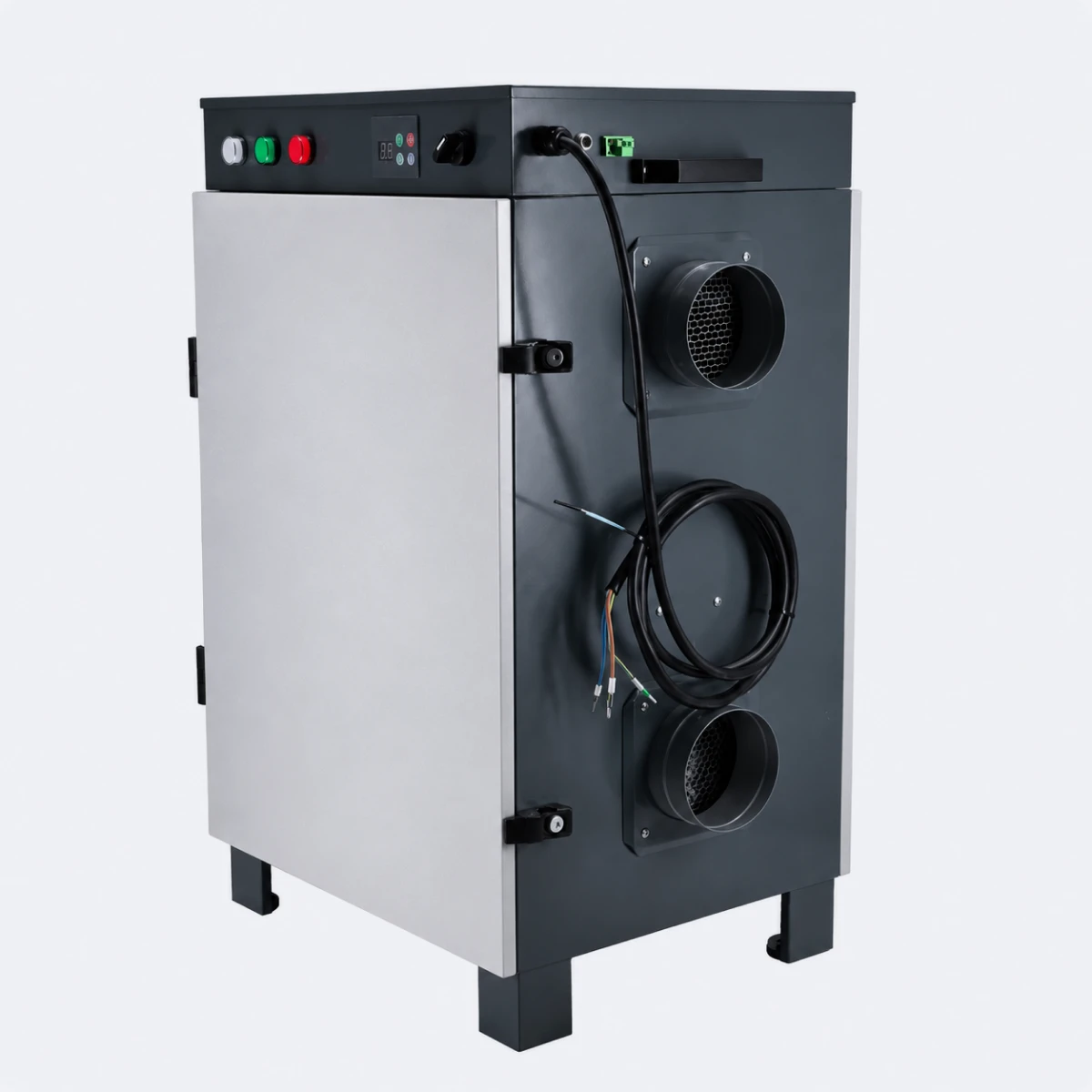
Extraction Capacity: 10–20 kg/h. Voltage: 380V. Target Applications: Warehousing and large-scale manufacturing facilities. Engineered for high-volume moisture loads, this unit provides robust humidity control down to -20°C across expansive floor plans. Standard features include G4 filtration and RS-485 Modbus connectivity for building management system (BMS) integration. Models: XR-1500XF-01 / XR-2000XF-01 / XR-3000XF-01.
• UH-DS Ultrasonic Humidifiers (2 kg/h to 30 kg/h) — Models UH-DS-02E through UH-DS-30E
• DXHW Precision Temperature & Humidity Control Units (2 kg/h to 20 kg/h) — Models DXHW-3 through DXHW-70
• DXSL Integrated Climate Control Systems (3 kg/h to 40 kg/h) — Models DXSL-60 through DXSL-480


Send us your greenhouse dimensions, cultivation stage, target humidity, and operating temperature. Our engineering team will recommend the right SHISHUO model and capacity.
Request Sizing Download Catalog amy@shishuodehu.comSwitch between the tabs below to learn more. Each tab links to a dedicated page.
Company Overview
Founded 2015 ; Jiaxing production base 2023 (Zhejiang Shishuo); R&D, production, technical service integration; Shanghai-based international sales team
LEARN MORE
Quality Inspection
Functional testing and 100% final inspection before shipment (per catalog Step 5); workshop-level inspection at heat exchanger and assembly stages
LEARN MORE
OEM & ODM Solutions
6-step customization flow per catalog: requirement analysis → solution & model selection → specification confirmation → production & assembly → testing → packaging & shipping
LEARN MORE
Certifications
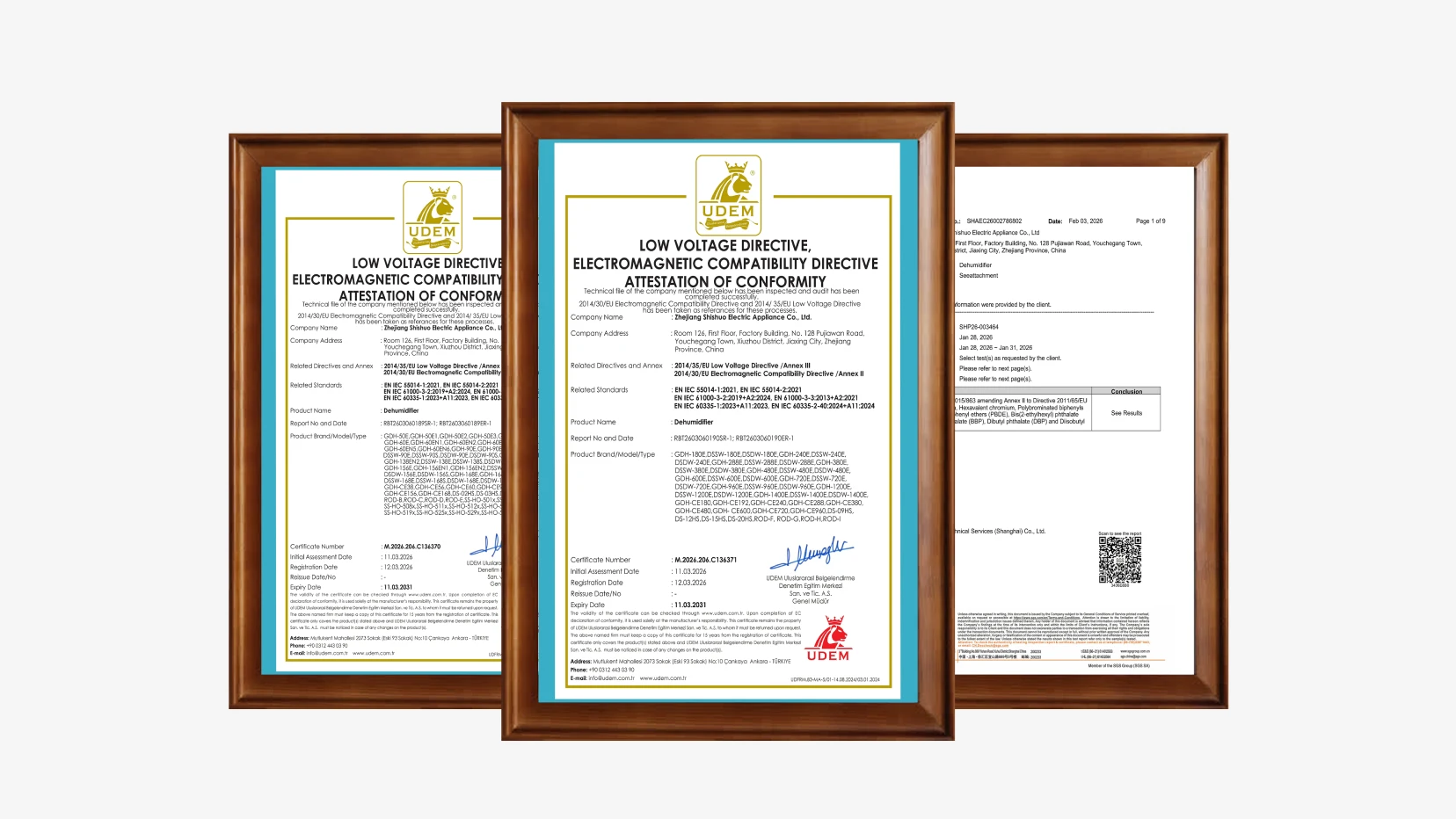
Quality, environmental, and occupational health management system certifications; product safety certifications (CCC and CE class) shown in catalog
LEARN MORE
Compressor dehumidifiers utilize refrigeration cycles to cool air below its dew point, condensing moisture; they operate effectively between 5°C and 38°C. Desiccant dehumidifiers utilize a rotating matrix impregnated with silica gel or zeolite to adsorb moisture directly from the air stream; they maintain operational efficiency below 0°C and can achieve extreme low-humidity targets (<30% RH). Compressor units are generally specified for standard commercial and warehouse applications above 15°C, while desiccant technology is mandated for cold storage, lithium battery manufacturing, and pharmaceutical processing.
Compressor dehumidifiers experience severe capacity degradation below 5°C due to rapid evaporator coil freezing, which outpaces standard defrost cycles. Below 0°C, desiccant technology is the only viable dehumidification method. In the 5°C to 15°C range, desiccant units offer superior stability. Above 15°C, compressor units are typically more energy-efficient unless the target relative humidity is below 40%.
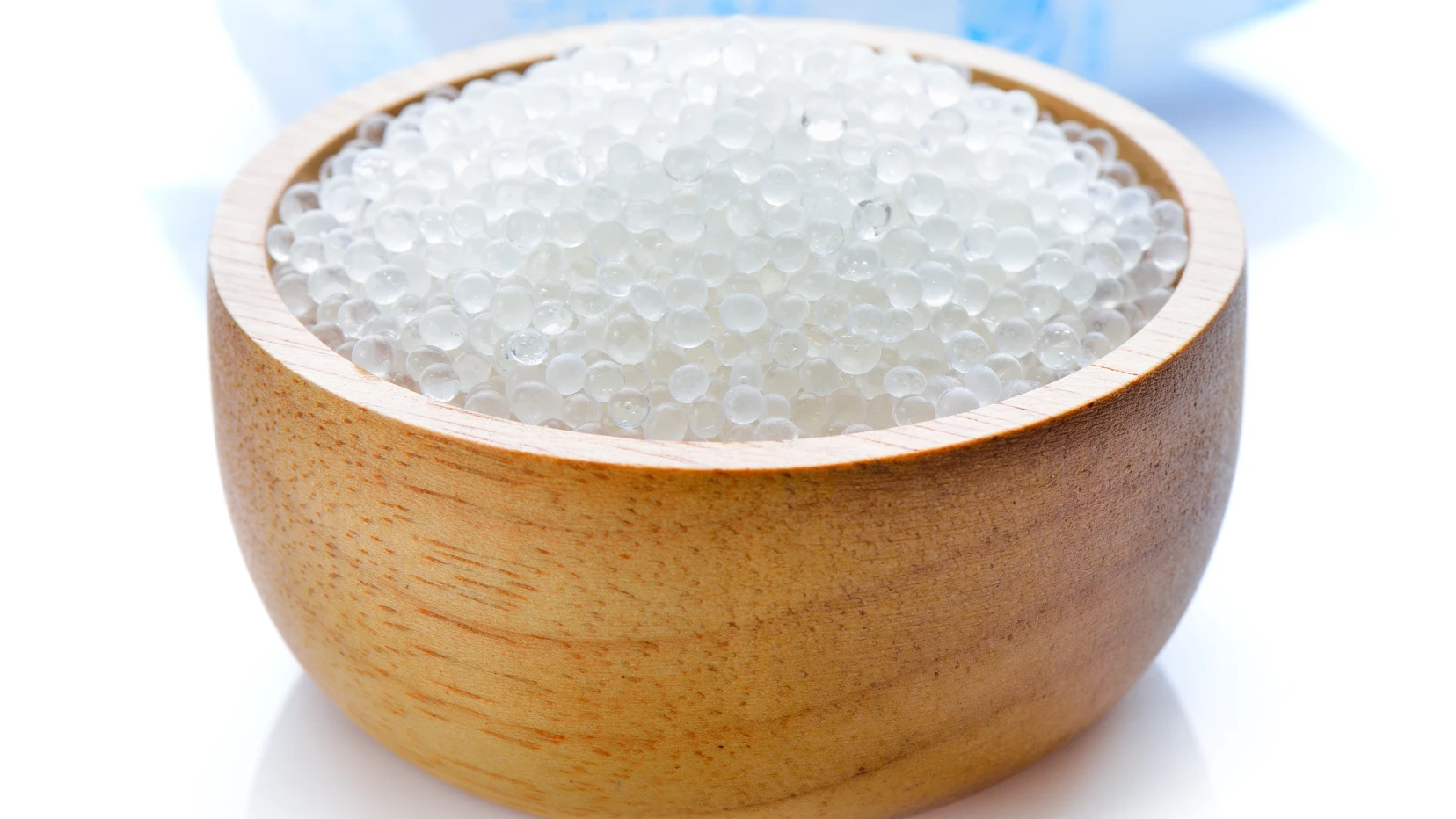
Silica gel provides high moisture adsorption capacity and requires lower regeneration temperatures (80–120°C), making it suitable for general industrial applications requiring outlet dew points down to approximately -30°C. Zeolite (molecular sieve) adsorbs moisture at significantly lower partial pressures, requiring higher regeneration temperatures (>150°C) but achieving outlet dew points below -50°C. The XR series utilizes silica gel as the standard matrix, with zeolite configurations available for stringent applications such as lithium battery dry rooms.
The process air stream (dehumidified air returning to the facility) and the regeneration air stream (exhaust air carrying expelled moisture) are routed through physically separated channels within the unit chassis. This sealed dual-duct architecture prevents cross-contamination. Regeneration air is typically drawn from an external source, heated, passed through the saturated sector of the rotor, and exhausted externally.
Under standard industrial conditions (20–30°C, 50–60% RH), compressor units exhibit higher energy efficiency (approximately 1.5–2.5 kWh per liter of moisture extracted). Desiccant units typically consume 2–3 kWh per kilogram under identical conditions. However, this dynamic reverses below 15°C or below 40% RH, where compressor efficiency drops precipitously while desiccant performance remains stable. XR series units utilize SCR-modulated PTC regeneration heating to optimize energy consumption based on real-time rotor exit temperatures.
XR series units are designed for seamless integration with existing HVAC infrastructure. Process inlet and outlet ports, as well as regeneration inlet and exhaust ports, are fully ductable. Units support various control integration protocols, including RS-485 Modbus, 0–10V analog, and dry contact interfaces, allowing for synchronized operation with centralized building management systems (BMS).
SHISHUO provides comprehensive OEM and ODM services for the XR series. Hardware platforms can be customized regarding rotor material (silica gel or zeolite), regeneration thermal profiles, operating voltages, dimensional constraints, control interfaces, and ducting configurations. The engineering process encompasses requirement analysis, solution design, specification confirmation, manufacturing, rigorous functional testing, and export preparation.
XR series units incorporate multiple integrated safety protocols, including rotor rotation failure detection (preventing thermal damage to a stalled rotor), electrical leakage protection, and phase-loss protection. The sealed dual-duct architecture ensures zero cross-contamination between air streams. Units also feature G4 pre-filtration for dust mitigation and thermally insulated heating chambers to maximize energy efficiency and prevent internal condensation.
Desiccant System Selection Reference
Desiccant sizing is based on the required outlet dew point and the moisture load at actual operating temperature, not on nominal room area. The calculation accounts for ambient infiltration, internal moisture generation, process air volume, and regeneration air availability. The XR series covers extraction rates from 0.4 kg/h to 20 kg/h for environments where compressor dehumidifiers lose rated capacity: ambient temperatures below 5°C and target humidity below 40% RH.
Technology Selection Matrix
| Operating Condition | Desiccant Requirement | Recommended Technology |
|---|---|---|
| >15°C, Target RH 50–70% | Not Required | Compressor Series (GDH / GDH-CE) |
| >15°C, Target RH <40% | Required | Desiccant (XR Series) |
| 5°C to 15°C, Any Target RH | Recommended | Desiccant (XR Series) |
| <5°C Ambient | Mandatory | Desiccant (XR Series) |
| <-10°C (Freezer / Cold Chain) | Mandatory | Desiccant, Zeolite Rotor Recommended |
| Target Dew Point <-30°C | Mandatory, Custom Configuration | Desiccant, Zeolite Rotor (OEM Spec) |
In the marginal zone (15–25°C ambient, 40–50% RH target), selection is a lifecycle cost decision: compressor units carry lower capital cost, while desiccant units hold their extraction rate as temperature and humidity targets fall.
Commercial and Compact Units (0.4–0.83 kg/h)
The XR-60XF to XR-200XF units serve confined, precision-controlled spaces: archival vaults, laboratories, and modular cold rooms. Silica gel rotors, G4 pre-filtration, plug-and-play installation, and sealed independent air channels are standard. Rated operation extends to -20°C.
Industrial and High-Capacity Systems (2.5–20 kg/h)
The XR-350 to XR-3000XF systems are built for continuous process duty: pharmaceutical tableting, lithium battery dry rooms, and freezer logistics. Standard silica gel rotors reach -30°C outlet dew point; zeolite configurations reach -50°C and below. All models in this range are fully ductable and integrate with building management systems via RS-485 Modbus.
Regeneration Energy Management
Regeneration heating is the dominant energy draw in any desiccant system. XR series units use PTC heating elements under SCR modulation, which adjusts heater output against real-time rotor exit temperature instead of running fixed on/off cycles. The regeneration chamber is thermally insulated to limit heat loss and prevent internal condensation.
OEM/ODM and Integration
Available modifications include rotor material (silica gel or zeolite), regeneration thermal profile, operating voltage, dimensions, control interface, and ducting topology; scope is defined on the OEM/ODM page. Application references are documented in our project cases, and psychrometric sizing support is available through SHISHUO Engineering.
We support industrial temperature and humidity control projects with clear specifications, stable equipment, and practical system advice. Share your application details and capacity requirements—our team will respond with a suitable solution and quotation.
Get a Quick QuoteHi! Click one of our member below to chat
on WhatsApp
General Manager
Business Development Manager