Why a desiccant rotor for cold and small spaces
A refrigerant dehumidifier condenses water on a cold coil, so it needs the room to be warm enough that the coil stays above freezing. As the space cools, output falls, and below roughly 5°C the unit runs its defrost cycle more than it dries. A desiccant unit has no cold coil. Humid process air passes through the 270° process sector of a slowly turning wheel (8–12 revolutions per hour); the desiccant adsorbs the water vapor, and dry, slightly warmed air leaves through the process fan. A separate regeneration airstream is heated to 100–140°C, passes through the remaining wheel sector to drive the captured moisture off, and carries it outdoors. Because adsorption does not depend on a temperature gradient, the rotor holds its target from -20°C up to 50°C — which is why these units suit cold rooms, unheated stores, and low-temperature process areas.
What each model fits
The three models step up in airflow and duct size, so match the unit to the room volume and how the air is delivered:
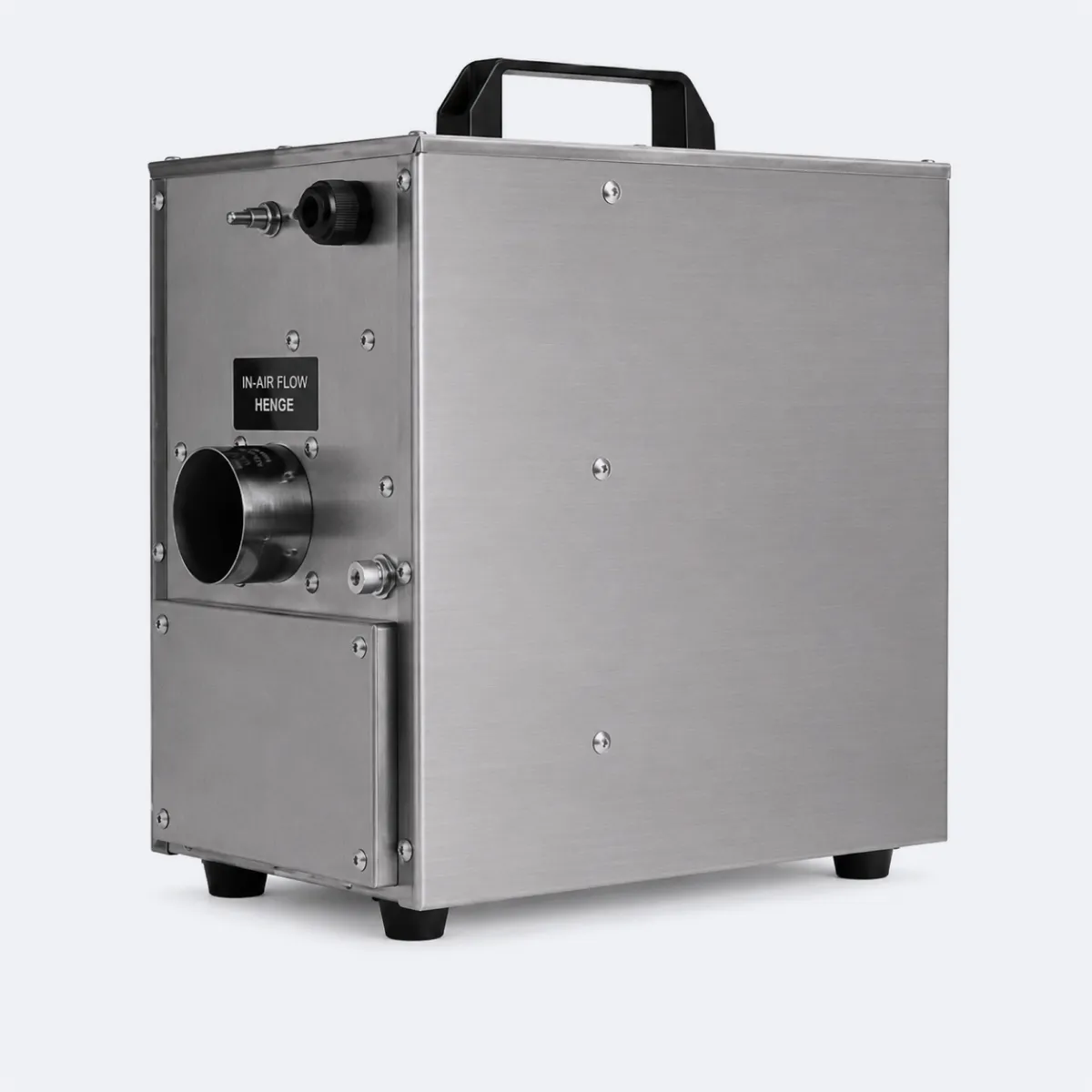
- XR-80XF-01 — 0.4 kg/h, 10–100 m³/h, Φ50mm×2 process ports, 10 kg. The most compact case, for small sealed enclosures: electrical and switchgear cabinets, instrument boxes, small test chambers, boat cabins, and display or storage cases that need a low dew point.
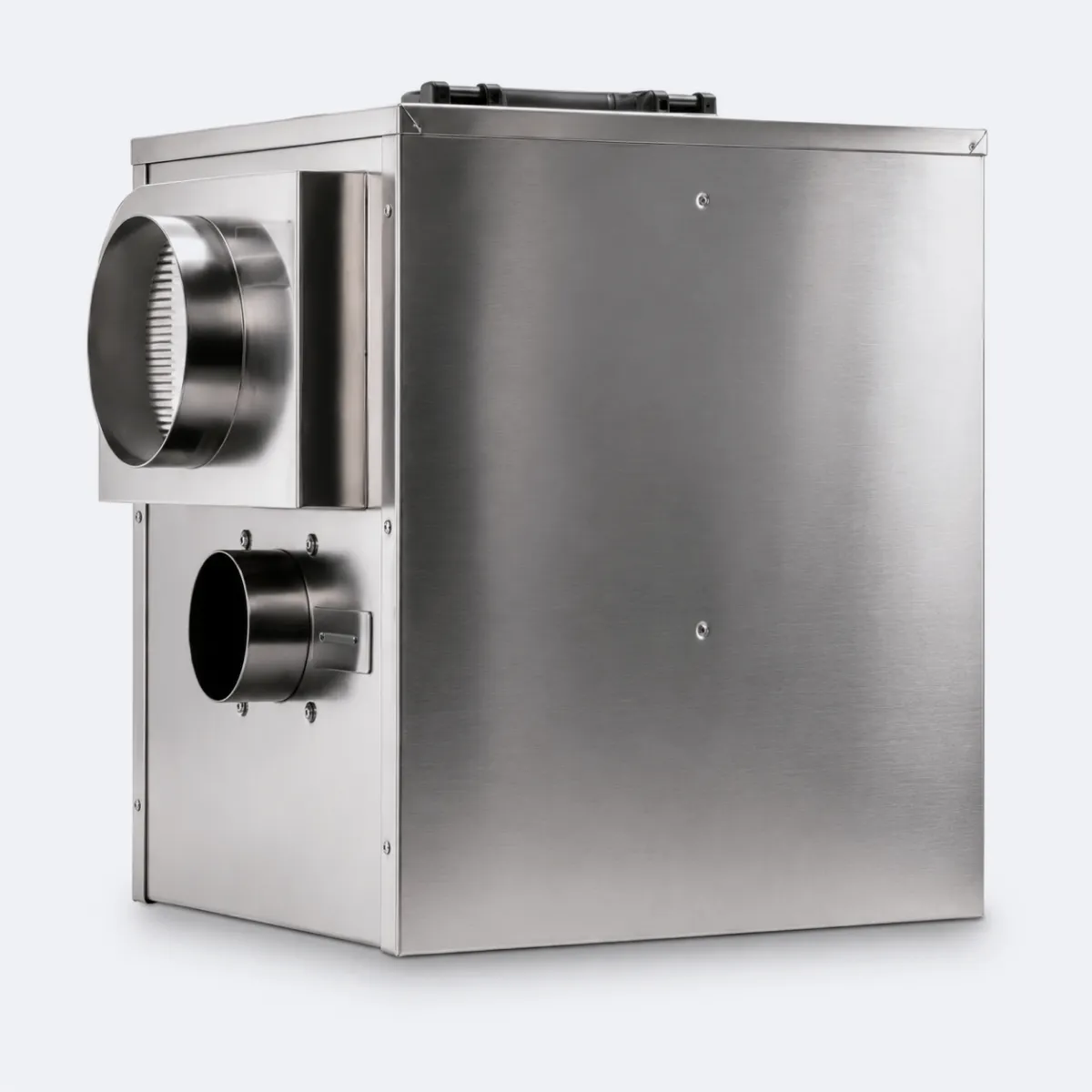
- XR-100XF-01 — 0.45 kg/h, 10–120 m³/h, Φ100mm×2 ports, 12 kg. A step up in airflow for slightly larger rooms — small cold rooms, laboratory spaces, and server or telecom closets — where the larger duct spreads dry air across the space.
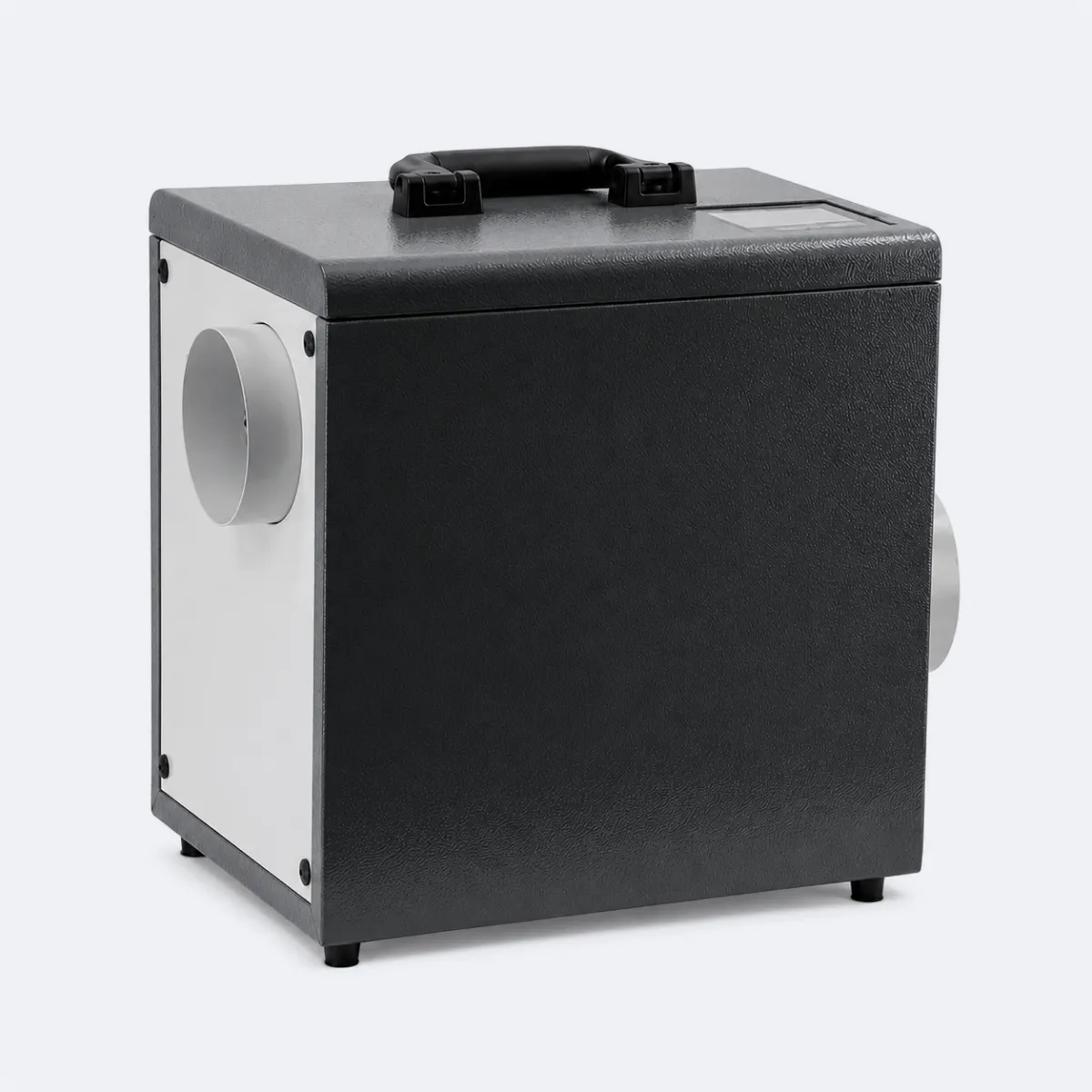
- XR-100XF-02 — 0.5 kg/h, 10–150 m³/h, Φ95mm×2 ports, 15 kg. The highest capacity in the commercial tier, for the largest small-space jobs: walk-in cold rooms, sealed archive or sample storage, and any low-temperature space needing a tighter, faster-held RH.
Build and control
These are compact machines built for continuous, unattended running:
- Rotor — fire-resistant desiccant wheel with strong adsorption and regeneration performance, rated for -20°C to 50°C, driven by a gear motor at 8–12 RPH.
- Regeneration heater — starts automatically with the regeneration fan; if the rotor stops turning, the heater cuts power automatically, so it never overheats a stationary wheel.
- Humidity control — adjustable across 5–95% RH with fully automatic operation and real-time RH shown on the LED display; manual/automatic switching is available.
- Protection — IP44 enclosure, electrical protection to IP54, plus over-temperature and overheat protection on the heating element; insulation and internal materials are heat-resistant and flame-retardant.
- Filtration and drainage — G4 pre-filter on the process inlet captures dust and protects the wheel; the case routes moisture out through the wet-air duct for continuous operation.
- Integration — DI signal and RS-485 communication for remote monitoring and control, with fault self-detection and a fault code on the display for quick service.
- Build — stainless-steel or powder-coated housing for corrosion resistance, designed service life of 10 years or more, with components from established brands.
Global voltage and OEM/ODM
Standard supply is single-phase 220V/50Hz. Units can be built for 50Hz or 60Hz and for the voltage of the destination market — 120V/60Hz for North America, 230V/50Hz for Europe, and other national standards. We support OEM branding and ODM changes: cabinet color, control interface and display language, duct and drainage configuration, filter grade, and custom labeling. Manufacturing is to CE, ETL, and RoHS with ISO 9001. Send us the space, its lowest operating temperature, target RH, and quantities, and we will recommend a model or a multi-unit layout.