search
Search

Enter keywords to search for products, blog posts, and more.


Home > Compact Desiccant Dehumidifier for Archives, Precision Storage and Cool Process Rooms (0.8 kg/h)

Compact Desiccant Dehumidifier for Archives, Precision Storage and Cool Process Rooms (0.8 kg/h)

Compact Desiccant Dehumidifier for Archives, Precision Storage and Cool Process Rooms (0.8 kg/h)

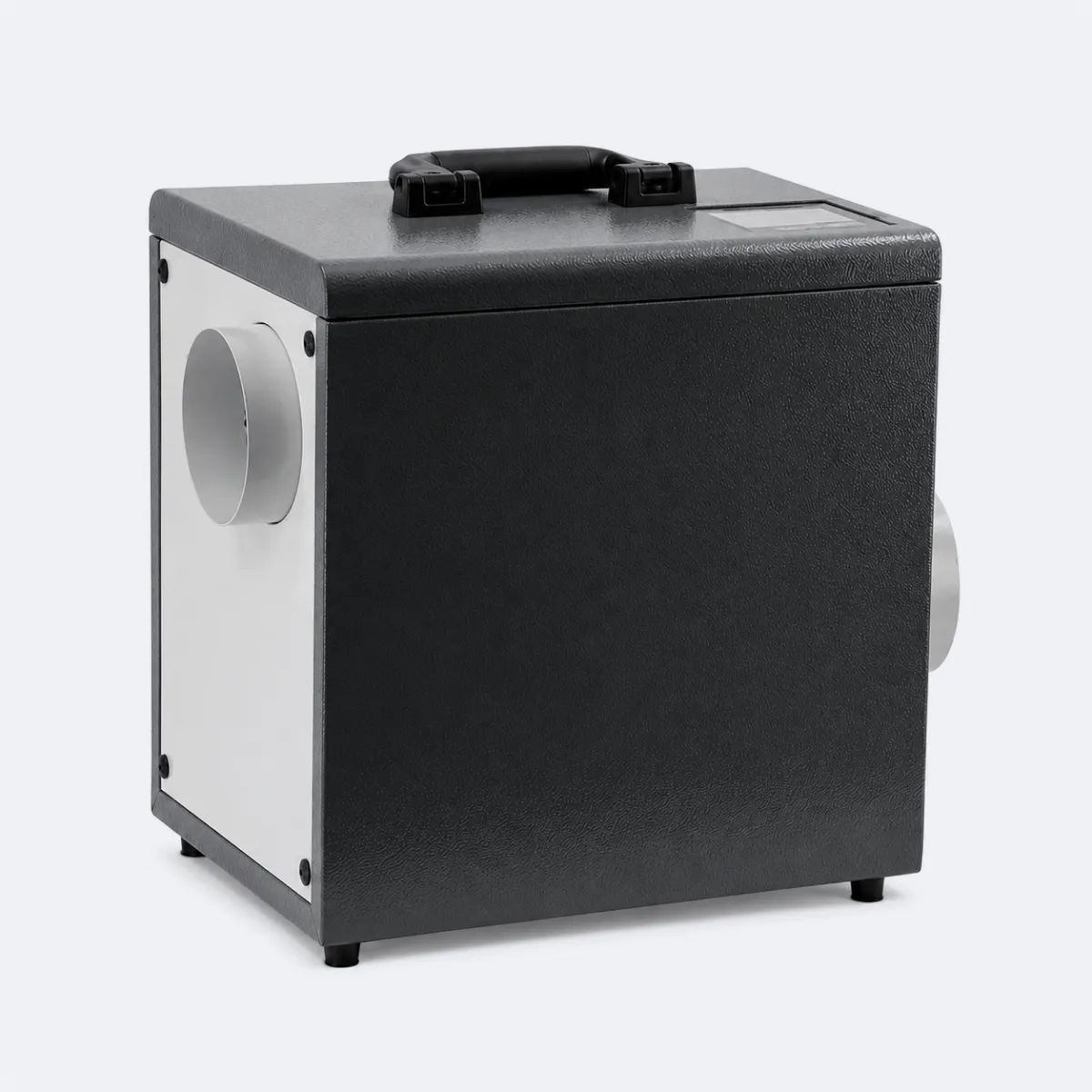
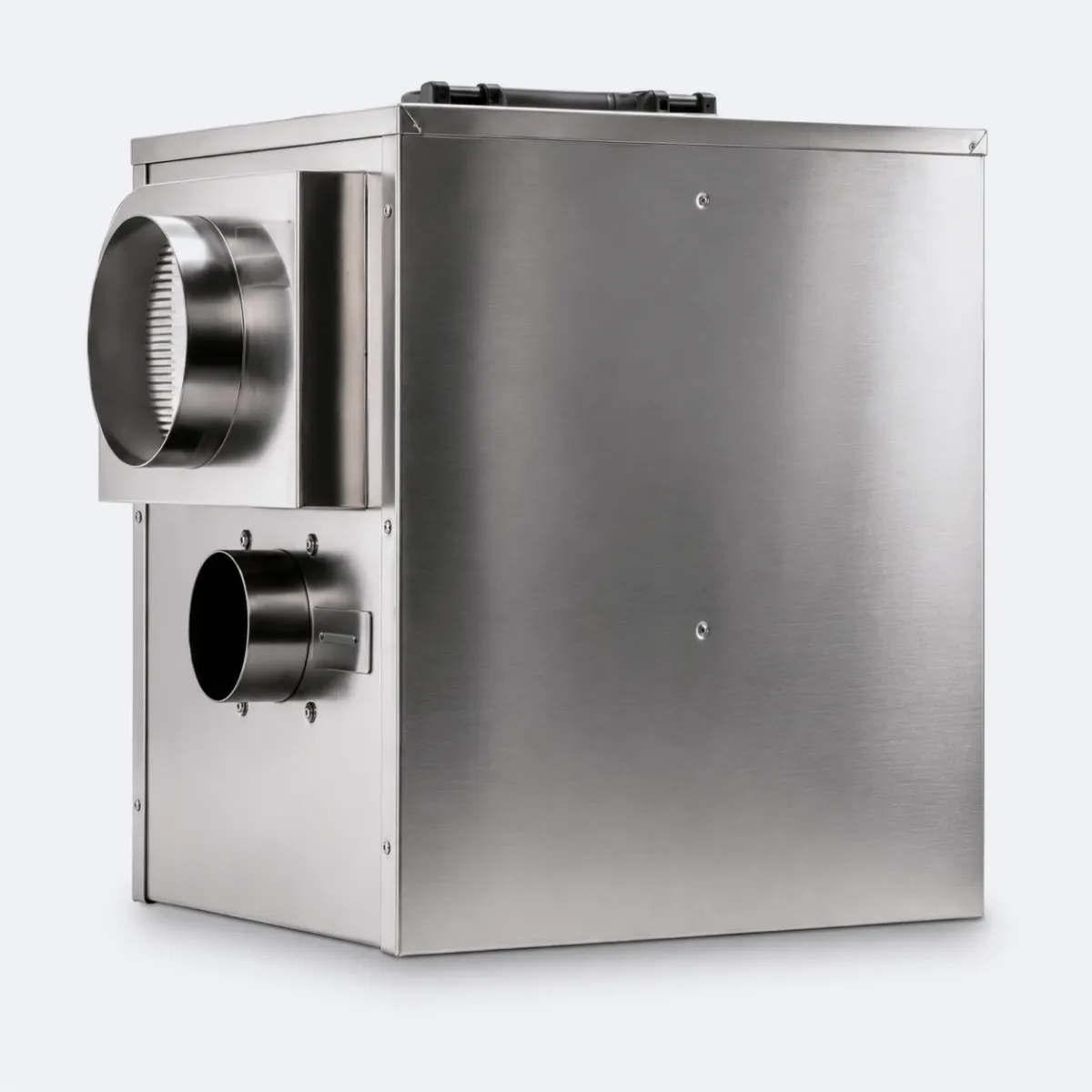
Some spaces need more than a small portable unit but less than a floor-standing industrial machine — an archive room, a precision parts store, a small production or packaging area, a lab suite, or a cool storeroom that a compressor can't keep dry. This compact series sits in that gap.

All three models remove about 0.8 kg/h of moisture with process airflow up to 210 m³/h, on plug-and-play 220V. They handle roughly twice the moisture load of the portable range while staying compact enough to place inside or beside the room they serve. Because they use a desiccant rotor rather than a cold coil, they hold a low, stable humidity target down to -20°C — steady in cool and unheated spaces where a refrigerant unit frosts up and cuts out.

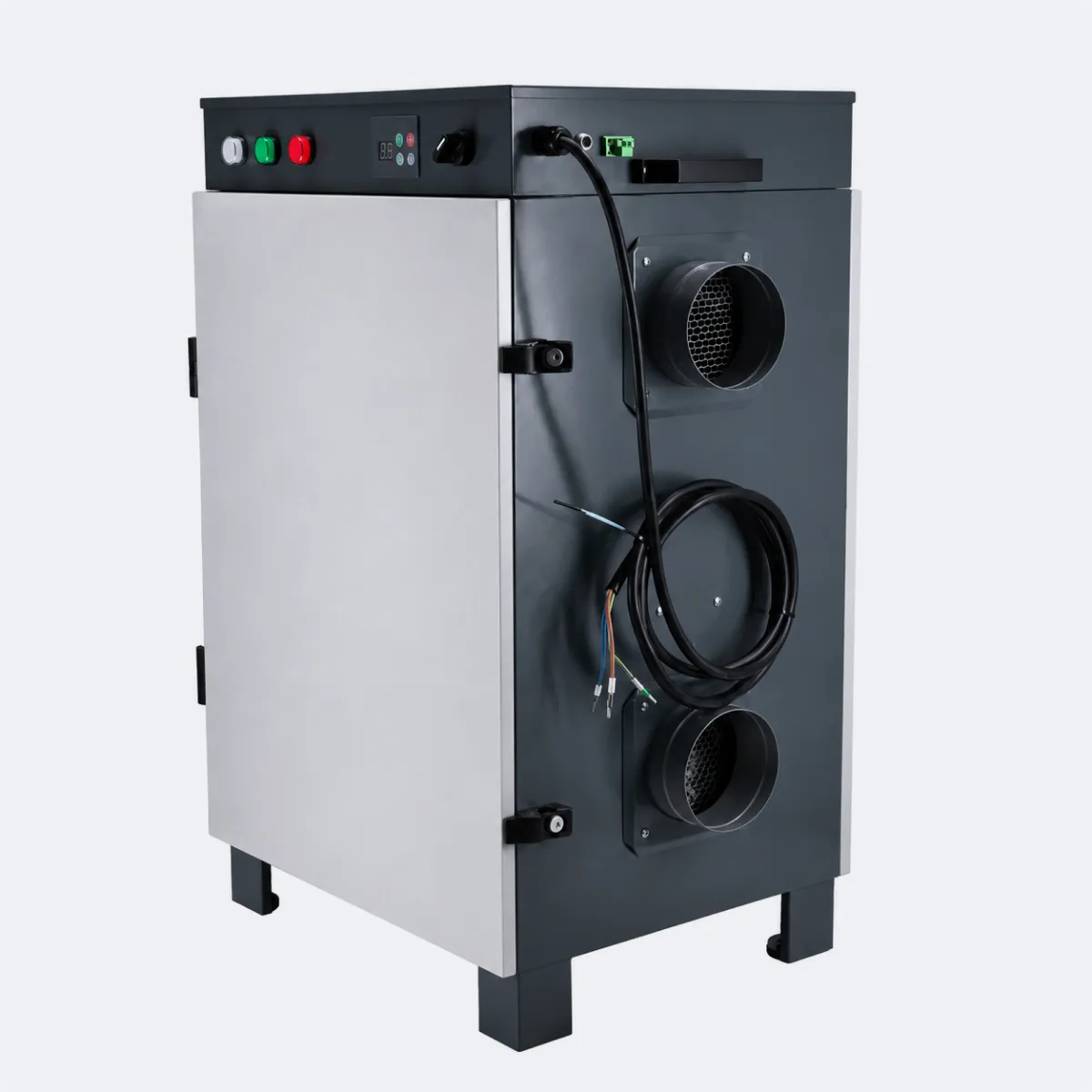
The three variants differ in how they move air. XR-200XF-03 uses a twin-fan layout tuned for low power draw; XR-200XF-02 is a single-fan unit with higher static pressure for longer duct runs; and XR-200XF-01 uses a twin-rotor design for the steadiest hold on a tight RH target. All adsorb moisture on a rotor rated for -20°C to 50°C, control humidity from 5% to 95% RH automatically, and support RS-485 and DI signal for remote monitoring. For small enclosures and cabinets, see the portable desiccant dehumidifier range; for larger rooms and higher moisture loads, see the industrial desiccant dehumidifier range.

Technial Parameters

ModelXR-200XF-01XR-200XF-02XR-200XF-03
ConfigurationTwin-rotorSingle-fanTwin-fan
Dehumidification Capacity0.83 kg/h0.8 kg/h0.8 kg/h
Process Airflow200 m³/h10–210 m³/h10–200 m³/h
Power Supply220V/50Hz220V/50Hz220V/50Hz
Rated Power1.2 kW1.65 kW1 kW
Rated Current5.4 A6 A4.6 A
Regeneration Airflow80 m³/h80 m³/h80 m³/h
Process Air Pressure (PARP)100 Pa100 Pa100 Pa
Regeneration Air Pressure (RARP)60 Pa60 Pa60 Pa
Process Air InletΦ100mm×2Φ95mm×2Φ100mm×2
Regeneration Air DuctΦ75mm×2Φ60mm×1Φ60mm×2
FilterG4G4G4
Test ConditionT=20°C, RH=60%T=20°C, RH=60%T=20°C, RH=60%
Operating Temperature-10 to +50°C-10 to +50°C-10 to +50°C
Overall Size (L×W×H)466×333×655 mm400×250×350 mm434×264×349 mm
Net Weight15 kg15 kg15 kg
DisplayLEDLEDLED

Product Details

Where the compact tier fits

These units target rooms that hold a defined moisture load continuously rather than a small sealed box. Typical applications: document and record archives, museum and artifact stores, electronics and PCB storage, precision parts and tooling stores, small production or packaging lines, laboratory suites, seed and sample storage, and cool storerooms or cellars. In each, the goal is to hold the whole room at a stable low RH so paper, metal, electronics, and stored goods stay dry — and to do it in spaces that often run cool, where a compressor loses ground.

Three configurations, one capacity class

All three remove about 0.8 kg/h, so choose by how the air needs to be delivered and how tightly RH must be held:

  • XR-200XF-03 — twin-fan, 0.8 kg/h, 10–200 m³/h, rated 1 kW (4.6 A), Φ100mm×2 process ports. The lowest power draw in the tier, for continuous running where energy cost matters — long-duty archive and storage rooms held around the clock.
  • XR-200XF-02 — single-fan, 0.8 kg/h, 10–210 m³/h, 100 Pa process pressure, Φ95mm×2 ports. Higher static pressure for pushing dry air through longer or more restrictive duct runs, or for delivering it evenly across a spread-out room.
  • XR-200XF-01 — twin-rotor, 0.83 kg/h, 200 m³/h, Φ100mm×2 process ports, larger 466×333×655 mm cabinet. Two desiccant wheels give the steadiest hold on a tight RH target, for precision storage and process rooms with a narrow humidity tolerance.

How the rotor holds a target in cool rooms

Humid process air passes through the 270° process sector of a slowly rotating wheel (8–12 revolutions per hour). The desiccant adsorbs the water vapor, releasing dry, slightly warmed air through the process fan. A separate regeneration airstream is heated to 100–140°C, drives the captured moisture off the wheel, and carries it outside. Adsorption does not need a cold surface, so the unit holds its RH target from -20°C to 50°C — and reaches a lower RH than a refrigerant unit can. That is what makes the compact rotor the right tool for archives held at a low set point and for cool storerooms a compressor can't serve.

Build and control

  • Rotor — fire-resistant desiccant wheel with strong adsorption and regeneration performance, rated -20°C to 50°C, gear-motor driven at 8–12 RPH; adjustable gear-motor speed on some models.
  • Regeneration heater — SCR-controlled, starts with the regeneration fan and cuts power automatically if the rotor stops; insulated heating chamber limits heat loss and condensation.
  • Humidity control — 5–95% RH, fully automatic, with real-time RH on the LED display and manual/automatic switching.
  • Protection — IP44 enclosure, electrical protection to IP54, over-temperature and overheat protection, heat-resistant flame-retardant internals.
  • Filtration and airflow — G4 pre-filter protects the wheel; sealed independent process and regeneration ducts keep the two airstreams from mixing.
  • Integration — DI signal and RS-485 for remote monitoring and control; fault self-detection with a fault code on the display.
  • Build — stainless-steel or powder-coated housing, 10-year-plus designed service life, components from established brands.

Global voltage and OEM/ODM

Standard supply is single-phase 220V/50Hz; units can be built for 50Hz or 60Hz and for the destination market's voltage (120V/60Hz for North America, 230V/50Hz for Europe, and other national standards). We support OEM branding and ODM changes: cabinet color, control interface and display language, duct and drainage configuration, filter grade, and labeling — built to CE, ETL, and RoHS with ISO 9001. Send us the room, its moisture load and lowest temperature, the target RH and tolerance, and quantities, and we will recommend a configuration.

FAQs

What's the difference between the three compact models?

All three remove about 0.8 kg/h; they differ in airflow design. XR-200XF-03 is twin-fan and draws the least power (1 kW), best for around-the-clock running where energy cost matters. XR-200XF-02 is single-fan with higher static pressure (100 Pa), best for longer duct runs or spreading dry air across a room. XR-200XF-01 is twin-rotor with a larger cabinet, giving the steadiest hold on a tight RH target for precision storage. Tell us the room and how the air will be delivered and we will point to the right one.

What kind of rooms is a

This tier suits rooms that carry a continuous moisture load rather than a small sealed box — document archives, museum and artifact stores, electronics and PCB storage, precision parts and tooling stores, small production or packaging areas, lab suites, and cool storerooms. As a rough guide, one unit handles a well-sealed room of moderate size at a low RH set point; a leakier room or a tighter target needs more capacity or more than one unit. Send us the room volume, sealing, lowest temperature, and target RH for a specific recommendation.

8 kg/h desiccant unit sized for?

Archives and precision stores are usually held at a low, stable RH to protect paper, metal, electronics, and sensitive goods — and they often run cool. A refrigerant unit loses efficiency as the room cools and struggles to reach a low set point. A desiccant rotor adsorbs moisture regardless of temperature, holds a lower RH than a compressor can, and keeps it steady from -20°C to 50°C. For a room where a narrow humidity band matters, the rotor holds the target more tightly and more reliably.

Why use a desiccant rotor for an archive or precision store?

Same rotor technology, roughly double the capacity. The portable range (0.4–0.5 kg/h) is built for small sealed enclosures — cabinets, instrument boxes, boat cabins — that you carry a case to. This compact range (0.8 kg/h, up to 210 m³/h) is sized for whole rooms with a continuous moisture load, with higher airflow and larger ducting to move dry air across the space. If you are drying a room rather than a box, this is the tier to start from.

How is this different from the portable range?

Yes — that is a core strength of the rotor. Adsorption does not depend on a cold coil, so the unit holds a low set point steadily without the cycling a compressor shows as it defrosts. Humidity is adjustable across 5–95% RH under fully automatic control, with real-time RH on the display. For the tightest tolerance, the twin-rotor XR-200XF-01 gives the steadiest hold, which is why it suits precision storage and process rooms with a narrow humidity window.

Can it hold a tight, stable humidity set point?

Yes. Every unit supports DI signal and RS-485 communication for remote monitoring and control and shows real-time indoor humidity on the LED display, so you can tie it into a building or facility monitoring system, read status remotely, and pick up a fault code off site. Protocol or interface customization is available as an ODM option.

Do these units support remote monitoring and BMS integration?

Standard supply is single-phase 220V/50Hz, buildable for 50Hz or 60Hz and for the destination market's voltage — 120V/60Hz for North America, 230V/50Hz for Europe, and other national standards. We support OEM branding and ODM changes including cabinet color, control interface and display language, duct and drainage configuration, and filter grade, all to CE, ETL, and RoHS with ISO 9001. Contact us with your market and quantities for a specification and quotation.

What voltages are available, and do you support OEM/ODM?

Specifying humidity control for an archive, precision store, or cool process room? Send us the room type and dimensions, its lowest operating temperature, the target RH and how tightly it must hold, how the space is sealed and ventilated, and where condensate can be ducted. Tell us the destination market voltage and any branding or documentation needs. Our team will recommend a configuration — twin-fan for low energy, single-fan for longer duct runs, or twin-rotor for the tightest hold — and provide technical drawings and a sizing calculation before you order. For small enclosures, see the portable desiccant dehumidifier; for larger rooms and higher loads, see the industrial desiccant dehumidifier. Quotation within one working day.

Amy

General Manager