Search

Enter keywords to search for products, blog posts, and more.

Freezer Dehumidifier — Ice and Condensation Control for Cold Rooms, Freezer Anterooms, and Blast Freezers

Freezer Dehumidifier — Ice and Condensation Control for Cold Rooms, Freezer Anterooms, and Blast Freezers


Why Freezer Spaces Need Desiccant Dehumidification

The fundamental difference between a refrigerant unit and a desiccant unit comes down to how moisture is removed. Below about 5°C, a compressor dehumidifier's evaporator coil ices over and extraction collapses; a desiccant rotor adsorbs moisture chemically and works from below freezing to above 40°C. Three points explain why desiccant is the only effective technology for freezer and cold room service:

Compressor dehumidifiers depend on condensation

A refrigerant dehumidifier cools incoming air below its dew point on a cold evaporator coil; water condenses and drains away. This works at 20–35°C. As ambient temperature drops below 5°C, the coil surface reaches freezing and condensate immediately ices over — frost blocks airflow, defrost cycles multiply, and effective extraction drops toward zero. A compressor unit inside a -18°C freezer becomes a heater fighting the refrigeration system, not a dehumidifier.

Desiccant dehumidifiers do not depend on temperature

A desiccant rotor passes process air through a slowly rotating wheel coated with silica gel or molecular sieve that adsorbs water vapor by chemical attraction — regardless of whether the air is 30°C or -20°C. A separate heated regeneration airstream drives moisture off the wheel and exhausts it outside the cold space. This is the same technology used in pharmaceutical low-dew-point rooms and lithium battery dry rooms, and it is the only effective dehumidifier for freezer applications.

The real moisture source is the door, not the air inside

In a steady-state cold room, the internal air is already near saturation but holds very little absolute moisture. The real load is door traffic: every forklift pass admits several cubic meters of warm humid outside air that condenses on cold surfaces as ice. The engineering solution is a desiccant unit in the airlock or anteroom that pre-dries incoming air and maintains slight positive pressure to block infiltration through the door seal.

SHISHUO Dehumidifiers Suitable for Freezer and Cold Room Applications

For any space operating below 5°C, we recommend the rotary desiccant series. The choice of model depends on the volume to be dried, the target dew point, and whether the unit is installed inside the cold space, in the anteroom, or in a dedicated mechanical room with ducted supply. Refrigerated spaces above 5°C (fresh produce, dairy, chilled distribution) can use the GDH industrial compressor series at lower equipment cost.

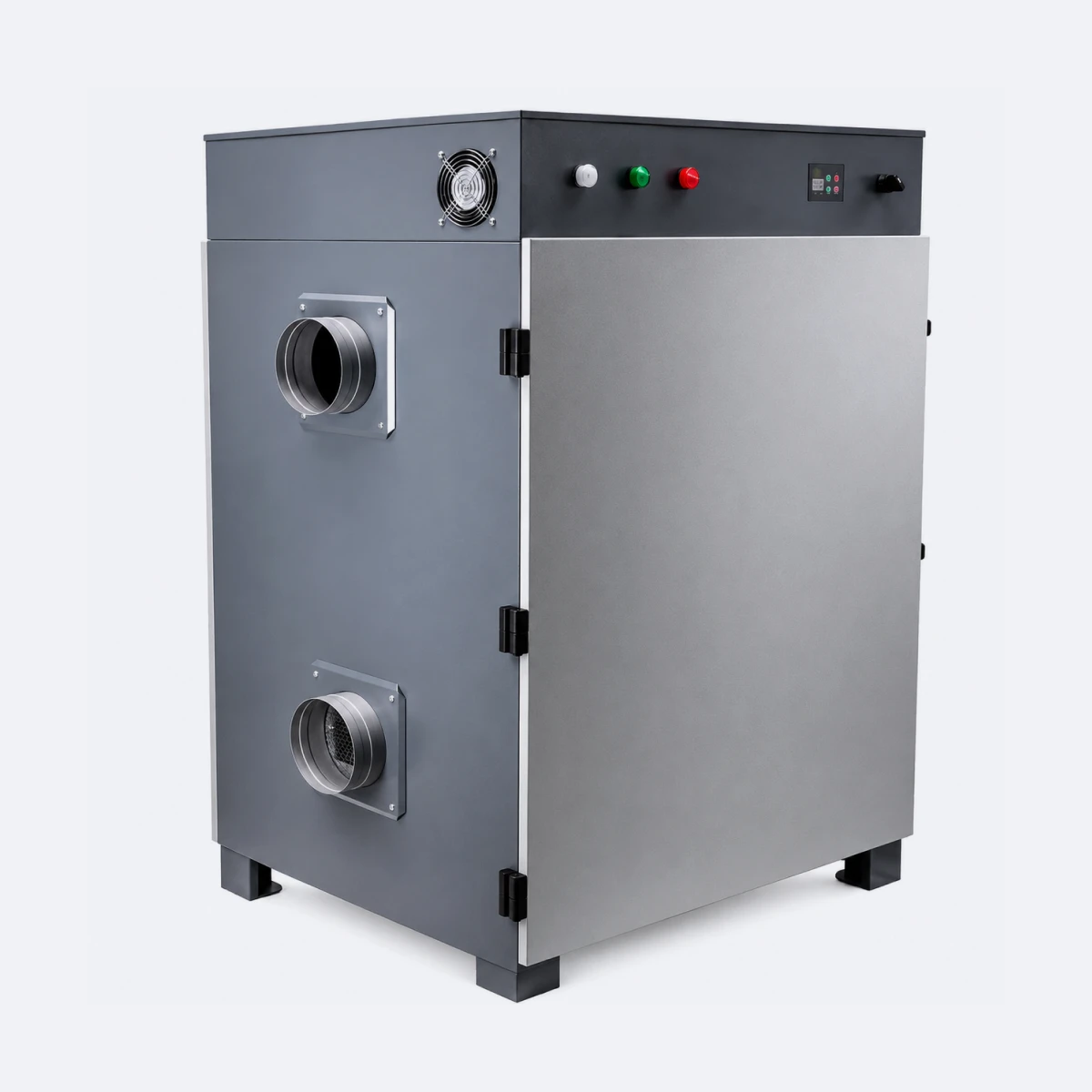
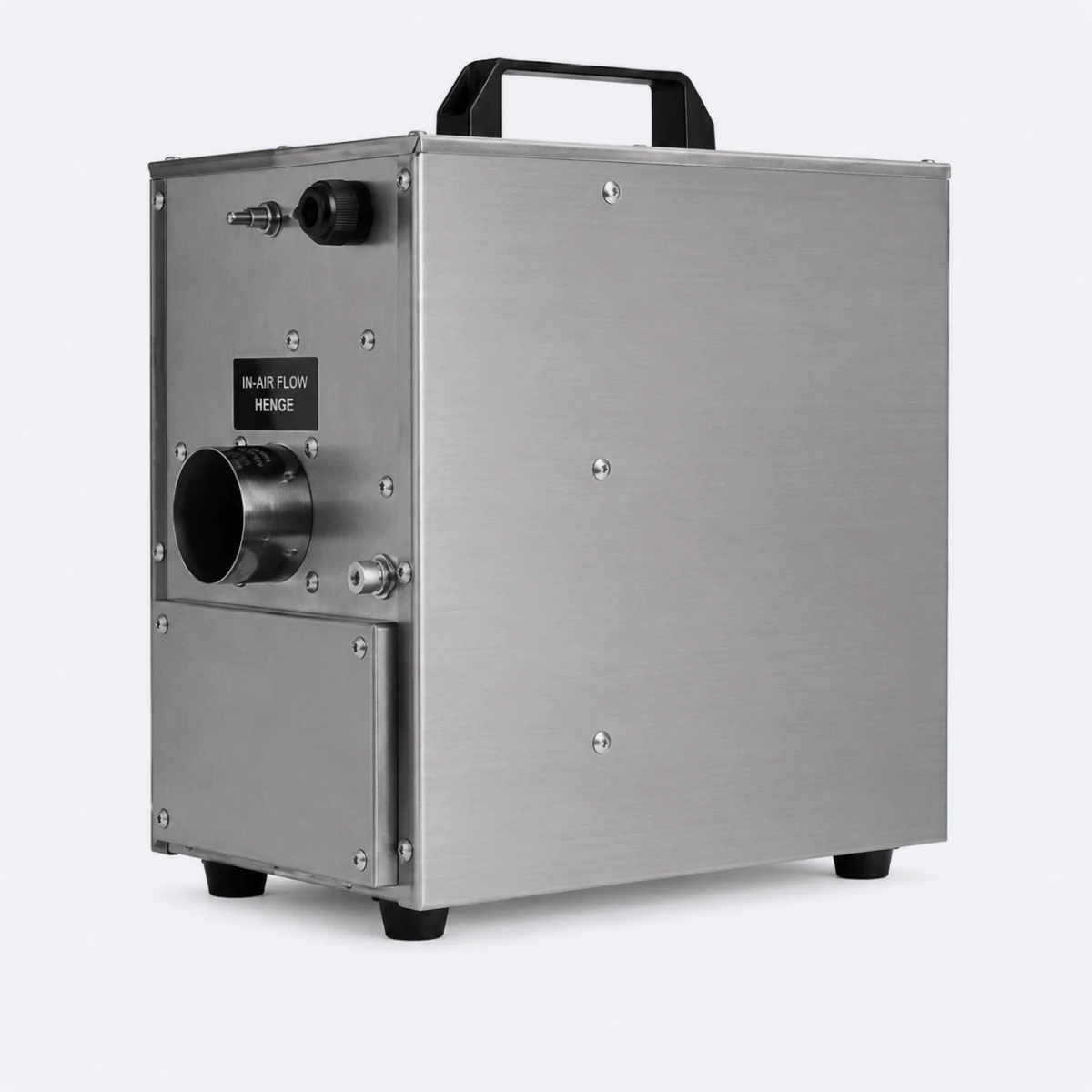
Option 1 — XR Low-Temperature Desiccant Dehumidifier for Cold Stores & Freezer Anterooms

For any space operating below 5°C — cold stores, freezer anterooms, cold-chain logistics, ice rinks, refrigerated production — where refrigerant dehumidifiers simply stop working:

A desiccant rotor has no cold coil to frost, so it keeps drying where a refrigerant unit spends most of its time defrosting. The highest-airflow tier: four units from 22 to 29 kg/h moisture removal, 3,500-5,000 m³/h process airflow, 380V three-phase, rotor rated for -20°C to 50°C. RS-485 Modbus and DI signal for BMS integration.

XR-3500XF-01

XR-3500XF-01
Capacity (Kg/h):22
Process Airflow:3500 m³/h
Power:380V/50Hz

view details

XR-4000XF-02

XR-4000XF-02
Capacity (Kg/h):25
Process Airflow:4200 m³/h
Power:380V/50Hz

view details

XR-4500XF-01

XR-4500XF-01
Capacity (Kg/h):27
Process Airflow:4500 m³/h
Power:380V/50Hz

view details

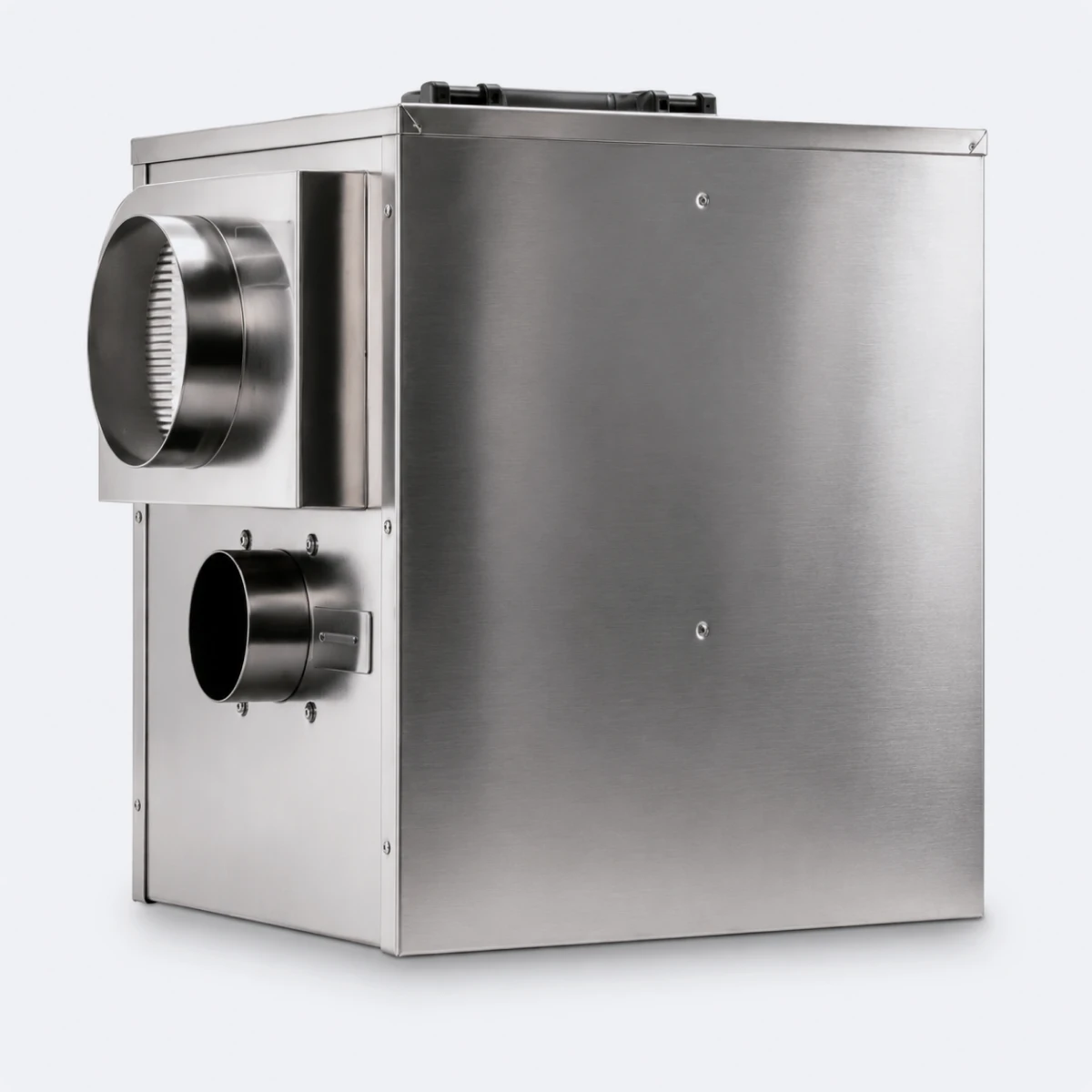
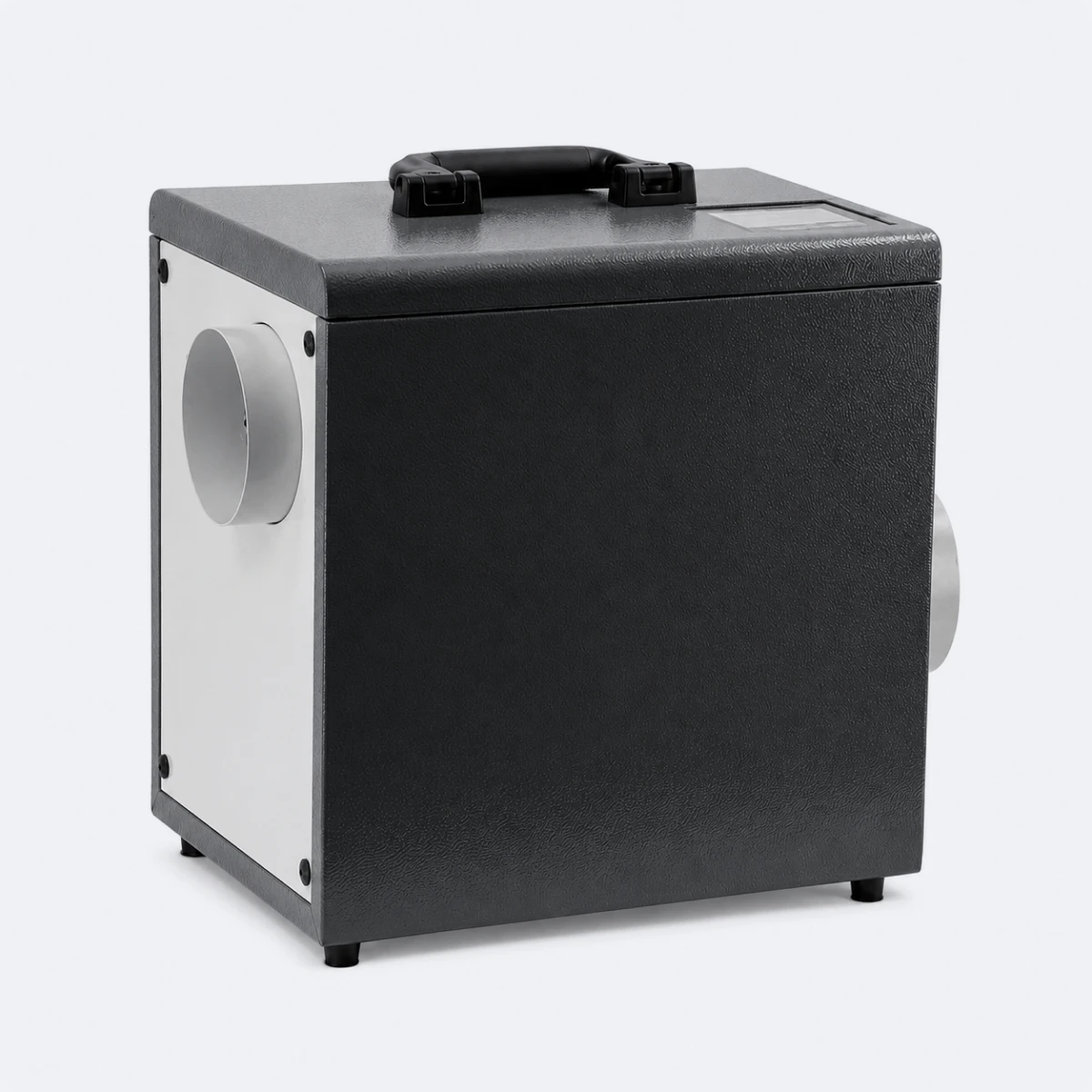
Option 2 — XR Commercial Desiccant Dehumidifier for Walk-In Cold Rooms & Enclosures

For walk-in cold rooms, cold laboratories, and small refrigerated enclosures where the space is too small for a floor-standing industrial unit but still needs desiccant-based drying:

Handle-carried desiccant case (10-15 kg) on 220V plug-and-play power. Explicitly built for walk-in cold rooms, laboratory cold chambers, and sealed enclosures where a full floor-standing unit is oversized. Rotor rated for -20°C to 50°C, holds RH from 5% to 95% under fully automatic control.

XR-80XF-01

XR-80XF-01
Capacity (Kg/h):0.4
Process Airflow:10-100 m³/h
Power:220V/50Hz

view details

XR-100XF-01

XR-100XF-01
Capacity (Kg/h):0.45
Process Airflow:10-120 m³/h
Power:220V/50Hz

view details

XR-100XF-02

XR-100XF-02
Capacity (Kg/h):0.5
Process Airflow:10-150 m³/h
Power:220V/50Hz

view details

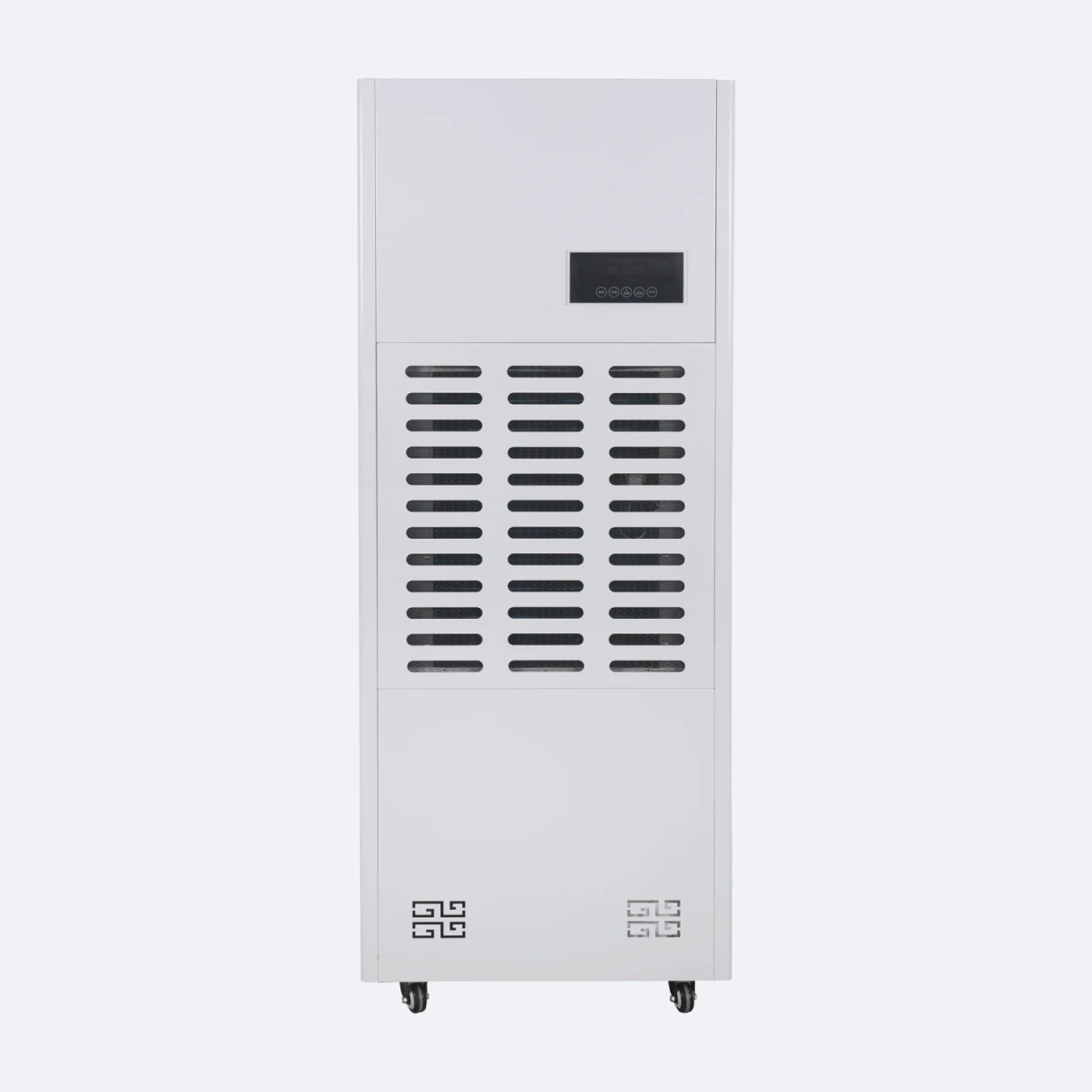
Option 3 — GDH Low-Temp Industrial Dehumidifier for Chilled Storage Above 5°C

For chilled storage above 5°C (produce, dairy, chilled distribution) where a compressor unit is more cost-effective than desiccant technology:

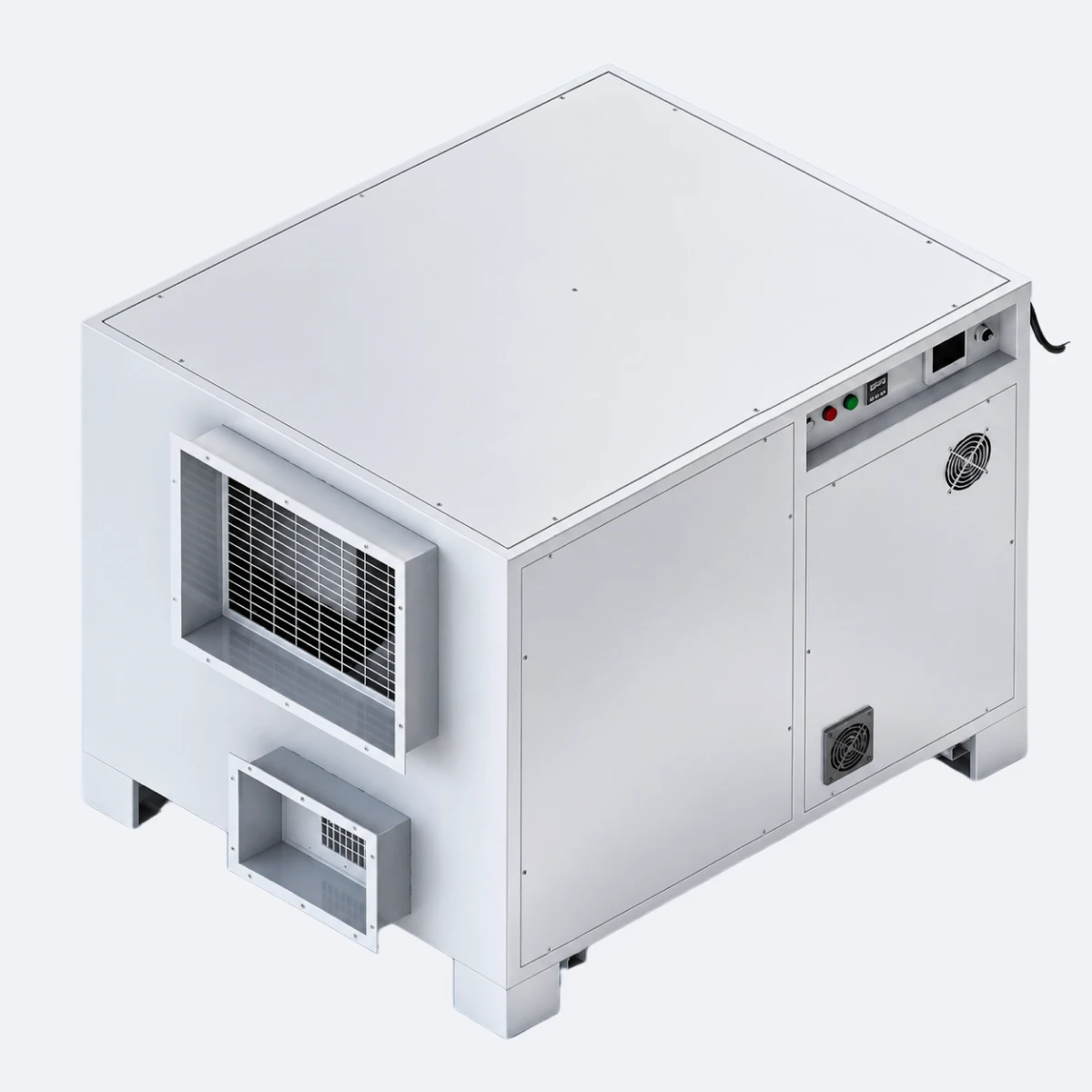
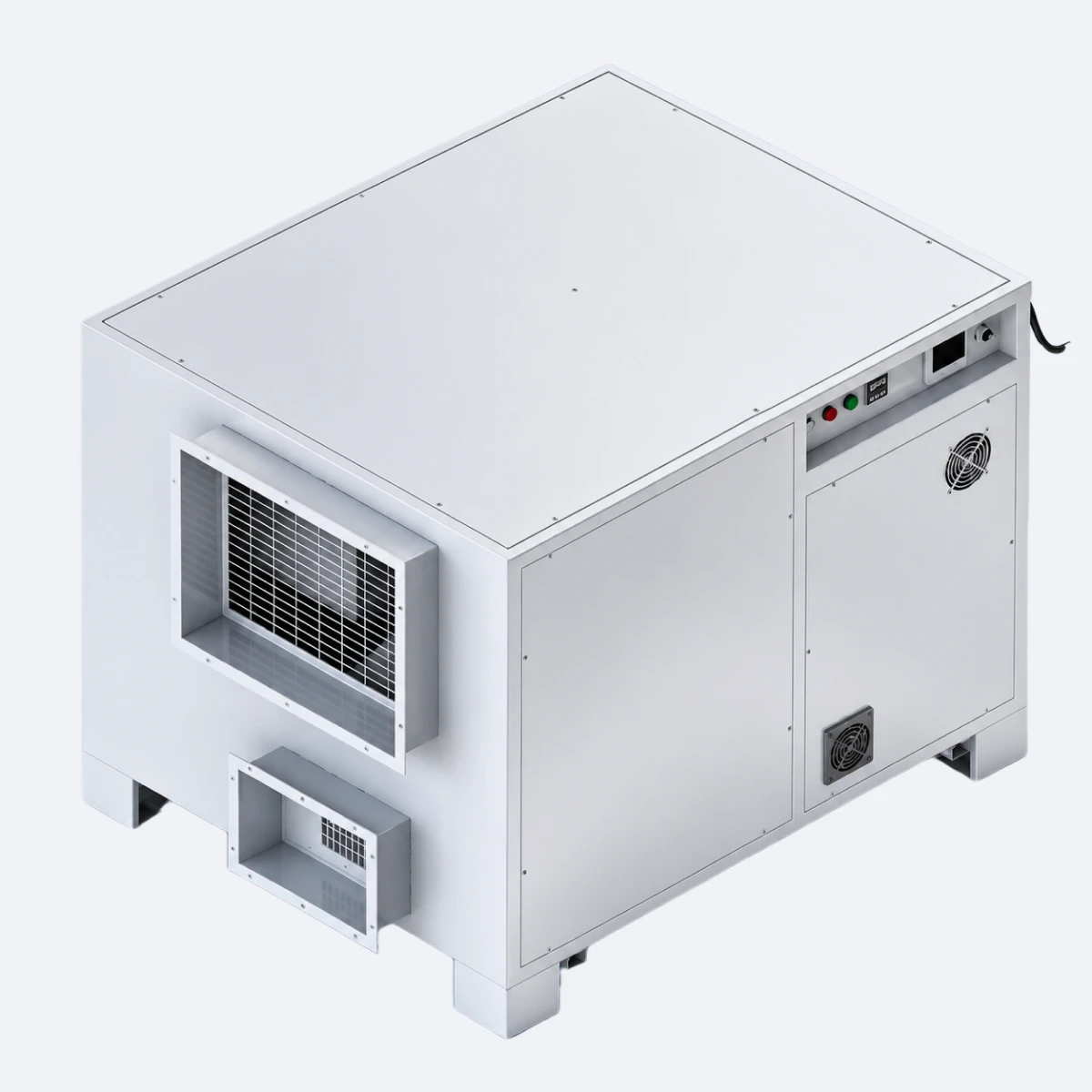
For refrigerated spaces above 5°C — fresh produce cold rooms, dairy storage, chilled distribution — a GDH compressor unit delivers moisture removal at lower equipment cost than desiccant. Engineered for low-temperature performance with automatic defrost cycling, all-copper corrosion-resistant heat exchanger.

GDH-180E

GDH-180E
Capacity (L/day):180
Coverage Area:180–240 m²
Power:220V/380V

view details

GDH-240E

GDH-240E
Capacity (L/day):240
Coverage Area:200–300 m²
Power:220V/380V

view details

GDH-288E

GDH-288E
Capacity (L/day):288
Coverage Area:260–350 m²
Power:220V/380V

view details

How to Select a Freezer or Cold Room Dehumidifier

Selection depends on five factors: the operating temperature of the space, the target dew point inside, door traffic frequency, the available installation location (inside / anteroom / mechanical room), and whether the building has a separate exhaust path for regeneration air. The matrix below maps common cold storage scenarios to the SHISHUO series most often specified.


ApplicationOperating TempTarget Dew PointRecommended SeriesInstallation Location
Walk-in cooler (fresh produce, dairy)2–8°C≤ -2°CGDH-180E to GDH-288E or XR-80XF-01 to XR-350-02Inside or anteroom
Refrigerated distribution warehouse0–5°C≤ -5°CGDH-180E to GDH-288E or XR-600XF-01 to XR-1000XF-01Anteroom or mechanical room
Freezer storage (frozen food, ice cream)-18 to -25°C≤ -25°CXR-750XF-01 to XR-2000XF-01Anteroom or ducted from mechanical room
Blast freezer (process cooling)-30 to -40°C≤ -35°CXR-2500XF-01 to XR-5000XF-01Mechanical room, ducted into chamber
Freezer loading dockVariable, 0–10°C zone≤ -2°CXR-750XF-01 to XR-3500XF-01Inside dock area or above ceiling
Cold room anteroom / airlock5–15°C≤ -5°CXR-100XF-01 to XR-600XF-01Inside anteroom
Pharmaceutical cold chain (2–8°C)2–8°C≤ -10°CXR-350-02 to XR-1000XF-01Mechanical room, ducted supply
Refrigerated transport / dock levelerVariable≤ 0°CXR-80XF-01 to XR-100XF-02 CommercialMobile / temporary placement


Freezer Dehumidifier Sizing — How to Calculate Required Capacity

Freezer dehumidifier sizing is driven primarily by moisture infiltration through doors and openings, not by the air volume of the room. Once a freezer reaches steady state, the internal air holds very little absolute moisture — the load is almost entirely the moisture brought in each time the door opens. The figures below are starting points; exact sizing requires a psychrometric calculation using your specific climate and door schedule.
01

Small walk-in cooler (light traffic)

0.4–0.5 kg/h infiltration load (walk-in coolers, cold cabinets, small enclosures)

XR-80XF-01 to XR-100XF-02 — Commercial 220V plug-and-play

02

Mid-size refrigerated warehouse

2.5–5 kg/h infiltration load (small process rooms, refrigerated distribution zones)

XR-350-02 to XR-800XF-01 — floor-standing industrial 220V/380V

03

Large frozen food warehouse

10–20 kg/h infiltration load (large frozen warehouses, multi-zone facilities)

XR-1500XF-01 to XR-3000XF-01 — large industrial 380V three-phase

04

Industrial blast freezer (continuous)

22–29 kg/h infiltration load (blast freezers, industrial cold chains, ice production)

XR-3500XF-01 to XR-5000XF-01 — low-temperature high-airflow 380V

Several factors require sizing above the baseline:

For an accurate sizing recommendation, share your room dimensions, target temperature and dew point, door specifications and opening schedule, outside design conditions, and any product-specific latent load. Our engineering team will return the calculated load and matching SHISHUO model.
Summer design conditions in humid climates — outside dew point above 22°C sharply raises infiltration load.
Door open times longer than 30 seconds per cycle (forklift loading) admit far more moist air.
Missing or worn strip curtains / air curtains reduce door-seal effectiveness.
Wet-cleaning routines and high product turnover add free water and more door cycles per shift.

Need a Sizing Calculation for Your Greenhouse?

Send us your greenhouse dimensions, cultivation stage, target humidity, and operating temperature. Our engineering team will recommend the right SHISHUO model and capacity.

Request Sizing Download Catalog amy@shishuodehu.com

Installation and Operation Notes for Freezer Environments

Where to Place the Dehumidifier

The most energy-efficient location is almost always the anteroom or loading dock, not inside the freezer. Treating air before it enters the cold space lets the desiccant regenerate at warmer ambient (more efficient), keeps service access in normal conditions, and uses slight positive pressure to block infiltration through the door seal. Direct in-freezer installation is only for retrofits with no anteroom.

Regeneration Air Discharge

Desiccant units exhaust extracted moisture as a hot, humid regeneration airstream. This air must be ducted outside the building or to a non-conditioned space — never back into the freezer or anteroom, which would defeat the system. Plan the regeneration exhaust route during early design; retrofitting an exhaust duct through a cold storage wall is far more expensive than designing it in.

Operating Below 0°C

XR rotary desiccant units extract moisture by adsorption, so they avoid the icing failure mode of compressor units — the rotor is unaffected by sub-zero process air. The regeneration heater must be sized for the temperature difference, since colder process air needs more regeneration heat to drive moisture off the rotor. Confirm your minimum operating temperature when ordering so the correct PTC heating element is fitted.

Ducting, Filtration & Power

For larger units (XR-1500XF-01 and above), ducted process airflow is standard: supply dry air just inside the freezer doorway (highest moisture ingress) and return from the warmest zone; insulate process ducts in the cold zone. A pre-filter protects the rotor — inspect every 30 days in high-traffic warehouses. XR-80XF-01 to XR-350-02 and XR-600XF-01 use 220V single-phase; XR-750XF-01 and larger use 380V three-phase. Confirm service capacity before specifying.

Frequently Asked Questions

Can a standard compressor dehumidifier work in a freezer?

No. Compressor refrigerant dehumidifiers stop functioning reliably below about 5°C ambient because the evaporator coil ices over faster than the unit can defrost. Inside a freezer at -18°C or colder, a compressor unit has no useful extraction capacity at all. The correct equipment is a desiccant rotor dehumidifier, which removes moisture by chemical adsorption on a silica gel wheel and is unaffected by sub-zero temperatures. SHISHUO XR series desiccant units are designed specifically for these applications.

What is the target humidity for a freezer or cold room?

For cold rooms and freezers, the more useful control parameter is dew point rather than relative humidity. The target dew point should sit 2–5°C below the coldest exposed surface inside the space — typically the evaporator fin temperature, refrigerated piping, or product itself. Holding dew point below surface temperature prevents condensation, which eliminates ice buildup, slippery floors, and frost on evaporator coils. For most frozen food warehouses operating at -18 to -25°C, a target dew point of -25 to -30°C in the anteroom supply air is typical.

Should the dehumidifier be installed inside the freezer or in the anteroom?

Anteroom installation is preferred for most projects. Treating the air before it enters the cold space is more energy-efficient because the desiccant regeneration cycle runs at warmer ambient temperature, technicians can service in normal conditions, and positive pressure in the anteroom blocks moist air infiltration through the door seal. Direct in-freezer installation is reserved for retrofits where no anteroom exists, or for blast freezers where ducted supply from a mechanical room is standard.

How much can a desiccant dehumidifier reduce freezer defrost frequency?

Industry case studies typically report defrost frequency dropping from daily or weekly down to monthly or quarterly after a desiccant dehumidifier is installed at the anteroom or loading dock. The specific improvement depends on the original moisture load, door schedule, and how well the system maintains positive pressure. Downstream benefits include longer evaporator coil service life, reduced product temperature fluctuation during defrost, and lower overall refrigeration energy consumption.

Will the dehumidifier raise the temperature inside the cold room?

A desiccant rotor unit generates heat during regeneration, but that heat is exhausted with the regeneration air to outside the conditioned space. The process air returning to the freezer is slightly warmer than intake (typically 5–10°C above, from heat of adsorption) but contains far less moisture. This small sensible heat gain is much smaller than the latent heat removed and is easily handled by the refrigeration system. In practice, total refrigeration energy drops because the system defrosts less and fights fewer latent loads.

Where does the moisture go after the desiccant extracts it?

The desiccant rotor continuously rotates between a process zone (adsorbing moisture from the cold room air) and a regeneration zone (where a heated airstream drives the moisture back off the rotor). The regeneration air carries that moisture out of the unit and must be ducted to a discharge point outside the building or to a non-conditioned space — never back into the freezer or anteroom. Plan the regeneration exhaust route during early design.

Can the same dehumidifier serve a freezer and an adjacent cold storage room?

A single XR desiccant unit can serve multiple spaces if ducted accordingly, but the design becomes more complex because target dew points usually differ (a 4°C cooler may target -5°C dew point, while a -20°C freezer targets -25°C or lower). For most projects, a separate unit per zone is simpler to control and easier to maintain. Share your facility layout with our engineering team and we will recommend a single-unit versus multi-unit configuration based on the loads.

Do your desiccant dehumidifiers comply with CE / RoHS for export?

Yes. The SHISHUO XR rotary desiccant series holds RoHS and CE certifications. Specific compliance documentation per model is available on request — contact our sales team and we will provide the certificate matching your destination market and project specification.

Do you offer OEM or customization for cold storage projects?

Yes. SHISHUO supports OEM and ODM customization on the XR series including custom voltage (110V / 220V / 380V / 480V), cabinet color and branding, ducted vs. cabinet configuration, control interface (manual, automatic, BMS-compatible), and custom airflow/extraction tuning for specific dew point targets. Minimum order quantities and lead times depend on the customization scope — contact our team with your specification for a project quotation.

Get the Right Climate Control
Solution for Your Application

We support industrial temperature and humidity control projects with clear specifications, stable equipment, and practical system advice. Share your application details and capacity requirements—our team will respond with a suitable solution and quotation.

Get a Quick Quote

Amy

General Manager