Search

Enter keywords to search for products, blog posts, and more.
Crawl Space Dehumidifier — Complete Buyer Guide and OEM/ODM Manufacturing Source

Crawl Space Dehumidifier — Complete Buyer Guide and OEM/ODM Manufacturing Source


What a Crawl Space Dehumidifier Actually Has to Solve

Crawl spaces — the 18-to-36-inch ventilated cavity under a building's first floor, common in raised-foundation homes across the southeastern United States, the Pacific Northwest, parts of Texas, and most of Florida — are the single largest source of indoor humidity problems in North American residential and small commercial buildings. Solving the problem depends on understanding four design decisions: how to size capacity against real-world operating conditions (not marketing peak ratings), why encapsulation comes before any dehumidifier sizing, what physical form factor fits a sub-3-foot crawl, and how condensate actually leaves the building.

AHAM PPD vs. Saturation — Sizing on Real-World Conditions

AHAM (80°F / 60% RH), DOE 2019 (65°F / 60% RH), and saturation (90°F / 90% RH) are three different test conditions for the same physical unit. A compressor dehumidifier rated '198 PPD at saturation' typically delivers about 90 PPD at AHAM conditions — roughly half. North American crawl space sizing uses AHAM PPD because 80°F / 60% RH approximates a real summer crawl space. Sizing on saturation numbers leads to undersized units that never quite hold target humidity.
+

Encapsulation First — The 6-Mil Vapor Barrier Foundation

Modern crawl space remediation is a two-step protocol: encapsulate first, then dehumidify. Encapsulation means a 6-mil (or 10-mil/20-mil premium) polyethylene vapor barrier across the entire ground surface, up the foundation walls, and sealed at all seams, with foundation vents sealed shut. Without encapsulation, the dehumidifier spends its capacity drying the soil itself and chasing humid outdoor air infiltration — usually with little visible effect on relative humidity. A properly sized unit in an encapsulated crawl typically outperforms a larger unit in an unencapsulated one.
+

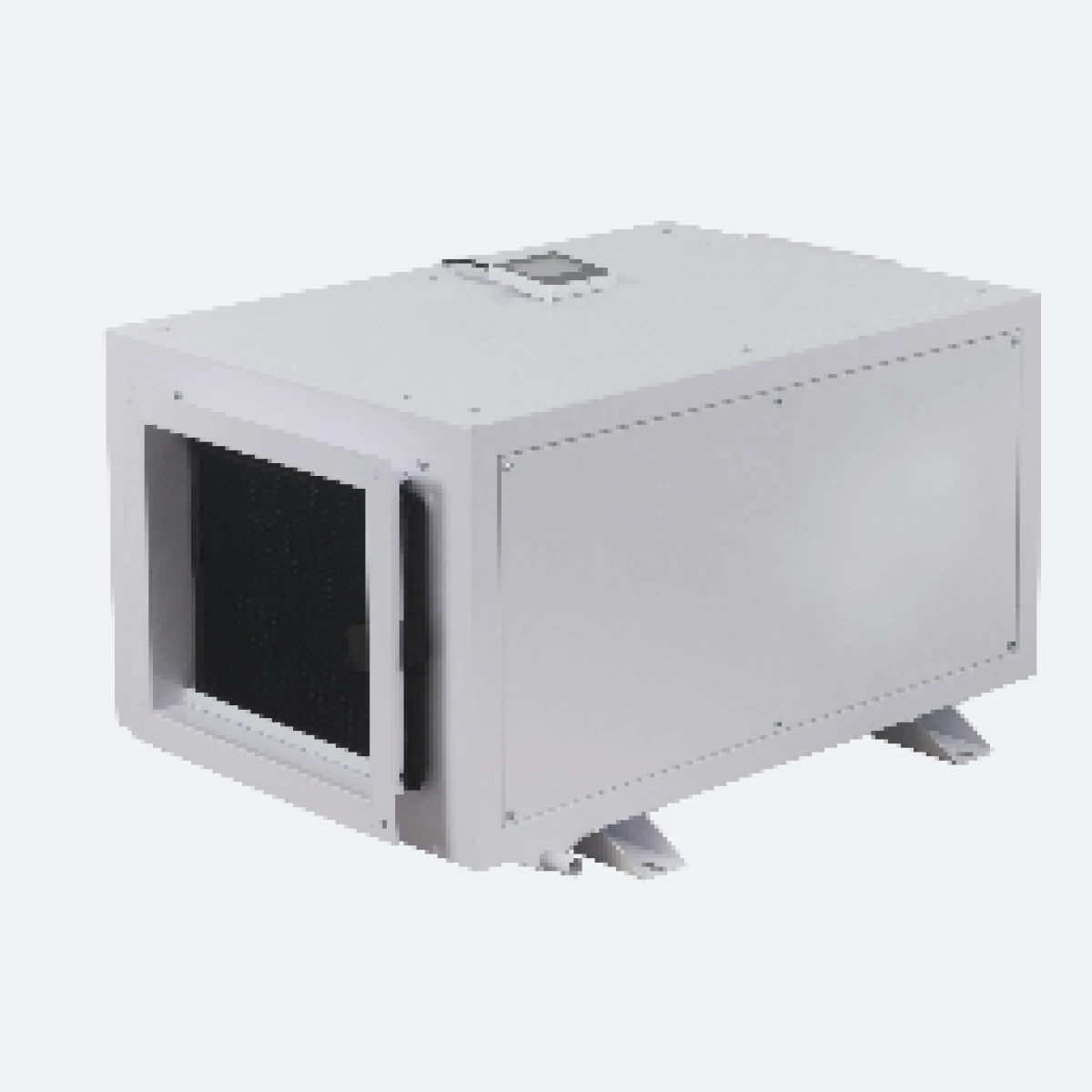
Low-Profile Form Factor — Built for 18–36" Vertical Clearance

Crawl spaces are physically constrained: 18–36 inches of vertical clearance is typical, and access is usually through a 24-inch hatch. A unit that does not fit through the hatch or stand under the joists is unusable regardless of nameplate capacity. Standard-profile units (20–25 inches tall) fit most crawls; for low-clearance spaces under 18 inches, ultra-low-profile units (11–13 inches tall, with reoriented compressor and coil layout) are the only option. A complete platform serves both form factors.
+

Built-in Condensate Pump — 14–20 ft Vertical Lift Drainage

Most crawl spaces lack a floor drain or sump pump within reach. Gravity drainage requires the unit to sit above the drain destination with continuous downward slope — rarely possible in a crawl. The standard solution is a built-in condensate pump that lifts water 14–20 feet vertically and pushes it horizontally to an exterior drain. Pump capacity must match the unit's maximum extraction rate so the pump never becomes the bottleneck during peak humidity periods.
+

Our Industrial Dehumidifier Range

We manufacture four series of dehumidification equipment, organized by application and installation type. Click any series below to view full model specifications.


Series

GDH Ceiling Mounted Dehumidifier (GDH-CE38)

GDH Ceiling Mounted Dehumidifier (GDH-CE38)

Capacity & Application

38L/day. 220V/50V. Concealed ceiling installation; ideal where floor space is limited. Direct hose drainage.


Series

GDH Ceiling Mounted Dehumidifier (GDH-CE56)

GDH Ceiling Mounted Dehumidifier (GDH-CE56)

Capacity & Application

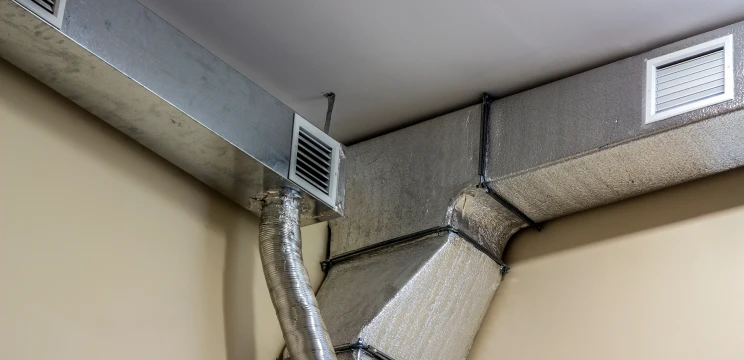
56L/day. 220V/50V. This powerful ceiling-mounted unit saves precious floor space by integrating directly into your ceiling void or HVAC ducting. It features a tankless, automated direct drain and an eco-friendly R290 design—perfect for seamless, high-efficiency humidity control.


Series

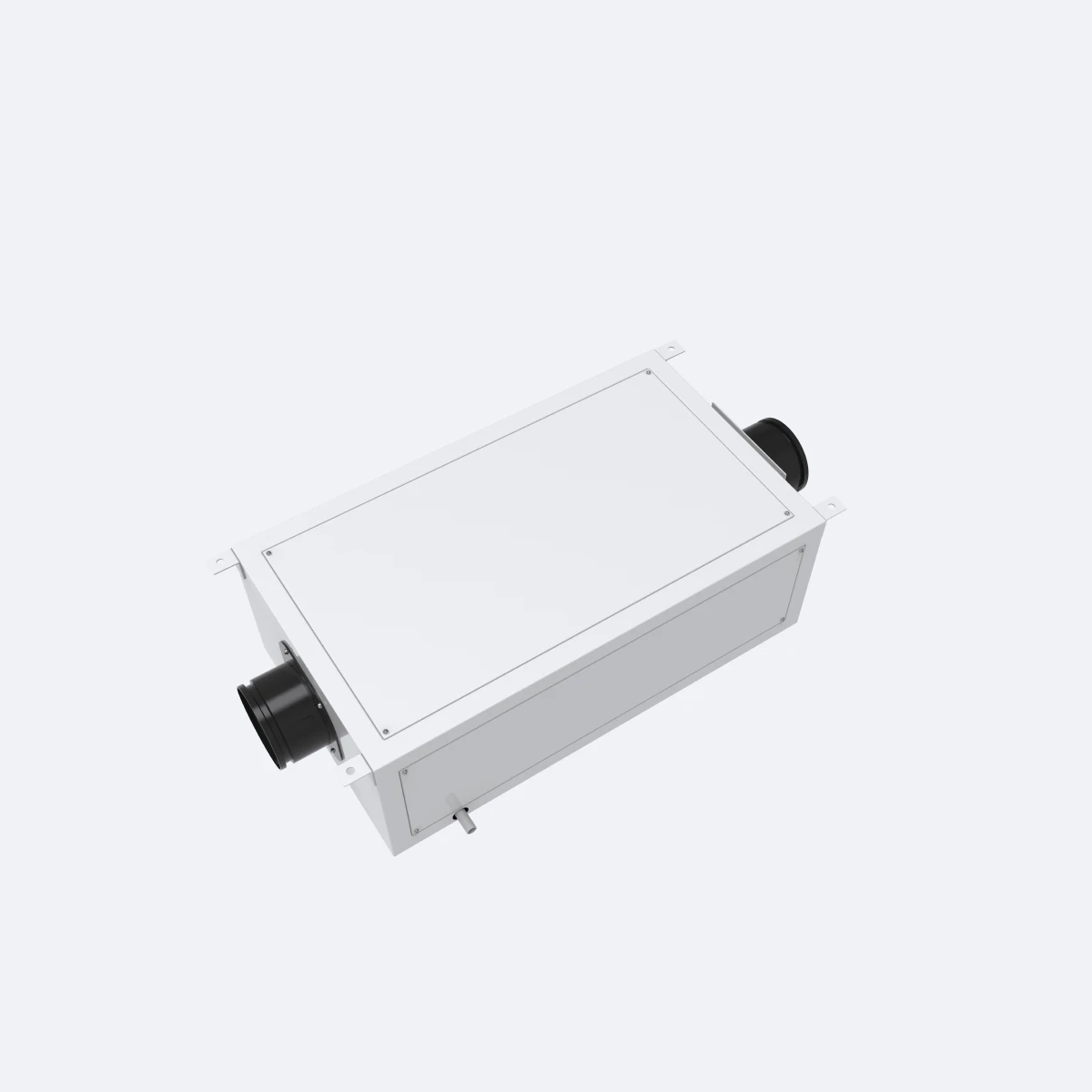
GDH Ducted Dehumidifier Series (GDH-CE90 / CE138 / CE156 / CE168)

GDH Ducted Dehumidifier Series (GDH-CE90 / CE138 / CE156 / CE168)

Capacity & Application

90-168L/day,220V / 50Hz. It features an LCD touch controller, direct hose drainage, and dual copper coils for reliable, tankless operation. Model: GDH-CE90 / CE138 / CE156 / CE168.


Series

Ducted Dehumidifier with Fresh Air Integration (30L to 156L Capacity Tiers)

Ducted Dehumidifier with Fresh Air Integration (30L to 156L Capacity Tiers)

Capacity & Application

30-156L/day, 220V / 50Hz. This 2-in-1 ducted system combines powerful dehumidification with an outdoor fresh air supply. Designed for concealed ceiling installation, it eliminates indoor CO2 buildup while offering intelligent touch control and durable all-copper coils. Model: Ducted Dehumidifier with Fresh Air Integration.


In addition to dehumidifiers, we also manufacture:

UH-DS Ultrasonic Humidifiers (2 kg/h to 30 kg/h) — UH-DS-02E through UH-DS-30E

DXHW Floor-Standing Temperature & Humidity Control Unit (2 kg/h to 20 kg/h) — DXHW-3 through DXHW-70

DXSL Integrated Humidifier & Dehumidifier Units (3 kg/h to 40 kg/h) — DXSL-60 through DXSL-480


READ MORE

Applications We Serve

Encapsulated Crawl Space

An encapsulated crawl space — sealed ground vapor barrier, sealed foundation walls, sealed vents — is the primary design target for the SHISHUO platform. With encapsulation in place, the dehumidifier handles residual moisture from vapor diffusion and any HVAC or plumbing sources. Target humidity is typically 50–55% RH. For most encapsulated crawls up to 2,200 sq ft (205 m²), a 70 PPD AHAM unit handles the load; above 2,800 sq ft, step up to 100 PPD AHAM or specify multiple units.
+

Vented or Partially Encapsulated Crawl Space

Crawl spaces still in the vented or partially-encapsulated state need higher capacity because the unit is fighting outdoor air infiltration in addition to vapor diffusion. The same floor area that needs 70 PPD AHAM when fully encapsulated typically needs 90 PPD AHAM when only partially sealed. Operating a dehumidifier in a fully vented configuration without any encapsulation is not a recommended deployment — encapsulate first, then size the unit for the sealed condition.
+

Unfinished Residential and Light Commercial Basement

Residential and small commercial basements share most of the design profile with crawl spaces: continuous duty, 115V single-phase, similar capacity range, continuous drainage to a sump or floor drain. The standard-profile SKUs in the planned platform (CS-70, CS-90, CS-110) serve unfinished basement applications directly. Drainage routing is usually simpler than a crawl space because a floor drain or sump pit is more often available.
+

Finished Basement and Mechanical Closet

Finished basements with mechanical closets need the same humidity control but with concealed installation. The ultra-low-profile SKU in the planned platform (CS-LP55) fits inside standard mechanical closets and operates quietly enough for occupied living space. Continuous pump drainage to the sump or perimeter drain matches the typical finished-basement layout.
+

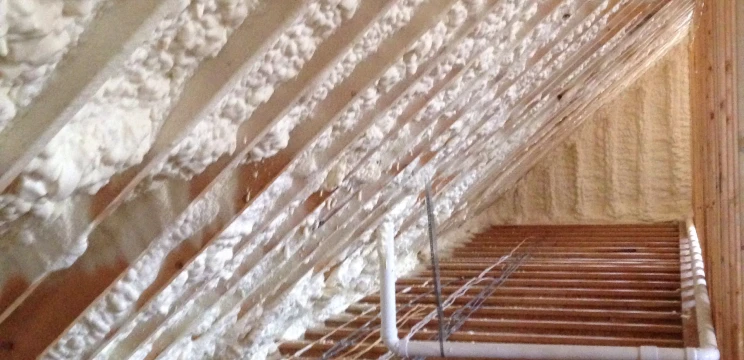
Attic in Hot Climates — Cooling Season Moisture Control

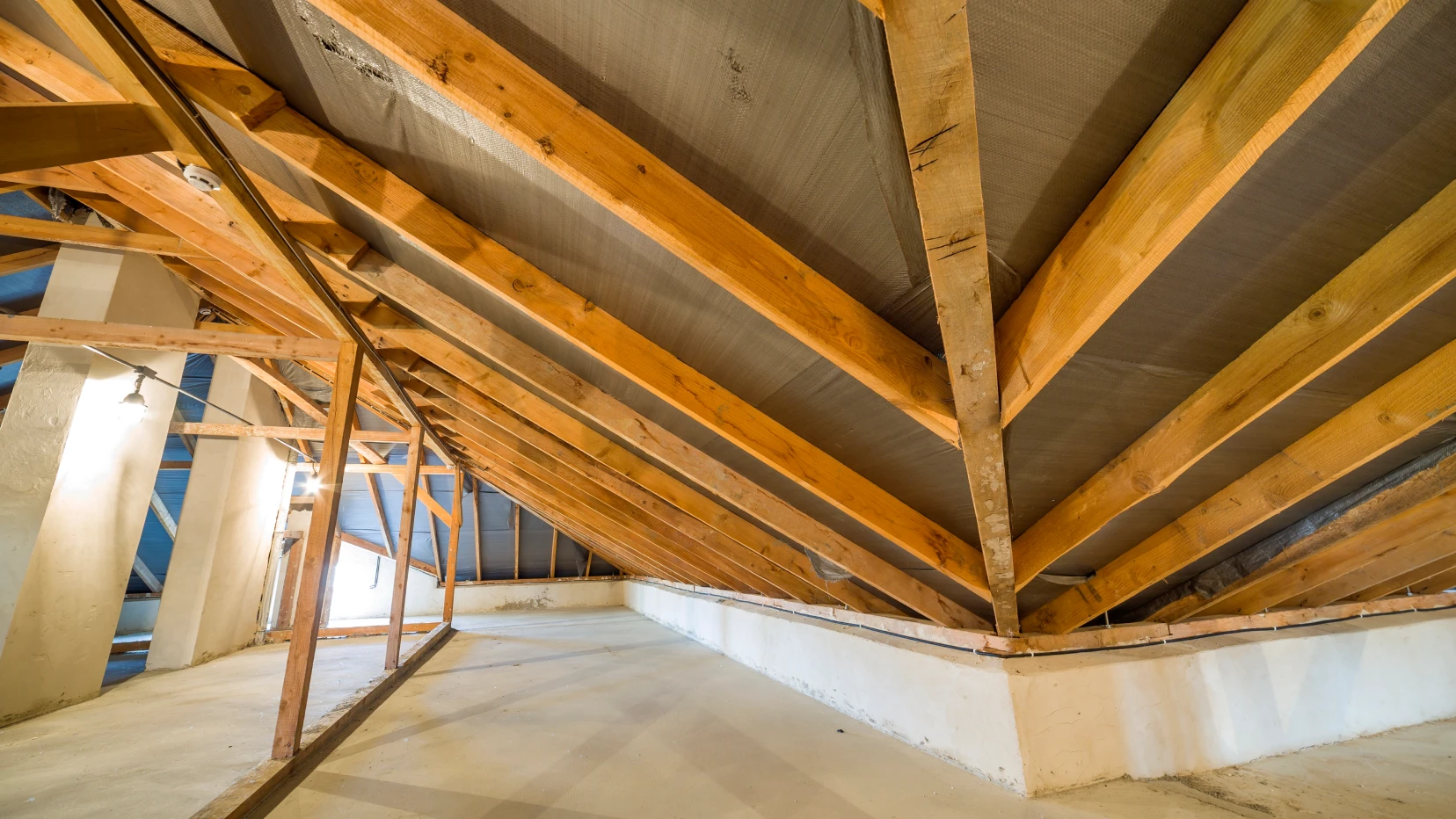
Attics in hot-summer climates — the southeastern US, Texas, the lower Midwest — accumulate humidity during cooling season as warm humid outdoor air leaks through vents and cooler attic surfaces condense moisture. Uncontrolled attic humidity drives roof deck delamination, insulation degradation, and HVAC ductwork condensation. The same platform serves attic applications — typically the low-profile SKU because attic working height varies and equipment must clear roof trusses.
+

Garage, Workshop, and Vehicle Storage

Detached garages, workshop garages, and vehicle storage spaces benefit from continuous dehumidification to prevent corrosion on tools, equipment, stored vehicles, and stored goods. Garage applications often run unattended for long periods, so built-in pump drainage and a 5-year warranty matter more than absolute capacity. The CS-70 or CS-90 SKU is the typical match depending on garage size and insulation level.
+

Water Damage Restoration — LGR Applications

LGR (low-grain refrigerant) dehumidifiers used in flood restoration share core hardware with crawl space units — same compressor, coil, and pump platform. Restoration contractors often carry the same SKU for both crawl space humidity control and storm-damage drying. The planned CS-110 SKU with built-in pump is designed to serve both segments. For restoration-specific features such as rugged casters and stack-ability, ODM hardware modification is the appropriate path.
+

Whole-Home HVAC-Integrated Dehumidification

Whole-home dehumidification — installing a dehumidifier inline with the central HVAC return air to treat moisture across the entire house — is the application Aprilaire and Ultra-Aire built their residential business on. The planned CS-90 and CS-110 SKUs include 10-inch duct collars compatible with standard residential HVAC ducting for this installation pattern. This is the natural growth direction beyond the dedicated crawl space use case.
+


How to Size a Crawl Space Dehumidifier — Encapsulation, Climate, and Capacity

Crawl space sizing depends on three factors: floor area, encapsulation status, and climate zone. The Aprilaire sizing approach used across the industry assumes an 8-foot equivalent ceiling and a moisture load profile typical of a sealed crawl. Use the baseline below as a starting point, then adjust for your climate and building condition.

Crawl Space AreaEncapsulated (sealed + vapor barrier)Partially EncapsulatedVented (no encapsulation)
Up to 1,500 sq ft (140 m²)70 PPD AHAM90 PPD AHAMNot recommended — encapsulate first
1,500–2,200 sq ft (140–205 m²)70 PPD AHAM90 PPD AHAMNot recommended
2,200–2,800 sq ft (205–260 m²)80 PPD AHAM100 PPD AHAMNot recommended
2,800–4,400 sq ft (260–410 m²)100 PPD AHAM120 PPD AHAMNot recommended
4,400–5,500 sq ft (410–510 m²)120 PPD AHAMMultiple units recommendedNot recommended
Above 5,500 sq ftMultiple units or ducted distributionMultiple units requiredNot recommended

Key sizing rules:

• Always specify the AHAM PPD figure (measured at 80°F / 60% RH), not the inflated "saturation PPD" some brands publish. A unit advertised as "198 PPD at saturation, 90 PPD at AHAM" will deliver about 90 PPD in a normal crawl space.
• Add 20–30% capacity in climates with extended humid seasons (Florida, Gulf Coast, coastal Carolinas).
• For low-clearance crawl spaces (under 18 inches vertical clearance), choose ultra-low-profile units (11–13 inches tall). Standard 20–25-inch-tall units physically will not fit.
• For crawl spaces without a sump pump or floor drain access, choose a unit with built-in condensate pump — gravity drainage is not usable in most crawl spaces.


AHAM vs. Saturation PPD — Why the Big Numbers Are Misleading

Crawl space dehumidifier shopping is full of numbers that look impressive but do not reflect real-world output. Three rating standards exist; understanding them prevents buying the wrong size.

Rating StandardTest ConditionWhat It Tells YouTypical Use
AHAM (80°F / 60% RH)27°C / 60% RHRealistic output in summer crawl space conditionsIndustry standard for North American crawl space sizing
DOE 2019 (65°F / 60% RH)18°C / 60% RHOutput under cooler conditions; used for Energy Star qualificationEnergy Factor calculation; Energy Star certification
Saturation (90°F / 90% RH)32°C / 90% RHMaximum possible output in extreme conditionsMarketing — rarely matches actual operation

A typical compressor refrigerant dehumidifier delivers approximately:
• 100% of nameplate capacity at saturation conditions (90°F / 90% RH)
• 45–50% of saturation capacity at AHAM conditions (80°F / 60% RH)
• 30–35% of saturation capacity at DOE 2019 conditions (65°F / 60% RH)

Example: AlorAir HDi90 publishes "198 PPD at saturation, 90 PPD at AHAM" on its specification sheet. Both numbers describe the same physical unit; the difference is the test condition. When sizing for a real crawl space that operates at 70–80°F and 70–80% RH most of the season, the AHAM figure is the relevant one. Buy on AHAM PPD, not on saturation PPD.


The SHISHUO Crawl Space Platform — Four SKUs in Development for OEM/ODM Partners

Our crawl space platform is currently in development. The four SKUs below define the design specifications for the platform — these specs are anchored to market benchmarks (Aprilaire E-series, AlorAir Sentinel and Helios series) and reflect what we will build. We are accepting OEM/ODM partnership commitments now; early partners participate in finalizing specifications such as filter type, control interface, badging, and color.

All four planned SKUs share the same baseline: 115V / 60Hz single-phase North American power; R-410A standard with R-454B low-GWP option on OEM specification; automatic defrost down to 33°F / 0.5°C ambient; auto-restart memory after power outage; continuous drain hose included with condensate pump on selected models; corrosion-resistant aluminum heat exchanger coil; targeted ETL / cETL safety listing for North American electrical compliance; targeted 5-year warranty matching the Aprilaire and AlorAir industry baseline; and internal humidistat with digital LCD control.

SKU (planned)AHAM PPDSaturation PPDCoverageDimensions (H × W × D)DrainageTarget Segment
SHISHUO CS-7070 PPD~155 PPDUp to 2,200 sq ft (205 m²)~12.5" × 14" × 22"Gravity hose; pump optionalCompact — entry to mid-range, comparable to Aprilaire E070 / AlorAir HD55
SHISHUO CS-9090 PPD~200 PPDUp to 2,600 sq ft (240 m²)~13" × 15" × 23"Built-in pump availableStandard whole-home / mid-commercial, comparable to Aprilaire E080CS / AlorAir HDi90
SHISHUO CS-110110 PPD~245 PPDUp to 3,500 sq ft (325 m²)~15" × 16" × 26"Built-in pump standardHeavy-duty whole-home / restoration, comparable to Aprilaire E100 / AlorAir Storm series
SHISHUO CS-LP5555 PPD~120 PPDUp to 1,500 sq ft (140 m²)~11.5" × 22" × 16"Built-in pump standardUltra low-profile for sub-18" crawl spaces, comparable to AlorAir Galaxy 60 / Helios MP55

Estimated Energy Factor target for the platform: 2.4–2.8 L/kWh at AHAM 80°F / 60% RH. The 2.4 L/kWh threshold qualifies for Energy Star certification under current US DOE standards; SKUs in the platform are designed to meet or exceed this baseline.

Why Source from a Chinese Manufacturer

North American crawl space dehumidifier brands fall into two groups. The first — Aprilaire, Santa Fe, Quest — are US-designed and US-manufactured at higher unit cost, with strong service networks and 5–6 year warranties. The second — AlorAir, Colzer, Moiswell, hOmeLabs, BlueDri — are US-branded with Chinese OEM manufacturing, sold at substantially lower retail price with similar 5-year warranties supported by replacement-on-failure rather than field service.

If you are entering the crawl space dehumidifier market as a distributor, restoration contractor specifying for repeat projects, HVAC dealer building a private-label line, or e-commerce brand, sourcing direct from a Chinese factory eliminates the second group's brand markup. The economics work because crawl space dehumidifiers have moderate technology barriers — core components (compressor, coil, fan, controller) are commodity-grade industrial parts available from the same suppliers serving Aprilaire and AlorAir.

What SHISHUO Provides

• Standard OEM: your branding, manuals, and packaging on our hardware platform
• ODM hardware modification: voltage variants (115V / 120V / 220V for international export), refrigerant choice (R-410A / R-454B / R-32), dimensions, color, control interface (basic LCD / Wi-Fi / app), filter grade (MERV-1 / MERV-8 / MERV-13 for HEPA-equivalent filtration)
• Six-step production flow per our catalog: requirement analysis, model selection, specification confirmation, production and assembly, testing and final inspection, packaging and shipping
• Export-ready: ISTA-tested shipping packaging, ETL / cETL certification support, FOB Shanghai or Ningbo

For project-specific MOQ, lead time, refrigerant options, and certification scope, contact amy@shishuodehu.com or WhatsApp +86 15372328650.

Need a Sizing Calculation for Your Greenhouse?

Send us your greenhouse dimensions, cultivation stage, target humidity, and operating temperature. Our engineering team will recommend the right SHISHUO model and capacity.

Request Sizing Download Catalog amy@shishuodehu.com

About SHISHUO

Switch between the tabs below to learn more. Each tab links to a dedicated page.

Company Overview

About

Founded 2015 ; Jiaxing production base 2023 (Zhejiang Shishuo); R&D, production, technical service integration; Shanghai-based international sales team

LEARN MORE
Company Overview

Quality Inspection

Quality-Control

Functional testing and 100% final inspection before shipment (per catalog Step 5); workshop-level inspection at heat exchanger and assembly stages

LEARN MORE
Quality Inspection

Global Shipping

Shipping

Export-standard crating for safe transport (per catalog Step 6)

LEARN MORE
Shipping

OEM & ODM Solutions

Oem-Odm

 6-step customization flow per catalog: requirement analysis → solution & model selection → specification confirmation → production & assembly → testing → packaging & shipping

LEARN MORE
OEM & ODM Solutions

Certifications

Certifications

Quality, environmental, and occupational health management system certifications; product safety certifications (CCC and CE class) shown in catalog

LEARN MORE
Certifications

Frequently Asked Questions

What size crawl space dehumidifier do I need for a 2,000 sq ft crawl space?

For a properly encapsulated crawl space of 2,000 sq ft (about 185 m²) with 6-mil vapor barrier installed on the ground and walls, plan for a 70 PPD AHAM unit (comparable to Aprilaire E070, AlorAir HD55, or the planned SHISHUO CS-70 SKU). For partially encapsulated or vented spaces, step up to 90 PPD AHAM. The single biggest factor in dehumidifier sizing is encapsulation status, not floor area — a smaller unit in a sealed crawl space typically outperforms a larger unit fighting outdoor air infiltration through open vents.

What is the difference between AHAM PPD and saturation PPD ratings?

These are two different test conditions for the same unit. AHAM (Association of Home Appliance Manufacturers) tests at 80°F and 60% relative humidity — a realistic summer crawl space condition. Saturation testing uses 90°F and 90% RH — extreme conditions rarely seen in practice. A unit listed as '198 PPD at saturation, 90 PPD at AHAM' is the same physical machine; the saturation number is roughly double the AHAM number for typical compressor dehumidifiers. When sizing for real-world conditions, use the AHAM PPD figure. The saturation figure is mostly marketing.

Do I need encapsulation before installing a crawl space dehumidifier?

Strongly recommended. Without encapsulation (6-mil or thicker vapor barrier across the ground and foundation walls, with foundation vents sealed shut), a dehumidifier spends its entire capacity drying soil moisture and outdoor air infiltration — usually with little visible effect on relative humidity. Encapsulation isolates the space; the dehumidifier then handles the residual moisture from vapor diffusion and plumbing or HVAC sources, which it can manage efficiently. The combined cost of encapsulation plus a properly sized dehumidifier is typically lower than running an oversized unit indefinitely in an unsealed space.

Do your crawl space dehumidifiers have a built-in condensate pump?

The planned SHISHUO CS-90, CS-110, and CS-LP55 SKUs include built-in condensate pumps as standard, lifting water 14–20 feet vertically and pushing it horizontally to an exterior drain. The CS-70 SKU ships with gravity drain hose as standard; condensate pump is available as an OEM specification or aftermarket add-on. For most crawl spaces without floor drain or sump pump access, pump drainage is essential — gravity drainage is not practical when condensate has to leave the building.

What is the target relative humidity for a crawl space?

Industry consensus is 50–55% RH. Below 50% wastes energy and can dry out wood structural members beyond normal range. Above 60% creates conditions for mold growth and wood-decay fungus. Most modern crawl space dehumidifiers ship with humidistats accurate to ±3–5% RH; set the target at 53% to keep operating margin on both sides. After installation, monitor the actual RH with a separate calibrated hygrometer in the first month to verify the unit's internal humidistat reading.

Are your crawl space units Energy Star certified?

The planned platform targets Energy Factor of 2.4 L/kWh or higher at AHAM 80°F / 60% RH — the current Energy Star qualification threshold. Energy Star testing and certification are conducted by AHRI-accredited laboratories and we plan to pursue certification on the CS-90 and CS-110 SKUs. For OEM partners requiring Energy Star certification under their own brand, certification can be applied at the partner level after qualifying test results are obtained.

What is the warranty on the SHISHUO crawl space platform?

The planned warranty matches the North American industry standard of 5 years on the unit and 1 year on accessories (filter, drain hose, pump). For OEM partnerships, warranty terms can be customized to match your retail program — for example, extended warranty with after-sales support handled by your team and refurbished-unit exchange program supported by SHISHUO. Discuss warranty structure during the OEM/ODM partnership conversation.

What is your MOQ and lead time for OEM and ODM orders?

MOQ and lead times depend on the specific SKU, your refrigerant choice, customization scope (Standard OEM badging vs. full ODM hardware modification), and total order volume. Because this platform is in development, current MOQ thresholds and first-order lead times are confirmed on a per-project basis. Please contact amy@shishuodehu.com or WhatsApp +86 15372328650 with your target SKU, volume, and launch timeline — we will confirm current terms tied to your project.

Can I source crawl space dehumidifiers from SHISHUO today?

The crawl space platform is currently in development. We are accepting OEM/ODM partnership inquiries now — early partners participate in finalizing specifications such as control interface, badging, color, filter grade, and packaging. Production sample units are expected to be available in the coming quarters. If you have a defined launch timeline for your own brand or distribution network, contact us early so we can align production scheduling with your launch.

Do you also manufacture standard commercial and industrial dehumidifiers?

Yes. Existing production covers commercial dehumidifiers (50–168 L/day, 220V single-phase), industrial dehumidifiers (180–1,440 L/day, 380V three-phase), ceiling-mounted ducted units, and rotary desiccant dehumidifiers (0.6–13 kg/h). The crawl space platform is a new product line specifically targeting the North American 115V / 60Hz residential and light commercial market. See our other collection pages for the existing ranges — Commercial Dehumidifier, Industrial Dehumidifier, Ceiling-Mounted Dehumidifier, and Desiccant Dehumidifier.

Technical Resources
Switch between the tabs below to learn more. Each tab links to a dedicated page.
Encapsulation Standards — 6-Mil, 10-Mil, and 20-Mil Vapor Barriers Compared
How polyethylene barrier thickness affects vapor permeance and puncture resistance, when the upgrade from 6-mil to premium 10-mil or 20-mil is justified, and how barrier seam sealing and wall-up coverage influence the final dehumidifier sizing target.
Sizing for Climate Zone — Why Florida and the Gulf Coast Need More Capacity
How extended humid seasons (Florida, Gulf Coast, coastal Carolinas) drive a 20–30% capacity adder over the baseline sizing table, and how operating hours per year shift the lifecycle economics of compressor versus desiccant configurations for unheated crawl spaces.
AHAM, DOE 2019, and Saturation PPD — Reading the Spec Sheet Honestly
Detailed comparison of the three published test conditions, why a unit can be advertised at two very different PPD numbers without contradiction, and how to translate any vendor's spec sheet back to the AHAM figure used for real-world sizing.
Sourcing Crawl Space Dehumidifiers from a Chinese Manufacturer — OEM and ODM Process
How the six-step production flow (requirement analysis, solution and model selection, specification confirmation, production and assembly, testing and 100% final inspection, packaging and shipping) maps to a Standard OEM versus ODM hardware modification project, and what specifications (voltage, refrigerant, dimensions, control interface, filter grade, packaging) early partners typically lock in.

Get the Right Climate Control
Solution for Your Application

We support industrial temperature and humidity control projects with clear specifications, stable equipment, and practical system advice. Share your application details and capacity requirements—our team will respond with a suitable solution and quotation.

Get a Quick Quote

Amy

General Manager