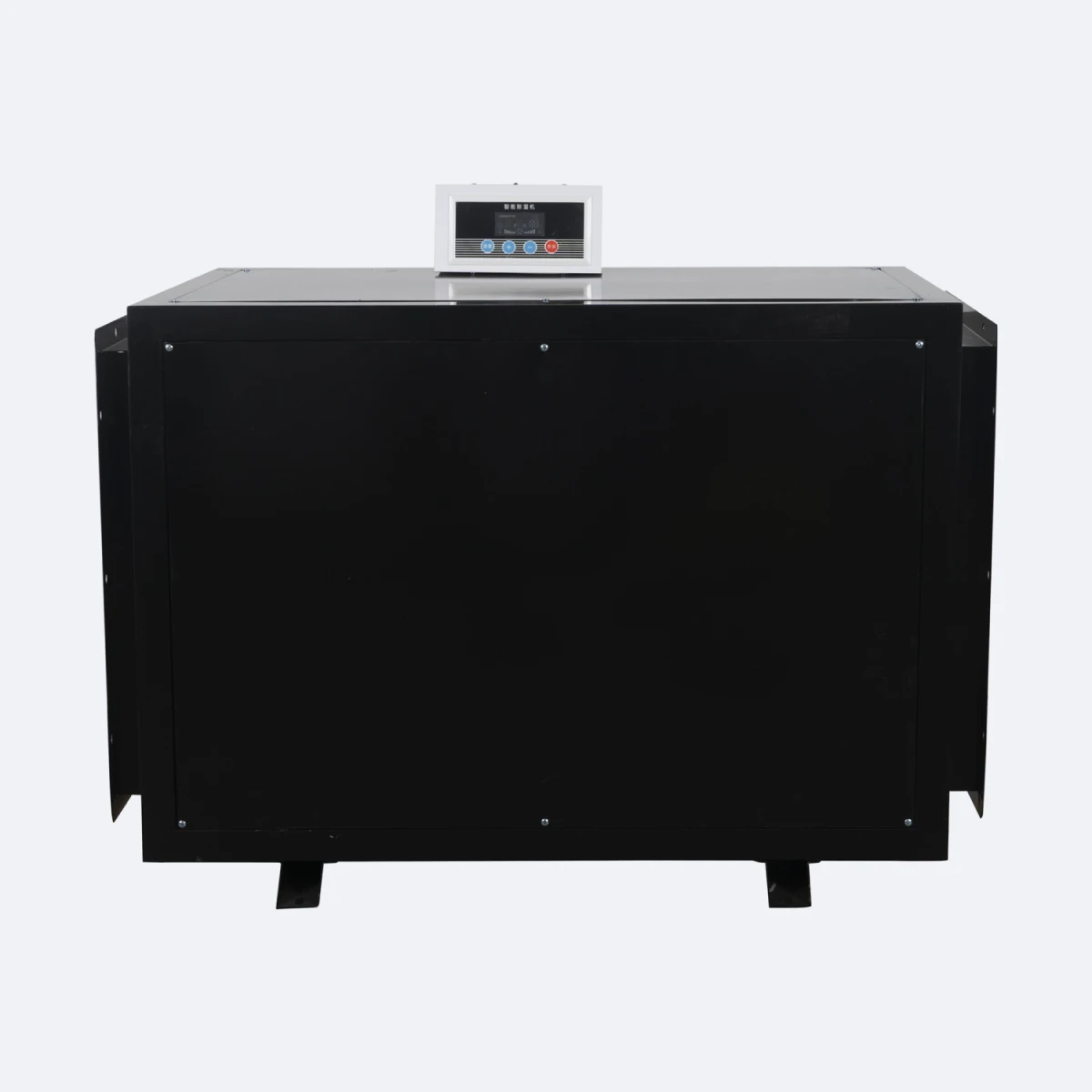
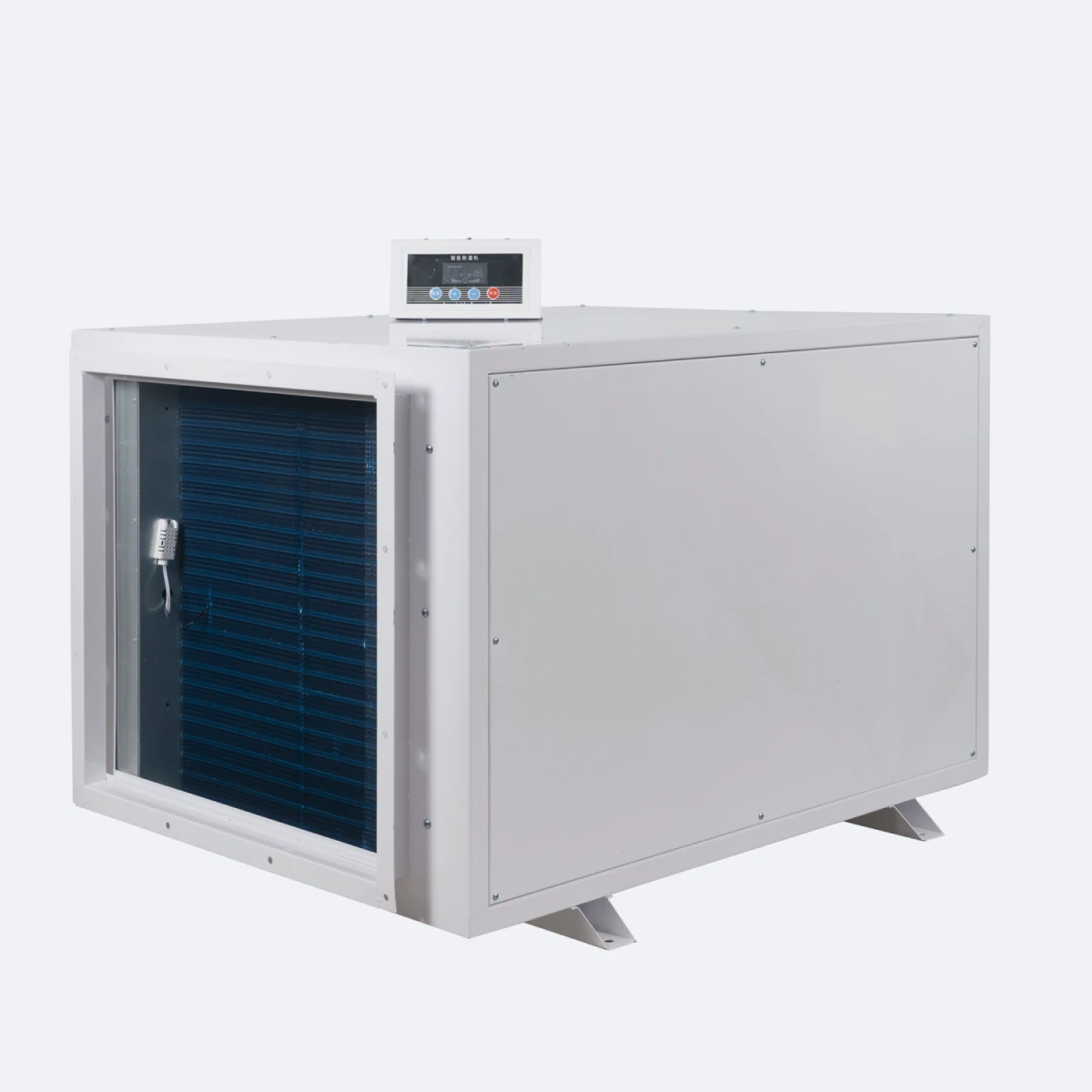
Where the CE180–CE288 Temperature-Controlled Series Fits Best
This is the small-format temperature-controlled ceiling-mounted industrial dehumidifier — three capacity tiers covering precision installations between 180 and 350 m² floor area per unit. The applicable scenarios on the product specification — data centers, server rooms, laboratories, pharmaceutical manufacturing plants, electronics workshops, battery production facilities, cleanrooms, archives storage rooms, museums, food processing areas and medical equipment rooms — describe the same precision industrial environments served by our larger temperature-controlled ranges, but at single-zone scale rather than multi-bay or full-floor scale.
Typical single-unit applications: individual laboratory rooms (single instrument bay, single bench area), single pharmaceutical production suites (granulation, drying, or compression as separate rooms), single data center pods or smaller server rooms, single cleanroom modules within larger cleanroom complexes, dedicated electronics workstation areas, single battery R&D rooms or pilot production cells, museum gallery zones with controlled environment requirements, and dedicated medical equipment rooms.
This is not the right product for general industrial installations at moderate ambient temperatures. For warehouses, archives, basements and similar standard-temperature environments using the identical CE180–CE288 chassis at lower cost, see the industrial dehumidifier for warehouse. The temperature-controlled premium pays back only in precision applications where ambient temperature varies widely across processes or shifts and standard 5 to 38 °C industrial equipment cannot run continuously.
Why Smaller Capacity Plus Wide Temperature Envelope Together
Many precision industrial facilities have moisture loads that fit comfortably within the 180 to 288 L/day capacity range of this small-format ceiling-mounted industrial dehumidifier series — laboratory rooms typically run 50 to 150 L/day moisture load, single pharmaceutical production suites 80 to 200 L/day, and individual data center pods or server rooms 100 to 250 L/day depending on cooling design and air infiltration. Oversizing to 380 L/day or larger units in these spaces wastes capacity, adds unnecessary cost, and produces undesirable short-cycling on the compressor.
What these smaller precision spaces share with their larger counterparts is the wide temperature operating envelope requirement. A small pharmaceutical drying room has the same elevated ambient temperatures as a large one. A single data center pod can have the same hot aisle issues as a large hall. A laboratory thermal cycling room or a single electronics burn-in chamber runs the same -3 to 60 °C ambient range as larger production zones. This series provides the wide-envelope operation at the right capacity scale for single-zone applications.
-3 to 60 °C Engineering — Same Thermal Design as Larger Ceiling-Mounted Range
The -3 to 60 °C operating envelope uses the same thermal engineering principles as our larger ceiling-mounted temperature-controlled industrial dehumidifier (CE380–CE720) and the floor-standing temperature-controlled industrial dehumidifier range — higher-pressure-rated compressor specifications, larger condenser heat exchange surface, industrial-grade electronic components rated to 85 °C+ junction temperature, and enhanced hot-gas bypass defrost for sub-zero operation.
The compact cabinet on this small-format version accommodates these same components in a smaller package suited to the lower capacity. Extraction rates across the temperature envelope follow the same curves as the larger units: roughly 60 to 70 percent of rated capacity at -3 °C ambient, full rated capacity at the 30 °C reference condition, and approximately 110 to 130 percent of rated capacity at 60 °C ambient (where higher absolute moisture content in hot humid air offsets the reduced compressor efficiency).
Three Capacity Tiers — Sizing for Smaller Precision Spaces
The three-tier capacity structure maps to typical single-zone precision installation sizes:
- GDH-CE180 (180 L/day, 180–240 m²) — single laboratory rooms, individual pharmaceutical granulation or compression suites, single electronics workshop bays, museum gallery zones with environmental control requirements, dedicated battery R&D cells
- GDH-CE240 (240 L/day, 200–300 m²) — multi-bench laboratory complexes, single pharmaceutical production suites with multiple process stations, mid-sized data center pods, dedicated cleanroom modules within larger cleanroom suites
- GDH-CE288 (288 L/day, 260–350 m²) — larger single-room precision installations, full single pharmaceutical production rooms, smaller data center halls, multi-station electronics fabrication areas, larger cleanroom modules
For installations above 350 m² floor area per zone, the larger ceiling-mounted CE380–CE720 range is more cost-effective per square meter covered. Alternatively, distributed multi-unit deployment of this CE180–CE288 range across the precision facility provides equivalent total capacity with built-in redundancy and finer-grained zone control — see the distributed deployment section below.
Application: Individual Laboratory Rooms and R&D Suites
Laboratory humidity targets vary by research domain: analytical chemistry labs typically 30 to 50 % RH for balance accuracy, biology and microbiology labs 40 to 60 % RH for sample stability, materials science labs 30 to 50 % RH for moisture-sensitive specimens, and electronics R&D labs 30 to 50 % RH for component handling per IPC J-STD-033. Many laboratory environments operate at standard 20 to 25 °C ambient where any industrial dehumidifier serves adequately, but certain specialized labs need the wide envelope.
Examples where the temperature-controlled range matters: thermal cycling labs running -20 to +80 °C test profiles with ambient air around the equipment varying widely; battery characterization labs with elevated ambient around test fixtures; environmental simulation chambers with adjacent humidity-controlled spaces at varying temperature; and high-temperature analytical labs (X-ray diffraction with heated stages, thermal gravimetric analysis stations) where local ambient runs 35 to 50 °C.
Application: Single-Zone Dehumidifier for Pharmaceutical Industry Use
A dehumidifier for pharmaceutical industry use at the single-suite scale serves the same regulatory framework as larger pharmaceutical installations — USP <1116>, EU GMP Annex 1, and ICH Q7 set the humidity tolerances for production environments regardless of zone size. The single-zone scale fits typical compartmentalized pharmaceutical facility layouts where granulation, drying, blending, compression, and coating occupy separate validated rooms.
For drying and granulation rooms operating at 35 to 50 °C ambient, this temperature-controlled small-format ceiling-mounted industrial dehumidifier serves the single-suite scale where the larger CE380–CE720 range would be over-specified. The compact ceiling-mounted format integrates with pharmaceutical cleanroom return-air plenums without disrupting the ISO 14644 cleanroom airflow patterns. Validation documentation packages — humidity sensor calibration certificates, IQ/OQ protocols, PQ templates — are available as ODM additions quoted per project, the same as for our larger temperature-controlled ranges.
Application: Smaller Data Center Pods and Equipment Rooms
Not every data center installation is a full hall. Modular data center designs deploy compute capacity in pods of 4 to 20 racks at a time; edge computing installations sit in single rooms within larger commercial buildings; smaller enterprises operate dedicated server rooms in the 50 to 300 m² range. These smaller-scale data center installations need the same ASHRAE TC 9.9 humidity control as the larger ones, including wide-envelope operation for hot aisle and equipment-room dehumidification.
This series fits the single-pod or single-room data center installation — quiet ≤60 dB(A) operation appropriate for IT staff work areas, 380V three-phase compatible with data center electrical infrastructure, and -3 to 60 °C envelope covering hot aisle ambient up to 55 °C and emergency operation during cooling failures. For full data hall installations above 350 m², the larger ceiling-mounted CE380–CE720 range or floor-standing temperature-controlled range provides better capacity per unit cost.
Application: Single Cleanroom Modules and Electronics Workstation Zones
Cleanroom facilities typically aggregate multiple cleanroom modules of different ISO 14644 classifications under a single building envelope — a Class 7 main production area, Class 5 critical work zones, Class 8 buffer areas, and Class 6 gowning rooms might all coexist. Each module has its own humidity target and ambient temperature profile based on the processes housed within. Centralized humidity control at the building level cannot meet zone-specific targets; module-level humidity control through smaller dehumidification units is the standard approach.
This small-format ceiling-mounted industrial dehumidifier fits single-module cleanroom installations where the wide -3 to 60 °C envelope serves elevated-temperature process areas. Electronics manufacturing workstation zones — reflow soldering stations with ambient 40 to 50 °C, single burn-in chambers, dedicated component aging areas — also fit the single-zone scale and benefit from the same wide envelope.
Distributed Multi-Unit Deployment in Mid-Sized Precision Facilities
For mid-sized precision facilities (350 to 1000 m² total floor area), distributed deployment of multiple CE180–CE288 temperature-controlled units across the facility ceiling often outperforms a single large unit. The advantages: finer-grained humidity control across the facility (each unit handles its local zone with shorter response time), built-in redundancy (single unit failure does not lose facility humidity control), simpler ceiling structural requirements (70 to 80 kg per mounting point vs 210 to 260 kg for the larger range), and easier capacity matching to actual moisture load distribution across the facility.
Typical distributed deployment configurations: a 600 m² precision facility might use three GDH-CE288 units positioned to cover the main production area, the staging area, and the QC laboratory separately; a 500 m² pharmaceutical compounding facility might deploy two GDH-CE240 units covering the production rooms and one GDH-CE180 covering the support spaces. BMS integration via Modbus RTU allows centralized humidity monitoring and control across the distributed units, with humidity setpoint, mode, and fault status all reportable to the facility management system.
Concealed Ceiling Installation at 70–85 kg Per Unit
At 70 to 85 kg net weight per unit, ceiling installation is straightforward compared to the larger temperature-controlled CE380–CE720 range (210 to 260 kg per unit requiring steel angle frames across multiple ceiling beams). Standard ceiling structures in commercial laboratory buildings, pharmaceutical facilities, data centers and electronics manufacturing plants typically support 70 to 85 kg through threaded rod attachment to existing structural members without requiring custom support frames.
Cabinet height is 700 mm on all three models; allow an additional 50 mm for vibration-isolation mounts, giving a minimum ceiling void of 750 mm clear at the intended mounting position. Typical commercial laboratory and cleanroom buildings have 2.4 to 3.0 m floor-to-slab height with finished ceilings at 2.4 to 2.7 m, leaving ceiling voids of 300 to 800 mm depending on construction — measure actual void clearance before ordering. Vibration-isolation mounts are essential for installations adjacent to precision measurement equipment or in cleanroom modules where vibration affects production quality.
R32 Refrigerant — Standard Charge, Regulated-Market Compliance
All three models use R32 refrigerant (HFC single-component, GWP 675, A2L mildly flammable) with factory-sealed circuits as the standard configuration. R32 is the established compliance choice across regulated global markets — EU under the revised F-gas Regulation (EU 2024/573), UK, Japan under the Fluorocarbons Emissions Control Law, Australia, and increasingly across North America, China, and other markets phasing out legacy HFC blends. Single-component composition eliminates the fractionation risk associated with blended refrigerants during charge and top-up service — a meaningful maintenance advantage for precision equipment operating on multi-year service cycles in mission-critical cleanroom, pharmaceutical, and data center installations. R32 charge volumes are compact — below the IEC 60335-2-40 charge limits for the installation category, with exact charge specified per model in the technical documentation package provided at order. For facility safety policies that require additional ventilation analysis for A2L refrigerant in confined cleanroom or laboratory installations, we provide the charge and ventilation reference data required for the assessment.
For facility safety standards that specifically prohibit any flammable refrigerant in occupied production areas — a policy still applied in certain pharmaceutical validated cleanrooms, sterile manufacturing suites, and legacy-specification data centers — R410A is available as an ODM configuration from MOQ 200 units. R410A (HFC blend, GWP 2088, non-flammable) remains a valid selection where facility policy overrides GWP considerations, though it is under phase-down schedules across the EU, UK, US, and other regulated markets — most new-build projects specify R32 or absorb the safety analysis needed to permit R32 in occupied spaces to align with 2027–2032 regulatory milestones.
Distinguishing from Other Industrial Dehumidifier Variants
We offer multiple industrial dehumidifier configurations across form factors, temperature ranges, and capacity scales. Choose by combining your facility size, ambient temperature requirements, and form-factor constraints:
- This series (small ceiling-mounted + temperature-controlled, CE180–CE288, 180–288 L/day) — Right for: single-zone precision installations 180 to 350 m² per unit, with wide ambient temperature operation. Best for individual labs, single pharmaceutical suites, single data center pods, single cleanroom modules.
- Temperature-controlled ceiling-mounted industrial dehumidifier (CE380–CE720, 380–720 L/day) — Same wide envelope, larger chassis. Right for: full data center halls, full pharmaceutical production floors, full battery production complexes 350 to 900 m² per unit.
- Temperature-controlled industrial dehumidifier (floor-standing, 180–1440 L/day, 10 capacity tiers) — Same wide envelope, floor-standing format. Right for: facilities where floor space is available, larger upper capacity needs (above 720 L/day per unit), or where ceiling structure cannot accept the mounted format.
- Industrial dehumidifier for warehouse (CE180–CE288, standard 5–38 °C) — Identical chassis at standard temperature range. Right for: warehouses, storage rooms, archives, switchgear rooms at standard ambient. Lower cost when wide envelope is not required.
- Industrial dehumidifier for basement (CE380–CE720, standard 5–38 °C) — Larger chassis at standard temperature. Right for: commercial basements, parking garages, hotel mechanical sub-levels.
- Industrial dehumidifier (floor-standing, standard 5–38 °C) — Right for: general industrial environments at standard temperatures, broader capacity range available.
- Ceiling mounted dehumidifier (CE38, 38 L/day) — Right for: single offices, hotel rooms, small commercial spaces.
- Rotary dehumidifier (desiccant-type) — Right for: sub-zero applications below -3 °C and very low dewpoint applications.
Build and Safety
1.0 mm cold-rolled steel cabinet with electrostatic powder coating in standard industrial finish. Internal electrical components receive moisture-proof conformal coating before assembly, with industrial-grade temperature rating on the control PCB necessary for sustained 60 °C ambient operation. Each unit is leakage-tested at full extraction conditions before shipping. Multiple safety protections: high-pressure cut-out with extended trip threshold for the 60 °C upper operation, hot-gas bypass defrost for sub-zero operation, overcurrent protection on each phase, defrost interlock, fault alarm with real-time operational alerts, compressor thermal cut-out, phase-loss detection on the three-phase input, refrigerant low-charge protection. The precision humidity sensor maintains ±3 % RH measurement accuracy across the full -3 to 60 °C envelope.
OEM and ODM Service
As a Chinese industrial dehumidifier manufacturer with full OEM and ODM capabilities for the temperature-controlled ceiling-mounted range, we support brand customization from MOQ 10 units per model. OEM scope covers branding, cabinet color, plug type or terminal block configuration for the destination market's three-phase standard, control firmware language, and packaging artwork. Common OEM additions for precision-industry installation channels include extended power cord length, factory-bundled condensate pump and drain hose kits, custom mounting brackets, enhanced vibration-isolation mounts for noise-sensitive applications, pre-fitted return-air filters with documented replacement schedules, and humidity sensor calibration certificates for regulatory compliance documentation.
ODM scope covers alternative refrigerant (R32 from MOQ 200), 460V/60Hz North American specification from MOQ 50, BMS integration (Modbus RTU from MOQ 50, BACnet/KNX from MOQ 200), control firmware customization for facility-specific automation, custom mounting bracket designs from MOQ 50, IQ/OQ validation documentation packages for pharmaceutical applications quoted per project, and certification routing (CE, RoHS, ETL, SAA, GS, UL depending on target market). Production lead time is 30 to 40 days after artwork sign-off. FOB Ningbo or Shanghai.
For other capacity tiers and configurations, browse the full commercial dehumidifier lineup.