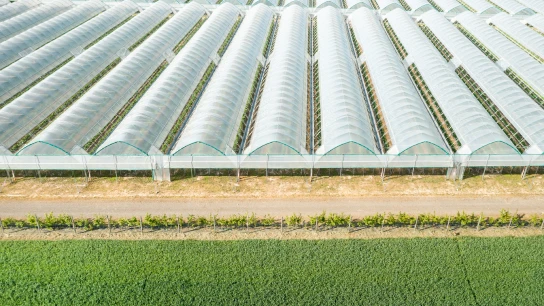
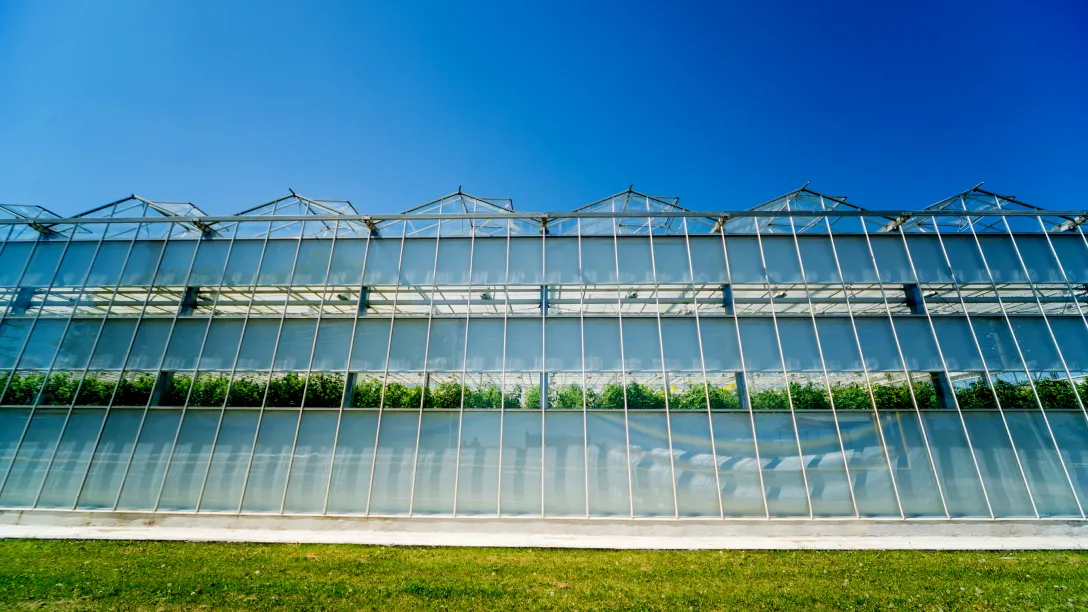
Commercial agriculture operates on a massive hydrological scale. Plants process water constantly, acting as highly efficient biological humidifiers. In a closed or semi-closed greenhouse environment, a mature crop canopy transpires approximately 95% of its daily irrigation volume directly into the surrounding air as water vapor. If a facility administers 500 gallons of water per day, nearly 475 gallons must be mechanically extracted from the air to maintain baseline stability.
Passive ventilation strategies, utilizing ridge vents and exhaust fans, offer limited utility in modern high-yield horticulture. Ventilation relies entirely on favorable external weather conditions. Drawing outside air into the facility fails during rainy seasons, high-humidity summer days, or cold night cycles. Maintaining precise climate parameters regardless of external weather patterns requires the integration of mechanical dehumidification equipment designed specifically for agricultural latent heat loads.
Vapor Pressure Deficit (VPD) and Plant Physiology
Advanced horticultural climate control relies on Vapor Pressure Deficit (VPD) rather than simple relative humidity metrics. VPD measures the exact difference, typically expressed in kilopascals (kPa), between the amount of moisture currently in the air and the maximum amount of moisture the air can hold at that specific temperature. This metric accurately dictates the atmospheric pressure exerted on the plant's stomata.
Maintaining an optimal VPD is strictly necessary for continuous plant metabolism. When the atmospheric moisture is too high (a low VPD), the air becomes saturated and cannot accept further vapor. The plant's transpiration mechanism halts entirely. Without transpiration, the root system stops pulling water and dissolved nutrients from the substrate. This physiological gridlock leads to localized nutrient deficiencies, manifesting as tip burn in leafy greens or blossom end rot in fruiting crops, despite abundant nutrients present in the soil.
Conversely, an excessively dry environment (a high VPD) exerts extreme atmospheric demand on the plant. The plant responds by closing its stomata to prevent complete desiccation, halting photosynthesis and stunting morphological development. Industrial dehumidifiers provide the mechanical leverage required to stabilize vapor pressure, ensuring the continuous, healthy flow of water and nutrients through the crop structure.
The Latent Heat Challenge: Why Standard HVAC Fails
Facilities often attempt to manage humidity utilizing standard comfort-cooling air conditioning systems. This approach fundamentally misunderstands the thermodynamic profile of a greenhouse. HVAC engineers evaluate systems based on the Sensible Heat Ratio (SHR). Sensible heat refers to temperature changes, while latent heat refers to changes in state, specifically the evaporation and condensation of water.
Standard commercial air conditioning systems are engineered for high sensible loads, operating with an SHR of approximately 0.70. This means 70% of their energy goes toward lowering the temperature, while only 30% removes moisture. Greenhouses present the exact opposite thermodynamic profile, generating massive latent moisture loads with varying sensible temperature requirements.
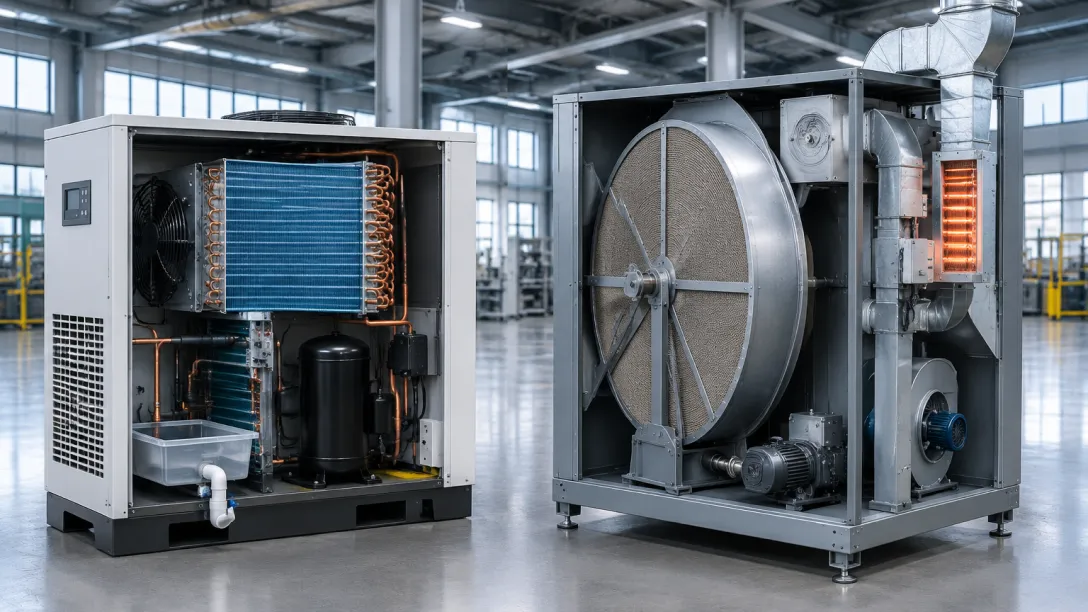
When a standard air conditioning unit reaches the programmed temperature setpoint, the compressor shuts off. The temperature is satisfied, but the latent moisture generated by the continuously transpiring plant canopy remains unchecked. Mechanical dehumidification resolves this imbalance. A dedicated commercial dehumidifier utilizes a refrigeration cycle to extract latent moisture, followed immediately by hot gas condenser reheat. The cooled, dry air passes over the warm condenser coil before leaving the unit, delivering aggressively dehumidified air back to the room without altering the ambient temperature.
Night-Cycle Dew Point and Pathogen Prevention
The most severe threat to crop integrity occurs during the transition to the night cycle or lights-off period. Thermodynamics dictate that warm air holds exponentially more water vapor than cold air. As the sun sets, or high-intensity grow lights deactivate, the ambient temperature inside the greenhouse drops rapidly.
During this temperature decline, the absolute volume of water in the air remains constant, but the air's capacity to hold that water shrinks drastically. Consequently, the relative humidity percentage spikes upward. If the temperature crosses the dew point, the air reaches 100% saturation. Water vapor instantly changes state, forming microscopic condensation droplets directly on the plant foliage and structural surfaces.
This exact physical mechanism triggers catastrophic pathogen outbreaks. Fungal pathogens, primarily Botrytis cinerea (gray mold) and powdery mildew, require free-standing moisture on the leaf surface to germinate. Spores present in the environment remain dormant until the facility crosses the dew point. Operating a dedicated dehumidifier during this temperature transition extracts the excess moisture precisely as the air loses its holding capacity, preventing the formation of condensation and neutralizing the threat of fungal germination at the source.
Mitigating Microclimates Through High-Velocity Airflow
Dehumidification capacity represents only half of the mechanical requirement; the other half is distribution. Moisture originates at the cellular level on the leaf surface. In dense, mature canopies, this localized transpiration creates an isolated boundary layer of heavily saturated air surrounding the plant.
These pockets of stagnant, humid air are known as microclimates. A climate sensor mounted on a structural pillar may report an acceptable room-level humidity of 55%, while the interior of the plant canopy suffers under 85% humidity. Pathogens thrive in these hidden microclimates, devastating crops despite seemingly perfect environmental data.
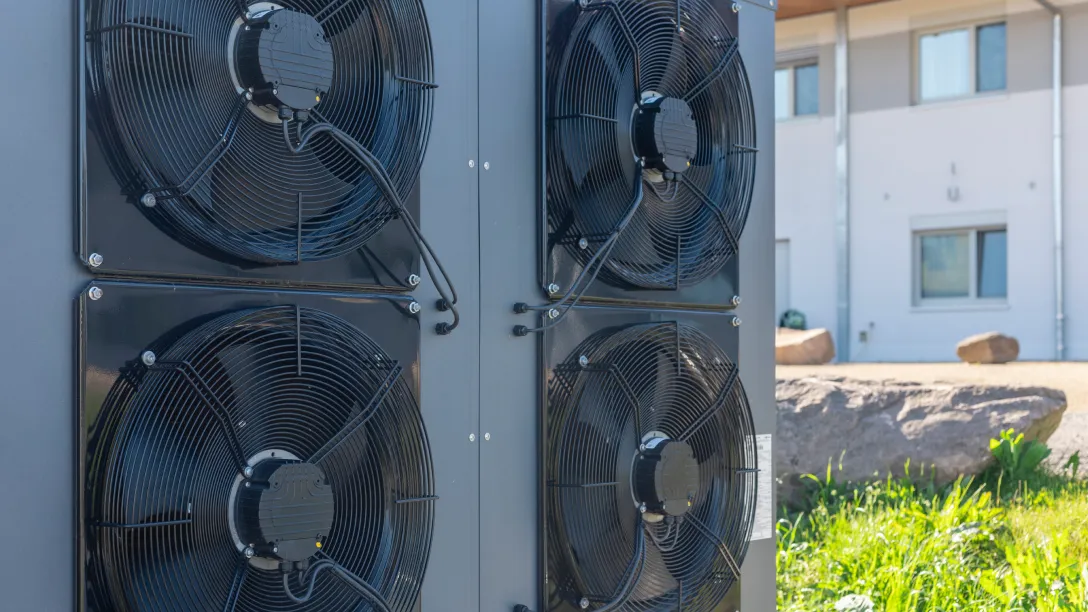
Industrial dehumidifiers engineered for horticulture incorporate high-velocity centrifugal blowers capable of moving massive volumes of air, measured in Cubic Feet per Minute (CFM). This forceful air distribution physically penetrates the dense plant structure, stripping away the saturated boundary layer and replacing it with conditioned, dry air. Equipment deployment strategies often involve ducting or elevated 360-degree air distribution modules to guarantee uniform climate consistency across the entire square footage of the facility.
Equipment Engineering for Harsh Agricultural Environments
Greenhouses present one of the most mechanically aggressive environments for HVAC equipment. The atmosphere contains elevated levels of aerosolized fertilizers, foliar spray drift, volatile organic compounds (VOCs) emitted by the plants, and occasionally sulfur vapor treatments utilized for pest management.
Standard commercial cooling coils utilize bare copper tubes and aluminum fins. In an agricultural environment, these dissimilar metals experience rapid galvanic corrosion, accelerated by acidic chemical exposure. Pitting occurs along the refrigeration lines, leading to catastrophic refrigerant leaks and total equipment failure, often within the first year of operation.
True industrial-grade horticultural dehumidifiers are manufactured with specialized metallurgical protection. The evaporator and condenser coils receive comprehensive epoxy coatings or electro-coating (e-coat) treatments, sealing the sensitive metals away from the corrosive atmospheric elements. Additionally, electrical panels are sealed against moisture ingress, and primary chassis components are fabricated from heavy-gauge, powder-coated steel to ensure a functional lifespan commensurate with industrial capital investments.
Sizing and Specification Parameters
Accurately specifying dehumidification equipment demands precise mathematical calculation rather than estimation. Engineers evaluate the total daily irrigation volume, the specific transpiration characteristics of the crop cultivar, the density of the planting arrangement, and the target temperature and humidity setpoints for both day and night cycles.
This calculation establishes the required moisture extraction rate, typically defined in Pints Per Day (PPD) or gallons per hour. Facility managers must also account for moisture infiltration through the building envelope and the baseline evaporation from exposed soil or hydroponic reservoirs. Deploying multiple distributed units often provides superior climate uniformity and redundancy compared to a single, centralized air handling system. Providing comprehensive operational data to engineering teams ensures the final equipment selection aligns perfectly with the facility's latent heat load.
Integrate Precision Climate Control
Protecting crop yields and maximizing facility efficiency requires rigorous environmental engineering. Implementing the correct moisture extraction systems guarantees continuous plant metabolism and eliminates the catastrophic risks associated with fungal pathogens. For detailed technical specifications, capacity engineering, and equipment selection, explore our professional greenhouse dehumidifier solutions designed exclusively for demanding commercial agricultural applications.
Frequently Asked Questions
How does a greenhouse dehumidifier differ from standard air conditioning?
Standard air conditioning removes moisture as a byproduct of lowering the air temperature, shutting off once the thermal setpoint is reached. A dedicated greenhouse dehumidifier isolates moisture removal and utilizes condenser reheat to maintain dry air output without overcooling the crop zone.
What is the relationship between plant irrigation and dehumidification sizing?
Dehumidification sizing strictly follows the "water in equals water out" principle. A mature plant canopy transpires approximately 95% of its daily irrigation volume back into the air as vapor, dictating the exact pints per day (PPD) of moisture the equipment must extract.
Why does humidity spike in a greenhouse at night?
Humidity spikes at night due to the thermodynamic relationship between temperature and air capacity. As the ambient temperature drops after sunset or lights-off, the air loses its capacity to hold water vapor, causing the relative humidity percentage to surge even if the absolute moisture volume remains unchanged.
What is Vapor Pressure Deficit (VPD) and why does humidity control matter for it?
VPD measures the exact difference between the moisture currently in the air and the maximum moisture the air can hold at that temperature. Precise dehumidification stabilizes this pressure deficit, ensuring plants continue healthy transpiration and nutrient uptake without triggering stomatal closure.
How does airflow affect greenhouse humidity control?
High-capacity dehumidification must be paired with massive airflow to penetrate dense plant canopies. Insufficient air circulation allows localized humidity pockets, known as microclimates, to form directly around the leaves, creating optimal conditions for botrytis and powdery mildew despite acceptable room-level sensor readings.
Why do dehumidifier coils fail in greenhouses?
Greenhouse environments contain corrosive elements such as aerosolized fertilizers, sulfur vapor treatments, and botanical off-gassing. Standard copper refrigeration coils corrode rapidly under these conditions, necessitating epoxy-coated or electro-coated components for industrial horticultural equipment.