The global proliferation of electric vehicles (EVs) and grid-scale energy storage systems relies entirely on the structural integrity of lithium-ion batteries. Manufacturing these high-density energy cells requires absolute control over atmospheric moisture. While standard semiconductor fabrication focuses primarily on particulate contamination, lithium-ion cell assembly demands an environment engineered specifically for chemical moisture extraction. Even microscopic traces of water vapor present during electrolyte injection or cell sealing initiate irreversible chemical degradation.
To prevent catastrophic failure, battery manufacturers construct specialized environments known as "dry rooms." These vaults operate at extreme psychrometric thresholds, requiring ambient air to be stripped of moisture to dew points ranging from -40°C to -70°C. Reaching these extreme parameters surpasses the physical limitations of conventional refrigeration. This technical guide outlines the chemical interactions between lithium electrolytes and water, the physics of vapor pressure infiltration, and the multi-stage active adsorption architecture required to sustain continuous ultra-low dew point production.
The Chemical Threat: LiPF6 and Hydrofluoric Acid Synthesis
The core vulnerability of a lithium-ion cell lies in its electrolyte solution. The most widely utilized conductive salt in commercial batteries is Lithium Hexafluorophosphate (LiPF6), dissolved in organic carbonate solvents. LiPF6 is exceptionally sensitive to moisture. When exposed to water vapor concentrations as low as a few parts per million (ppm), the salt undergoes rapid hydrolysis.
This chemical reaction produces Hydrofluoric Acid (HF) and phosphoryl fluoride. Hydrofluoric acid is highly corrosive and actively attacks the internal components of the cell. It dissolves the transition metal ions from the cathode material and destroys the Solid Electrolyte Interphase (SEI) layer on the anode, which is critical for long-term charge retention. Furthermore, this hydrolysis reaction generates significant volumes of hydrogen and carbon dioxide gas. Inside a sealed battery pouch or cylindrical cell, this gas generation leads to severe internal pressurization, causing the cell to physically swell. Defective cells suffering from moisture-induced HF generation exhibit drastically reduced lifecycle capacity, heightened internal resistance, and a severe risk of thermal runaway and explosion.
Defining the Dry Room Microclimate and Vapor Pressure Deficits
Standard HVAC engineering relies on relative humidity (RH) to define space conditions. In dry room engineering, relative humidity is an inadequate metric because the required moisture levels approach absolute zero. Instead, engineers measure atmospheric moisture using dew point (DP) temperature. A target specification of -50°C dew point means the air contains less than 0.04 grams of water per kilogram of dry air.
Creating this environment establishes an immense vapor pressure deficit between the interior of the dry room and the external factory floor. Atmospheric moisture inherently attempts to equalize pressure. If the external humidity is high, invisible water vapor exerts tremendous physical force, attempting to permeate through the walls, ceiling panels, and flooring of the dry room. Standard drywall and commercial insulation offer zero resistance to this force. Constructing a viable dry room requires a perfectly monolithic vapor barrier, typically utilizing continuously welded steel panels and specialized epoxy floor coatings. Without absolute structural encapsulation, the dehumidification equipment will run continuously at maximum capacity merely to combat envelope infiltration, failing to protect the actual manufacturing process.
The Human Moisture Load Constraint
Inside a sealed, monolithic dry room, the primary source of moisture contamination is the manufacturing workforce. The human body continuously emits water vapor through respiration and dermal transpiration. A single adult engaged in moderate physical activity releases approximately 100 to 150 grams of water vapor per hour. In an ultra-low dew point environment, the introduction of 150 grams of water acts as a massive latent heat load.
To dilute this continuous biological moisture emission and maintain a strict -50°C dew point, the HVAC system must deliver extraordinary volumes of aggressively dried supply air. Engineers must calculate the maximum allowable personnel occupancy and design the system to provide high Air Changes Per Hour (ACH). The supply air acts as a high-velocity purge, intercepting the moisture emitted by the operators and sweeping it into the return ducts before it can contaminate the exposed lithium cells. Integrating a high-capacity desiccant dehumidifier ensures the volumetric airflow is massive enough to instantly dilute human moisture without relying on excessive sensibly chilled air.
Multi-Stage Adsorption: The Cascading Rotor Architecture
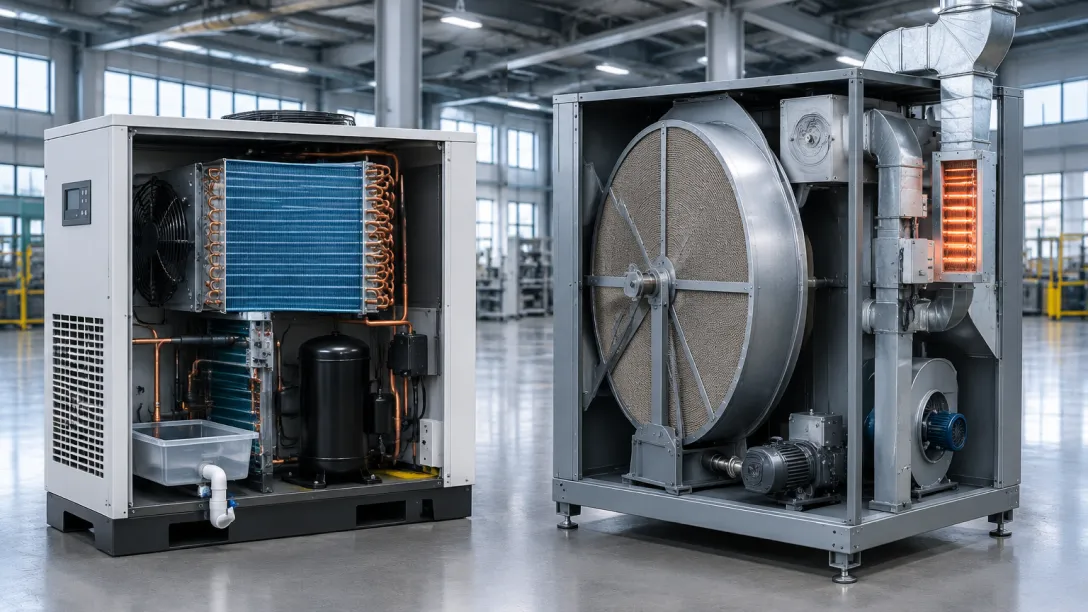
Achieving a -60°C dew point is physically impossible with a single-pass dehumidification cycle. Commercial silica gel rotors hit a thermodynamic limit as the air becomes progressively drier; the vapor pressure difference between the air and the desiccant surface becomes too small to drive efficient adsorption. Consequently, dry rooms require a cascading, multi-stage air handling architecture.
The fresh make-up air first passes through a pre-cooling chilled water coil, dropping the temperature to approximately 5°C. This mechanical condensation strips the bulk moisture from the humid outdoor air efficiently. The air then enters the primary desiccant rotor, which utilizes high-activity silica gel to reduce the dew point down to roughly -20°C. Because adsorption is exothermic, the air leaving this primary rotor is hot. It must be passed through a secondary cooling coil to remove the sensible heat gain before entering the final, most critical stage.
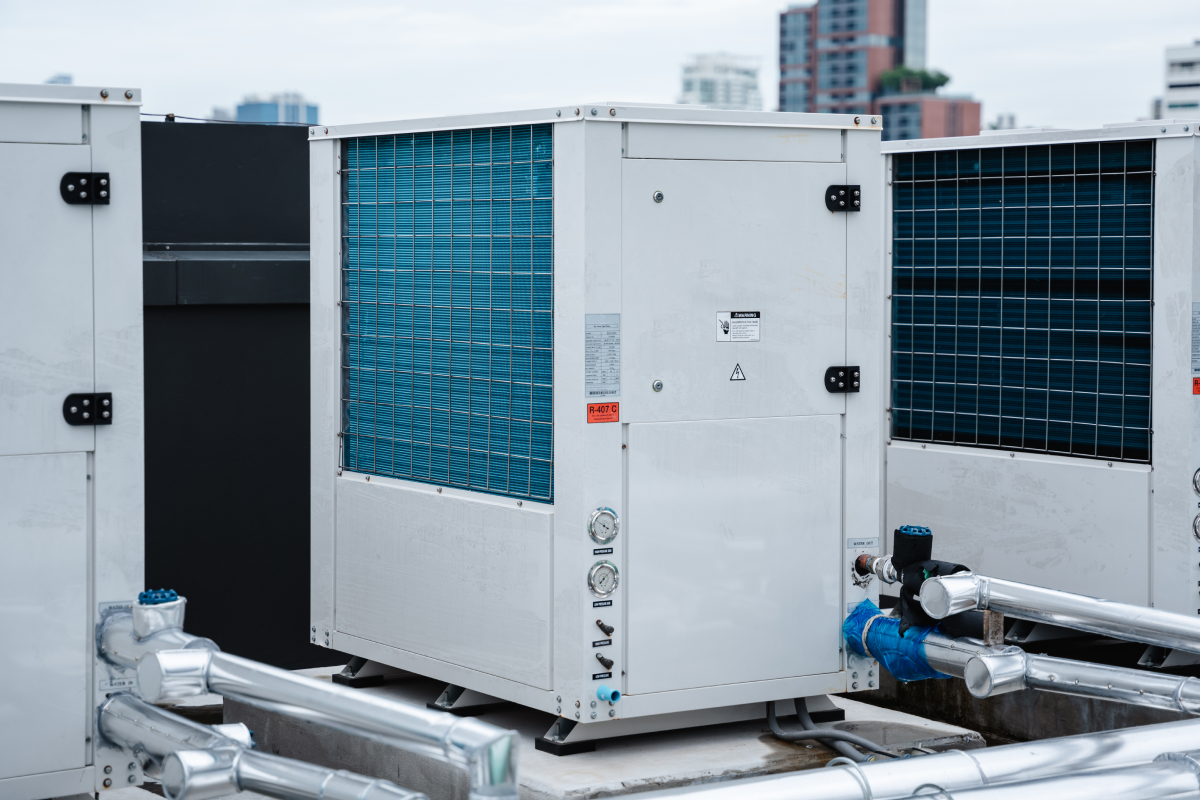
Molecular Sieve Technology for Deep Dew Point Extraction
The final stage of a lithium-ion dry room system abandons standard silica gel in favor of molecular sieve technology. Molecular sieves are synthetic zeolites engineered with a crystalline lattice that forms perfectly uniform, microscopic pores (typically 3 Angstroms or 4 Angstroms in diameter). These pores are sized specifically to trap water molecules while excluding larger atmospheric gases.
Unlike silica gel, which loses its moisture affinity in dry conditions, a molecular sieve maintains extreme adsorptive strength even when the surrounding air is almost entirely devoid of moisture. By passing the -20°C dew point air through a specialized low temperature desiccant dehumidifier equipped with a molecular sieve rotor, the system extracts the final trace amounts of water vapor, successfully discharging air at -60°C to -70°C dew point into the cleanroom plenum.
Reactivation Thermodynamics and Waste Heat Recovery
The extreme adsorptive strength of molecular sieves requires equally extreme thermal energy to break the bonds during the reactivation cycle. While standard silica gel can be reactivated at 100°C to 120°C, a molecular sieve rotor demands reactivation air temperatures exceeding 140°C to 160°C. Generating this intense heat across massive industrial airflows consumes an enormous amount of electrical or direct-fired natural gas energy.
To optimize the operational expenditures (OPEX) of battery manufacturing, engineers design extensive thermal recovery loops within the equipment housing. As the high-temperature sector of the rotor rotates out of the regeneration zone, it carries massive residual sensible heat. A dedicated purge sector utilizes a fraction of the return air to pre-cool the matrix, capturing this thermal energy and transferring it to the incoming reactivation airstream. Selecting a large industrial desiccant dehumidifier with integrated closed-loop purge mechanics reduces the total energy consumption of the reactivation heaters by up to 30%, making continuous deep-drying economically sustainable for large-scale gigafactories.
Integrate Advanced Dry Room Engineering
The expansion of electric mobility hinges on the safety, energy density, and longevity of lithium-ion cells. Guaranteeing these performance metrics requires treating atmospheric moisture as a severe chemical contaminant. Standard cleanroom HVAC cannot achieve the vapor pressure deficits required to prevent hydrofluoric acid synthesis. For multi-stage rotor configurations, molecular sieve integration, and psychrometric load calculations designed specifically for advanced battery manufacturing, consult our engineering specialists to secure your dry room infrastructure.
Frequently Asked Questions
What is the chemical reaction between lithium electrolyte and water?
The dominant electrolyte salt in lithium-ion batteries is Lithium Hexafluorophosphate (LiPF6). When exposed to even microscopic amounts of water vapor, it rapidly hydrolyzes to form Hydrofluoric Acid (HF) and phosphoryl fluoride. This highly corrosive acid attacks the internal cell materials, generates internal gas, and severely degrades the battery's charge capacity and safety.
What is the difference between relative humidity and dew point in battery manufacturing?
Relative humidity is a percentage indicating how much moisture the air holds relative to its maximum capacity at a specific temperature. In battery dry rooms, moisture levels are so low that relative humidity becomes an inaccurate measurement. Dew point measures the exact absolute temperature at which condensation forms, providing a precise metric for ultra-low moisture environments (typically -40°C to -70°C DP).
Why do battery dry rooms require a monolithic vapor barrier?
Maintaining a -50°C dew point creates an extreme vapor pressure deficit. Moisture from the ambient factory environment exerts tremendous physical force to penetrate the dry room. Standard building materials are porous to water vapor. A monolithic vapor barrier, typically made of continuously welded steel panels, physically blocks this vapor infiltration, ensuring the dehumidifiers only process internal loads.
How does human occupancy affect dry room engineering?
In a sealed dry room, humans are the largest source of moisture, emitting 100 to 150 grams of water vapor per hour through breathing and skin transpiration. To maintain ultra-low dew points, the HVAC system must deliver massive volumes of dry air to instantly dilute and sweep away this biological moisture before it contaminates the exposed lithium cells.
Why is a multi-stage desiccant system necessary for lithium battery production?
A single silica gel rotor cannot physically extract enough moisture in a single pass to reach a -60°C dew point because it loses adsorptive efficiency as the air gets drier. Dry rooms require a cascading architecture: a pre-cooling coil removes bulk moisture, a primary silica gel rotor brings the air to -20°C DP, and a final molecular sieve rotor extracts the remaining trace moisture.
What makes a molecular sieve different from standard silica gel in ultra-low dew point applications?
Silica gel uses irregular surface pores to adsorb moisture, which becomes inefficient at extremely low humidity. A molecular sieve is a synthetic zeolite with perfectly uniform crystalline pores (e.g., 3A or 4A) designed precisely to trap water molecules. It maintains immense adsorptive strength even when the air is nearly bone-dry, allowing it to drive dew points down to -70°C.