Specifying industrial dehumidification equipment starts with a fundamental choice: condensing (refrigerant-based) technology or desiccant adsorption. Both remove water vapor from air, but they work through entirely different physical mechanisms, and each has a defined operating envelope. Choosing the wrong technology does not simply raise the energy bill. It leaves corrosion, condensation, and product spoilage unresolved while the machine runs at full rated capacity.
This guide explains how each technology removes moisture, where the performance boundary sits on the psychrometric chart, and how to match the equipment to the application. The recommendations reflect the load calculations and commissioning work our engineering team performs for warehouses, cold storage facilities, pharmaceutical plants, and indoor pool halls.
How Each Technology Removes Moisture
Refrigerant (Condensing) Dehumidification
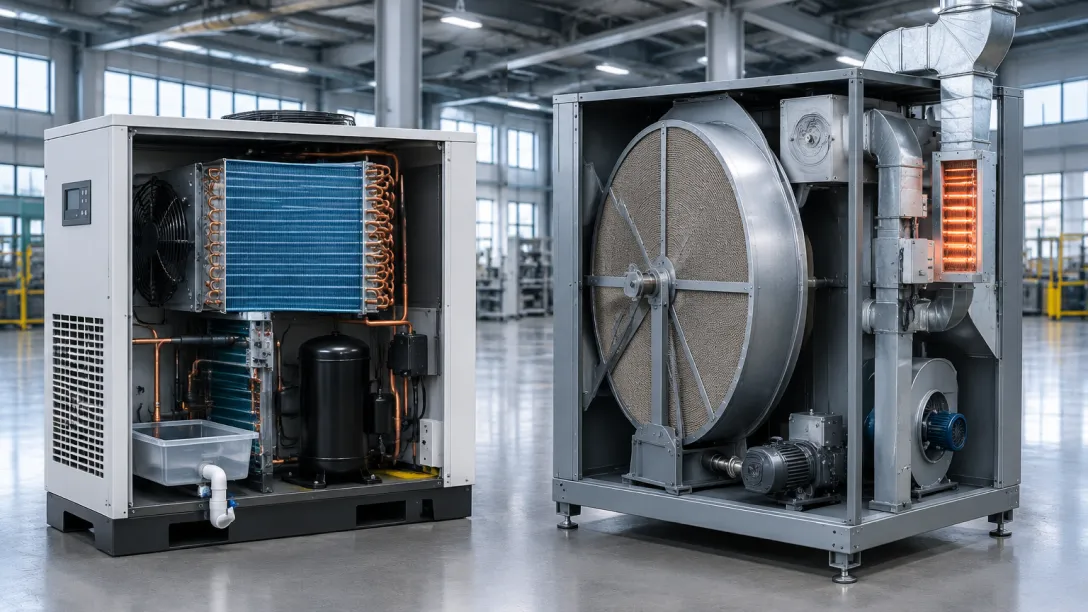
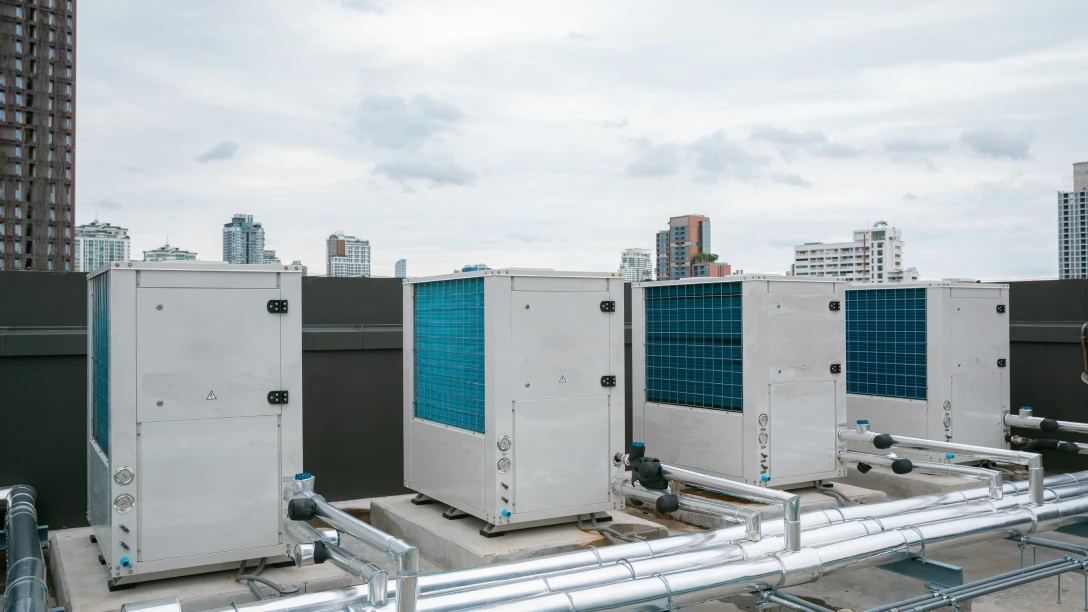
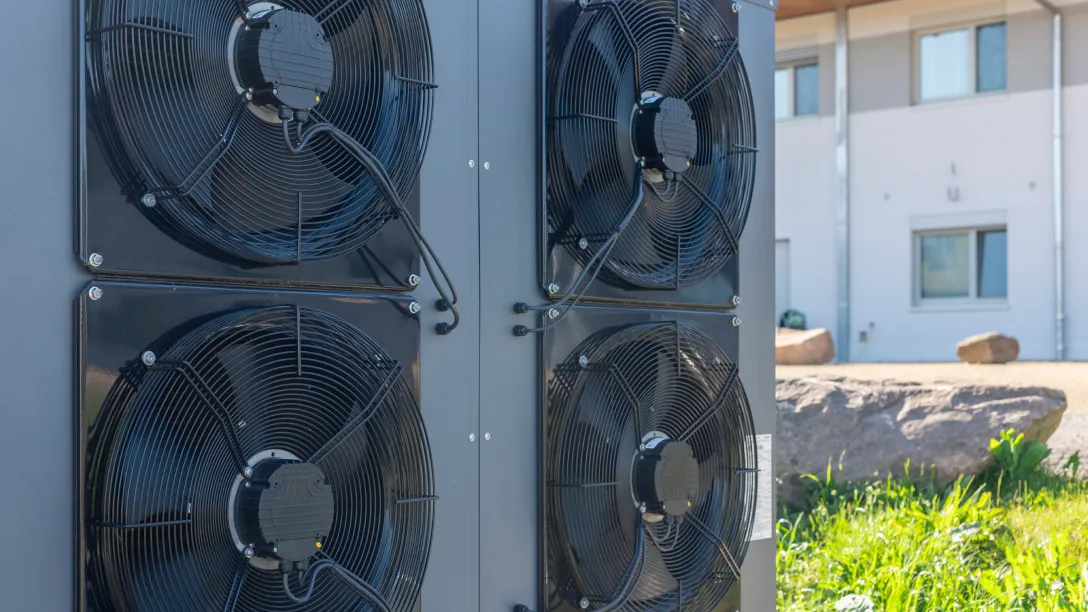
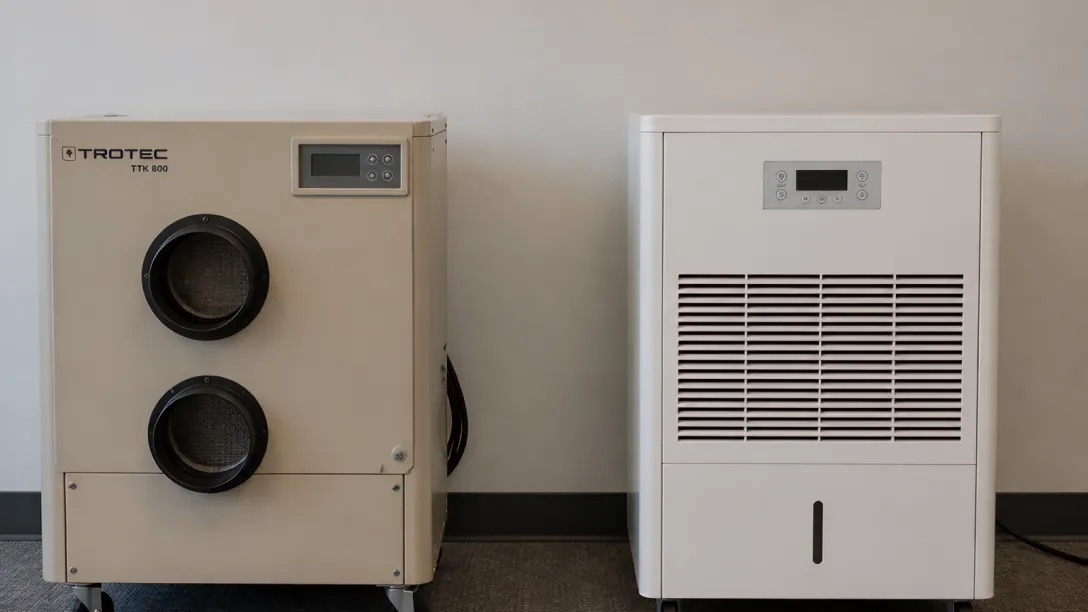
A refrigerant dehumidifier draws humid air across an evaporator coil chilled below the dew point of the incoming air. Water vapor condenses on the coil fins, collects in a drain pan, and leaves the unit as liquid. The dried air then passes over the warm condenser coil, reheats by a few degrees, and returns to the space. Most industrial dehumidifiers used in general manufacturing and storage facilities operate on this principle.
The mechanism has a hard physical limit. The coil temperature cannot drop below 0°C without frost forming on the fins, and frost blocks airflow until the unit pauses to defrost. In practice, refrigerant units lose capacity quickly once room temperature falls below 15°C, and the achievable supply-air dew point bottoms out around 5°C to 7°C. Within warm, humid conditions, however, the refrigeration cycle is the most energy-efficient way to condense large volumes of water.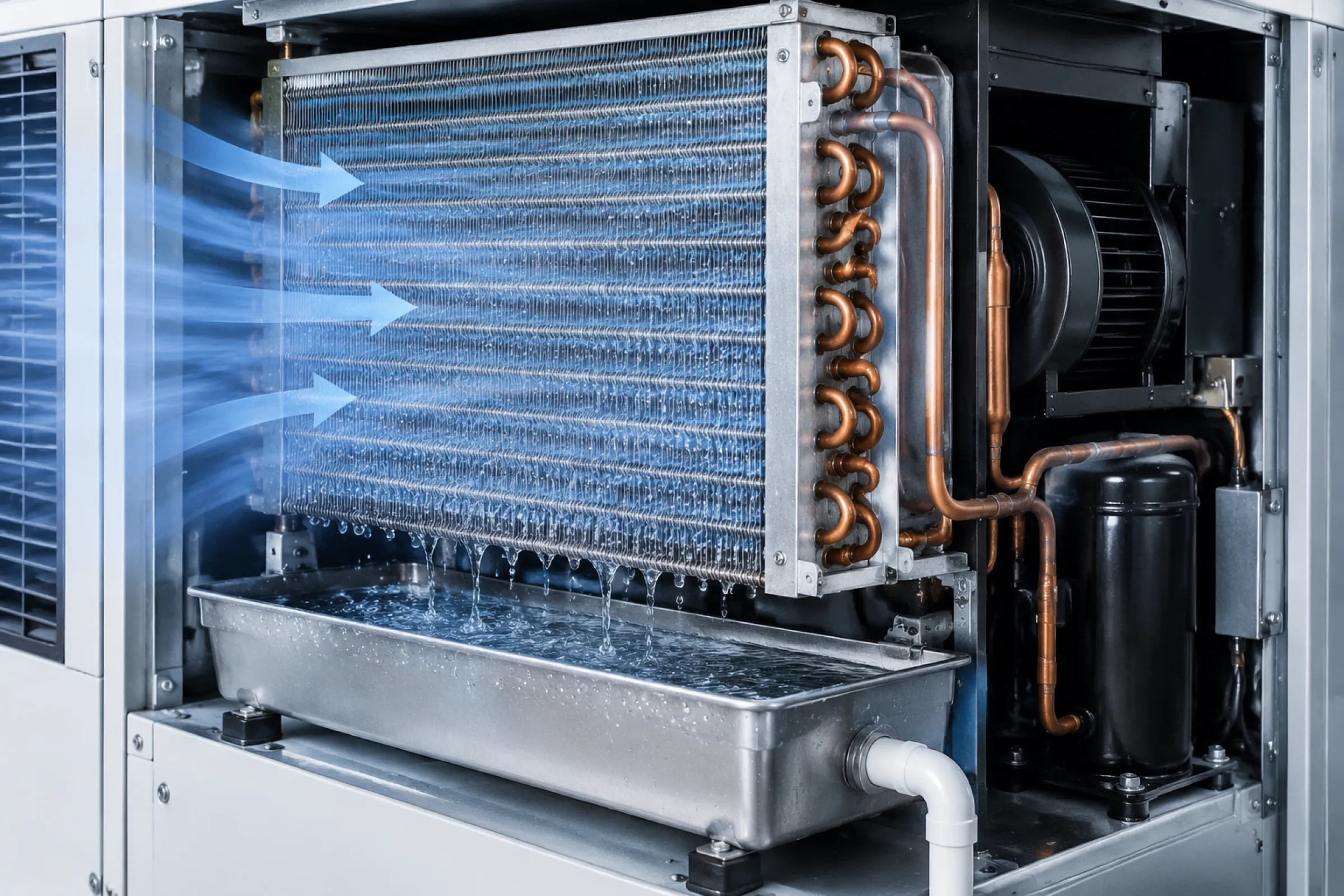
Desiccant Adsorption
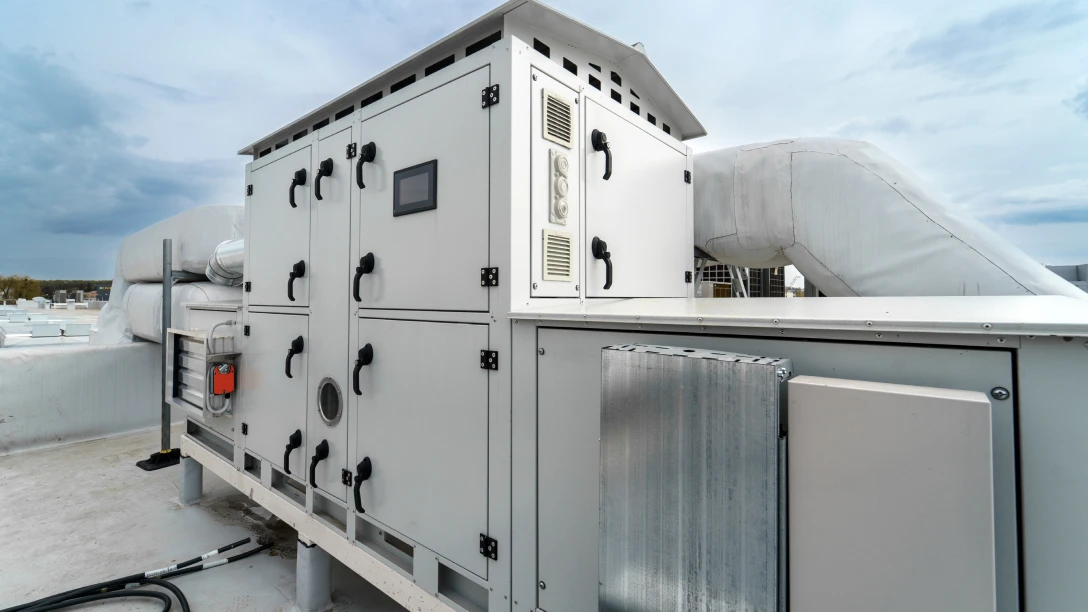
A desiccant dehumidifier passes process air through a slowly rotating wheel impregnated with a hygroscopic material, typically silica gel or a molecular sieve composite. The desiccant adsorbs water vapor directly from the airstream, even when vapor pressure is very low. A separate heated airstream, called reactivation air and typically running at 90°C to 140°C, regenerates a small section of the wheel and carries the extracted moisture outdoors as hot vapor. A rotary desiccant dehumidifier therefore exhausts no liquid water at all; the moisture leaves the building as vapor through a duct.
Adsorption capacity depends on vapor pressure differential rather than coil temperature, so performance stays nearly constant from 35°C down to -30°C and below. Supply dew points of -20°C to -40°C are routine, and specialized systems reach -60°C for battery dry rooms.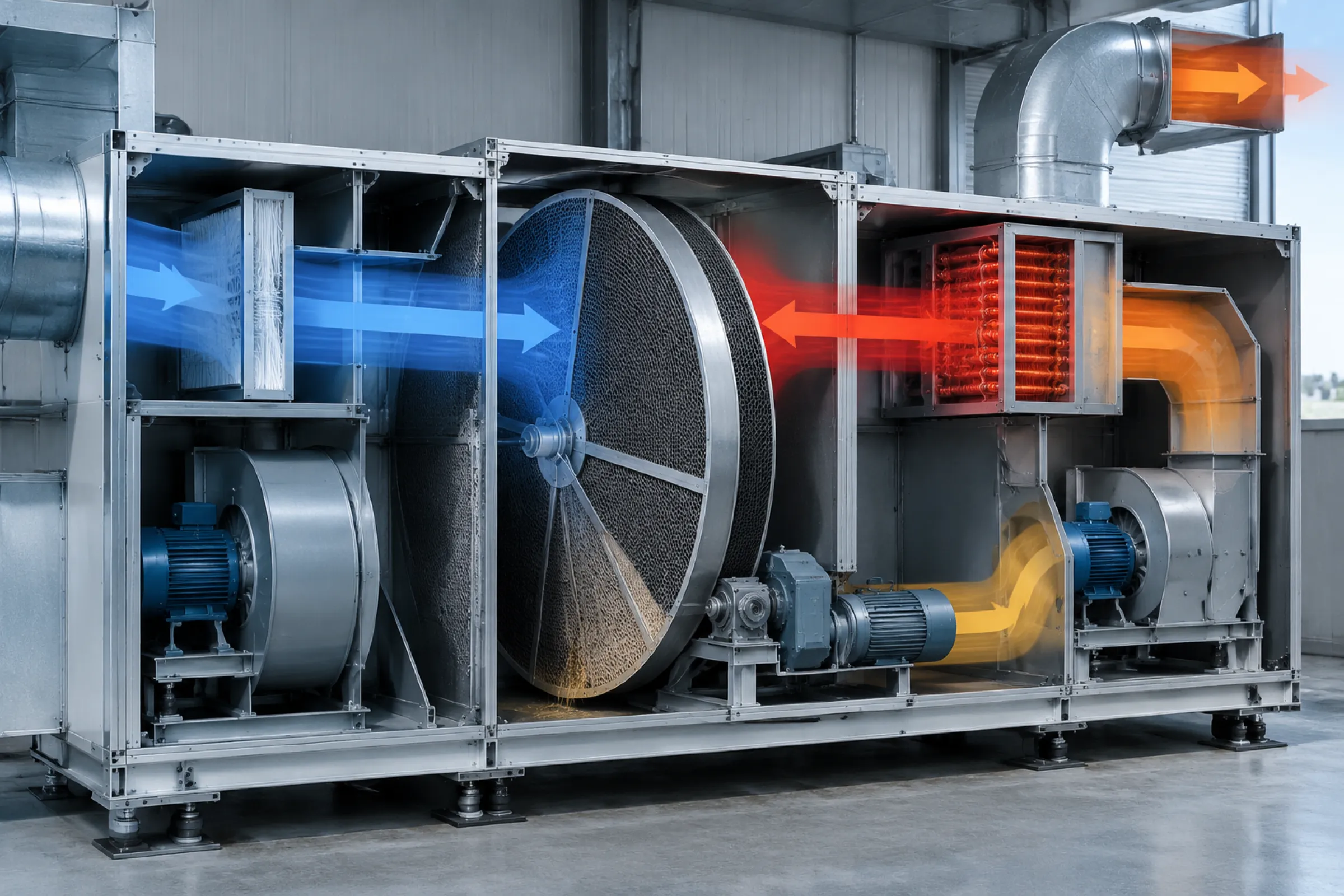
Where the Performance Boundary Sits
The crossover point between the two technologies is defined by two variables: room temperature and target humidity level. As a working rule used in our sizing reviews, refrigerant technology holds the advantage when the space stays above 18°C to 20°C and the target condition is moderate, such as 50% to 60% relative humidity. Below 15°C, or whenever the specification calls for a dew point under 10°C, desiccant technology becomes the only workable option.
| Parameter | Refrigerant Dehumidifier | Desiccant Dehumidifier |
|---|---|---|
| Effective temperature range | 15°C to 35°C | -30°C to 40°C |
| Practical dew point limit | Approximately 5°C to 7°C | -40°C or lower |
| Moisture exhaust form | Liquid condensate to drain | Hot vapor through a duct |
| Primary energy input | Electricity for compressor | Electricity, steam, or gas for reactivation heat |
| Frost risk | Coil frosting below 15°C room temperature | None in the process airstream |
| Supply air temperature effect | Slightly warmer than room air | Noticeably warm (10°C to 20°C rise) |
| Typical installations | Warehouse dehumidification, pools, production halls | Cold storage, pharmaceutical drying, lithium battery rooms |
Energy and Operating Cost Reality
Energy comparisons between the two technologies are often quoted out of context. In a 25°C warehouse at high humidity, a refrigerant unit removes roughly 1.5 to 2.5 liters of water per kilowatt-hour, while a desiccant unit in the same condition consumes two to three times more energy per liter because of the reactivation heater. For warm-space applications, the refrigerant machine is the correct economic choice.
The picture reverses once conditions leave the refrigerant envelope. Below 10°C, a condensing unit spends a growing share of its runtime in defrost cycles and delivers a fraction of its nameplate capacity. A desiccant rotor at -5°C still performs at full rating. In cold storage projects we have reviewed, operators who installed refrigerant units to save on capital cost ended up running two or three units continuously to hold a condition that one correctly sized desiccant system maintains without strain.
One further operating cost factor works in favor of desiccant equipment in heated climates: the supply air leaves the rotor 10°C to 20°C warmer than it entered. In winter this heat is a credit against the building heating load. In summer it may require additional cooling, which belongs in the total cost calculation.
Application-by-Application Selection
Warehouses and General Production Floors
Ambient-temperature storage and manufacturing spaces above 18°C with targets near 50% to 60% RH are standard refrigerant territory. The load profile is dominated by infiltration through doors and ventilation, and the equipment runs most economically in exactly the warm, humid conditions these buildings present. Our guidance on warehouse dehumidifier sizing covers the infiltration calculation in detail.
Cold Storage and Freezer Rooms
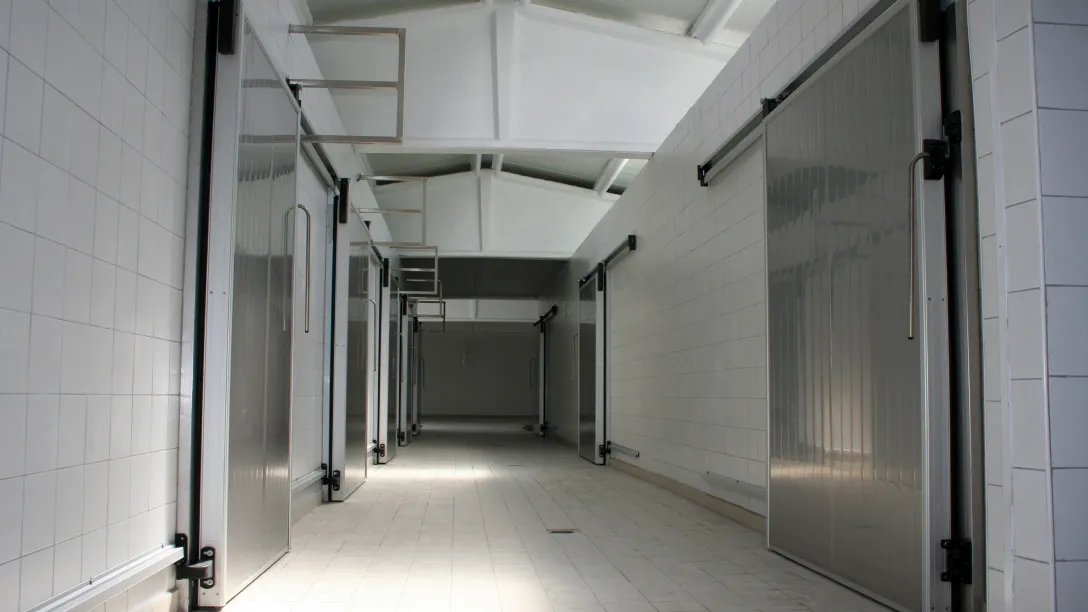
Any space held between +5°C and -30°C requires desiccant technology without exception. Refrigerant coils frost immediately at these temperatures. The standard configuration places the desiccant unit outside the cold envelope and ducts dry air into the room, which eliminates ice on evaporators, fog at doorways, and slippery floors. The engineering details are covered in our article on cold storage dehumidification, and the equipment options are listed on the freezer dehumidifier application page.
Pharmaceutical and Lithium Battery Production
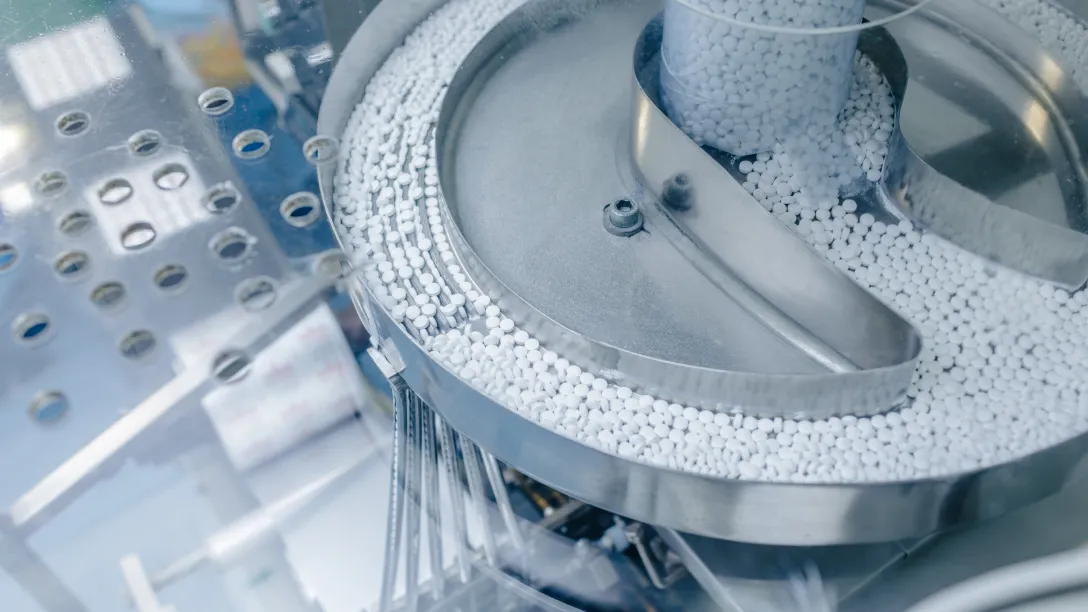
Processes that specify 10% to 30% RH at room temperature, or dew points of -20°C and below for battery electrode manufacturing, sit far outside the reach of condensing equipment. Multi-wheel desiccant systems with post-cooling are the standard solution. Corrosion-resistant and hygienic casings are usually specified alongside the rotor, as discussed on our desiccant dehumidifier category page.
Indoor Pools and Greenhouses
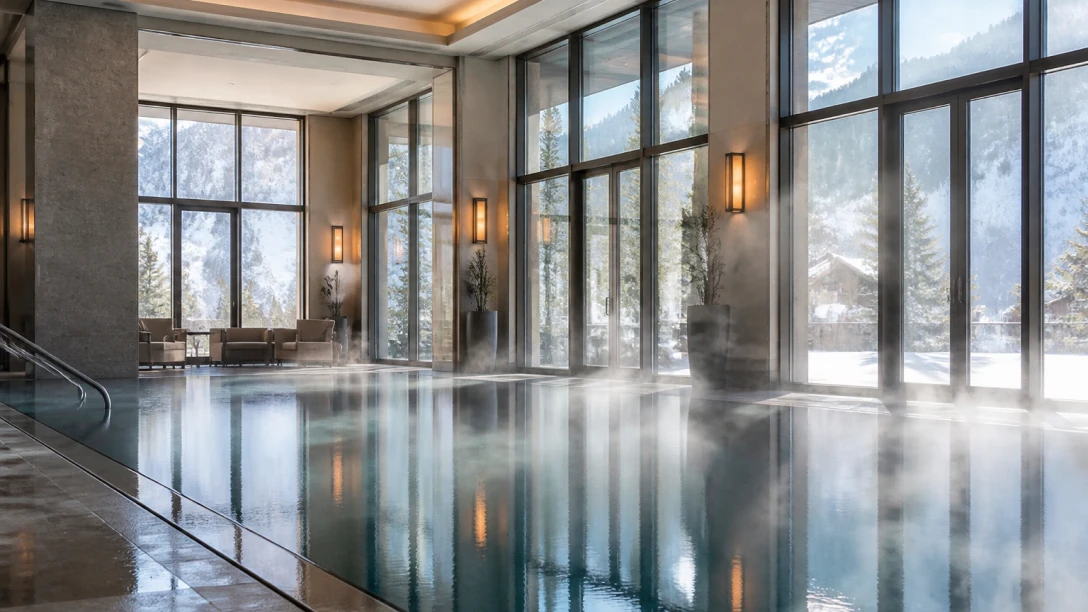
Pool halls and greenhouse facilities run warm and extremely humid, which places them inside the refrigerant envelope. The correct equipment differs from general-purpose units in one respect: corrosion protection. Chlorinated air in pools and fertilizer-laden air in greenhouses attack standard coils, so purpose-built swimming pool dehumidifier and greenhouse dehumidifier configurations use coated coils and protected cabinetry. Heat recovery from the condenser to pool water or space heating frequently improves project economics.
Sizing Inputs Both Technologies Share
Regardless of the mechanism, equipment capacity must be derived from a moisture load calculation, not from floor area. The inputs that determine the result:
- Infiltration and ventilation load: outdoor air entering through door openings, dock seals, and mechanical ventilation, converted to a water load using the difference between indoor and outdoor humidity ratios.
- Internal moisture sources: open water surfaces, wet processes, product moisture release, washdown cycles, and occupant respiration.
- Target condition: the required temperature and relative humidity, expressed as a dew point so the technology boundary can be checked.
- Air distribution: room volume, acceptable airflow patterns, and whether ducted or free-blow installation fits the layout.
The calculated load, stated in kilograms or liters of water per hour, is then matched against unit capacity at the actual room condition rather than at the nominal rating point. A capacity safety margin of 15% to 20% accounts for door traffic growth and seasonal extremes.
Specification Mistakes We See in the Field
Three errors account for most of the underperforming installations our team is asked to review. The first is specifying refrigerant units for rooms below 15°C, where defrost cycles consume the runtime and the space never reaches setpoint. The second is overlooking reactivation air routing on desiccant equipment; the wet exhaust duct must discharge outdoors, and the reactivation inlet needs a dedicated air source, or the unit recirculates its own moisture. The third is sizing from square meters of floor area. Two rooms with identical floor plans can differ in moisture load by a factor of five depending on door traffic and process water use.
A correct specification starts with the load calculation, checks the dew point requirement against the technology boundary, and only then compares capital and energy cost. Our engineers perform this review as part of every quotation. Send your room dimensions, target condition, and a description of moisture sources through the contact page, and we will return a sized equipment schedule with the load figures documented.