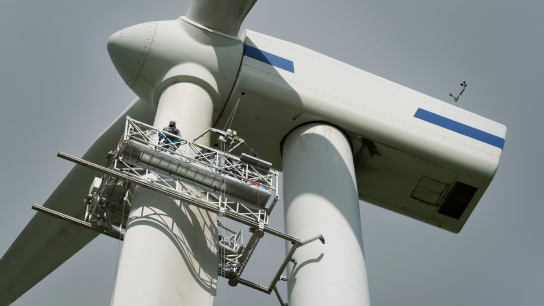
Offshore wind farms represent the pinnacle of heavy industrial engineering, deploying massive multi-megawatt rotating machines in the most hostile, corrosive environments on Earth. While the exterior of a wind turbine is protected by advanced marine-grade epoxies, the internal environment within the steel monopole and the nacelle poses a catastrophic structural and electrical threat[cite: 7]. As the turbine operates, ambient marine air inevitably infiltrates the tower structure through access hatches, cable penetrations, and ventilation louvers. This air carries a massive load of saltwater vapor.
Due to the extreme temperature differentials across the length of the turbine tower, this internal moisture undergoes relentless thermodynamic cycling, resulting in continuous condensation[cite: 7]. Without active psychrometric intervention, this trapped moisture destroys high-voltage electrical switchgear, degrades generator insulation, and initiates structural pitting corrosion from the inside out. This engineering guide details the physics of the internal "chimney effect," the mechanism of electrical tracking on inverters, and the deployment of active chemical adsorption to secure the 25-year design life of offshore wind assets.
The Thermodynamics of Tower Condensation
An offshore wind turbine tower functions as a massive, vertical steel cylinder subjected to extreme thermal gradients. The transition piece and the base of the monopole are submerged in, or directly above, ocean water that typically remains between 5°C and 15°C depending on the season. Conversely, the upper sections of the tower and the nacelle are exposed to direct solar radiation and the immense mechanical heat generated by the gearbox, generator, and hydraulic systems, often pushing internal air temperatures above 35°C.
This temperature differential creates a powerful internal convection current. Warm, humid air rises to the top of the tower, absorbs mechanical heat, and eventually circulates back down the cold inner walls of the steel monopole. As this humid air contacts the chilled steel near the waterline, its temperature plummets below the dew point. The air instantly dumps its moisture load, causing liquid water to stream down the internal walls. In severe cases, maintenance crews report it physically "raining" inside the transition piece. Controlling this severe internal weather system requires a high-capacity desiccant dehumidifier installed at the base, constantly stripping the moisture from the air column and forcing the localized dew point safely below the ocean water temperature.
Protecting High-Voltage Switchgear and Inverters
The base of the wind turbine tower typically houses the critical power electronics, including the variable frequency drives (VFDs), step-up transformers, and high-voltage switchgear. These components are highly sensitive to moisture and airborne chlorides (salt). When condensation forms on the surface of terminal blocks or printed circuit boards, it mixes with trace salt deposits to form a highly conductive electrolytic film.
This conductive layer causes electrical tracking—current bleeding across the surface of the insulation. Over time, tracking degrades the dielectric strength of the materials, leading to corona discharge and eventual catastrophic arc flash events. An arc flash inside a turbine tower obliterates the control cabinets, causes prolonged downtime, and necessitates multi-million-dollar offshore repair operations. By injecting aggressively dried air into the switchgear compartments, engineers completely eliminate the electrolytic film, ensuring that the megohm resistance of the insulation remains stable throughout the turbine's operational life.
Nacelle Standby Protection and Gearbox Integrity
The nacelle, located at the top of the tower, houses the main shaft, gearbox, and generator. During active power generation, these massive components generate enough sensible heat to keep themselves relatively dry. However, when the turbine is taken offline due to low wind conditions, grid curtailment, or scheduled maintenance, the massive iron and copper components cool rapidly.
As the generator cools below the ambient marine dew point, condensation forms directly on the copper stator windings. If the turbine is suddenly restarted while the windings are wet, the moisture causes immediate short circuits. Furthermore, condensation entering the gearbox breather vents contaminates the lubricating oil. Water in gearbox oil drastically reduces its load-carrying capacity, accelerating bearing spalling and gear tooth fatigue. Routing dry air directly into the nacelle during standby periods guarantees that the generator windings and gearbox breathers remain completely free of liquid moisture, enabling instantaneous, safe restarts as soon as wind conditions permit.
Why Refrigerant HVAC Systems Fail Offshore
Historically, some manufacturers attempted to manage internal moisture using standard refrigerant-based air conditioning units. These systems invariably fail in marine deployments due to physical and chemical limitations. First, refrigerant units rely on bare copper evaporator coils to condense moisture. In a salt-laden offshore environment, these dissimilar metals undergo rapid galvanic corrosion, leading to catastrophic refrigerant leaks within 12 to 18 months.
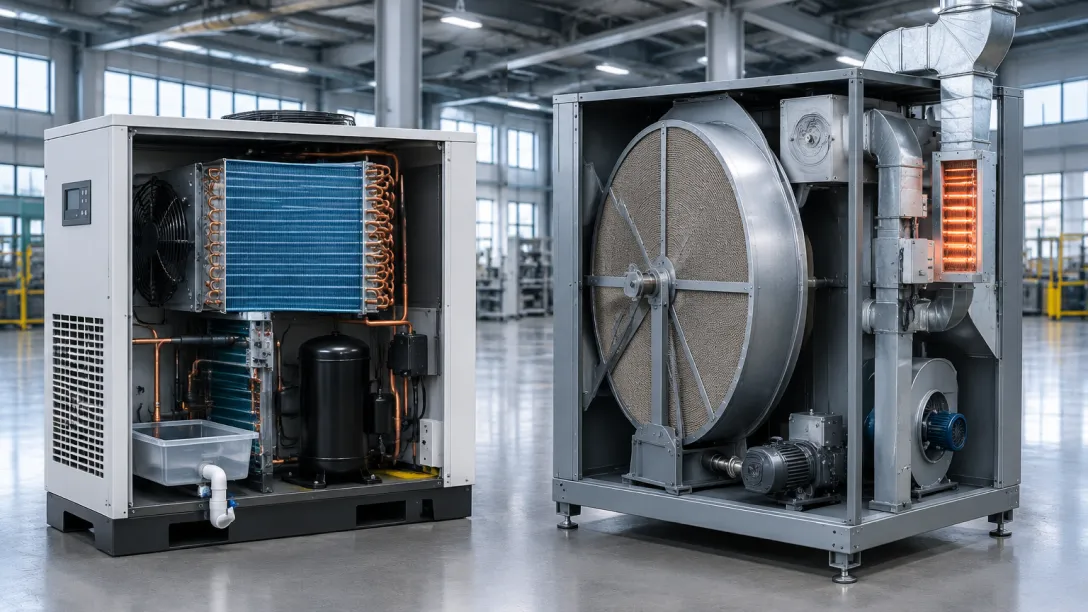
Secondly, a refrigerant unit removes moisture as liquid condensate. Pumping hundreds of gallons of liquid water out of a sealed turbine tower requires complex drain lines, drip pans, and mechanical pumps, which are prone to freezing in winter or clogging with biological growth. Desiccant systems eliminate this mechanical vulnerability. An adsorption rotor utilizes silica gel to extract the moisture as a vapor. The system simply exhausts this hot, wet vapor directly outside the tower through a small vent. There are no wet coils, no liquid water to pump, and no freezing hazards during winter storms.
Equipment Engineering for Marine Environments
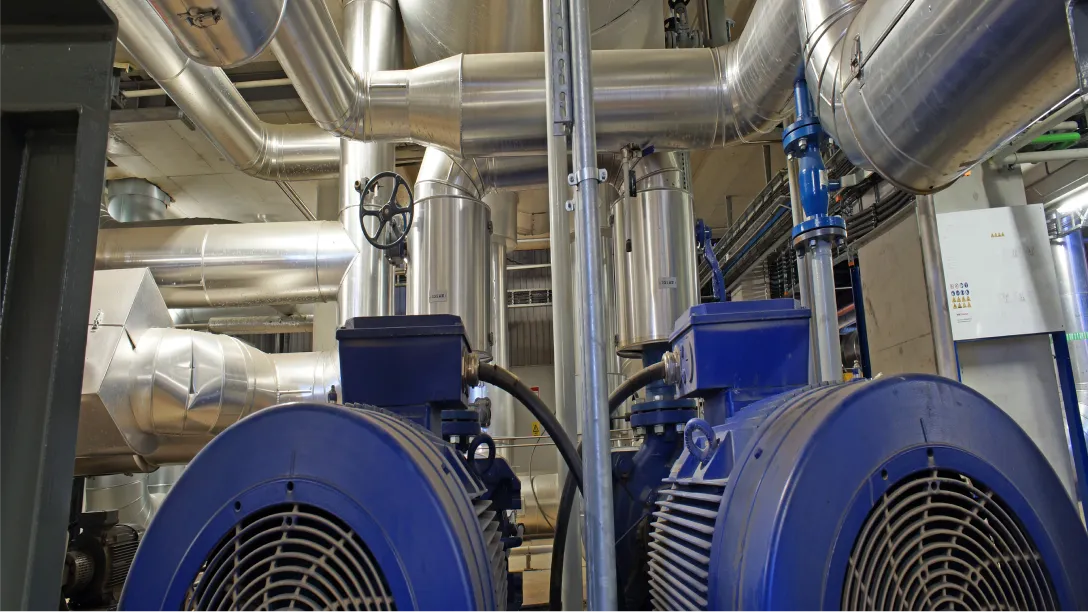
Space is the ultimate premium inside a wind turbine tower. Equipment must fit through narrow access hatches and navigate complex internal ladders. Facility engineers typically specify a compact desiccant dehumidifier that provides high moisture extraction capacity within a minimal physical footprint.
Beyond size, the metallurgy of the equipment must withstand constant chloride exposure. Deploying a specialized corrosion-resistant dehumidifier is non-negotiable. These units are fabricated with 316L stainless steel casings, fully sealed and epoxy-coated NEMA 4X electrical enclosures, and marine-grade PTFE internal barrier seals. The silica gel rotor itself must be chemically inert and washable to recover from unavoidable salt aerosol accumulation. Only ruggedized equipment engineered explicitly for the offshore sector can deliver the 25-year reliability mandated by wind farm operators.
Integrate Professional Turbine Preservation
Securing the structural and electrical integrity of offshore wind assets requires defeating the aggressive thermodynamics of marine condensation. Implementing active adsorption technology halts internal steel corrosion, prevents catastrophic high-voltage arc flashes, and protects critical gearbox lubricants during standby cooling. For comprehensive tower airflow mapping, dew point calculations, and marine-grade equipment specifications, consult our specialized engineering team to protect your offshore energy investments.
Frequently Asked Questions
Why does condensation form heavily at the base of a wind turbine tower?
The base of the tower and the transition piece are submerged in cold ocean water, making the steel significantly colder than the upper sections. When warm, humid air circulating from the top of the tower contacts this chilled steel near the waterline, the air temperature drops below its dew point. The invisible water vapor instantly condenses into liquid water, causing heavy internal "raining" and pooling at the base.
What is electrical tracking on wind turbine switchgear?
Electrical tracking occurs when moisture mixes with airborne salt deposits to form a conductive film across the surface of electrical insulators. This allows high-voltage current to bleed across the surface. Over time, this tracking degrades the insulation, eventually leading to a short circuit or an explosive arc flash that destroys the control cabinets.
How does moisture ruin wind turbine gearbox oil?
During shutdown periods, the gearbox cools, drawing in humid ambient air through its breather vents. Condensation forms inside the casing and mixes with the lubricating oil. Even trace amounts of water severely degrade the oil's viscosity and load-carrying capacity, leading to accelerated wear, bearing spalling, and eventual catastrophic failure of the gearbox.
Why are desiccant dehumidifiers preferred over refrigerant units for offshore wind?
Refrigerant units use copper cooling coils that rapidly corrode in salty marine air, and they produce liquid condensate that must be pumped out of the tower, risking freezing and pump failure. Desiccant dehumidifiers utilize a dry chemical adsorption rotor and exhaust the extracted moisture as a hot vapor directly outside the tower. They have no wet coils, no liquid water to pump, and operate flawlessly in freezing temperatures.
What metallurgy is required for dehumidifiers installed in offshore turbines?
Due to the extreme concentration of airborne chlorides (salt), standard galvanized steel will rust away rapidly. Marine-grade dehumidifiers must be constructed with 316L stainless steel casings. Additionally, the electrical control panels must be sealed in NEMA 4X enclosures to prevent salt ingress, and internal fans should feature heavy-duty epoxy coatings to prevent galvanic corrosion.
How does dry air protect the turbine generator during standby periods?
When the wind drops and the turbine stops spinning, the massive copper coils in the generator cool down. If the surrounding air is humid, moisture condenses directly on the stator windings. Restarting a wet generator causes immediate insulation failure and short circuits. Pumping dry air into the nacelle ensures the dew point remains lower than the winding temperature, keeping the generator completely dry and ready for instantaneous safe restart.