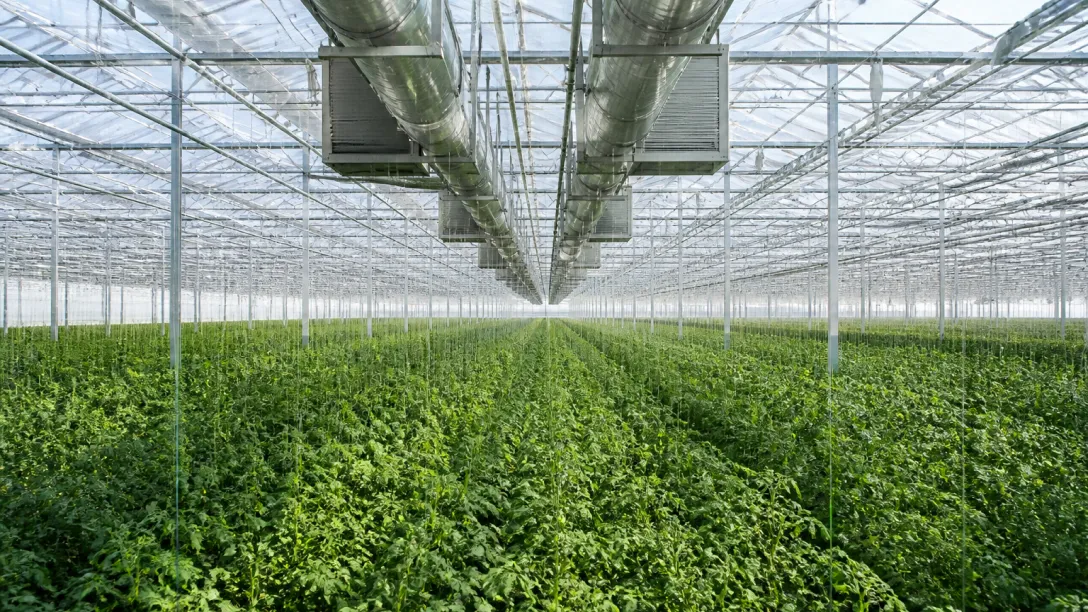
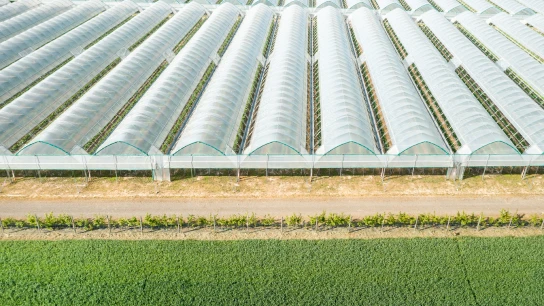
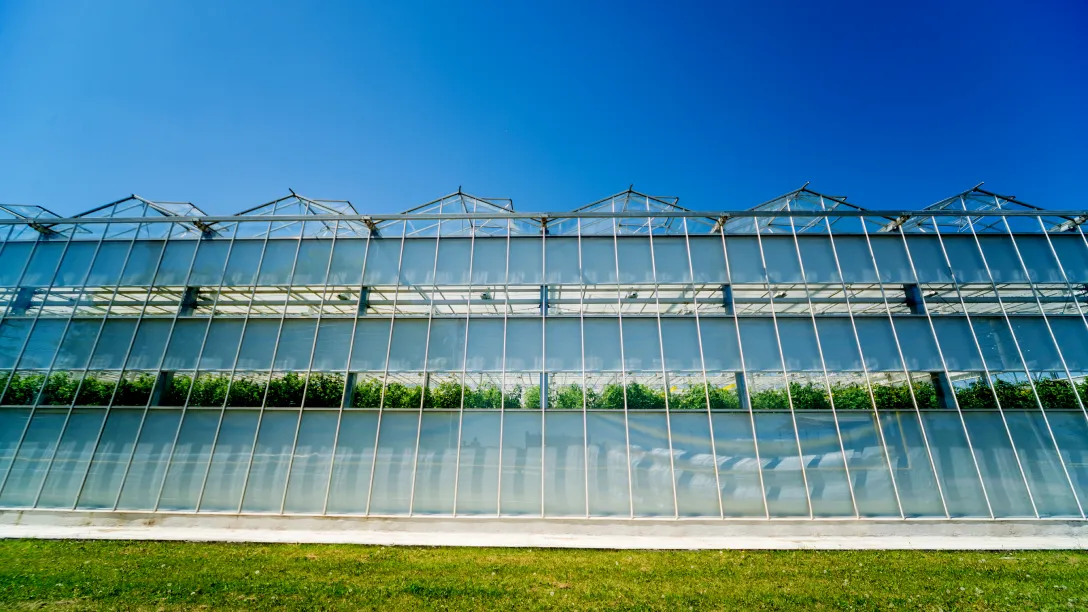
Controlled Environment Agriculture (CEA) and large-scale commercial greenhouses operate at the intersection of biological science and precise thermodynamic engineering. Within these highly optimized enclosures, the plant canopy acts as a massive, continuous bio-humidifier. Through the biological process of transpiration, commercial crops convert up to 95% of their irrigation water directly into atmospheric water vapor. Failure to mechanically extract this immense latent moisture load disrupts the fundamental physics of plant growth, suppresses crop yields, and creates the exact environmental vector required for catastrophic pathogen outbreaks.
Standard commercial HVAC systems are entirely inadequate for the latent loads generated by agricultural canopies. They are engineered to manage sensible heat (temperature) rather than the massive volumes of water vapor introduced by thousands of transpiring plants. Securing agricultural yields requires the deployment of specialized moisture extraction technology governed by the principles of Vapor Pressure Deficit (VPD). This technical analysis examines the thermodynamics of plant transpiration, the severe psychrometric shifts occurring during the agricultural night cycle, and the precise engineering of industrial dehumidification systems necessary to sustain optimal vegetative and generative growth phases.
The Thermodynamics of Vapor Pressure Deficit (VPD)
In modern agronomy, Relative Humidity (RH) is widely recognized as a flawed and insufficient metric for environmental control. RH is highly temperature-dependent; a room at 60% RH at 20°C holds significantly less actual water vapor than a room at 60% RH at 30°C. Relying on RH fails to provide an accurate measurement of the evaporative potential of the air. Instead, agronomists and climate engineers utilize Vapor Pressure Deficit (VPD).
VPD, measured in kilopascals (kPa), quantifies the absolute difference between the amount of moisture currently in the air and the maximum amount of moisture the air can hold at saturation (when condensation occurs). This deficit represents the physical "pull" or atmospheric demand exerted on the leaf surface. When VPD is too low (the air is nearly saturated), the atmospheric pressure prevents the leaf from releasing water. When VPD is too high (the air is excessively dry), the atmospheric pull is so violent that the plant closes its stomata to prevent complete desiccation, thereby halting photosynthesis.
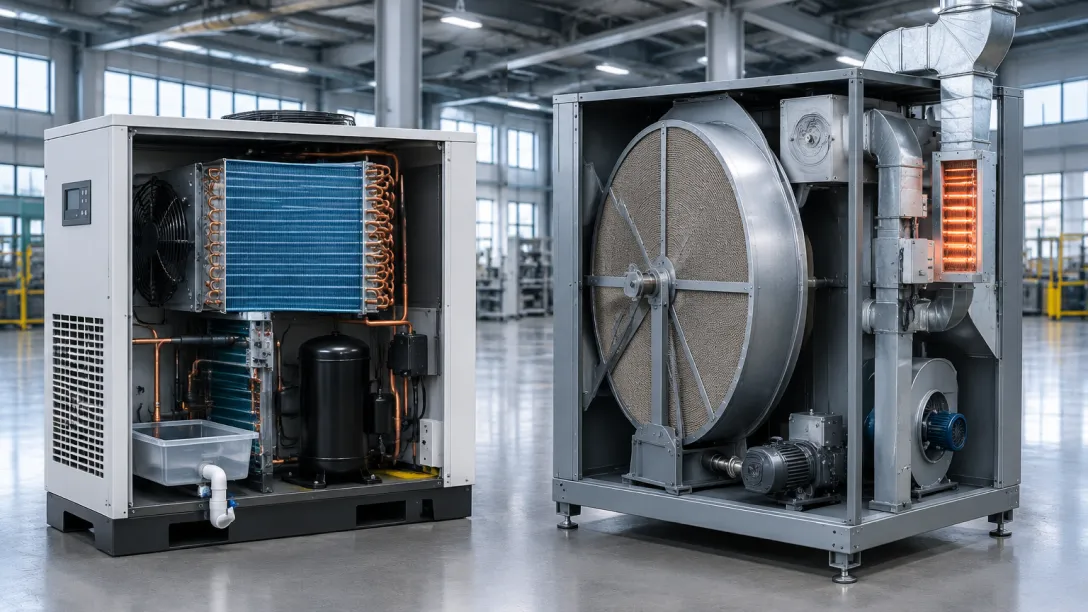
Maintaining an optimal VPD—typically between 0.8 kPa and 1.2 kPa for vegetative growth, and 1.2 kPa to 1.5 kPa for flowering phases—requires continuous, high-capacity moisture removal. The HVAC system must constantly strip water vapor from the air to maintain the precise atmospheric pressure deficit that drives the plant's internal fluid dynamics.
Stomatal Conductance and Nutrient Uptake
The regulation of VPD is the primary mechanical driver of plant metabolism. Plants absorb water and essential mobile nutrients (such as nitrogen, phosphorus, and potassium) from the root zone. This nutrient-rich fluid is pulled upward through the xylem tissue and distributed throughout the plant structure. This upward capillary action is physically powered by transpiration—the evaporation of water through microscopic pores on the underside of the leaves, known as stomata.
If the ambient greenhouse environment lacks sufficient dehumidification, the air reaches saturation. The VPD drops near zero. Consequently, transpiration halts entirely because the water molecules have nowhere to evaporate. When transpiration stops, root nutrient uptake ceases simultaneously. Even if the irrigation system delivers a perfectly balanced hydroponic nutrient solution, the plants will suffer severe nutrient deficiencies, stunted structural growth, and localized calcium deficiencies resulting in tissue necrosis (such as tip burn or blossom end rot). Active atmospheric moisture extraction using a dedicated industrial greenhouse dehumidifier physically guarantees the continuation of the transpirational stream.
The Night Cycle Psychrometric Shift: The Danger Zone
The most extreme thermodynamic challenge in CEA occurs during the transition from the day cycle to the night cycle. When the supplemental high-intensity discharge (HID) or LED grow lights turn off, or when the sun sets on a glass greenhouse, the sensible heat load drops instantaneously. The ambient air temperature cools rapidly.
Because cold air has a lower moisture-holding capacity than warm air, the rapid temperature drop causes the existing water vapor in the room to instantly spike the relative humidity toward 100%. Concurrently, the massive thermal mass of the plant canopy takes several hours to cool down, meaning the plants continue to transpire heavily into an already shrinking atmospheric moisture envelope. This violently pushes the environment past the dew point.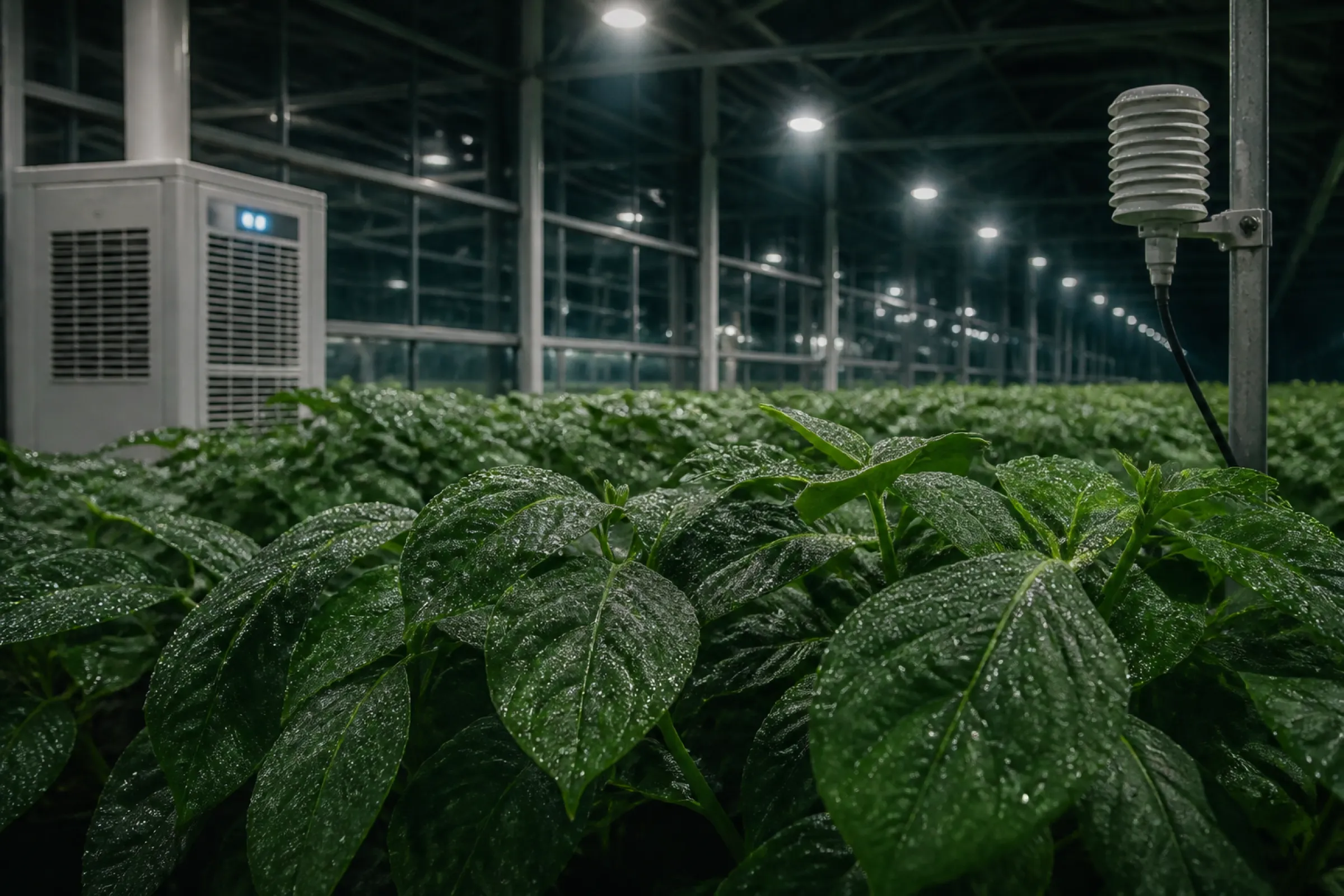
Without massive, immediate mechanical intervention, micro-condensation forms directly on the leaf surfaces, inside dense flower clusters, and on structural greenhouse steel. Managing this "nighttime humidity spike" requires equipment that operates independently of the cooling cycle. Since the lights are off, the room does not require sensible cooling, but it demands maximum latent moisture extraction. Standard air conditioners will not run if the room is already cool, allowing humidity to destroy the crop. Dedicated agricultural dehumidifiers continuously strip moisture regardless of the sensible heat requirements.
Pathogen Vectors: Botrytis Cinerea and Powdery Mildew
Allowing the ambient greenhouse dew point to intersect with the surface temperature of the plant canopy initiates catastrophic biological consequences. The presence of microscopic liquid water on plant tissue is the exclusive catalyst for the germination of fungal spores.
Botrytis cinerea, commonly known as gray mold or bud rot, is an aggressive necrotrophic fungus that destroys dense agricultural biomass from the inside out. Powdery mildew rapidly colonizes leaf surfaces, blocking light absorption and crippling photosynthesis. Both pathogens require high humidity and micro-condensation to reproduce and spread. Once established in a commercial facility, these pathogens can completely decimate a multimillion-dollar crop within 72 hours. Applying chemical fungicides is heavily restricted in consumable crops (especially in commercial cannabis or organic food production). The only recognized, compliant method for pathogen eradication is environmental sterilization through strict mechanical dew point suppression.
Closed-Loop Environmental Control vs. Open Ventilation
Legacy greenhouse operations attempt to manage humidity by venting damp indoor air to the outside environment and drawing in fresh makeup air. This open-loop strategy is thermodynamically inefficient and biologically hazardous. Venting actively exhausts expensive, artificially enriched CO2 from the facility, severely handicapping photosynthetic rates. Furthermore, if the outside weather is raining or highly humid, venting provides zero dehumidification and actually pulls external moisture and airborne pathogens directly into the pristine crop zone.
Modern high-yield CEA facilities operate as fully sealed, closed-loop ecosystems. Within a closed loop, no air is exchanged with the outside world. This retains 100% of the supplemented CO2 and provides a heavily quarantined biological perimeter. However, it traps every drop of transpired water inside the building. To sustain a sealed environment, engineers integrate advanced greenhouse humidity control dehumidifiers directly into the central air handling infrastructure, recycling the captured condensation back into the fertigation system for a zero-waste water cycle.
Calculating Latent Loads and Transpiration Rates
Engineering the HVAC architecture for a commercial grow facility requires precise mathematical calculation of the latent moisture load. A standard agronomic rule dictates that a healthy canopy will transpire between 90% and 95% of its total irrigation volume into the air. If a facility irrigates the crop with 1,000 gallons of water per day, the climate control system must be engineered to physically extract approximately 900 gallons (7,500 pounds) of water vapor from the air every 24 hours.
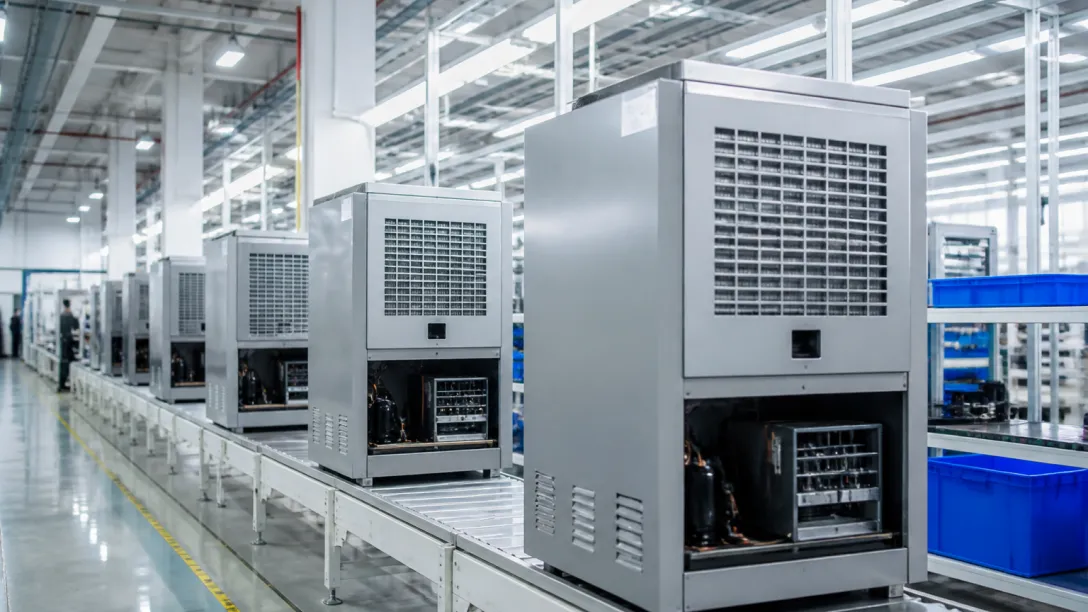
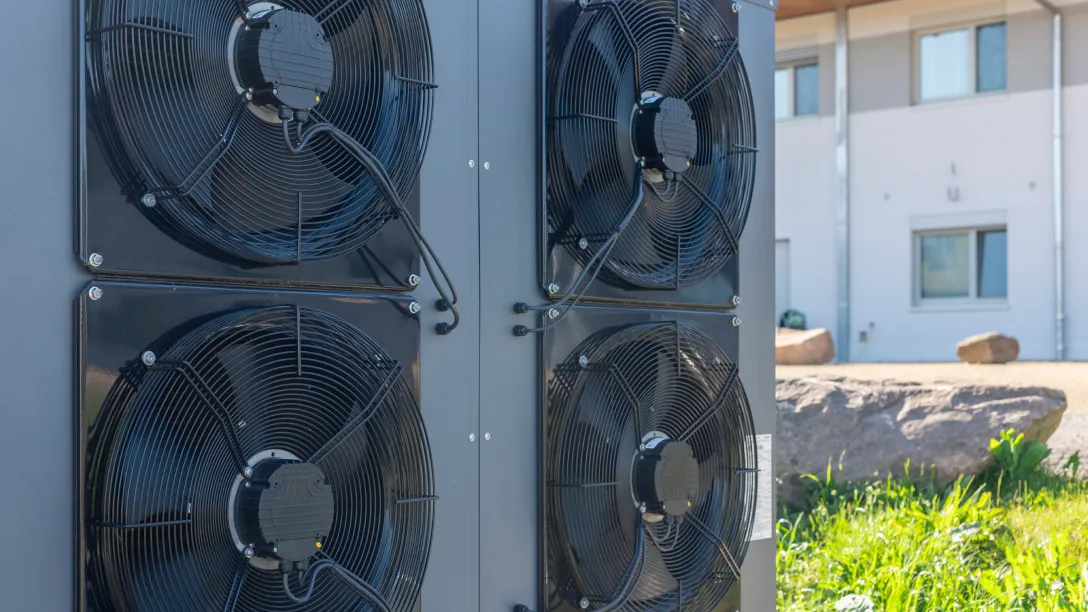
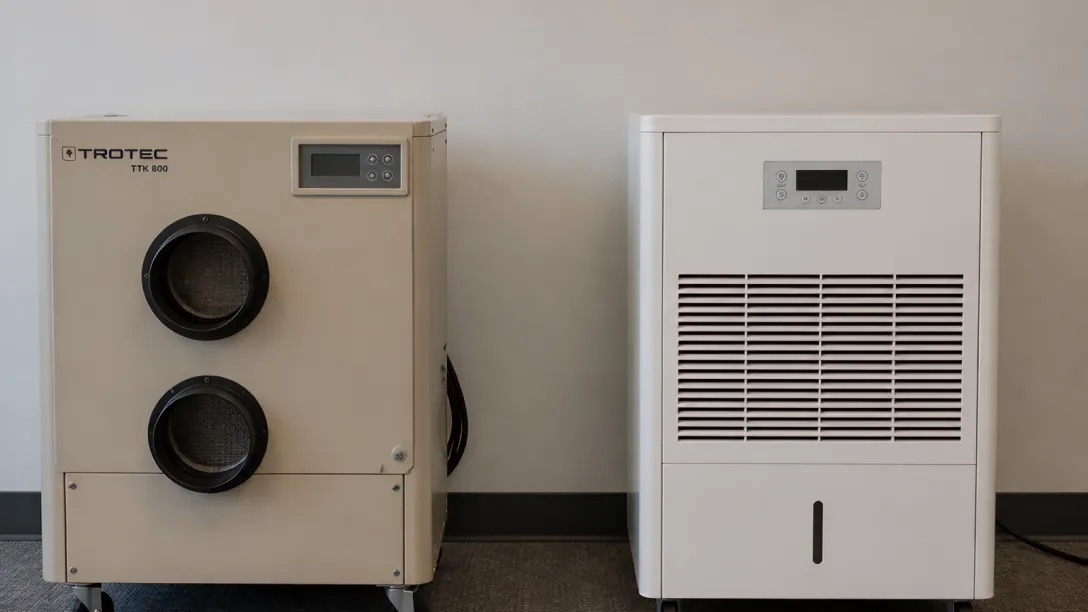
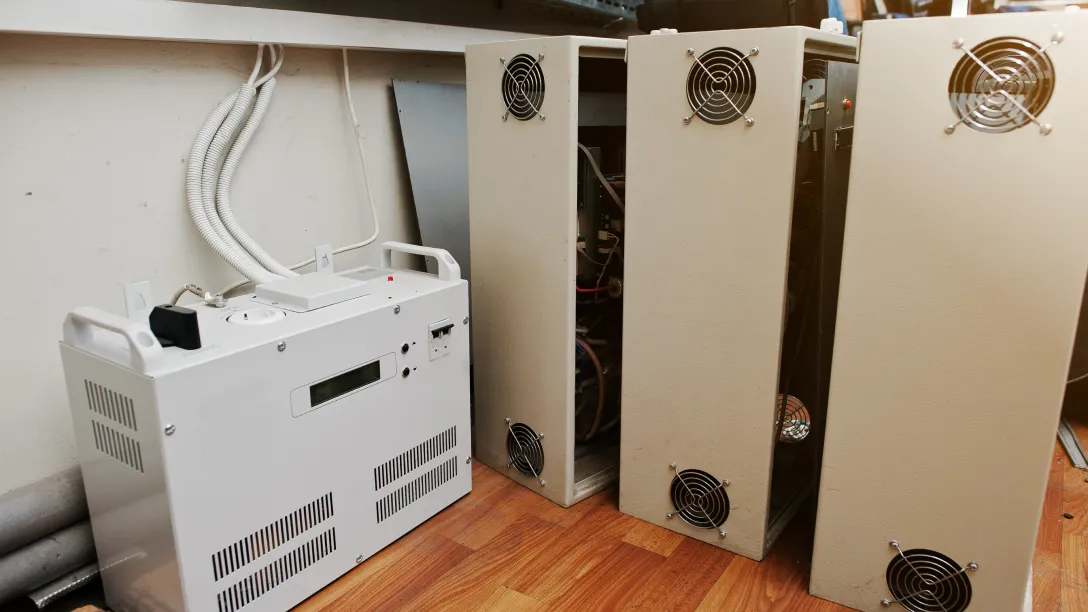
This massive volume dictates industrial-scale equipment. Relying on dozens of small, residential-grade dehumidifiers clutters the facility, overloads electrical panels, and provides highly inefficient moisture extraction per kilowatt of energy consumed. Facility managers scale their operations using large-tonnage, purpose-built machinery. Integrating a heavy-duty commercial dehumidifier 380V system ensures high-capacity water removal with industrial-grade compressors, maximizing the pints-per-kilowatt (PPK) efficiency metric and driving down operational expenditures.
Equipment Sizing and Canopy Airflow Integration
Extracting moisture from the ambient room volume is only effective if that dry air reaches the microclimate trapped deep within the plant canopy. Dense foliage creates stagnant pockets of air where localized humidity spikes to 100%, even if the wall-mounted hygrometer reads a safe 50% RH.
Breaking these microclimates requires strategic airflow engineering. To optimize floor space and eliminate dead zones, agronomists frequently specify a ceiling-mounted dehumidifier configuration. Suspending the equipment above the crop allows for high-velocity, horizontal air distribution. The dry supply air acts as an air sweep, physically penetrating the canopy, stripping away the wet boundary layer from the leaves, and forcing the humid air back into the return ducts. This continuous mechanical disruption of the canopy microclimate ensures uniform VPD across the entire facility, preventing localized pathogen outbreaks and guaranteeing uniform crop maturation.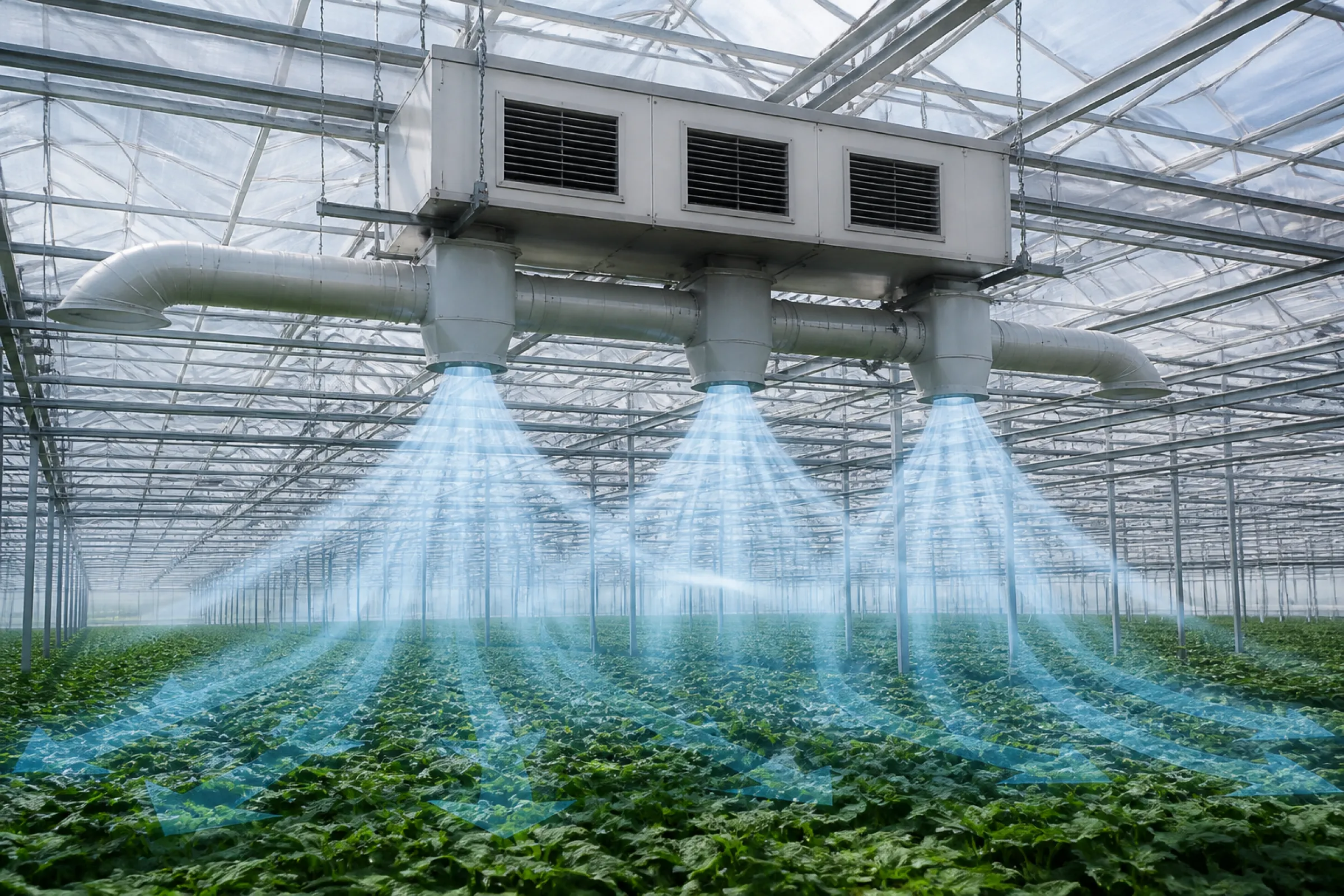
Implement Scientific Agronomic Climate Engineering
Agricultural yields are mathematically bound by the precision of the facility's thermodynamic envelope. Relying on inadequate standard cooling or archaic venting strategies guarantees compromised nutrient uptake, invites devastating fungal pathogens, and severely limits the genetic potential of the crop. Implementing calculated, high-capacity desiccant or mechanical dehumidification secures the specific VPD parameters required for maximum biomass production. To calculate your facility's peak transpirational loads and engineer a customized, high-efficiency closed-loop climate architecture, consult our specialized agricultural engineering team.
Frequently Asked Questions
What is Vapor Pressure Deficit (VPD) in commercial agriculture?
VPD is a precise measurement of the drying power of the air, calculated by the difference between the amount of moisture in the air and the maximum amount it can hold at saturation. In agriculture, VPD dictates the rate of plant transpiration. An optimal VPD provides just enough atmospheric "pull" to draw water and nutrients up through the roots and out through the leaves without causing the plant to dry out entirely.
Why is relative humidity (RH) an inadequate metric for plant growth?
Relative humidity only measures the percentage of saturation at a specific temperature. Because warm air holds significantly more water than cold air, a room at 60% RH at 85°F has a drastically different evaporative pressure than a room at 60% RH at 70°F. Relying solely on RH does not tell the grower the actual physical force pulling water from the plant leaves, whereas VPD provides an absolute, temperature-independent metric.
What causes the nighttime humidity spike in greenhouses?
When grow lights turn off or the sun sets, the air temperature in the greenhouse drops rapidly. Because cold air cannot hold as much moisture as warm air, the relative humidity instantly spikes toward 100%. Furthermore, the plants themselves hold thermal heat and continue to transpire water vapor into this shrinking moisture envelope. If industrial dehumidifiers do not instantly remove this water, condensation forms on the plants.
How does high humidity cause Botrytis (bud rot) and powdery mildew?
Fungal pathogens like Botrytis cinerea and powdery mildew cannot germinate in dry conditions; their spores require microscopic droplets of liquid water on the plant tissue to activate. When greenhouse humidity is uncontrolled and dew point intersects with canopy temperature, micro-condensation forms on the leaves and inside dense flowers. This provides the exact biological environment required for mold to instantly colonize and destroy the crop.
Why is venting moist air outside inefficient for modern greenhouses?
Venting relies on the outside weather being drier than the inside air, which is unreliable. If it is raining outside, venting pulls moisture in. More importantly, modern greenhouses artificially pump expensive CO2 into the room to accelerate plant growth. Opening vents to release humidity simultaneously exhausts all the valuable CO2 into the atmosphere, wasting money and crippling the crop's photosynthetic potential. Closed-loop dehumidification solves this.
How do engineers calculate the dehumidification capacity required for a grow room?
Agronomic engineers calculate latent load based on the total daily irrigation volume. Plants typically transpire between 90% and 95% of the water they absorb into the air as vapor. Therefore, if a room is fed 500 gallons of water per day, the dehumidification fleet must possess the mechanical capacity to extract a minimum of 450 gallons of water from the air every 24 hours to maintain equilibrium.