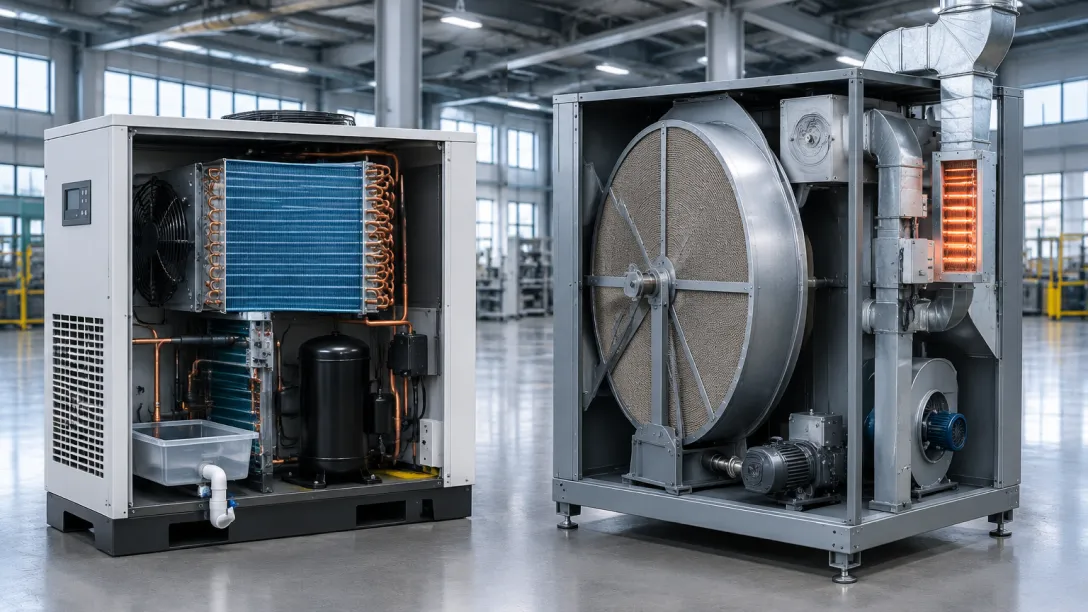
The operational economy of an active chemical adsorption unit depends almost entirely on the thermal efficiency of its regeneration cycle. While the primary process sector continuously strips moisture from incoming air streams via vapor pressure differential, the desiccant matrix requires a consistent thermal input to purge the trapped water molecules. If the reactivation energy balance is mismanaged, energy consumption spikes, operational costs escalate, and the overall moisture removal capacity degrades.
Facility engineers must evaluate multiple thermodynamic variables when specifying reactivation parameters, including specific heat capacities, reactivation air velocity, purge sector angles, and waste heat recovery integration. This technical analysis explores the thermodynamic mechanics of thermal desorption, the impact of regeneration temperature on matrix longevity, and strategies to minimize energy waste in continuous industrial operations.
Thermodynamics of Desorption and Vapor Pressure Inversion
Adsorption is an exothermic process, meaning it releases thermal energy as water vapor bonds to the active sites of the silica gel or molecular sieve matrix. Conversely, the reverse process—desorption—is endothermic. To break the physical bond holding the moisture molecule within the pore structure, external thermal energy must be introduced.
During the reactivation phase, high-temperature air ranging from 195°F to 285°F (90°C to 140°C) is forced through the regeneration sector of the rotating wheel in a counter-flow direction. This intense heat alters the local vapor pressure equilibrium. The vapor pressure inside the desiccant pores rapidly exceeds the vapor pressure of the hot purge air, forcing the trapped water out of the matrix and into the airstream to be exhausted outside the building.
Controlling this thermal gradient requires precise calibration. If the reactivation temperature drops too low, desorption remains incomplete, leaving residual moisture trapped inside the pores. This phenomenon, known as partial regeneration, progressively reduces the effective adsorption capacity of the wheel on subsequent rotations, leading to an early breakthrough of humidity in the main process supply air.
Energy Optimization via Purge Sector Design
A critical engineering challenge in rotary adsorption systems is carryover thermal energy. As the freshly reactivated, high-temperature section of the desiccant rotor rotates out of the regeneration zone and back into the cold process airstream, it carries residual sensible heat. If left unmanaged, this heat dumps directly into the dry supply air, causing an undesirable temperature spike.
To mitigate this, modern high-efficiency units incorporate a dedicated waste heat recovery or purge sector. A portion of the dry process air is diverted to sweep across the hot matrix just before it re-enters the process stream. This pre-cools the rotor segment while simultaneously pre-heating the purge air, which is then routed into the main reactivation heater inlet. This internal thermal recycling reduces the total energy required by the reactivation heater by 10% to 15%, significantly improving the overall coefficient of performance (COP) for the system.
Reactivation Energy Sources: Electric, Steam, and Direct Gas
Selecting the correct thermal source for the reactivation circuit depends heavily on the utility infrastructure available at the industrial plant. Each heating medium presents distinct engineering characteristics:
| Energy Medium | Thermal Stability | Operational Complexity | Best Industrial Application |
|---|---|---|---|
| Electric PTC Heaters | High precision | Low maintenance, plug-and-play | Smaller continuous loops, remote installations, cleanrooms |
| Saturated Steam Coils | Constant temperature | Requires boiler infrastructure and traps | Chemical plants, food processing facilities with central steam |
| Direct-Fired Natural Gas | High thermal output | Requires strict safety interlocks and venting | Large-scale manufacturing, high-flow central air systems |
Direct-fired gas burners offer the lowest operating cost per BTU in large-scale installations, but they introduce combustion byproducts—specifically water vapor and carbon dioxide—directly into the reactivation air stream. Because the reactivation air is completely isolated from the process air by internal mechanical seals, these combustion gases never mix with the dry supply air, ensuring complete safety and zero contamination of the sensitive manufacturing environment.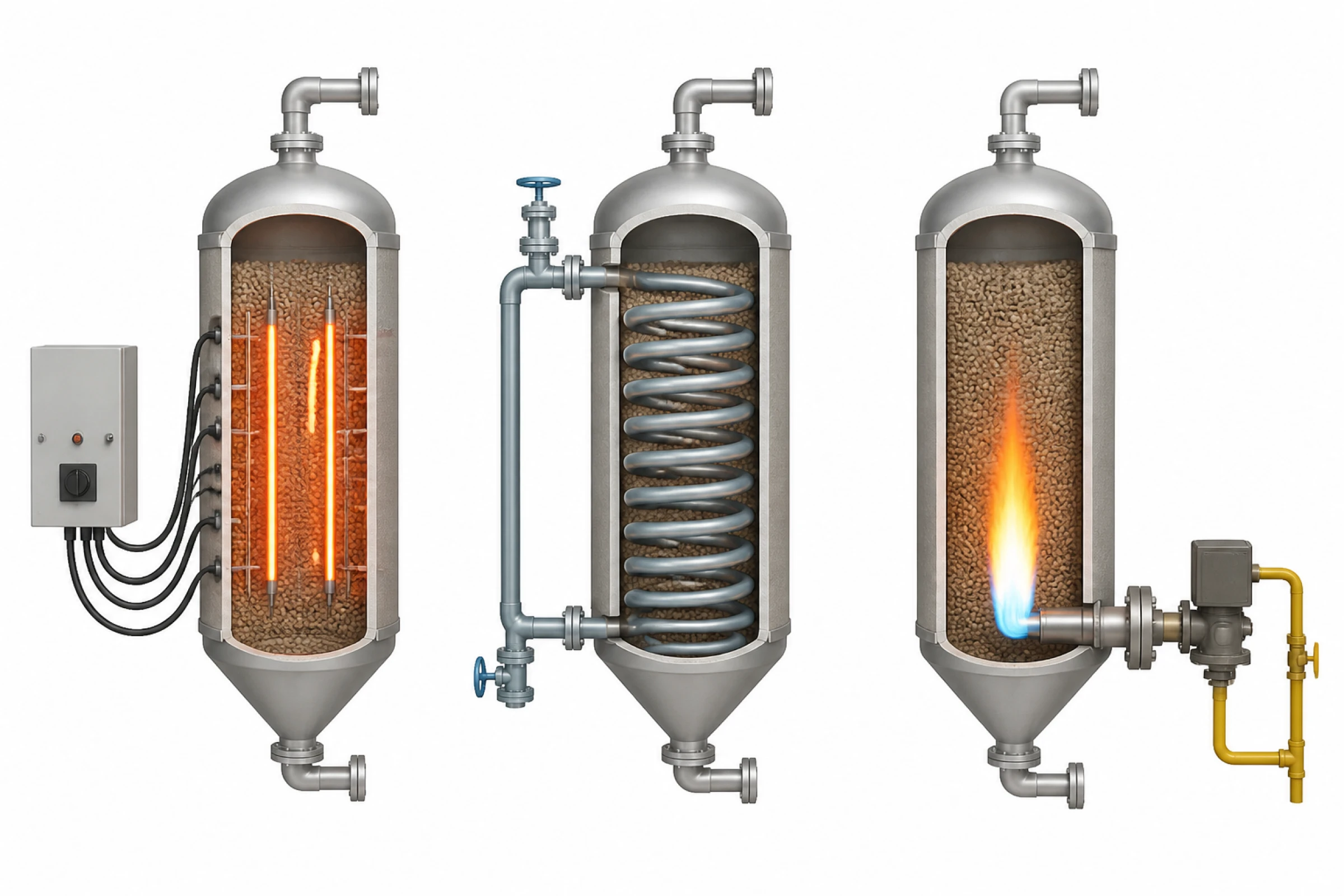
Preventing Matrix Degradation and Thermal Shock
Exposing a desiccant rotor to erratic thermal spikes or chemical contamination during reactivation leads to premature structural failure. If the reactivation heating elements fail and experience thermal runaway, localized temperatures can exceed the structural tolerance of the fiberglass or ceramic matrix, causing warping and destroying the delicate internal flutes.
Furthermore, chemical fouling represents a severe operational hazard. If process airstreams containing airborne oils, volatile organic compounds (VOCs), or alkaline particulates pass through the wheel, these contaminants accumulate on the desiccant surface. During the high-temperature reactivation phase, these trapped compounds can bake onto the active sites, permanently blocking the microscopic pores and causing irreversible loss of moisture extraction capacity. Upstream multi-stage filtration—utilizing high-efficiency particulate and carbon filters—is mandatory to protect the thermal integrity of the adsorption rotor.
Integrate Advanced Thermal Engineering
Maximizing the efficiency of industrial humidity control requires meticulous attention to the thermodynamics of the reactivation cycle. Optimizing purge sectors, selecting the correct heating medium, and preventing thermal degradation ensure long-term reliability and minimal energy expenditure. For custom thermal performance calculations, energy recovery evaluations, and specialized system configurations, explore our professional desiccant dehumidifier solutions engineered for demanding continuous operations.
Frequently Asked Questions
Why is desorption an endothermic process?
Desorption requires the continuous input of external thermal energy to break the physical vapor pressure bond holding water molecules inside the microscopic pores of the desiccant matrix. Unlike adsorption, which releases heat when moisture bonds to the surface, extracting that moisture back out during reactivation demands high-temperature air to drive the phase change.
What causes partial regeneration in a desiccant rotor?
Partial regeneration occurs when the reactivation temperature is too low, the airflow is insufficient, or the exposure time in the reactivation sector is too short. This leaves residual moisture trapped inside the desiccant pores, reducing the wheel's active surface area and causing a premature rise in humidity in the primary process supply air.
How does a purge sector save energy?
A purge sector diverts a small portion of the dry process air to cool the hot desiccant matrix just before it re-enters the process stream. This recovers sensible heat that would otherwise be wasted as a temperature spike in the supply air, using that thermal energy to pre-heat the air entering the reactivation heater and reducing total power consumption.
Are combustion gases from gas-fired reactivation dangerous to the clean air supply?
No. Direct-fired natural gas burners introduce combustion byproducts into the reactivation airstream, but the system is engineered with strict physical barrier seals. The reactivation loop and the process loop are completely isolated, ensuring that exhaust and combustion gases are vented directly outdoors without ever mixing with the treated supply air.
What prevents chemical contaminants from ruining the desiccant matrix during heating?
Protecting the wheel requires rigorous upstream filtration, including particulate filters and activated carbon stages, to remove airborne oils, VOCs, and chemical aerosols before the air reaches the rotor. Preventing these compounds from entering the matrix stops them from baking onto the active sites during the high-temperature reactivation phase.
How do electric and steam reactivation methods compare in efficiency?
Electric heaters offer precise temperature control and easy installation but carry higher operational costs depending on local electricity tariffs. Steam coils utilize existing facility boiler infrastructure, offering exceptionally stable, safe thermal output with lower energy costs where steam is already being generated for other industrial processes.