Aerospace manufacturing and aircraft maintenance operate under zero-tolerance engineering standards. The structural integrity of modern airframes, the reliability of flight-critical avionics, and the survivability of multi-million-dollar jet engines are strictly governed by the psychrometric conditions of their surrounding environments. Atmospheric moisture acts as a relentless agent of degradation in this sector. During the fabrication of carbon fiber composite structures, ambient humidity directly compromises the molecular cross-linking of epoxy resins. During long-term aircraft parking or MRO (Maintenance, Repair, and Overhaul) operations, trapped moisture causes aggressive galvanic corrosion and catastrophic electrical tracking.
Standard industrial air conditioning lacks the vapor pressure leverage required to mitigate these highly specific aerospace threats. Protecting composite layups, preventing hangar condensation, and executing dry air preservation protocols on grounded fleets require active chemical adsorption. This technical guide explores the thermodynamics of composite porosity, the mechanisms of avionics degradation, and the integration of industrial desiccant systems to secure aerospace assets against moisture-induced failure.
Thermodynamics of Composite Porosity and Delamination
Modern commercial and military airframes rely heavily on Carbon Fiber Reinforced Polymers (CFRP). These structures are fabricated using "prepregs"—sheets of carbon fiber pre-impregnated with a partially cured epoxy resin matrix. Epoxy resins are highly hygroscopic. When technicians remove prepregs from cold storage and expose them to ambient air in the layup cleanroom, the resin acts as a desiccant, actively absorbing atmospheric water molecules.
This moisture absorption initiates a catastrophic sequence during the curing phase. After the composite layers are arranged on a mold, the entire assembly is placed inside an autoclave. The autoclave subjects the composite to intense pressure (up to 100 psi) and elevated temperatures (typically exceeding 175°C) to fully cross-link and cure the epoxy. At these temperatures, the moisture previously absorbed by the resin instantly flashes into high-pressure steam. Because this phase change occurs within a sealed, highly viscous matrix, the expanding steam forms microscopic bubbles or voids between the carbon fiber layers.
This internal void formation is known as porosity. Even a 2% void fraction can reduce the interlaminar shear strength of a critical flight surface by 15% to 20%, leading to subsequent delamination under aerodynamic stress. To prevent porosity, aerospace engineers mandate that the relative humidity inside the composite layup cleanroom never exceeds 30%. Maintaining this strict parameter requires a dedicated desiccant dehumidifier to forcefully extract latent moisture from the make-up air before the resin can absorb it.
Decoupling Latent Loads in Layup Cleanrooms
Aerospace layup rooms present a unique HVAC challenge. They require strict positive pressurization to prevent particulate infiltration, necessitating massive volumes of outside make-up air. Additionally, a large workforce of technicians in full cleanroom suits generates a significant biological latent moisture load.
If facility engineers attempt to control this environment using standard chilled-water cooling coils, the system fails. To drop the room's relative humidity to the required 30%, the cooling coils must run continuously, chilling the supply air well below freezing. This causes the coils to frost over, blocking airflow, while simultaneously making the cleanroom unworkably cold for the technicians. Active adsorption solves this by decoupling the latent load from the sensible load. The desiccant rotor chemically strips the moisture via vapor pressure differentials, allowing the sensible cooling coils to operate at normal, comfortable temperatures. This guarantees a perfectly dry layup environment without massive energy penalties for reheating over-chilled air.
Aircraft Lay-up, MRO, and Fuselage Preservation
When aircraft are grounded for extended periods—whether for seasonal storage, economic curtailment, or heavy "D-check" maintenance—they face severe environmental threats. An unpowered, parked aircraft acts as an enormous aluminum greenhouse. During the day, solar radiation heats the fuselage, allowing the internal air to hold massive amounts of moisture. At night, the aluminum skin cools rapidly. The trapped internal air drops below its dew point, causing heavy condensation to form on the inside of the fuselage skin, pooling in the belly of the aircraft (the bilge).
This continuous daily thermal cycling initiates aggressive galvanic corrosion between the dissimilar metals in the airframe structure. Furthermore, the standing moisture saturates acoustic insulation blankets, promoting rampant fungal growth and mold that ruins the cabin interior. Standard preservation protocols require venting the fuselage and deploying a compact desiccant dehumidifier directly into the aircraft. By pumping a continuous supply of sub-zero dew point air through a flexible duct into a slightly cracked cabin door, technicians establish a positive pressure of ultra-dry air. This constant purge physically prevents ambient moisture from entering the fuselage and arrests the diurnal condensation cycle completely.

Avionics Protection and Jet Engine Purging
The financial value of a commercial airliner is heavily concentrated in its avionics bays and turbofan engines. High-density printed circuit boards, flight control computers, and radar systems are extremely sensitive to moisture. Condensation within an avionics bay causes electrical tracking, shorts out microprocessors, and corrodes gold-plated terminal contacts, leading to unpredictable flight control anomalies.
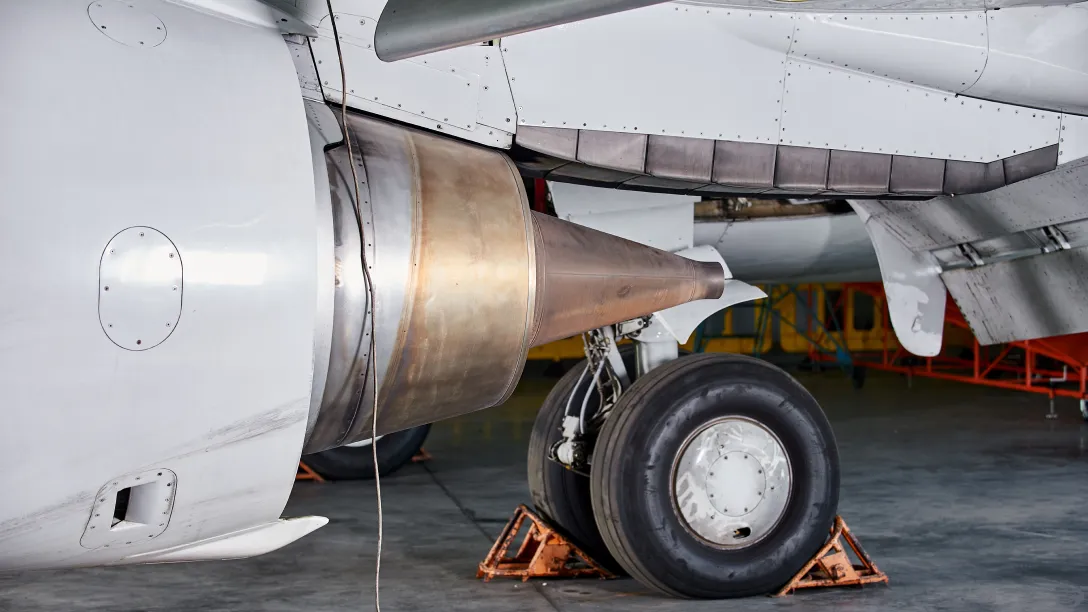
Jet engines suffer similar degradation during lay-up. The highly engineered turbine blades and compressor stators are susceptible to pitting corrosion. Pumping dry air directly into the engine cowling and sealing the intakes physically starves the oxidation reaction. Because the critical relative humidity (CRH) for most aerospace alloys is around 40%, maintaining the internal engine volume at 20% RH effectively suspends metallurgical degradation indefinitely, ensuring the engine passes rigorous borescope inspections prior to returning to service.
High-Bay Hangar Condensation (Sweating Aircraft)
MRO hangars are massive structures characterized by enormous bay doors. During winter or rainy operations, opening these doors allows thousands of cubic feet of cold, humid air to flood the facility. When a cold aircraft is towed into a warm, humid hangar, the massive thermal mass of the chilled aluminum airframe causes the surrounding air to drop below its dew point. The aircraft begins to physically "sweat," rapidly becoming coated in liquid condensation.
This sweating poses severe operational delays. Technicians cannot perform structural inspections, apply sealants, or execute aircraft painting on wet aluminum. Waiting for the aircraft to naturally acclimatize and dry can waste an entire day of a critical maintenance schedule. Facility managers overcome this bottleneck by installing a high-capacity rotary desiccant dehumidifier in the hangar. By maintaining the entire high-bay environment at an ultra-low dew point, the condensation threshold is artificially pushed below the temperature of the cold incoming aircraft. The airframe remains perfectly dry upon entry, allowing maintenance and painting crews to commence work immediately.
Integrate Aerospace Climate Engineering
Mitigating atmospheric moisture is not an optional utility in aerospace operations; it is a fundamental requirement for structural safety and asset preservation. Implementing active adsorption technology secures composite manufacturing yields, prevents catastrophic avionics failure during lay-up, and accelerates MRO turnaround times. For psychrometric evaluations, composite cleanroom design, and hangar airflow calculations, consult our specialized engineering team to implement industrial moisture control across your aerospace facilities.
Frequently Asked Questions
What causes porosity in aerospace composite materials?
Porosity in Carbon Fiber Reinforced Polymers (CFRP) occurs when the epoxy resin absorbs moisture from the air during the layup process. When the composite is placed in an autoclave to cure at high temperatures, this absorbed moisture instantly boils into high-pressure steam. The steam creates microscopic voids and bubbles within the resin matrix, severely weakening the structural integrity and shear strength of the final aerospace component.
Why do aircraft lay-up facilities require active dehumidification?
An unpowered, parked aircraft undergoes severe thermal cycling. As the aluminum skin cools at night, the air inside the fuselage drops below its dew point, causing heavy condensation. This trapped moisture initiates galvanic corrosion on the airframe, destroys avionics, and causes mold growth in the cabin. Pumping ultra-dry air from a desiccant unit into the aircraft completely stops this condensation cycle.
How does moisture degrade avionics during storage?
Modern avionics consist of highly sensitive microprocessors, printed circuit boards, and gold-plated connectors. When condensation forms inside an unconditioned avionics bay, the liquid water acts as an electrolyte. This causes electrical tracking across circuits, short-circuits critical flight computers, and initiates micro-corrosion on terminal pins, leading to catastrophic communication and control failures.
What is the psychrometric challenge of a large aircraft hangar?
Hangars require massive doors to open frequently, instantly flooding the facility with outside weather. If a cold aircraft is towed into a warm, humid hangar, the cold aluminum drops the localized air temperature below the dew point, causing the aircraft to "sweat" profusely. This liquid water halts all painting, sealing, and inspection work until it evaporates. High-capacity desiccant systems lower the hangar's overall dew point to prevent this sweating entirely.
Why can't standard air conditioning dry a composite layup room effectively?
Aerospace layup rooms mandate strict environmental control, often requiring relative humidity below 30%. To achieve this low humidity, standard air conditioning must run continuously, chilling the cooling coils to sub-zero temperatures. This freezes the coils solid and makes the room unworkably cold for technicians. Desiccant systems decouple this process, using chemical adsorption to extract moisture independently of the room's temperature.
How are jet engines protected from corrosion during long-term parking?
During a "cold stacking" or long-term lay-up, atmospheric moisture easily infiltrates jet engine cowlings, causing aggressive pitting corrosion on precision-machined compressor and turbine blades. Ground crews protect these multi-million-dollar assets by routing a dedicated hose from a compact desiccant dehumidifier directly into the engine intake, sealing the exhaust, and maintaining a constant purge of bone-dry air to halt the oxidation process completely.