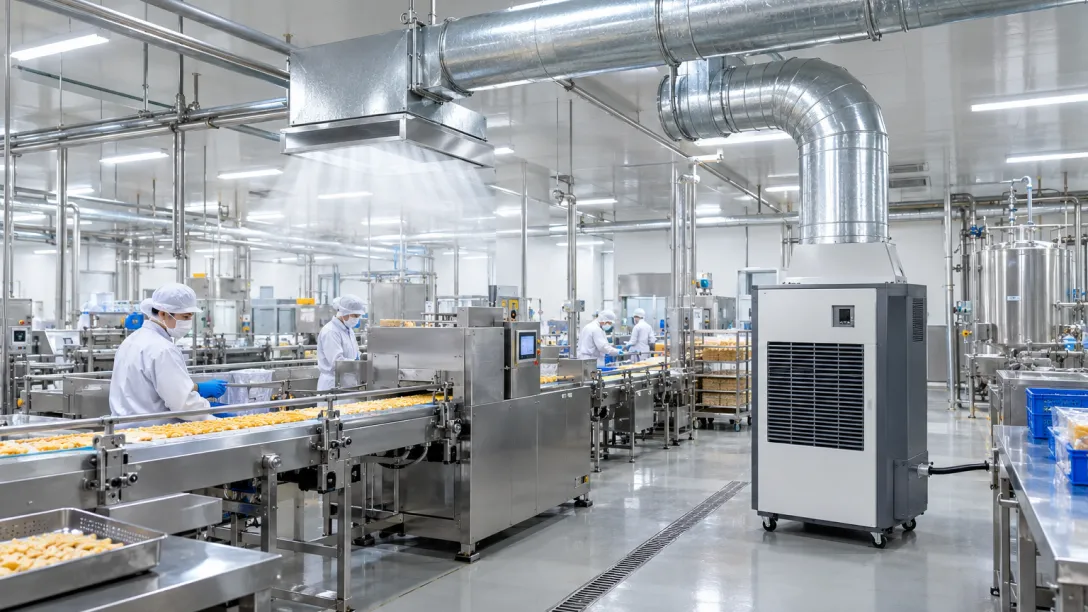
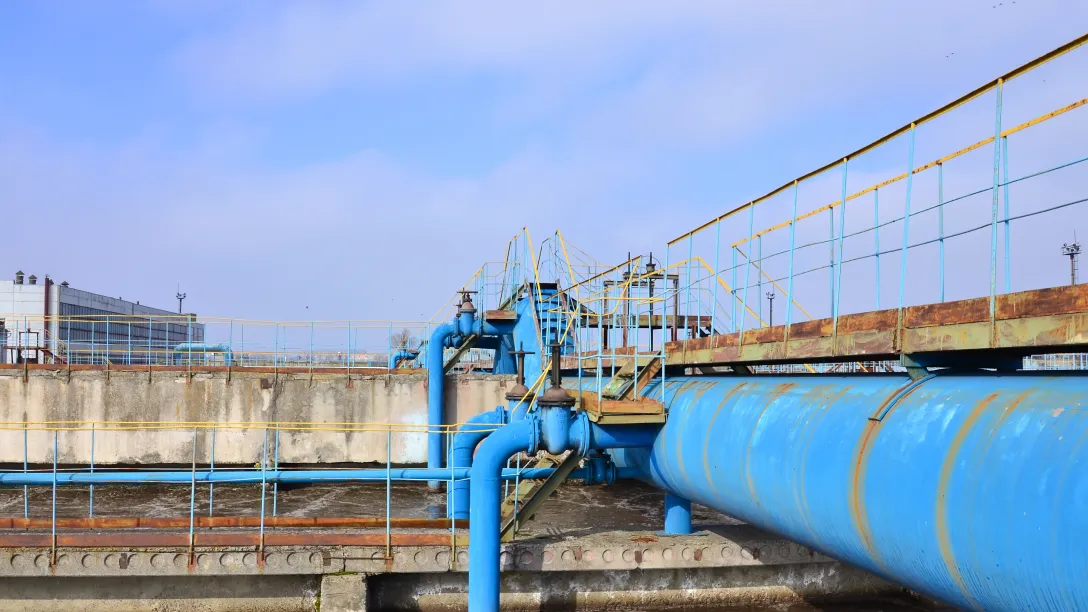
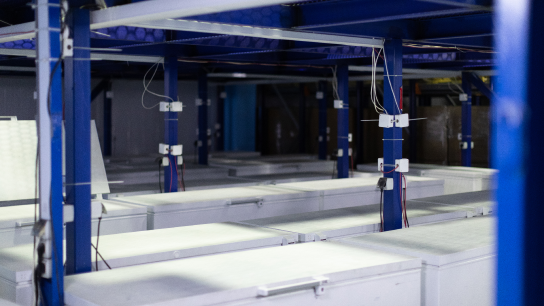
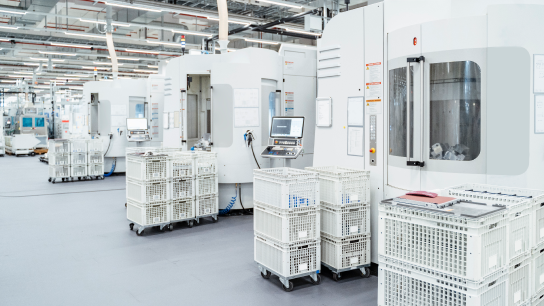
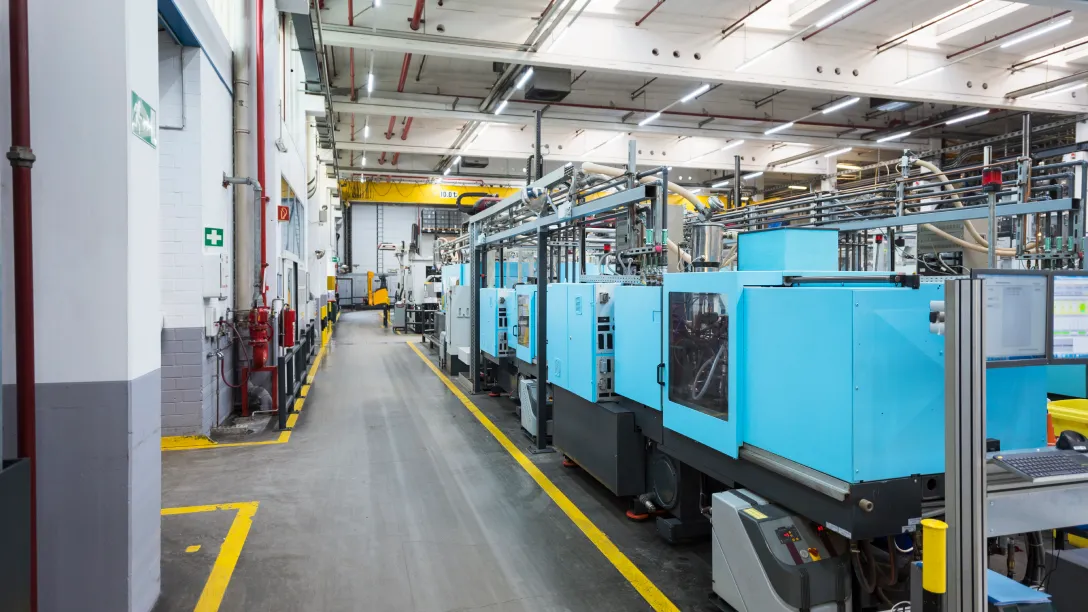
Food processing plants run some of the highest moisture loads of any industrial building. Washdown cycles, cooking and blanching lines, open product surfaces, and constant door traffic between temperature zones all release water vapor into the air. When that vapor meets a cold ceiling panel, a chilled pipe, or a refrigeration coil, it condenses, and in a food facility condensation is a documented contamination route. Droplets falling from overhead structures onto product or food contact surfaces are treated as adulteration events under modern food safety frameworks.
This guide covers where the moisture load comes from, what uncontrolled humidity costs in hygiene and product quality, the target conditions by plant zone, and the dehumidification engineering that holds those conditions through production and sanitation cycles. It reflects the conditions our engineers work with when specifying dehumidifiers for food storage and processing environments.
Where the Moisture Load Comes From
Moisture sources in a food plant divide into continuous and cyclic loads. Continuous loads include product evaporation from wet processes, cooking and pasteurizing lines, cooling tunnels receiving hot product, and infiltration through doors and dock openings. A single blanching or frying line can release tens of kilograms of water vapor per hour into the room air.
Cyclic loads arrive with sanitation. A washdown cycle floods floors, walls, and equipment with heated water, and the subsequent evaporation spike can double the room moisture load for one to three hours. If the dehumidification system is sized only for the steady production load, humidity climbs through every sanitation shift, and condensation appears on the coldest surfaces exactly when the plant is cleanest and most exposed. Proper sizing treats the post-washdown recovery period as the design condition.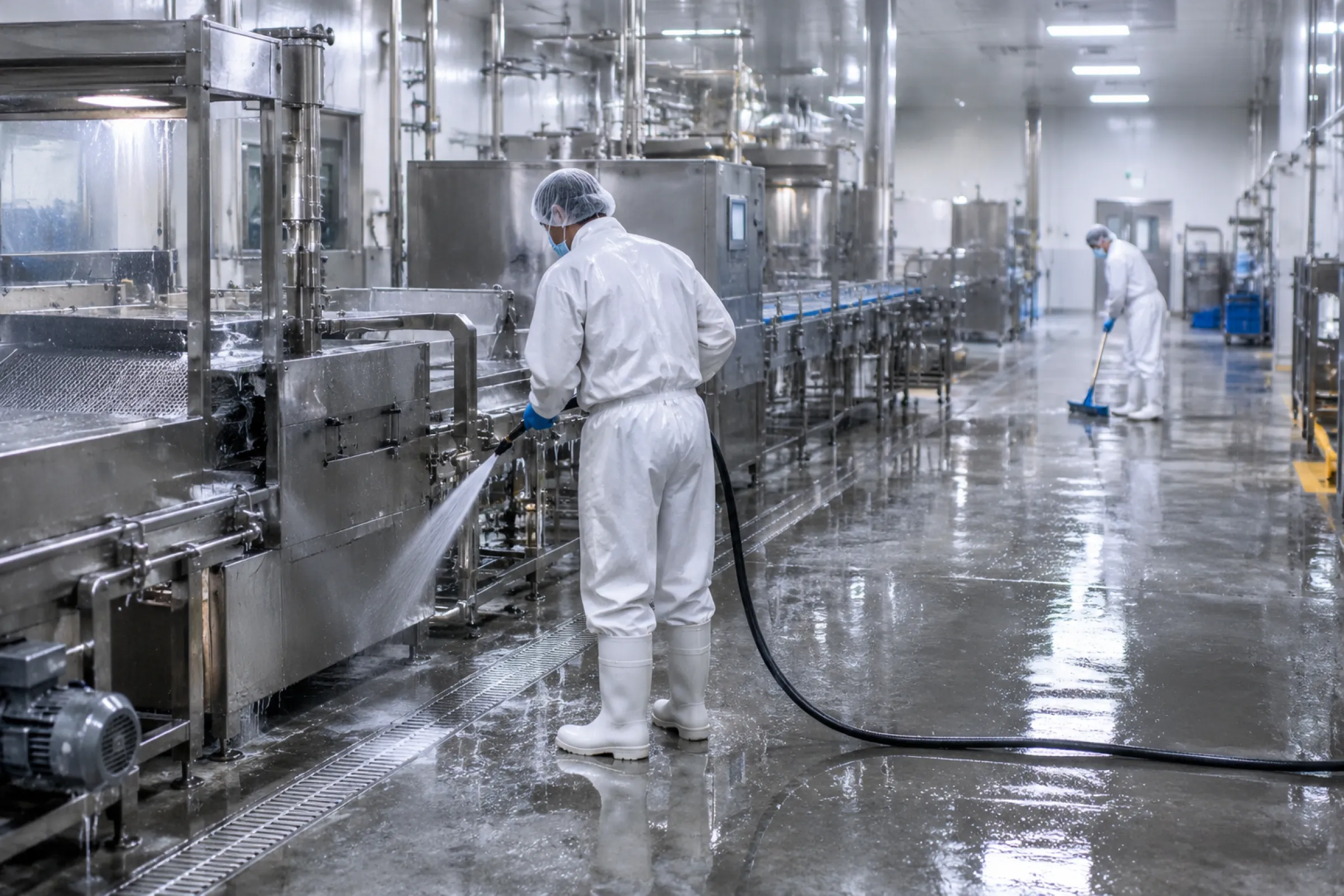
What Uncontrolled Humidity Costs
Hygiene and Compliance Exposure
Condensation on overhead structures supports mold growth and creates drip points above production lines. Water films on floors, walls, and equipment sustain bacterial growth, including Listeria monocytogenes, which thrives in cold, wet environments and is a persistent concern in ready-to-eat facilities. Regulatory frameworks such as FSMA in the United States and BRCGS and IFS audit schemes internationally all treat condensation control as a prerequisite sanitation condition. Audit findings for overhead condensation or standing water translate directly into corrective actions, and in serious cases into production holds.
Product Quality and Packaging Failures
Hygroscopic products absorb moisture directly from humid air. Powders and dry ingredients cake in silos and feed lines, sugar and salt bridge in conveying systems, and snack foods lose texture within minutes of exposure. Packaging operations suffer separately: high humidity weakens corrugated cases, causes labels to lift, and degrades heat-seal quality on films. Cold product moving into warm, humid packaging halls collects surface condensation that interferes with coding, labeling, and case sealing. These losses rarely appear as a single failure; they show up as elevated reject rates and customer complaints.
Target Conditions by Plant Zone
| Zone | Typical Temperature | Humidity Target | Primary Risk Controlled |
|---|---|---|---|
| Chilled process halls | 8°C to 12°C | 50% to 60% RH; dew point below the coldest surface temperature | Condensation, mold, Listeria harborage |
| Packaging halls | 18°C to 22°C | 40% to 55% RH | Case strength, label adhesion, seal quality |
| Powder handling and dry ingredient rooms | 18°C to 24°C | 30% to 40% RH | Caking, bridging, flow failure |
| Cold rooms and freezers | -25°C to +4°C | Dew point below room temperature; dry air supply | Ice, frost, fog, floor slip hazards |
The governing principle across all zones is the same: the room dew point must stay below the temperature of the coldest surface in the space. Humidity setpoints are derived from surface temperatures, not the reverse.
Engineering the Dehumidification System
Load Calculation and Technology Selection
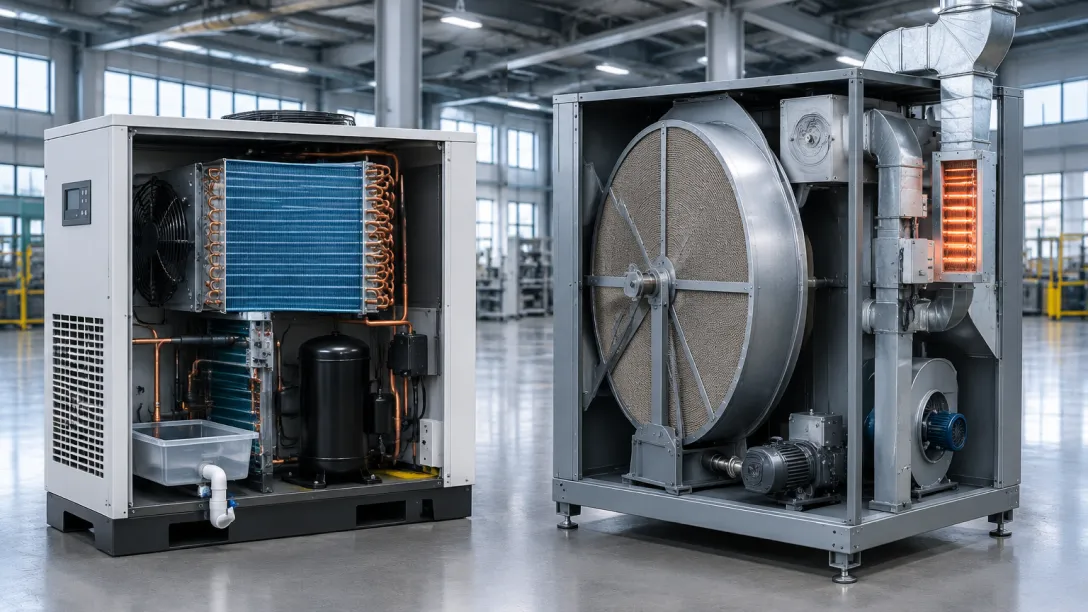
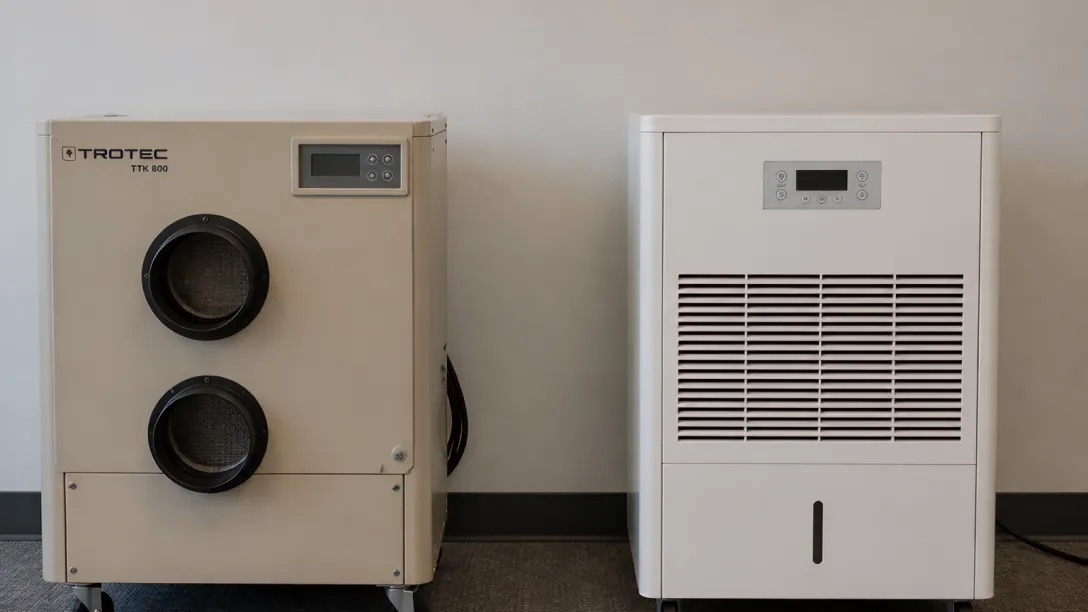
The moisture load calculation aggregates process evaporation, washdown recovery, infiltration through doors and docks, and personnel. Each source is quantified in kilograms of water per hour at its peak rather than its average, because the system must hold condition through the worst hour of the day. For existing plants, a week of logged temperature and humidity data, recorded at multiple points including the coldest surfaces, replaces assumptions with measured loads and usually reveals that the true peak sits during sanitation rather than production. Technology selection then follows the temperature boundary described in our selection work: warm zones above 15°C with moderate targets are served by refrigerant-based industrial dehumidifiers, while chilled halls below 15°C and all freezer areas require desiccant dehumidifier systems that hold full capacity at low temperature. Cold store entrances benefit from a dry air curtain across the doorway, which intercepts infiltration moisture before it reaches the cold zone; the supporting engineering is detailed on our freezer dehumidifier application page.
Casings and Materials for Washdown Environments
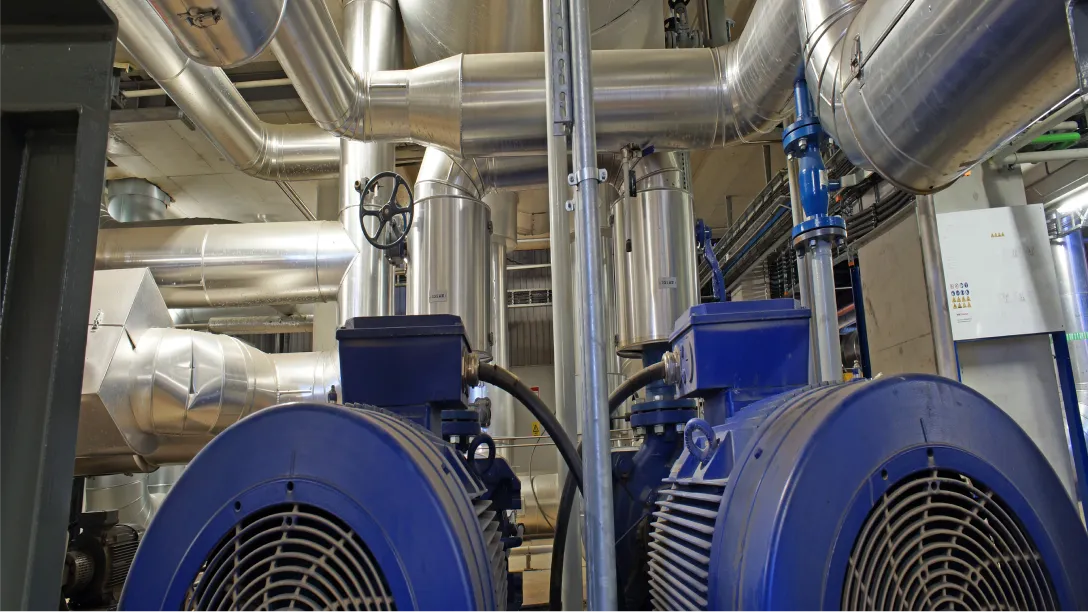
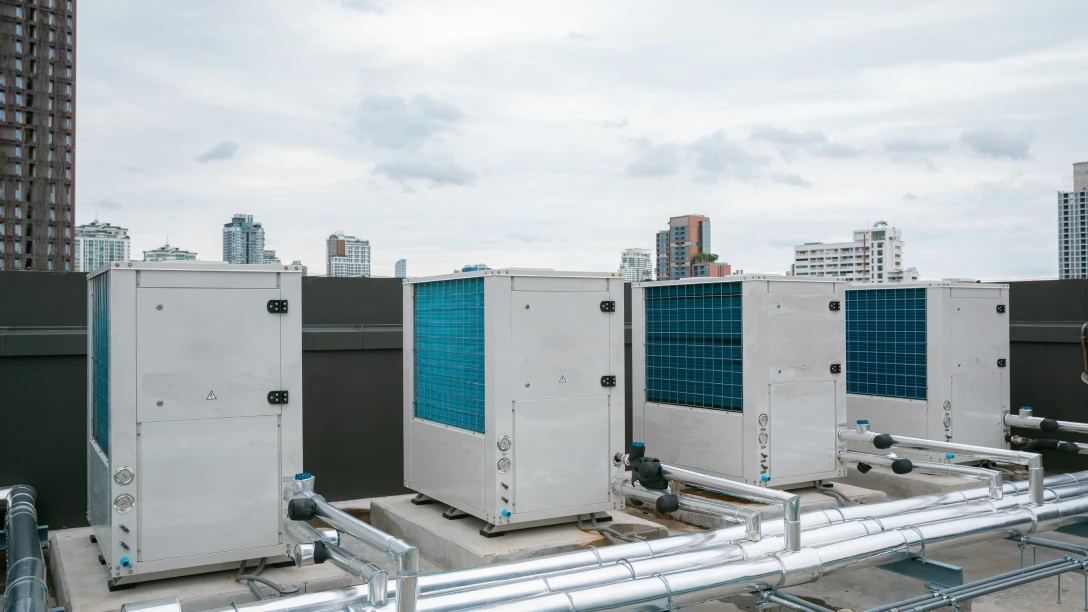
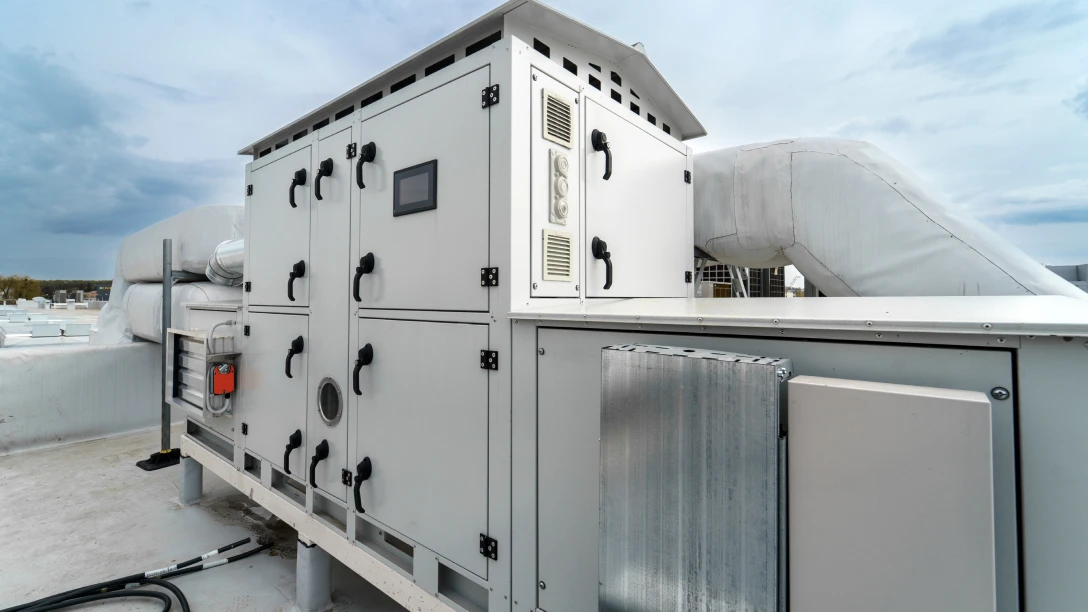
Equipment installed inside process areas must survive daily exposure to hot water, alkaline and chlorinated sanitizers, and high ambient humidity. Standard painted carbon steel cabinets fail within one to two years in this duty. Stainless steel casings, sealed electrical enclosures, and corrosion-protected coils are the baseline specification, as detailed on our corrosion-resistant dehumidifier page. Where equipment cannot be located inside the process area, the standard alternative is to place units in a plant room or on the roof and duct dry air into the space.
Air Distribution and Pressure Control
Dehumidification capacity alone does not prevent condensation if the air never reaches the cold surfaces. Supply air should be directed across ceiling planes, along exterior walls, and into corners where thermal bridging creates cold spots. Room pressure cascades matter equally: high-hygiene zones are held positive to adjacent areas so that humid air from docks and raw material zones cannot migrate inward. The dehumidified supply volume is part of that pressure balance, and the two systems should be designed together rather than independently.
Application Notes by Process Type
Cold Rooms and Freezer Entrances
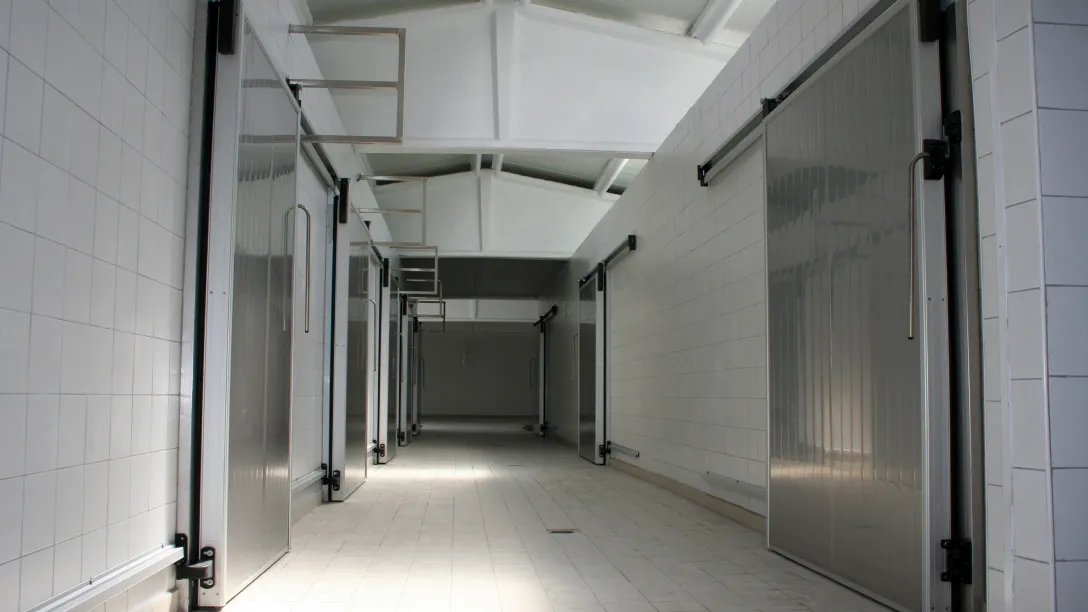
The highest condensation risk in most plants sits at the boundary between a cold room and a warm corridor. Every door opening admits warm, humid air that deposits its moisture as frost on evaporator coils, ice on floors, and fog at the doorway. The standard countermeasure supplies desiccant-dried air to the cold room itself, keeping the room slightly positive, and adds a dry air curtain across the door opening. Frost formation on coils drops sharply, defrost cycles lengthen, and the floor stays clear of ice.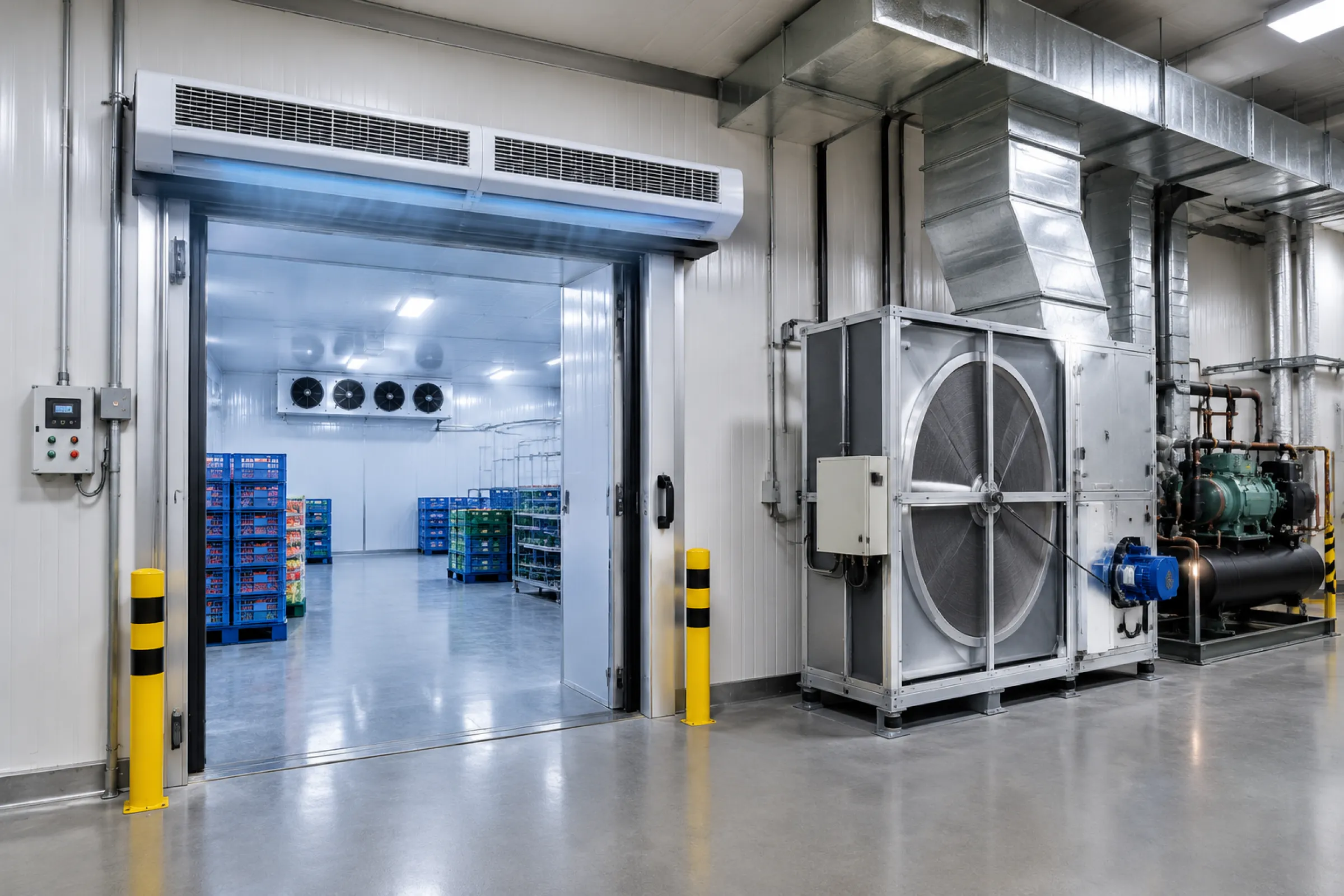
Powder Handling and Dry Ingredient Rooms
Rooms holding flour, sugar, milk powder, starch, and seasoning blends are usually held at 30% to 40% RH regardless of season. At these levels, refrigerant equipment operates at the edge of its envelope, and desiccant systems are the common specification. Silo and conveying systems fed with conditioned air extend the protection into the equipment itself, preventing the caking that otherwise forces line stoppages for manual clearing.
Drying and Maturation Rooms
Facilities drying noodles, fruit, pet food, or cured products run a continuous high-load evaporation process where humidity control determines the drying rate and the final moisture specification. Dehumidification capacity is sized directly from the water that must leave the product per hour, and supply air temperature is controlled alongside humidity to hold the product's drying curve. In these rooms the dehumidifier is process equipment, and its sizing follows the product specification rather than the building.
Specification Mistakes That Recur in Food Plants
Three errors account for most of the underperforming installations our team reviews. The first is sizing for the production load only and ignoring the washdown recovery spike, which leaves the room wet through every sanitation shift. The second is placing standard-grade equipment inside washdown zones, where cabinet corrosion and electrical ingress follow within months. The third is treating dehumidification as a standalone purchase: without coordinated air distribution and room pressure control, even a correctly sized unit leaves cold corners condensing.
A correct specification starts with the load calculation including sanitation recovery, selects technology against the zone temperature boundary, and pairs the equipment with ducted distribution and a documented pressure cascade. Our engineers perform this review as part of every quotation. Send your floor plan, zone temperatures, and a description of wet processes through the contact page, and we will return a sized equipment schedule with the load figures documented.