Semiconductor fabrication operates at the extreme limits of physics and chemistry. In a modern wafer fab processing 3-nanometer nodes, environmental tolerances are zero. Atmospheric moisture is not merely an inconvenience; it is a chemical reactant that destroys yields, disrupts photolithography, and induces catastrophic failure during integrated circuit (IC) packaging. Standard HVAC systems are incapable of maintaining the stringent ±1% Relative Humidity (RH) tolerances required in an ISO Class 3 cleanroom[cite: 7].
Achieving this level of psychrometric stability requires decoupling sensible temperature control from latent moisture extraction. Facilities must deploy active chemical adsorption technology to manage the massive volumes of fresh make-up air required for cleanroom pressurization. This engineering guide details the micro-scale mechanics of moisture-induced defects in wafer fabrication, the phenomenon of popcorn cracking in IC packaging, and the integration of industrial desiccant systems into Make-Up Air Units (MAU) for maximum yield protection.
Photolithography and Photoresist Adhesion Failures
Photolithography is the most critical and expensive step in semiconductor manufacturing. A light-sensitive polymer, known as photoresist, is spin-coated onto the silicon wafer before being exposed to extreme ultraviolet (EUV) light. The physical adhesion of this photoresist to the silicon substrate is heavily dependent on the ambient humidity inside the photolithography bay.
If the relative humidity exceeds 45%, or fluctuates by more than ±1%, a microscopic layer of water molecules condenses on the surface of the wafer. This moisture acts as a chemical barrier, preventing the photoresist polymer from bonding securely to the silicon dioxide layer. During the subsequent anisotropic etching process, the etching chemicals undercut the poorly adhered photoresist, causing the nanometer-scale circuit patterns to collapse or short-circuit. Supplying ultra-dry air via a desiccant dehumidifier stabilizes the vapor pressure inside the lithography track, ensuring consistent polymer viscosity, uniform spin-coating thickness, and flawless pattern transfer.
Arresting Native Oxide Growth on Bare Silicon
Bare silicon is highly reactive with atmospheric oxygen, but this reaction is catalyzed by water vapor. When a silicon wafer is exposed to humid air between processing steps, a random, uncontrolled layer of silicon dioxide (SiO2) grows on the surface. This is known in the industry as "native oxide."
In legacy manufacturing nodes, a few angstroms of native oxide were acceptable. In modern advanced nodes, native oxide unpredictably alters the electrical properties of the gate dielectric, increasing resistance and causing the transistor to fail entirely. Furthermore, water vapor acts as a transport medium for Airborne Molecular Contamination (AMC). Trace amounts of ammonia, sulfur dioxide, and volatile organic compounds (VOCs) dissolve in the surface moisture layer, chemically doping the silicon and destroying its semiconducting properties. By artificially crushing the dew point of the cleanroom down to ultra-low levels, engineers physically starve these chemical reactions of the necessary electrolyte, keeping the wafers pristine during transport between vacuum chambers.
IC Packaging and the Popcorn Effect
The destructive power of moisture extends beyond wafer fabrication into the final assembly and packaging of the integrated circuits. Epoxy molding compounds (EMC) and the organic substrates used to encapsulate microchips are inherently hygroscopic. According to JEDEC standards, if these components are stored or processed in an environment with elevated humidity, they will absorb atmospheric moisture deep into their molecular structure.
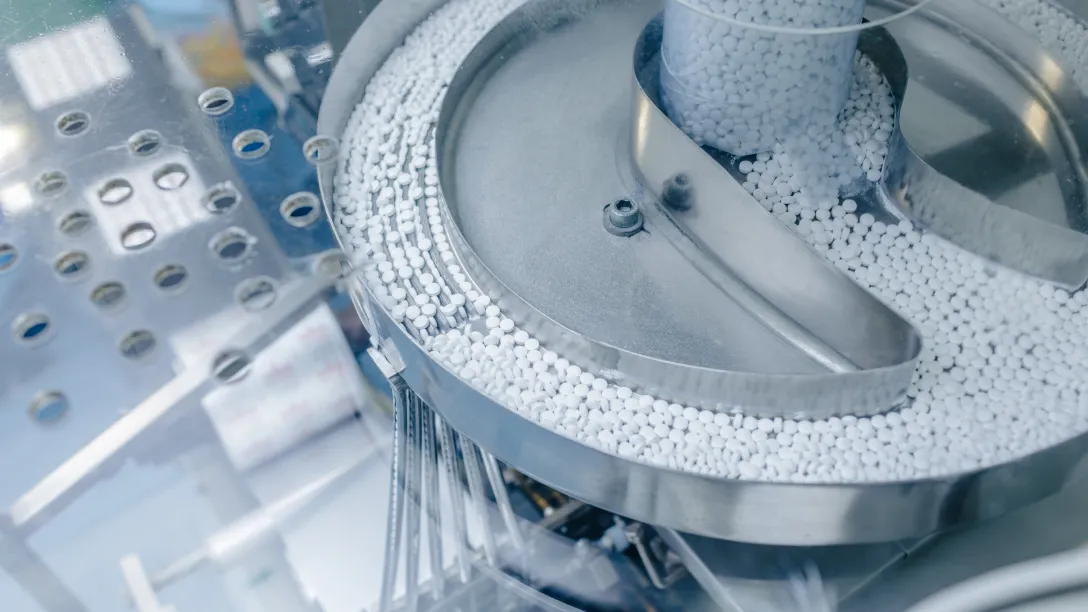
During the final surface-mount technology (SMT) assembly, the packaged chips are passed through a reflow soldering oven at temperatures exceeding 260°C. The moisture trapped inside the epoxy is instantly superheated into high-pressure steam. Because the steam cannot escape fast enough, it expands violently, causing the epoxy casing to fracture and delaminate from the die. This catastrophic mechanical failure is universally referred to as the "popcorn effect" or "popcorn cracking."
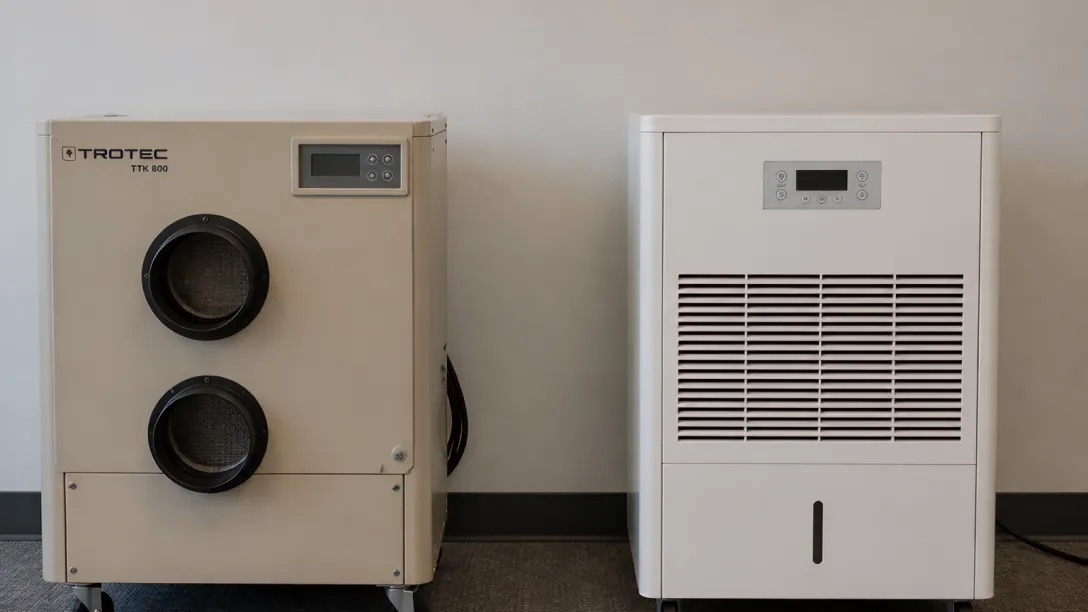
To eliminate this failure mode, packaging facilities construct dedicated dry rooms utilizing a industrial desiccant dehumidifier to maintain an ambient environment of 10% RH or lower. Storing and processing hygroscopic packaging materials in these bone-dry environments prevents moisture ingress entirely, allowing components to survive reflow soldering without requiring time-consuming pre-baking processes.
Make-Up Air Units (MAU) and Latent Load Management
Semiconductor cleanrooms consume immense volumes of air. To maintain strict positive pressure (preventing particulate infiltration) and to safely exhaust toxic processing gases like silane and hydrofluoric acid, a fab requires massive Air Changes Per Hour (ACH). This necessitates bringing in hundreds of thousands of cubic feet per minute (CFM) of fresh outside make-up air.
During summer months, this raw outside air introduces an overwhelming latent moisture load. Attempting to strip this moisture using standard chilled water coils is energetically disastrous. The chilled water must be driven close to freezing to force condensation, which often causes the coils to freeze solid, obstructing airflow entirely. Furthermore, the over-cooled air must then be reheated before entering the cleanroom, wasting massive amounts of thermal energy.
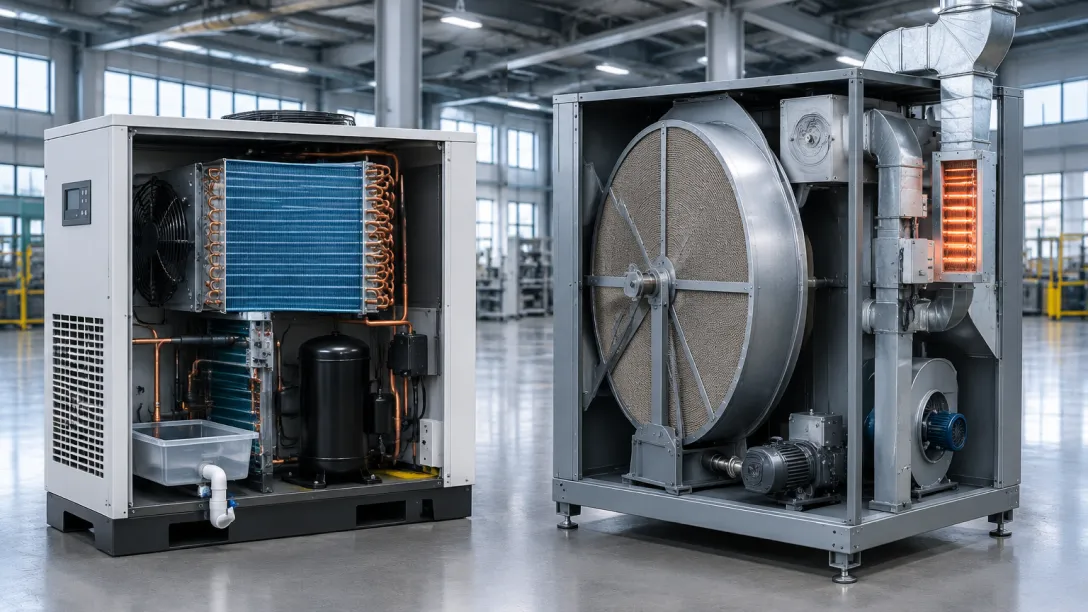
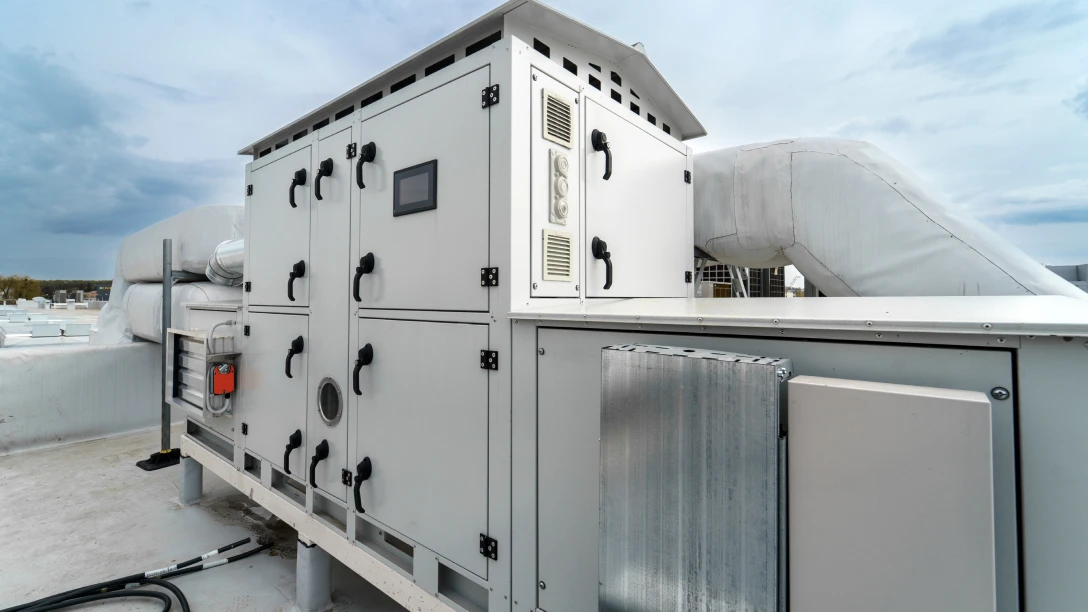
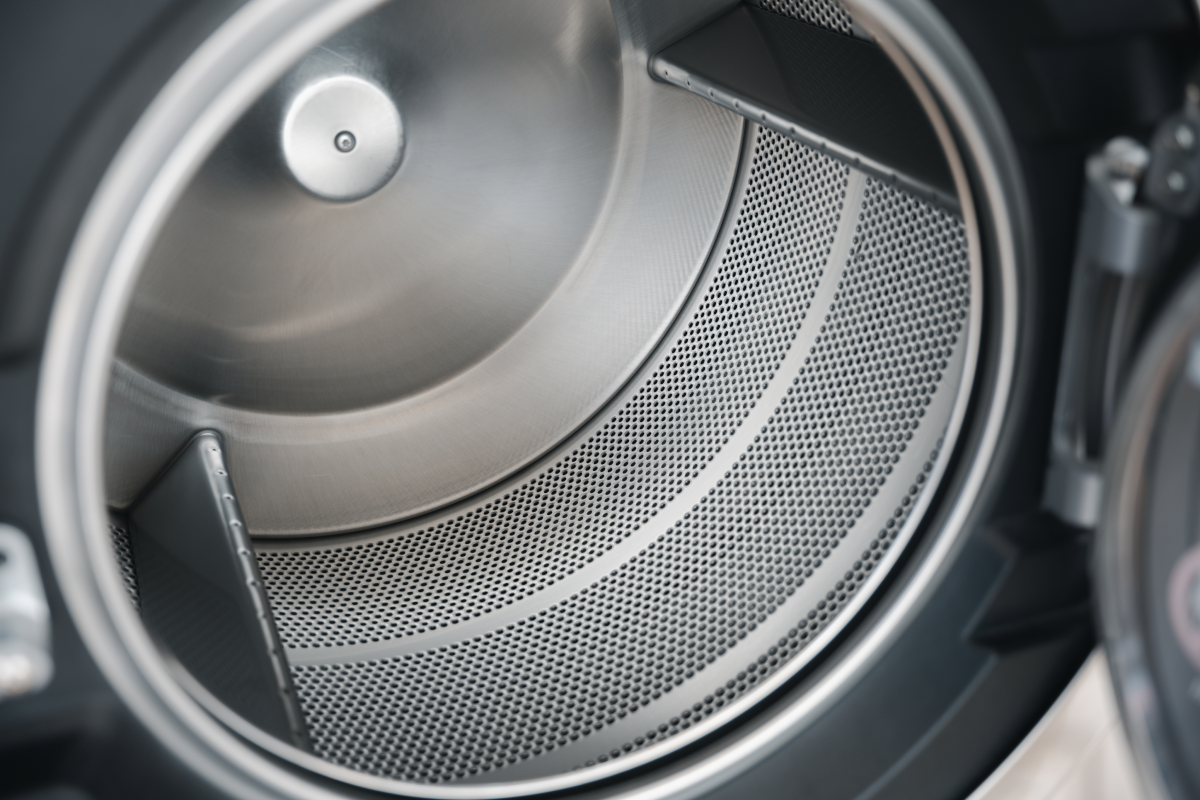
Advanced semiconductor facilities integrate active adsorption rotors directly into the MAU. The desiccant wheel intercepts the outside air, chemically stripping the latent moisture load without relying on sub-zero cooling coils. By handling the latent load entirely through adsorption, the sensible cooling coils can operate at much higher, more efficient temperatures. To maintain the exact psychrometric setpoints required by photolithography equipment, engineers deploy a precision air conditioner constant temperature humidity unit downstream of the desiccant wheel, ensuring the air entering the sub-fab is perfectly calibrated to a ±0.1°C and ±1% RH tolerance.
Protecting Copper Interconnects from Galvanic Corrosion
Modern microprocessors utilize copper for internal interconnect wiring due to its superior electrical conductivity compared to legacy aluminum. However, copper is highly susceptible to atmospheric oxidation and galvanic corrosion. If humidity levels fluctuate inside the cleanroom, microscopic condensation forms between the densely packed copper traces.
This moisture acts as an electrolyte, initiating galvanic corrosion that increases the electrical resistance of the circuit and causes signal delay or total chip failure. Maintaining a rigidly dry environment eliminates the electrolyte entirely, ensuring the copper interconnects remain highly conductive and structurally sound throughout the complex, multi-week fabrication process.
Integrate Precision Environmental Control
In semiconductor manufacturing, psychrometric instability translates directly into millions of dollars in lost yields. Eliminating photoresist adhesion failures, native oxide growth, and popcorn cracking requires absolute control over atmospheric vapor pressure. Relying on condensation-based HVAC is a structural vulnerability. For comprehensive MAU integration, desiccant sizing, and cleanroom air balancing designed for advanced semiconductor nodes, consult our specialized engineering team to safeguard your fabrication environment.
Frequently Asked Questions
Why is humidity control critical for photolithography?
Photolithography relies on the precise application of a light-sensitive polymer called photoresist. If the relative humidity is too high or fluctuates, a microscopic layer of moisture forms on the silicon wafer. This prevents the photoresist from adhering properly. During etching, the chemicals will undercut the unadhered resist, causing the nanometer-scale circuit patterns to collapse and destroying the chip.
What is native oxide growth on a silicon wafer?
Bare silicon reacts with oxygen in the air to form silicon dioxide. This reaction is heavily catalyzed by water vapor. Native oxide is unpredictable and uncontrolled; even a few extra angstroms of it will alter the electrical resistance of the gate dielectric, ruining the transistor's performance. Desiccant dehumidifiers lower the dew point to starve this chemical reaction.
What causes the "popcorn effect" in IC packaging?
Integrated circuit packaging utilizes hygroscopic epoxy molding compounds. If exposed to standard humidity, the epoxy absorbs moisture. When the chip is passed through a 260°C reflow soldering oven, the trapped moisture instantly turns into high-pressure steam, fracturing the epoxy casing and delaminating the die inside. This explosive mechanical failure is known as the popcorn effect.
How does a desiccant system handle make-up air (MAU) in a fab?
Cleanrooms require massive amounts of outside air to maintain positive pressure and exhaust toxic gases. In humid weather, standard cooling coils freeze solid trying to extract the moisture from this make-up air. A desiccant rotor uses chemical adsorption to strip the latent moisture load efficiently, allowing the sensible cooling coils to operate at warmer, non-freezing temperatures.
What is Airborne Molecular Contamination (AMC)?
AMC refers to trace chemical gases in the cleanroom air, such as ammonia, sulfur dioxide, or VOCs. Water vapor on the surface of a wafer acts as a solvent, dissolving these airborne chemicals and allowing them to chemically dope or corrode the silicon. Removing the moisture from the air removes the transport medium, drastically reducing AMC-related defects.
Why can't standard HVAC maintain cleanroom humidity tolerances?
Semiconductor fabs require relative humidity tolerances of ±1%. Standard HVAC systems couple temperature and humidity control together; they only remove moisture when they are actively cooling the air. A desiccant system decouples these processes, extracting moisture continuously via vapor pressure differentials, ensuring a perfectly flat-line humidity profile regardless of sensible cooling demands.