In commercial food manufacturing and temperature-controlled logistics, unmanaged airborne moisture compromises product integrity, violates stringent sanitation protocols, and destroys the mechanical efficiency of refrigeration infrastructure. Food processing facilities are inherently wet environments. Open vats, cooking processes, and mandatory high-pressure washdowns introduce massive volumes of water vapor into the air. Simultaneously, cooling tunnels and blast freezers maintain sub-zero temperatures, creating extreme vapor pressure differentials across the building envelope.
When warm, moist air meets cold surfaces, the laws of psychrometrics dictate immediate condensation. Standard vapor-compression HVAC systems are incapable of managing these severe latent heat loads, particularly in cold environments where evaporator coils simply freeze solid. Resolving these complex thermodynamic imbalances requires active chemical adsorption. This engineering guide examines how industrial desiccant dehumidifiers secure food safety compliance, eliminate cold storage frosting, and optimize yield in highly hygroscopic food production lines.
Overhead Condensation and Sanitation Compliance
Regulatory bodies such as the USDA and FDA enforce strict hazard analysis and critical control point (HACCP) protocols regarding facility sanitation. One of the most severe health violations in a food processing plant is overhead condensation. In meat and poultry processing plants, ambient air temperatures are kept low (typically around 35°F to 40°F) to slow bacterial growth, while nearby carcass washing or cooking stations release clouds of steam.
This moisture migrates toward the coldest surfaces in the room—usually the uninsulated stainless steel ceilings, exposed structural beams, or overhead refrigeration pipes. As the air contacts these cold surfaces, it drops below its dew point, forming condensation droplets. These droplets act as vectors for severe biological contamination. If a single drop of moisture falls from an unsterilized overhead pipe onto an exposed conveyor belt of processed meat, it can introduce Listeria monocytogenes or Salmonella, triggering catastrophic product recalls.
Desiccant dehumidifiers mitigate this risk entirely by actively depressing the room's dew point. By continuously extracting moisture from the ambient air via a silica gel rotor, the system ensures that the dew point of the room air remains significantly lower than the surface temperature of the ceiling and pipes. Without crossing the dew point boundary, condensation physically cannot form, guaranteeing a dry, compliant, and microbiologically safe processing environment.
Frost Mitigation in Blast Freezers and Cold Storage
Sub-zero cold storage facilities and spiral blast freezers face relentless vapor pressure infiltration. Whenever a loading dock door opens, or product moves from a warm preparation area into a freezer (-20°F / -29°C), a massive volume of warm, humid make-up air rushes into the cold zone.
Cold air possesses almost zero capacity to hold water vapor. As the infiltrating ambient air cools rapidly, it dumps its entire moisture load instantly. This moisture turns directly into ice, collecting aggressively on the facility's evaporator coils. As the ice layer thickens, it acts as a thermal insulator, preventing the refrigeration system from extracting heat from the room. To maintain temperatures, the facility must initiate energy-intensive mechanical defrost cycles—shutting down the cooling, activating internal heaters to melt the ice, and then restarting the refrigeration. This cyclical process consumes immense electrical power and causes undesirable temperature spikes within the freezer.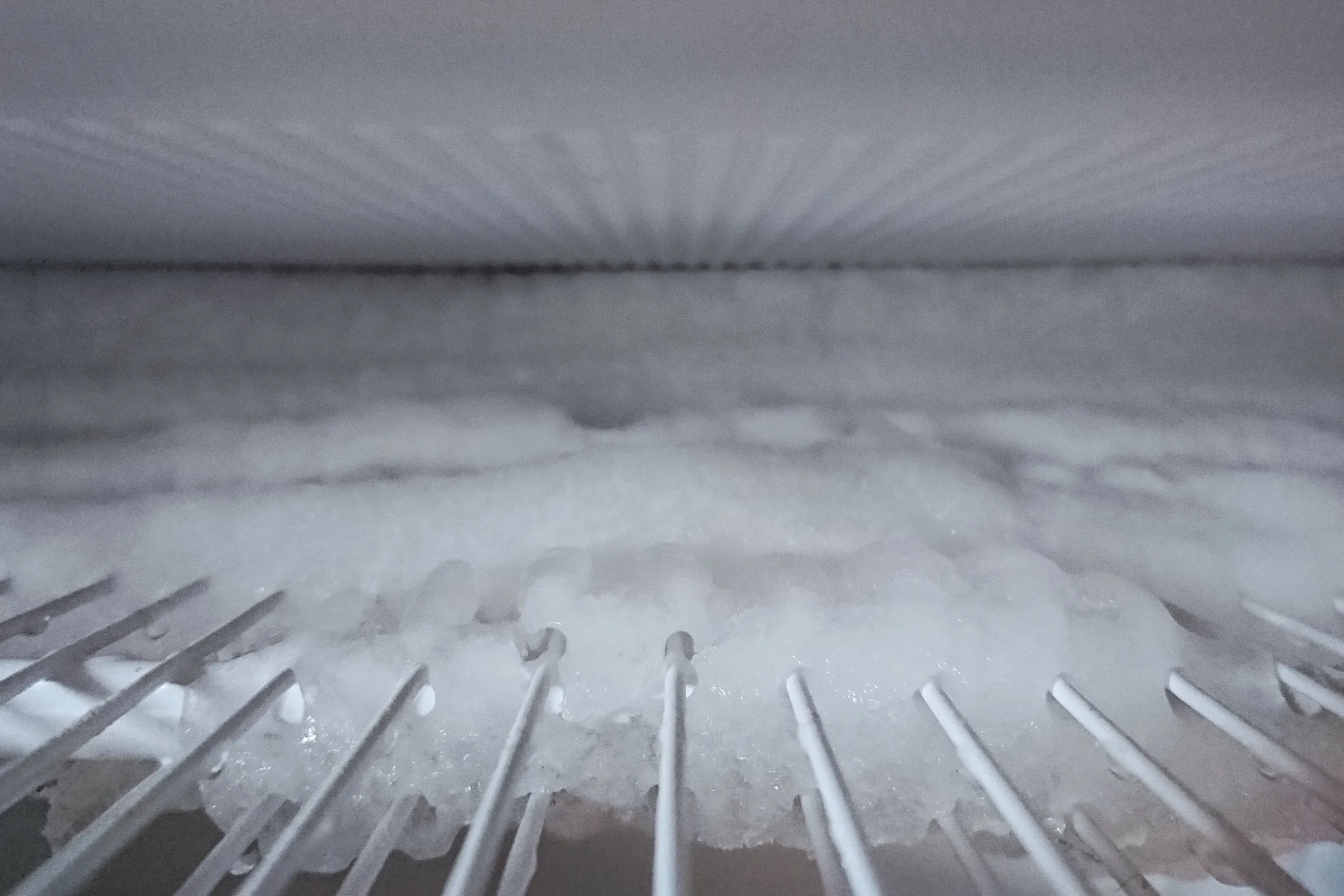
Furthermore, the moisture that does not reach the coils settles on the floors and the product packaging. Ice on the floors creates extreme slip-and-fall hazards for forklift operators, while frost on packaging destroys barcodes and compromises the cardboard's structural integrity.
Engineering a desiccant dehumidifier as an "airlock" at the freezer entrance solves this failure mode. The system captures the warm, moist ambient air before it enters the freezer, stripping the moisture through chemical adsorption. It then discharges bone-dry, sub-zero air directly into the cold zone. Because the desiccant rotor does not rely on condensation, it operates flawlessly in freezing temperatures. By preventing moisture from ever entering the cold room, the facility eliminates frost buildup, drastically reduces defrost cycles, lowers energy consumption, and maintains continuous refrigeration efficiency.
Confectionery Manufacturing: Preventing Sugar Bloom
Confectionery production, particularly involving hard candies, chocolates, and chewing gum, requires surgical precision over atmospheric humidity. Sugar is fundamentally hygroscopic. In environments where relative humidity fluctuates above 40%, sugar molecules absorb moisture directly from the air, causing the candy surface to become sticky and unworkable in packaging machinery.
Chocolate manufacturing introduces an additional thermal complexity. When chocolate cools in a forming tunnel, it must be subjected to cold air to solidify the cocoa butter crystals properly. However, if the cold air supplied to the tunnel has a dew point higher than the temperature of the chocolate, microscopic condensation forms on the surface of the product. This moisture dissolves the surface sugar. When the chocolate subsequently warms up and the moisture evaporates, the sugar recrystallizes into white, dusty patches known in the industry as "sugar bloom." While safe to eat, sugar bloom destroys the visual appeal of the product, rendering it unsalable.
Deploying a desiccant dehumidifier guarantees that the air inside the cooling tunnels and packaging halls remains exceptionally dry, typically engineered to maintain a dew point of 15°F (-9°C) or lower. This absolute moisture control prevents stickiness in sugar silos, eliminates sugar bloom during cocoa crystallization, and ensures high-speed wrapping machines operate without jamming.
Spray Drying and Dairy Powder Yield Optimization
In the dairy and instant beverage industries, liquid products such as milk, whey, and coffee are transformed into stable powders using large-scale spray dryers. The liquid is atomized inside a massive thermal tower and exposed to a high-velocity stream of hot air, which evaporates the water content instantly.
The efficiency of a spray dryer is directly tied to the moisture content of its inlet air. During humid summer months, the ambient air drawn into the dryer already carries a heavy load of water vapor. Consequently, the air has less remaining capacity to absorb moisture from the atomized liquid. Operators are forced to reduce the liquid feed rate or increase the heat significantly to achieve the desired powder specification, reducing overall production yield and spiking natural gas consumption.
By installing a high-capacity desiccant dehumidification system at the fresh air intake of the spray dryer, engineers pre-condition the air to a standardized, ultra-low moisture level regardless of seasonal weather. This consistent, dry inlet air maximizes the dryer's evaporation capacity, allowing the facility to run at maximum liquid feed rates 365 days a year. The increase in production yield often pays for the desiccant equipment capital expenditure within the first operational year.
Accelerating Washdown Recovery Times
Food processing lines require frequent, aggressive sanitation. Standard operating procedures involve flooding the production floor with hot water, foaming agents, and sanitizers during third-shift Clean-In-Place (CIP) operations. Following the washdown, the facility must be completely dry before production can resume; introducing raw ingredients into a wet room invites immediate microbial bloom.
Standard HVAC systems simply recirculate wet air, resulting in prolonged drying times that eat directly into profitable production hours. Desiccant systems provide rapid recovery by acting as a massive moisture vacuum. By flooding the wet room with aggressively dry supply air and continuously exhausting the laden moisture out of the building via the reactivation circuit, the equipment accelerates the evaporation of standing water. This mechanical intervention shrinks the drying window from several hours down to minutes, allowing production lines to restart faster while maintaining pristine hygiene standards.
Integrate Moisture Control for Food Safety
Controlling atmospheric vapor pressure is just as critical as temperature management in modern food production. Upgrading to active adsorption technology ensures full HACCP compliance, protects cold storage infrastructure from frost degradation, and standardizes production throughput against unpredictable weather patterns. For detailed psychrometric analysis, freezer airlock design, and equipment specification, review our comprehensive desiccant dehumidifier portfolio engineered for heavy-duty food and beverage applications.
Frequently Asked Questions
Why does condensation form on ceilings in food processing plants?
Condensation occurs when the ambient air temperature drops below its dew point. In food plants, processing equipment generates steam and warm moisture, while the ceiling structures and overhead pipes are kept cold for refrigeration. When the warm, moist air contacts these cold surfaces, it deposits liquid water, creating severe hygiene hazards. Desiccant dehumidifiers lower the room's dew point below the ceiling's surface temperature, physically preventing condensation.
How does moisture ruin the efficiency of a blast freezer?
Moisture infiltrating a sub-zero freezer instantly turns to ice on the coldest surfaces, primarily the evaporator coils. This ice acts as a thermal insulator, blocking heat transfer and forcing the refrigeration compressors to run continuously. It also triggers mandatory defrost cycles, which consume massive amounts of electricity and cause temperature spikes in the storage zone.
Can a desiccant dehumidifier work in freezing temperatures?
Yes. Unlike standard refrigerant dehumidifiers that rely on cooling coils to condense water (which freeze and fail below 50°F/10°C), desiccant dehumidifiers extract moisture through a chemical adsorption process using a silica gel rotor. Because they do not rely on condensation, they operate with extreme efficiency in sub-zero environments, making them ideal for freezer airlocks.
What is sugar bloom in chocolate manufacturing?
Sugar bloom is a cosmetic defect where white, dusty patches appear on the surface of chocolate. It occurs when chocolate is exposed to high humidity or when condensation forms on the product in a cooling tunnel. The moisture dissolves the surface sugar; as the water evaporates, the sugar recrystallizes into visible white spots. Desiccant dehumidifiers prevent this by supplying ultra-dry air to the cooling tunnels.
How do dehumidifiers improve spray drying efficiency?
A spray dryer's production rate depends on the air's capacity to absorb moisture from the liquid feed. If the ambient intake air is already humid, the dryer operates inefficiently. By passing the intake air through a desiccant rotor first, the air enters the dryer completely bone-dry. This maximizes its evaporation capacity, allowing the facility to process more liquid product per hour without increasing heat consumption.
Why is rapid drying required after facility washdowns?
Standing water left after a sanitation washdown is a breeding ground for bacteria such as Listeria and Salmonella. Food cannot be processed until the room is completely dry. Desiccant dehumidifiers dramatically accelerate this drying process by flooding the area with ultra-dry air, cutting hours off the turnaround time and allowing the plant to safely resume production much faster.