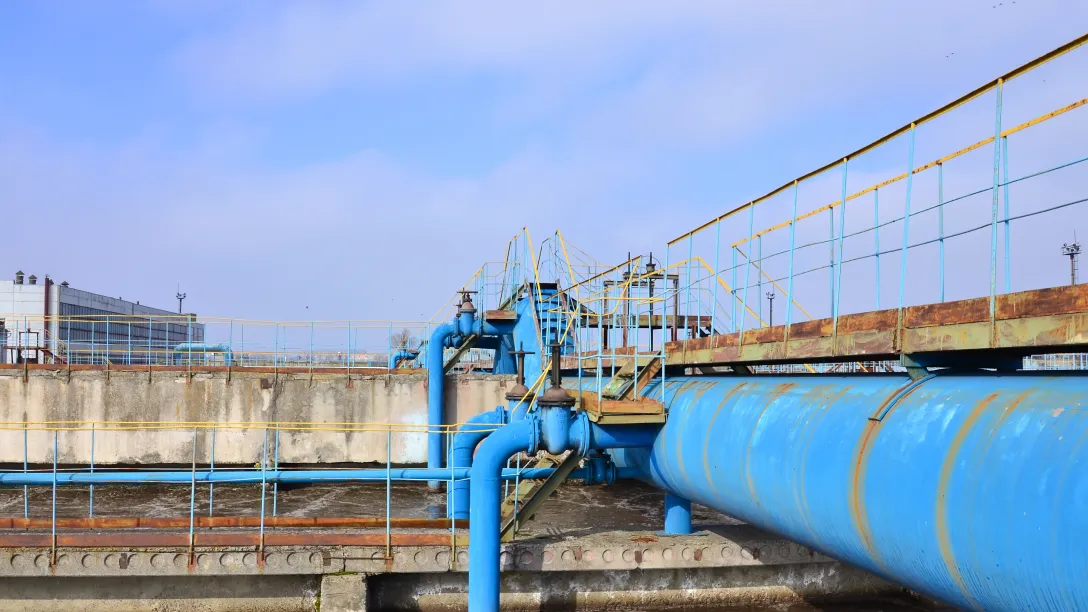
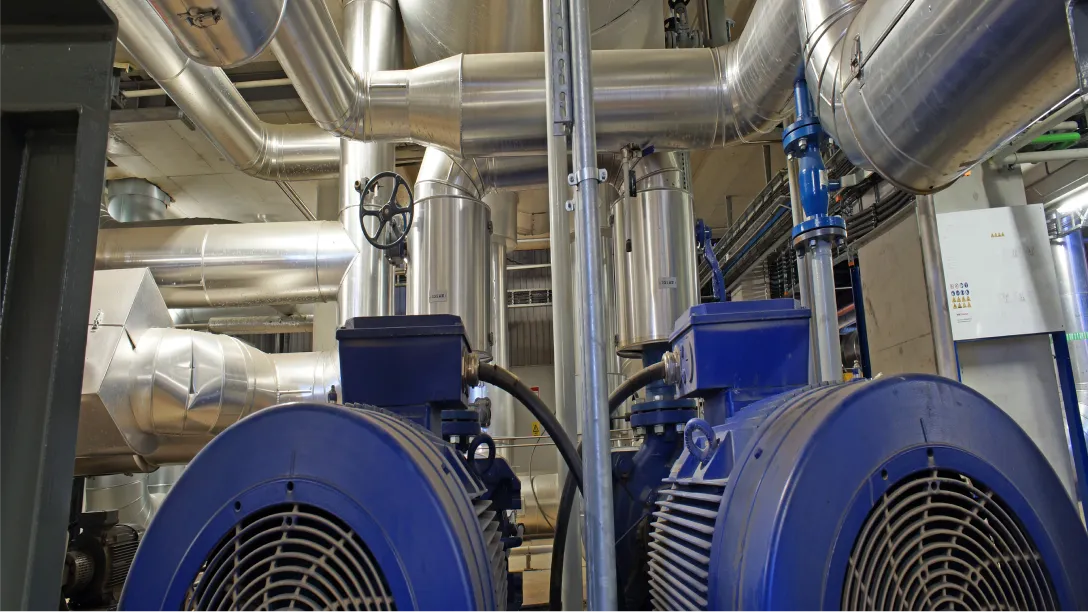
Subterranean pump stations, pipe galleries, and municipal water treatment facilities operate as massive thermodynamic heat sinks. These infrastructure networks transport millions of gallons of ground or surface water continuously, typically maintaining fluid temperatures between 5°C and 12°C. When ambient, unconditioned air infiltrates these underground facilities, it carries a heavy latent moisture load. The physical collision between this humid air and the massive chilled surface area of the iron piping triggers relentless, aggressive condensation.
Known colloquially as "pipe sweating," this continuous liquid water generation degrades expensive mechanical assets, initiates localized flooding, and compromises high-voltage automation networks. In wastewater applications, the presence of airborne chemical contaminants exacerbates the moisture, transforming simple condensation into highly acidic corrosive films. Standard commercial ventilation and cooling fail entirely in these subterranean environments. This engineering guide details the psychrometrics of pipe condensation, the threat of Microbiologically Induced Corrosion (MIC), and the necessity of integrating active adsorption systems to secure critical water infrastructure.
The Thermodynamics of Pipe Sweating
Condensation is a strict function of surface temperature versus atmospheric dew point. In a water treatment pipe gallery, a 48-inch ductile iron water main acts as a massive thermal conductor, equalizing its surface temperature with the cold water flowing inside it. If the water is 10°C, the external pipe surface is essentially 10°C.
During spring and summer months, outside air drawn into the facility for ventilation may carry a dew point of 18°C or higher. As this air contacts the cold pipe, it cools rapidly below its saturation threshold. The vapor phase collapses, depositing immense volumes of liquid water directly onto the pipe exterior, flanges, and mechanical actuators. This water drips continuously, stripping protective industrial coatings and initiating rapid oxidation (rust) on the iron infrastructure. Preventing this physical reaction requires deploying a desiccant dehumidifier to artificially suppress the ambient dew point of the entire gallery. By maintaining the room's dew point firmly below the lowest possible pipe surface temperature (e.g., maintaining a 5°C dew point), facility engineers physically render condensation impossible, preserving the coatings and the steel beneath them.
Microbiologically Induced Corrosion (MIC) in Wastewater
In wastewater lift stations and raw sewage processing facilities, atmospheric moisture introduces a severe chemical hazard. Wastewater inherently releases volatile gases, most notably Hydrogen Sulfide (H2S), which carries the characteristic odor of rotten eggs. While H2S gas is toxic, its primary structural threat occurs when it dissolves in water.
When pipe sweating occurs in a facility with elevated H2S levels, specialized sulfur-oxidizing bacteria (such as Thiobacillus) thrive in the moist condensation layer on the walls and pipes. These biological agents metabolize the H2S gas and excrete concentrated sulfuric acid directly onto the infrastructure. This process, known as Microbiologically Induced Corrosion (MIC), aggressively eats through carbon steel, destroys concrete structural pillars, and ruins copper wiring. By utilizing chemical adsorption to dry the air and eliminate the liquid condensation film, engineers physically starve the bacteria of the habitat required to synthesize the acid, halting MIC degradation at the source.
Vulnerability of SCADA and Motor Control Centers
Modern water treatment operations rely entirely on Supervisory Control and Data Acquisition (SCADA) systems and localized Motor Control Centers (MCCs) to automate variable frequency drives, pressure sensors, and massive centrifugal pumps. These electronic components are highly sensitive to moisture ingress.
In a humid pump station, condensation forms on the internal printed circuit boards and terminal blocks of the electrical cabinets. This moisture causes electrical tracking, short circuits, and catastrophic arc flashes, which can instantly shut down a municipal water sector. Standard panel heaters are often insufficient because they only raise the sensible temperature inside the cabinet; they do not extract the water vapor. Injecting deeply dried air directly into the gallery ensures that the electrical enclosures remain safely operating in an environment devoid of conductive moisture, extending the lifecycle of the automation hardware.
Sensible Heat Ratios and the Failure of Standard HVAC
A common engineering error in pump station design is attempting to control humidity with standard refrigerant-based air conditioning. Subterranean galleries are inherently cool because they are surrounded by earth and massive cold-water pipes. Consequently, the sensible heat load (the temperature of the room) is extremely low.
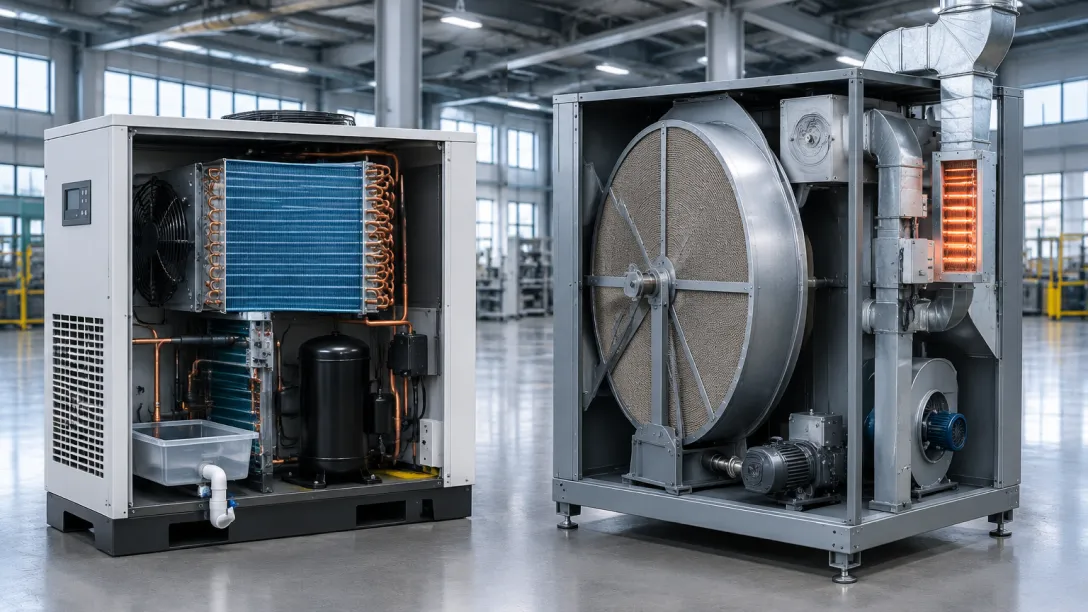
Standard air conditioning units only remove moisture when the compressor is actively running to cool the room. Because the pump station is already cool, the thermostat is satisfied, and the compressor remains off. The latent moisture load, however, remains unchecked, allowing humidity to spike to 90% or higher. An industrial desiccant dehumidifier decouples this process. It extracts moisture via a chemical vapor pressure differential, pulling water molecules into a continuously rotating silica gel matrix regardless of the room's sensible temperature. This active adsorption allows the facility to maintain an ultra-low dew point even in freezing subterranean environments where standard AC coils would simply frost over and fail.
Equipment Metallurgy for Corrosive Pump Stations
The atmospheric conditions inside a wastewater treatment plant or chemical dosing room are highly corrosive. Standard galvanized steel HVAC equipment will disintegrate within a few years due to continuous exposure to chlorine, ozone, and airborne sulfides. Dehumidification systems deployed in these critical infrastructure sectors must be heavily ruggedized.
Specifying a corrosion-resistant dehumidifier is absolutely mandatory. These specialized units feature 316L stainless steel enclosures, fully encapsulated NEMA 4X (IP66) electrical control panels, and chemically inert PTFE internal barrier seals. Furthermore, the adsorption rotors must be chemically stabilized to prevent them from absorbing and becoming fouled by the very VOCs and sulfides present in the ambient air. Ruggedizing the climate control equipment ensures it meets the 20-to-30-year operational lifecycle expected of municipal infrastructure.
Integrate Infrastructure Moisture Control
Protecting multi-million-dollar municipal water assets requires a proactive approach to psychrometric engineering. Eliminating pipe condensation halts external corrosion, prevents biological acid synthesis, and secures critical automation networks from electrical failure. For complete gallery airflow mapping, dew point calculations, and equipment specifications tailored to hostile chemical environments, consult our specialized engineering team to implement active adsorption in your water treatment facilities.
Frequently Asked Questions
Why do pipes sweat in water treatment plants?
Pipe sweating is the physical condensation of atmospheric moisture onto a cold surface. Water mains carry cold fluid (often 5°C to 12°C), causing the exterior of the pipe to become equally cold. When humid ambient air with a dew point higher than the pipe's temperature contacts the metal, the moisture drops out of vapor form and condenses into liquid water on the pipe.
What is Microbiologically Induced Corrosion (MIC) in wastewater?
MIC occurs when airborne Hydrogen Sulfide (H2S) gas mixes with condensation on pipes or concrete walls. Sulfur-oxidizing bacteria living in the wet condensation layer consume the gas and excrete sulfuric acid. This highly concentrated acid rapidly corrodes iron piping and degrades structural concrete. Desiccant dehumidifiers prevent this by eliminating the wet condensation layer the bacteria need to survive.
Why can't standard air conditioning prevent gallery condensation?
Standard AC units remove moisture as a byproduct of cooling the air. Because subterranean pump stations are already cool, the sensible thermostat shuts the compressor off. Without the compressor running, the AC stops removing moisture, allowing the relative humidity to spike. Desiccant systems extract moisture chemically, operating independently of the room's temperature.
How does condensation affect SCADA systems and VFDs?
Moisture inside an electrical cabinet condenses on printed circuit boards and terminal blocks. This creates a conductive path for electricity, known as electrical tracking. Over time, tracking leads to short circuits, corrupted data signals in SCADA networks, and explosive arc flashes inside high-voltage Variable Frequency Drives (VFDs).
What materials are required for dehumidifiers in wastewater plants?
Wastewater environments contain corrosive gases like chlorine and hydrogen sulfide. Standard steel equipment rusts rapidly. Dehumidifiers must be specified with 316L stainless steel structural panels, epoxy-coated internal components, and fully sealed NEMA 4X electrical enclosures to prevent the ambient corrosive gases from destroying the internal hardware.
How does a desiccant rotor remove moisture without a drain line?
Unlike refrigerant units that create liquid condensate requiring pumps and drain lines, a desiccant rotor uses chemical adsorption to trap moisture in a silica gel matrix. As the wheel rotates into a separate reactivation sector, a heater drives the moisture out of the gel as a hot vapor, which is simply exhausted through a duct directly outside the building.