Maintaining absolute separation between the process air stream and the reactivation loop is the defining engineering priority in rotary adsorption systems. In critical sectors such as pharmaceutical manufacturing, cleanroom packaging, and lithium-ion dry rooms, even minor leakage across internal barrier seals compromises air purity. An effective desiccant dehumidifier relies on precision-engineered perimeter and sector seals to prevent high-pressure reactivation air or combustion exhaust from bleeding into the dry supply air stream.
Facility managers and HVAC specifiers must evaluate seal durability, differential pressure control, and purge sector mechanics to eliminate cross-contamination risks entirely. This technical guide examines seal wear mechanisms, pressure balancing protocols, and structural enhancements required for zero-leakage adsorption operations.
The Mechanics of Internal Seal Leakage
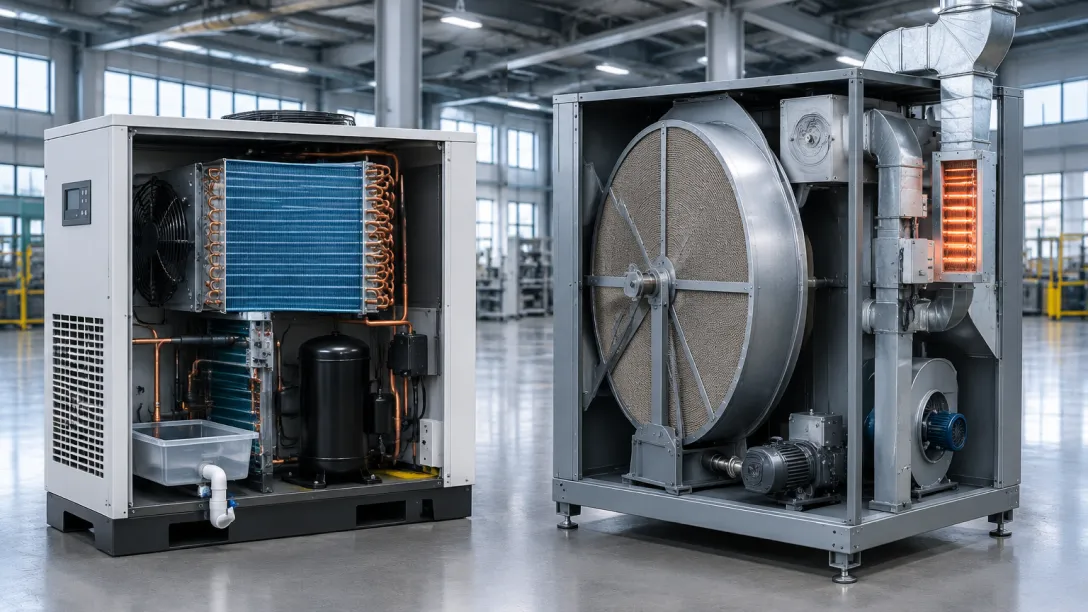
A rotary wheel dehumidifier operates by continuously rotating a fluted matrix between two distinct pressure zones. The process air stream is typically pressurized by forward-curved or centrifugal blowers, while the reactivation loop draws or pushes heated air in the opposite direction. Because pressure differentials exist across the matrix face, mechanical seals must withstand continuous friction while maintaining a tight barrier against air bypass.
Over thousands of operational hours, substandard brush or elastomer seals experience wear, allowing high-pressure purge air to slip into the low-pressure process path. This phenomenon introduces moisture-laden air or reactivation gases directly back into the conditioned space, undermining the system's overall dew point performance. High-performance units utilize self-adjusting labyrinth seals or spring-loaded PTFE barrier blades that maintain constant contact pressure against the rotating matrix without inducing excessive friction or motor drag.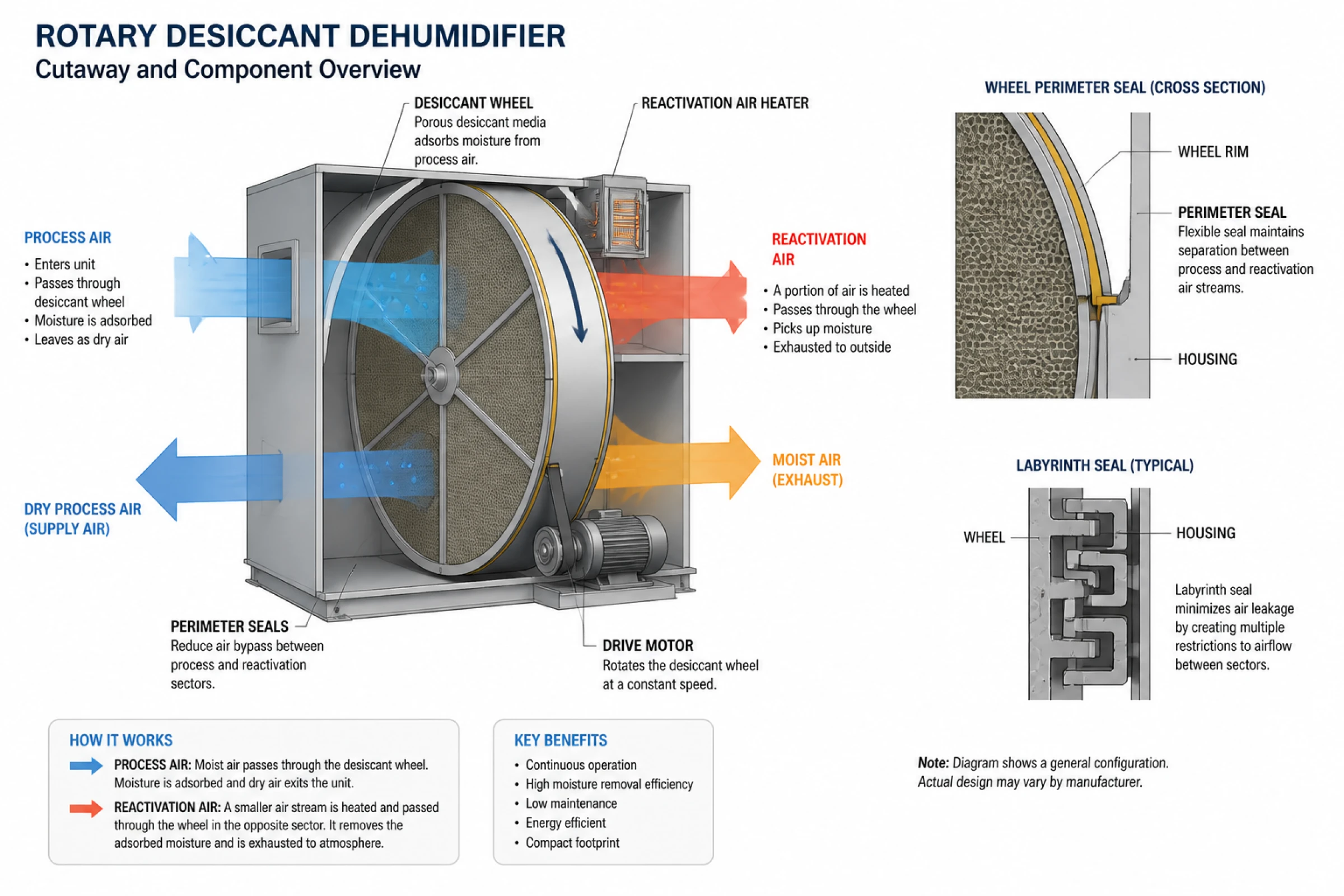
Differential Pressure Control and Airflow Sealing
Preventing cross-contamination is not solely a function of mechanical seal quality; it requires strict control over internal static pressures. If the static pressure in the reactivation sector exceeds the pressure in the process sector, air will naturally force its way past the barrier seals regardless of how tightly they fit.
Commissioning engineers must calibrate variable frequency drives (VFDs) on both blowers to maintain a neutral or favorable pressure gradient across the internal partitions. Ensuring that the process air stream maintains an optimized pressure relative to the reactivation loop guarantees that any microscopic air leakage moves harmlessly away from the clean supply line. Furthermore, pairing these controls with a heavy-duty rotary desiccant dehumidifier ensures robust physical framing that resists warping under extreme thermal gradients.
Purge Sector Balancing and Contaminant Isolation
In addition to barrier seals, advanced rotary systems incorporate a dedicated purge sector to isolate pressure and thermal zones. This sector captures residual air trapped within the rotor flutes as they transition between the high-temperature regeneration zone and the low-temperature process zone.
By routing a controlled fraction of dry air backward through this intermediate sector, the system sweeps away lingering moisture or trace gases before the matrix rotates into the clean supply path. Properly balancing this purge pressure prevents volatile organic compounds (VOCs) or moisture from migrating across the boundary, protecting sensitive industrial processes from chemical and biological contamination.
Upstream Filtration and Matrix Protection
Seal longevity is directly linked to the cleanliness of the incoming air streams. Abrasive dust particles, airborne chemical mists, and particulate accumulation scoring the face of the matrix will rapidly degrade the contact surface of the perimeter seals. Installing high-efficiency particulate air (HEPA) or MERV-rated pre-filters upstream of both the process and reactivation inlets protects both the desiccant flutes and the sealing materials.
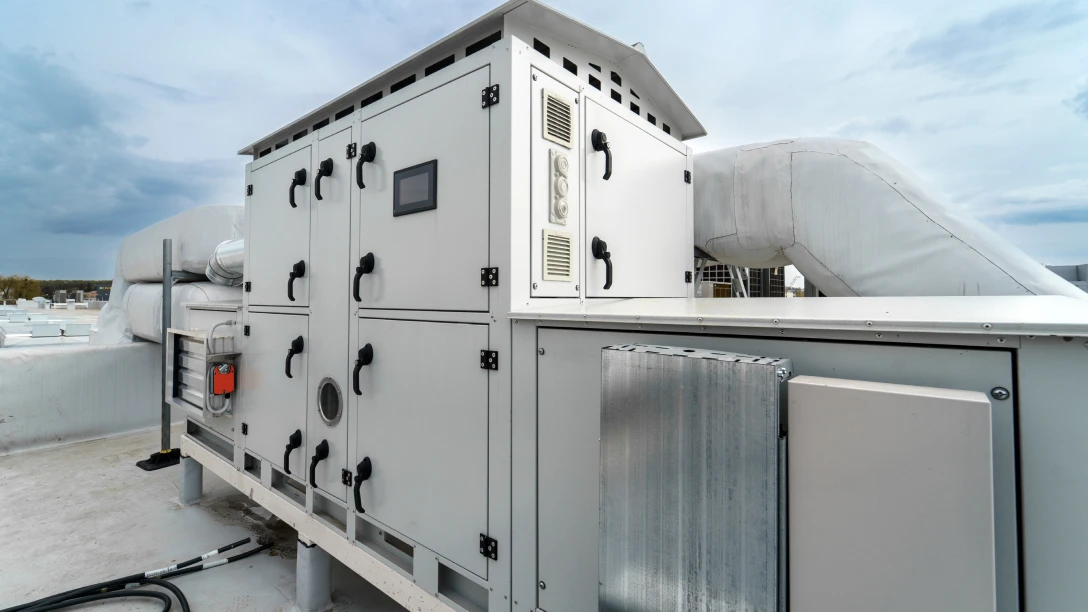
For facilities managing heavy-duty extraction tasks, selecting a robust high-capacity rotary desiccant dehumidifier equipped with reinforced internal baffling and accessible inspection hatches ensures that seal maintenance and filter replacements can be executed efficiently during scheduled service windows.
Integrate Zero-Leakage Adsorption Engineering
Ensuring absolute air purity and consistent low-dew-point performance requires meticulous attention to seal integrity, differential pressure management, and robust internal baffling. Eliminating cross-contamination risks protects sensitive manufacturing lines and guarantees long-term operational compliance. For customized engineering support, pressure profiling, and system configurations tailored to your facility, explore our professional air handling solutions designed for rigorous industrial applications.
Frequently Asked Questions
What causes cross-contamination in a rotary desiccant dehumidifier?
Cross-contamination is primarily caused by worn perimeter seals, improper internal pressure differentials, or inadequate purge sector balancing. When reactivation pressure exceeds process pressure, or when barrier seals degrade, moisture and exhaust gases bleed into the clean supply airstream.
How do labyrinth seals prevent air bypass?
Labyrinth seals utilize a multi-tiered, non-contact or low-contact mechanical pathway that creates tortuous flow resistance, preventing air from slipping between the rotating matrix and the stationary housing without generating excessive frictional heat.
Why is differential pressure monitoring critical for seal integrity?
If the static pressure in the reactivation loop is significantly higher than the process loop, air will force its way across the barrier seals regardless of physical wear. Monitoring and balancing pressures ensures airflow moves in the correct direction.
What role does the purge sector play in contamination control?
The purge sector acts as an intermediate buffer zone. It uses a controlled stream of dry air to sweep trapped moisture and residual gases out of the rotor flutes before they rotate into the clean process supply path.
How does upstream filtration protect internal seals?
Upstream filters remove abrasive dust, chemical mists, and particulates before the air reaches the desiccant wheel. Preventing particulate accumulation stops the debris from scoring the matrix face and wearing down the perimeter sealing materials prematurely.
What maintenance steps ensure long-term seal reliability?
Routine inspection of barrier seals, monitoring blower static pressures, replacing upstream air filters on schedule, and verifying correct VFD calibration for internal pressure gradients ensure long-term seal integrity and prevent performance drift.