Warehouse humidity conversations usually concern removing moisture. From November through March in heating climates, the opposite problem takes over. Cold outdoor air carries very little water vapor, and once that air is drawn into the building and heated to working temperature, its relative humidity collapses to 10% to 20%. Every hygroscopic material in the building then begins releasing its internal moisture to the air: corrugated cases dry and lose stacking strength, wood products shrink and check, and static electricity builds on every conveyor and shrink-wrap line.
This guide covers the physics of winter drying, the inventory and packaging damage it causes, the target conditions by material type, and the humidification engineering that holds those conditions in large, leaky industrial buildings. It reflects the conditions our engineers work with when specifying warehouse humidifier systems for distribution centers, printing and paper facilities, and furniture storage operations.
Why Winter Air Turns Warehouses Dry
The mechanism is simple thermodynamics, and the scale of the effect surprises operators seeing the data for the first time. Outdoor air at 0°C and 70% relative humidity holds roughly 3 grams of water per kilogram of dry air. Heated to 21°C without adding moisture, that same air falls below 15% relative humidity. A warehouse with dock doors cycling all day exchanges its air volume continuously, so the building cannot accumulate moisture from occupant or process sources the way a sealed office does. The heating system then makes matters worse: every degree of temperature rise on unhumidified air lowers relative humidity further.
Facilities with radiant tube heaters and minimal mechanical ventilation still face infiltration through door seals, dock leveler gaps, and wall penetrations. The result across the heating season is a building held at conditions drier than most deserts, while the inventory inside it was manufactured and packaged to perform at 40% to 55% relative humidity.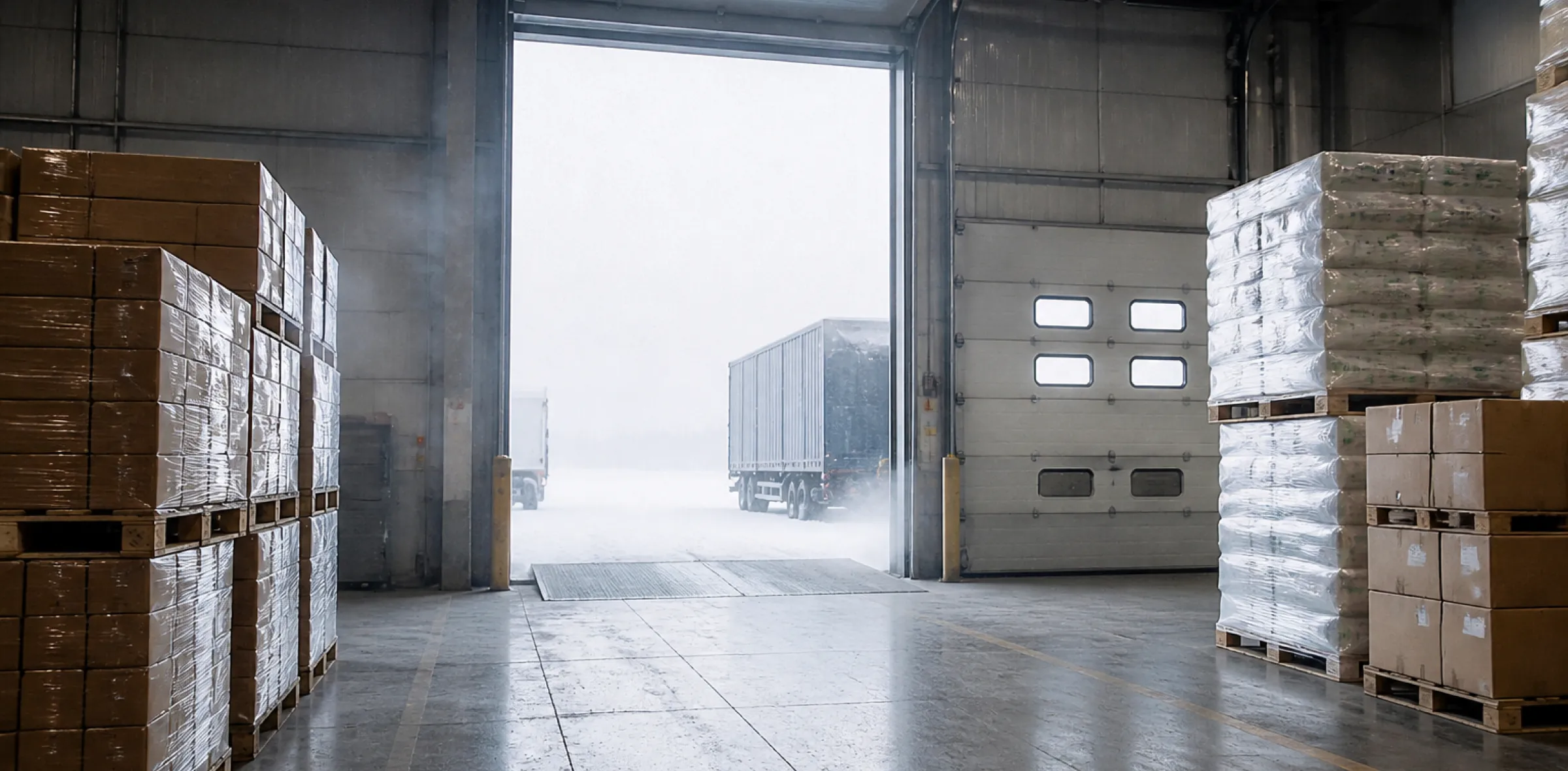
What Dry Air Does to Inventory and Operations
Corrugated Packaging and Paper Products
Corrugated board is manufactured to an equilibrium moisture content around 7% to 9%, which it holds at 40% to 55% ambient humidity. In a 20% RH warehouse the board dries toward 5% moisture content and its behavior changes measurably. Box compression strength drops, score lines crack during case erecting, and printing and die-cutting registration drifts as sheet dimensions shift. Facilities that store cases flat and erect them at pack-out see the failure at the worst point: cases splitting on the packing line during the peak shipping season. Paper rolls and sheet stock show the same physics as curling, edge wavy edges, and static-driven misfeeds on converting equipment.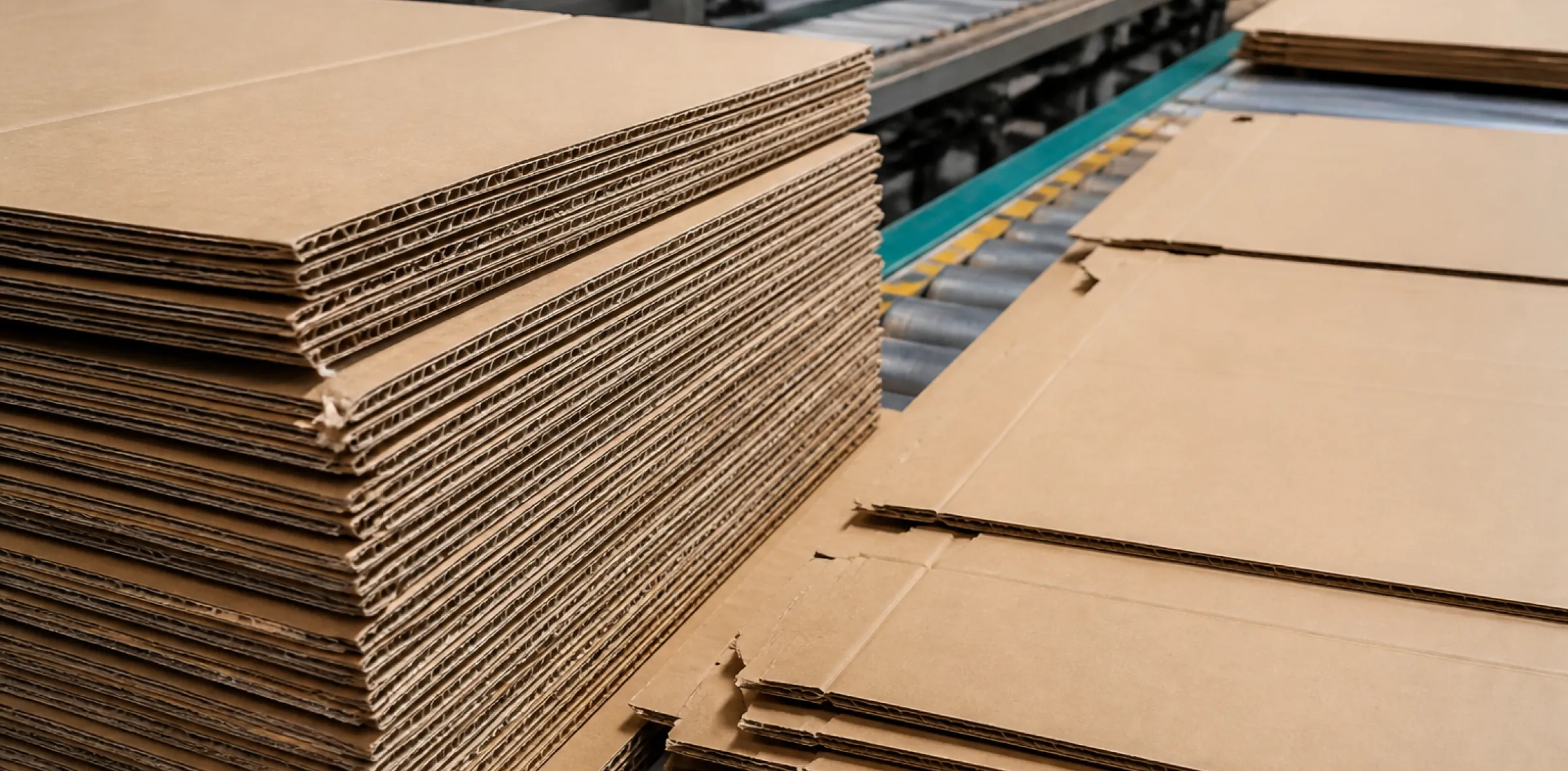
Wood Products and Furniture
Wood shrinks as it dries, and it dries to equilibrium with the surrounding air. Furniture, millwork, flooring, and musical instrument stock held at 20% RH for weeks loses moisture unevenly, with surfaces drying faster than cores. The results appear as checked veneers, opened joints, split panels, and drawer fits that change between manufacture and installation. Claims in this category are difficult to defend because the damage is progressive and invisible until the product is unpacked downstream.
Textiles, Food, and Other Hygroscopic Goods
Yarn and fabric lose both moisture and processability in dry storage; fiber brittleness and static on spinning and weaving equipment are the reason textile plants humidify production areas, as covered in our notes on humidification for the textile industry. Stored produce and perishables lose saleable weight directly to the air. Electronics inventory faces a different failure mode: below 40% RH, static charge accumulates on packaging, personnel, and material handling equipment, and discharge events damage components inside sealed bags and cartons without leaving visible evidence. The same physics drives the humidification requirements in electronics manufacturing environments.
Static Electricity and Dust
Below 40% RH, every friction point in the building becomes a charge generator. Personnel accumulate charge walking aisles, stretch film clings and sparks at the wrapper, and dust rides the airflow onto packaging and product. Raising the humidity restores the thin moisture film on surfaces that lets charges dissipate, and dust settles out of the air instead of circulating. For mixed consumer goods warehouses, static control alone often justifies the humidification investment.
Target Conditions by Stored Material
| Inventory Type | Recommended RH | Primary Risk Controlled |
|---|---|---|
| Corrugated cases and paper | 40% to 55% | Compression strength loss, score cracking, curl |
| Wood furniture and millwork | 40% to 50% | Shrinkage, veneer checking, joint failure |
| Textiles and fiber | 50% to 65% | Fiber brittleness, static, weight loss |
| Electronics and components | 40% to 60% | Electrostatic discharge damage |
| General mixed inventory | 40% to 50% | Static, dust, packaging degradation |
For most general warehouses the working target is 40% to 45% RH at normal operating temperature. This band protects packaging and inventory, suppresses static, and stays below the levels where condensation risk appears on cold roof decks and wall panels. Facilities should verify the dew point against the coldest structural surfaces before raising setpoints further.
Humidification Technologies for Large Spaces
Ultrasonic Humidification
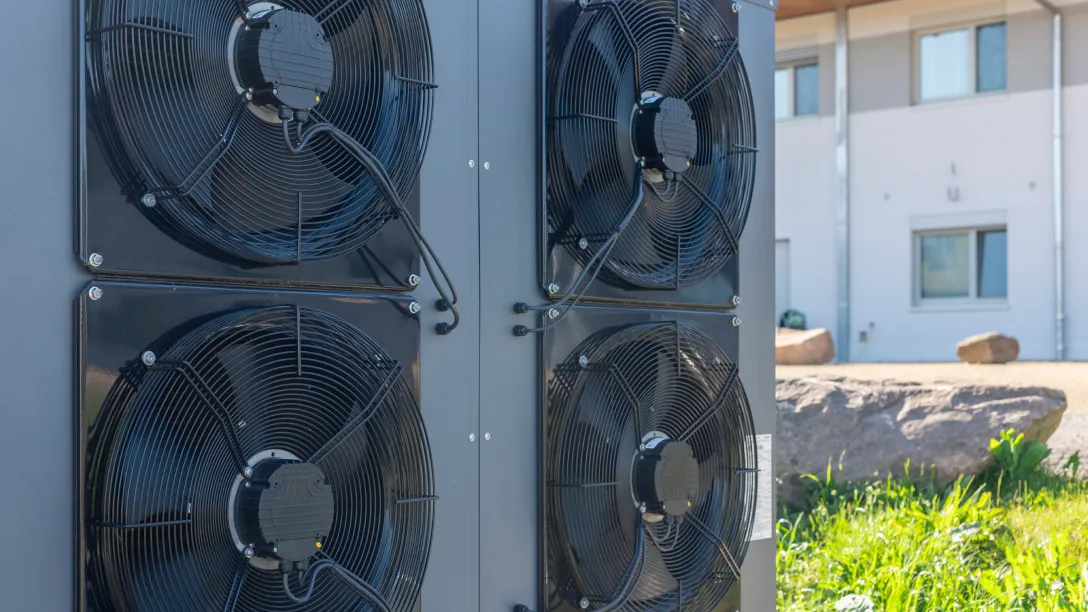
Ultrasonic humidifiers generate a fine aerosol of 1 to 5 micron droplets using high-frequency transducers, and the droplets evaporate into the airstream within a short distance of the discharge. Energy consumption is a small fraction of steam generation because no boiling is involved. Two requirements govern the specification. Feed water must be reverse osmosis or deionized quality, or dissolved minerals deposit across the inventory as white dust. And the evaporation absorbs heat, so in a heated warehouse the humidification load and the heating load must be calculated together. An industrial ultrasonic humidifier sized for the building volume and air exchange rate is the standard specification for distribution and storage environments.
Evaporative Systems
Evaporative media units pass air through a wetted pad and add moisture without generating droplets, tolerating ordinary treated water and producing no dust risk. The trade-offs are footprint, media maintenance, and lower output per unit. For dedicated rooms and smaller buildings, evaporative humidifiers are often the simpler ownership proposition; for high-bay distribution centers, ultrasonic output density usually wins the comparison.
Sizing and Air Distribution at Warehouse Scale
The humidification load in a warehouse is dominated by air exchange, not by the building volume itself. The calculation starts from the infiltration and ventilation rate in air changes per hour, multiplied by the moisture deficit between outdoor design air and the indoor target. A 20,000 cubic meter building at one air change per hour in a cold climate can require tens of kilograms of water per hour, while the same building with disciplined dock door management needs half of that. Door practices and dock seals are therefore part of the humidity specification.
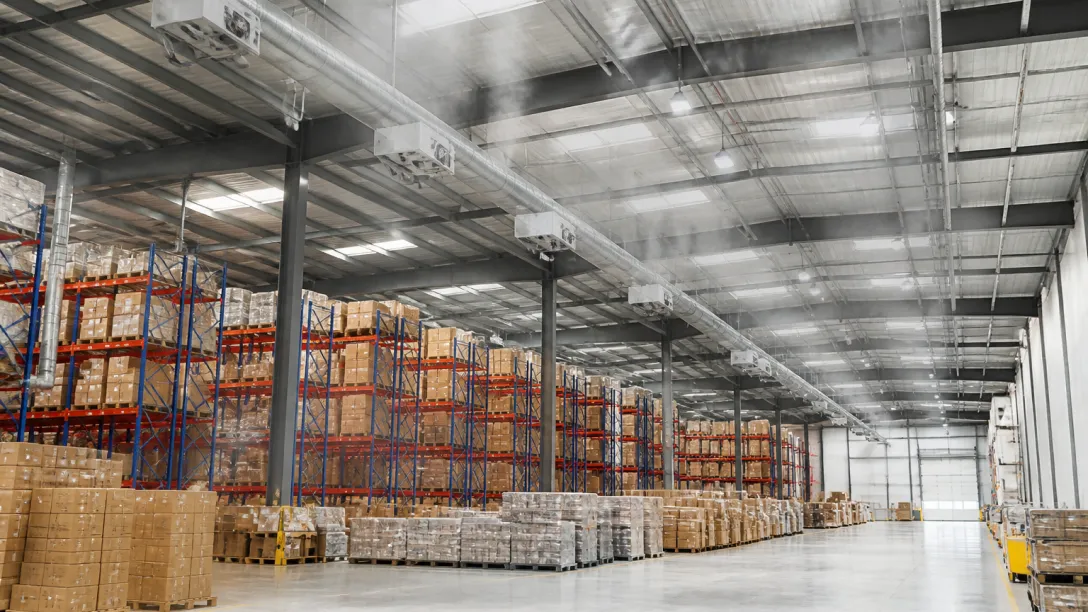
Distribution determines whether the rated capacity reaches the inventory. High-bay buildings stratify, and warm humidified air collects under the roof while the occupied and storage zones stay dry. Units should be positioned to discharge into the occupied zone or paired with the building's air movement so the added moisture mixes through the full height. Multiple smaller units distributed across the building outperform one large unit in all but the smallest facilities.
Mistakes That Recur in Winter Humidification Projects
Three errors account for most underperforming installations. The first is sizing on building volume alone and ignoring air exchange, which undersizes the system from the first cold snap. The second is installing ultrasonic equipment without water treatment and discovering mineral dust on black packaging within a week. The third is running humidification without checking the building envelope: in a cold climate, raising indoor humidity without verifying roof deck and wall surface temperatures trades a static problem for a condensation problem on the structure.
A correct specification starts from the air exchange rate and target condition, matches the technology to the available water quality, and confirms the envelope can tolerate the setpoint. Our engineers perform this calculation as part of every quotation. Send your building dimensions, dock door count, and inventory type through the contact page, and we will return a sized equipment schedule with the load figures documented.