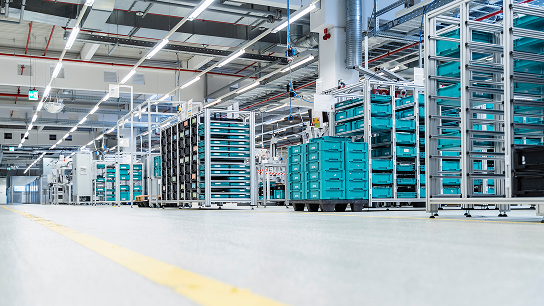
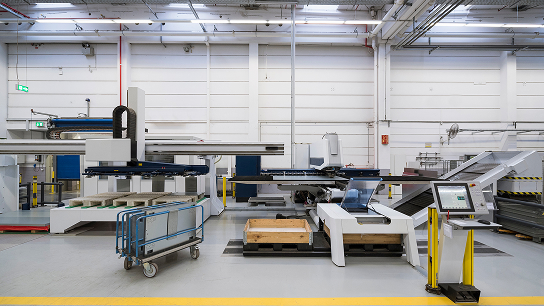
Refrigerant-based dehumidification hits a hard thermodynamic limit as ambient temperatures drop. When air cools below 50°F (10°C), the dew point approaches freezing. Mechanical coils form frost, triggering continuous defrost cycles that completely halt moisture extraction. Industrial processes demanding strict environmental stability cannot tolerate these interruptions or the physical limits of condensation. Desiccant dehumidifiers bypass the dew point entirely by utilizing chemical adsorption, pulling moisture directly from the airstream regardless of the ambient temperature or existing humidity level.
To understand why desiccants dominate specific industrial sectors, facility engineers must look beyond basic air conditioning. Manufacturing environments such as pharmaceutical tableting, lithium-ion battery assembly, and deep-freeze logistics require atmospheric conditions that standard compressors simply cannot generate. This engineering guide details the mechanics of rotor adsorption, the management of sensible heat gain, and the sizing parameters required for industrial-grade moisture control.
The Mechanics of the Desiccant Wheel
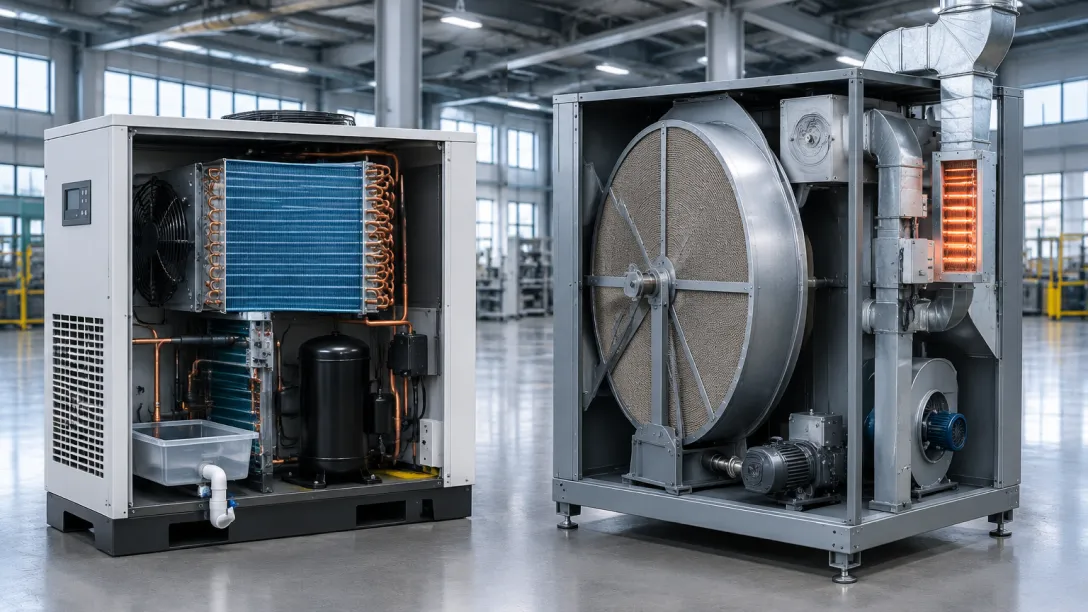
The core of an active desiccant system is a fluted rotor, typically constructed from a fiberglass substrate impregnated with a highly active desiccant material. The rotor turns continuously at a slow rate, usually between 6 to 10 revolutions per hour, passing between two isolated mechanical airstreams: the process air and the reactivation air.
As the damp process air passes through the narrow flutes of the rotor, the desiccant matrix adsorbs the water vapor. This is a surface-level physical reaction driven by vapor pressure differentials, not a chemical change that alters the desiccant's physical structure. The now-dry air exits the rotor and is supplied directly to the facility. Simultaneously, the moisture-laden section of the wheel rotates into the reactivation sector. Here, a secondary airstream is heated to high temperatures—between 195°F and 285°F (90°C to 140°C)—and driven through the rotor in the opposite direction. This intense thermal energy breaks the vapor pressure bond, driving the trapped moisture out of the desiccant and exhausting it outside the building as hot, wet air. The reactivated, completely dry section of the wheel then rotates back into the process airstream, creating an uninterrupted cycle of moisture extraction.
Overcoming the Psychrometric Limits of Condensation
Mechanical cooling requires air to be chilled below its saturation point to force condensation. If an industrial environment requires a sustained 30% relative humidity at 65°F (18°C), the required dew point sits at approximately 33°F (0.5°C). A standard compressor system will freeze solid attempting to maintain this load. Desiccant systems do not rely on condensation.
Because they operate on differences in vapor pressure between the desiccant surface and the surrounding air, they easily drive ambient dew points down to -40°F (-40°C) or lower. This capability makes them the only viable engineering choice for deep-drying applications. Furthermore, desiccant efficiency actually improves as the incoming process air gets colder. Lower ambient temperatures increase the desiccant's adsorption capacity, allowing the system to remove heavy moisture loads in extreme cold weather environments where traditional HVAC systems fail entirely.
Material Science: Silica Gel vs. Molecular Sieve
The performance profile of the rotor dictates the capacity of the entire HVAC system. Active silica gel remains the standard for the vast majority of commercial and industrial applications. It features an enormous internal surface area—often exceeding 600 square meters per gram—and handles a wide range of moisture loads effectively without degrading over time.
However, emerging high-tech manufacturing requires even stricter environmental tolerances. The manufacturing of lithium-ion batteries requires some of the driest environments on earth. Lithium is highly reactive with water; even microscopic exposure to airborne moisture during cell assembly causes the formation of lithium hydroxide and hydrogen gas, compromising battery density and creating severe safety hazards. Dry rooms for battery production mandate dew points of -40°C to -60°C.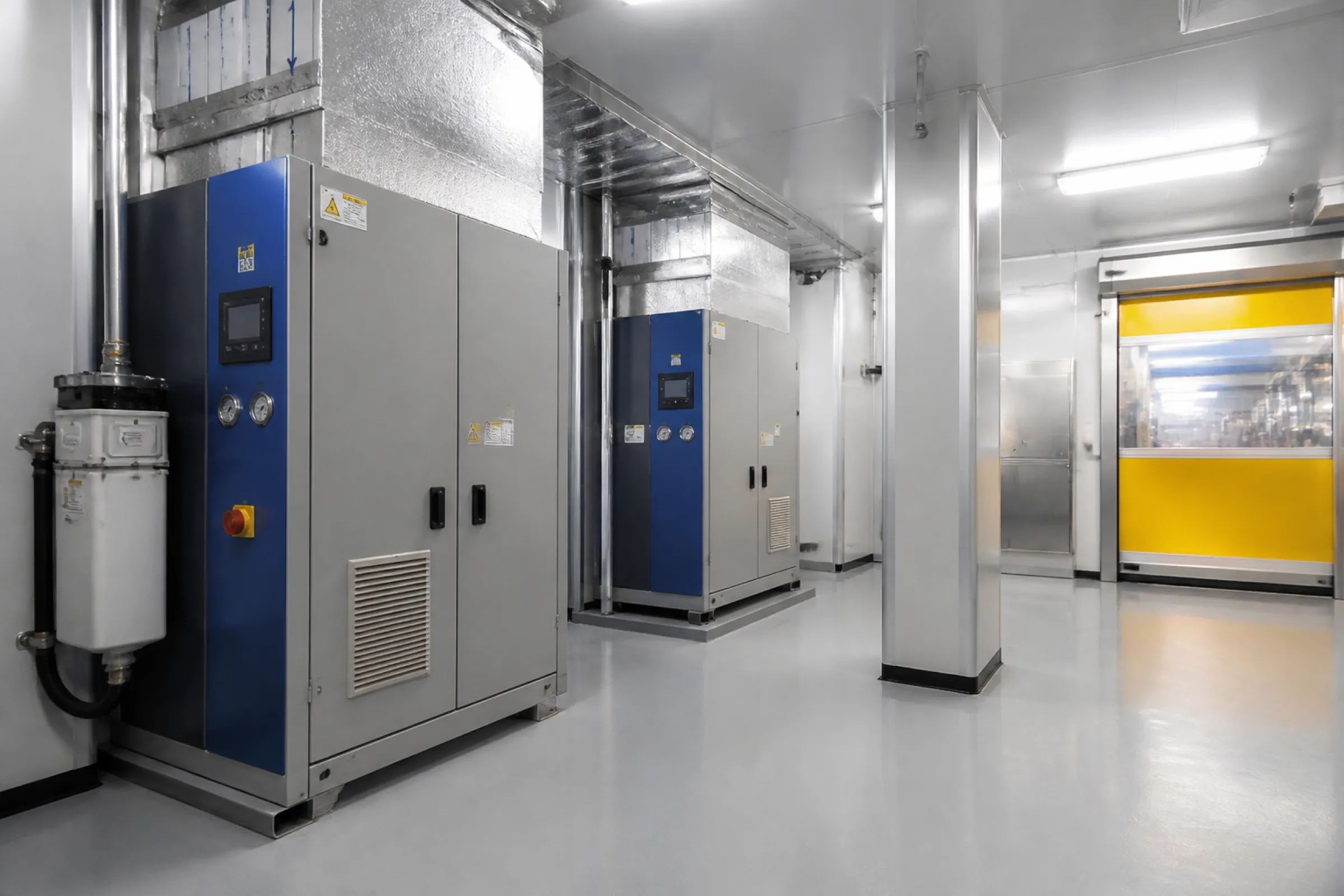
For these environments, manufacturers deploy molecular sieve rotors. Molecular sieves are synthetic zeolites with perfectly uniform pore structures engineered to trap specific water molecules. While silica gel adsorption capacity drops off as the surrounding air becomes extremely dry, molecular sieves continue to extract water vapor effectively even when the air is already near absolute zero humidity. To achieve these extreme metrics, engineering teams often deploy multi-stage active desiccant systems, utilizing dual rotors to progressively strip moisture while sophisticated seals prevent cross-contamination between the airstreams.
Managing Sensible Heat Gain and Energy Consumption
Adsorption is an exothermic physical process. When water vapor changes state and bonds to the desiccant surface, it releases the latent heat of vaporization directly into the process airstream. Additionally, the physical mass of the rotor carries residual heat from the high-temperature reactivation sector back into the process sector. Consequently, the dry air leaving a desiccant dehumidifier is significantly warmer than the wet air entering it. This phenomenon is known as sensible heat gain.
The supply air temperature typically rises by 20°F to 40°F (11°C to 22°C). HVAC engineers must account for this heat load in the facility's overall thermal design. In temperature-sensitive applications like cold storage or chocolate manufacturing, this warm supply air must be post-cooled by the facility's primary refrigeration system before being discharged into the room.
In terms of energy consumption, the reactivation heater represents the primary operating cost. Industrial units utilize direct-fired gas, steam coils, or electric PTC heaters depending on the utility rates and infrastructure of the specific facility. Advanced industrial systems integrate heat recovery modules to capture the thermal energy from the wet exhaust air and pre-heat the incoming reactivation air. This internal energy recycling substantially lowers continuous operational costs and improves the overall efficiency of the installation.
Vapor Pressure and Permeation in Deep-Drying
In deep-drying applications, vapor pressure becomes a formidable physical force. If a cleanroom is maintained at 10% relative humidity while the outdoor environment sits at 70% relative humidity, moisture will constantly attempt to equalize by pushing through the walls, ceilings, and floors.
Sizing a desiccant unit without first ensuring a perfect, monolithic vapor barrier is a catastrophic engineering failure. The dehumidifier will run continuously at maximum capacity simply trying to dry the moisture migrating through the concrete, failing to control the actual internal load. Complete encapsulation with vapor-impermeable epoxies and specialized steel paneling must precede mechanical sizing. The system must also be designed to maintain a slight positive pressure within the treated space, ensuring that any air leakage moves outward, preventing humid ambient air from infiltrating through door cracks and conveyor openings.
Integrate Advanced Desiccant Dehumidification
Reliable industrial production requires precise, continuous environmental engineering. Upgrading to a chemical adsorption system eliminates the seasonal variables and temperature limits that plague standard refrigeration equipment, securing your production lines against moisture-related shutdowns. For detailed performance charts, specific psychrometric evaluations, and engineering support tailored to your facility, review our complete line of desiccant dehumidifier systems built for heavy-duty industrial operations.
Frequently Asked Questions
What is the difference between a desiccant and a refrigerant dehumidifier?
A refrigerant dehumidifier uses a compressor to cool coils below the dew point, forcing water to condense out of the air. It loses efficiency as the temperature drops and fails below 50°F (10°C). A desiccant dehumidifier utilizes a chemical adsorption wheel to extract water vapor directly from the airstream. It does not rely on condensation and functions effectively in sub-zero temperatures and ultra-low humidity environments.
Why does the air coming out of a desiccant dehumidifier feel warm?
The adsorption of water vapor is an exothermic reaction. When moisture bonds to the silica gel or molecular sieve, it releases the latent heat of vaporization into the air. Additionally, the rotor transfers residual heat from the high-temperature reactivation sector into the process airstream. This combined effect, known as sensible heat gain, typically raises the supply air temperature by 20°F to 40°F (11°C to 22°C).
How often does the desiccant rotor need to be replaced?
Industrial desiccant rotors are highly durable and designed for continuous operation. Under normal operating conditions with proper upstream particulate filtration (MERV 8 or higher), a high-quality silica gel rotor will maintain its adsorption capacity for 10 to 15 years. Premature failure usually occurs due to chemical contamination, airborne oils coating the flutes, or severe physical damage from poor maintenance.
What is the reactivation process in a desiccant system?
As the rotor absorbs moisture, it eventually becomes saturated. To reuse the desiccant, the wheel slowly rotates into a separate reactivation sector. Here, a secondary airstream is heated to temperatures between 195°F and 285°F (90°C to 140°C) and driven through the rotor. This intense thermal energy breaks the vapor pressure bond, driving the trapped moisture out of the wheel and exhausting it outside the building.
Can a desiccant dehumidifier prevent ice formation in commercial freezers?
Yes, this is one of their primary applications. By installing a desiccant system at the entrance or airlock of a blast freezer or cold storage facility, it intercepts and removes the moisture from the ambient make-up air before it enters the sub-zero zone. This prevents the moisture from condensing and freezing on the floors, walls, and evaporator coils, significantly reducing the need for mechanical defrost cycles.
What makes molecular sieve desiccants necessary for lithium battery manufacturing?
Standard silica gel loses its adsorption efficiency as the surrounding air becomes extremely dry. Lithium-ion battery production requires dry rooms with dew points dropping to -40°C or lower. Molecular sieves are synthetic zeolites with perfectly uniform pore structures that maintain aggressive moisture extraction capabilities even in bone-dry conditions, achieving the ultra-low dew points required to prevent lithium degradation.