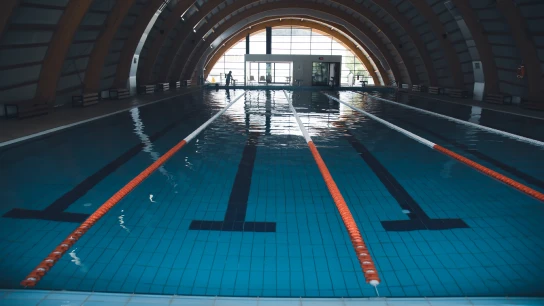
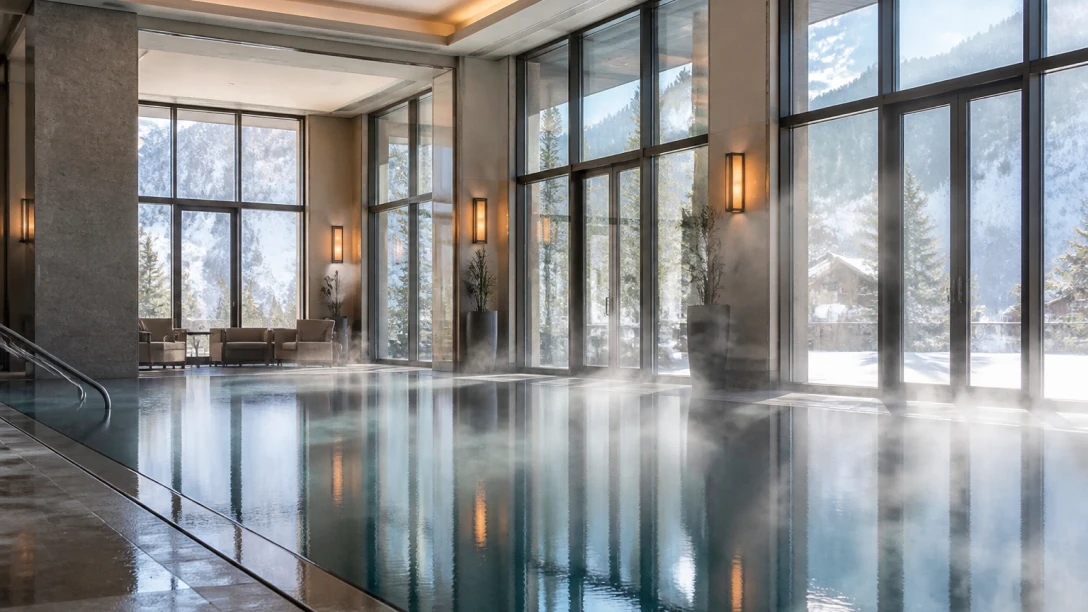
An indoor swimming pool operates as a continuous moisture generator, fundamentally altering the thermodynamics of the building envelope it occupies. Unlike standard commercial spaces where latent loads are dictated by human occupancy and weather infiltration, a natatorium faces a constant, massive evaporative load from the water surface itself. This evaporation is not merely pure water; it carries disinfection byproducts and heat, creating a highly corrosive and structurally dangerous atmospheric condition if left unmanaged.
Mechanical dehumidification is the absolute prerequisite for any indoor pool facility. Attempting to manage an indoor aquatic environment through passive ventilation or standard comfort cooling guarantees structural degradation and severe indoor air quality failures. This document outlines the engineering principles behind natatorium dehumidification, the mechanics of energy recovery, and the precise control strategies required to maintain a safe, structurally sound indoor pool facility.
The Physics of Natatorium Evaporation
The rate at which water evaporates from a pool surface is governed by a strict set of physical variables, well-documented by ASHRAE (American Society of Heating, Refrigerating and Air-Conditioning Engineers). The primary drivers dictate the total moisture load: the surface area of the pool, the temperature of the water, the temperature of the air, the relative humidity of the space, and the activity factor of the bathers.
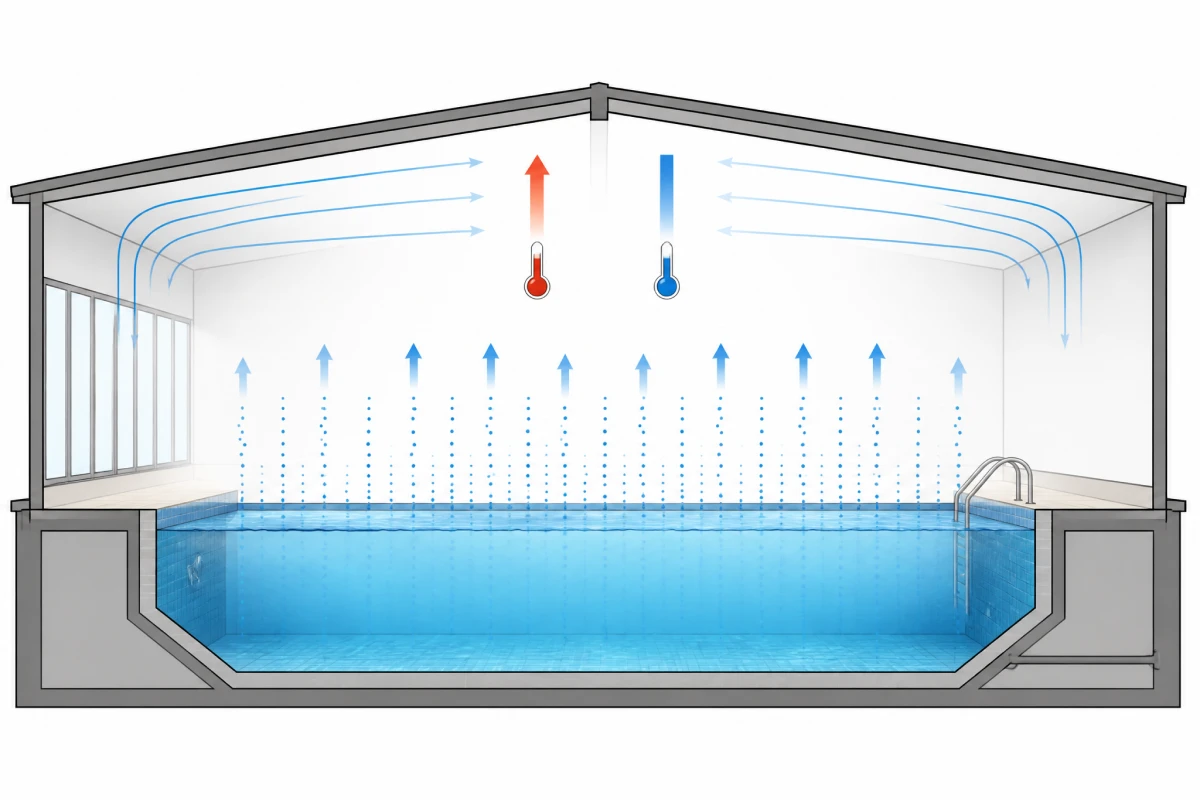
The vapor pressure differential between the saturated air immediately at the water's surface and the ambient air in the room dictates the baseline evaporation rate. To minimize this differential and slow the evaporation process, the primary rule of natatorium design dictates maintaining the room air temperature 2°F to 4°F (1°C to 2°C) warmer than the pool water. If the air temperature drops below the water temperature, the evaporation rate accelerates dramatically, overwhelming the mechanical systems and spiking the room's relative humidity.
Furthermore, the activity factor plays a critical role in capacity engineering. A quiescent pool with an undisturbed surface evaporates at a predictable baseline rate. However, a public wave pool, a water park feature, or a facility hosting an active competitive swimming event introduces severe surface agitation. This agitation multiplies the effective surface area exposed to the air, increasing the evaporation rate by 50% to 150% depending on the severity of the splashing. Engineers must size the dehumidification plant not for the quiescent state, but for the peak anticipated activity load to prevent temporary humidity spikes during high-occupancy events.
Structural Threat: Condensation and Vapor Pressure
When the dehumidification capacity falls short, the relative humidity of the natatorium rises, and the dew point of the room air increases. The dew point is the precise temperature at which the air can no longer hold its suspended moisture in vapor form, causing it to condense into liquid water.
In a natatorium, the most immediate danger of an elevated dew point is condensation on exterior glazing, cold structural steel, and poorly insulated wall assemblies. This is not merely an aesthetic issue. Pool water condensation carries vaporized chlorides. When this condensation forms on window frames, roof decking, or internal steel supports, it initiates rapid, aggressive oxidation. Within a few short years, this corrosive attack compromises the structural integrity of the building, leading to massive remediation costs and potential structural failures.
Furthermore, vapor pressure acts as a relentless physical force, driving moisture through porous building materials toward the colder, drier outdoor environment. Without a meticulously sealed vapor barrier and a continuously operating dehumidifier to depressurize the internal moisture load, interstitial condensation occurs inside the wall cavities. This hidden condensation destroys the R-value of thermal insulation, promotes aggressive fungal growth, and rots structural components entirely hidden from visual inspection.
Chemical Airborne Hazards: Chloramine Management
Indoor Air Quality (IAQ) in a natatorium involves managing chemical off-gassing alongside absolute moisture. Pool water is sanitized using chlorine compounds. When free available chlorine binds with nitrogenous organic compounds introduced by bathers (such as sweat, oils, and urea), it forms chloramines, specifically trichloramines.
Chloramines are responsible for the harsh, irritating "pool smell" often associated with poorly managed facilities. They cause significant respiratory irritation, asthma aggravation, and eye fatigue for bathers and staff. More importantly for HVAC design, chloramines are heavier than the ambient air. They stratify and hover directly above the water surface, concentrating in the exact breathing zone of the swimmers.
A dedicated pool dehumidifier must integrate with the facility's overall ventilation strategy to physically mitigate these compounds. This requires a calculated introduction of outside make-up air and a dedicated low-level exhaust system. Exhaust grilles positioned near the pool deck sweep the heavy, chloramine-laden air off the surface and expel it from the building, while the main dehumidification system replaces it with fresh, conditioned, and filtered air.
The Refrigeration Cycle and Energy Recovery
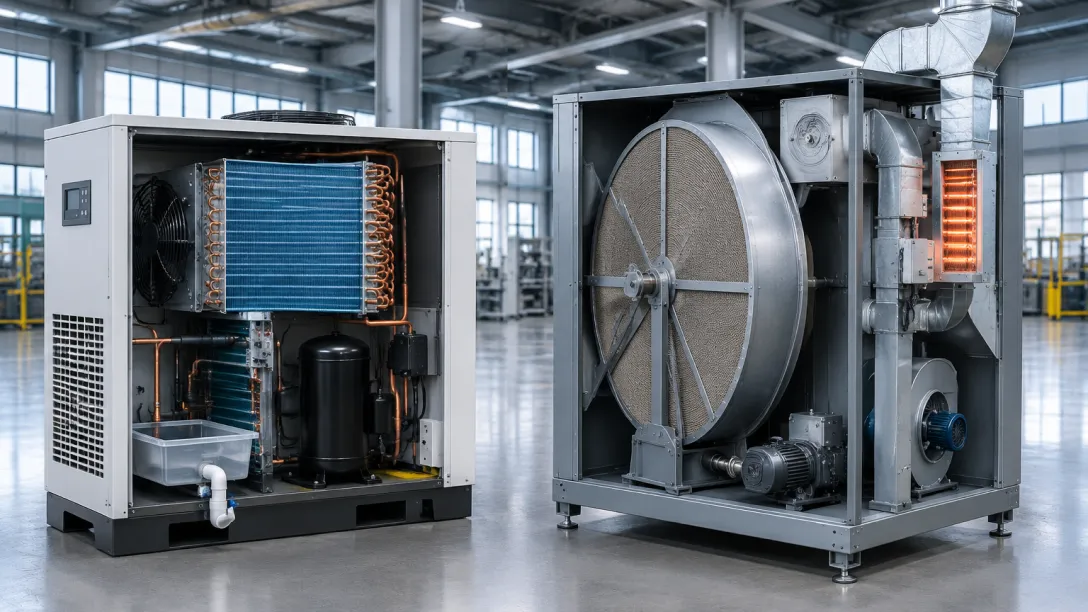
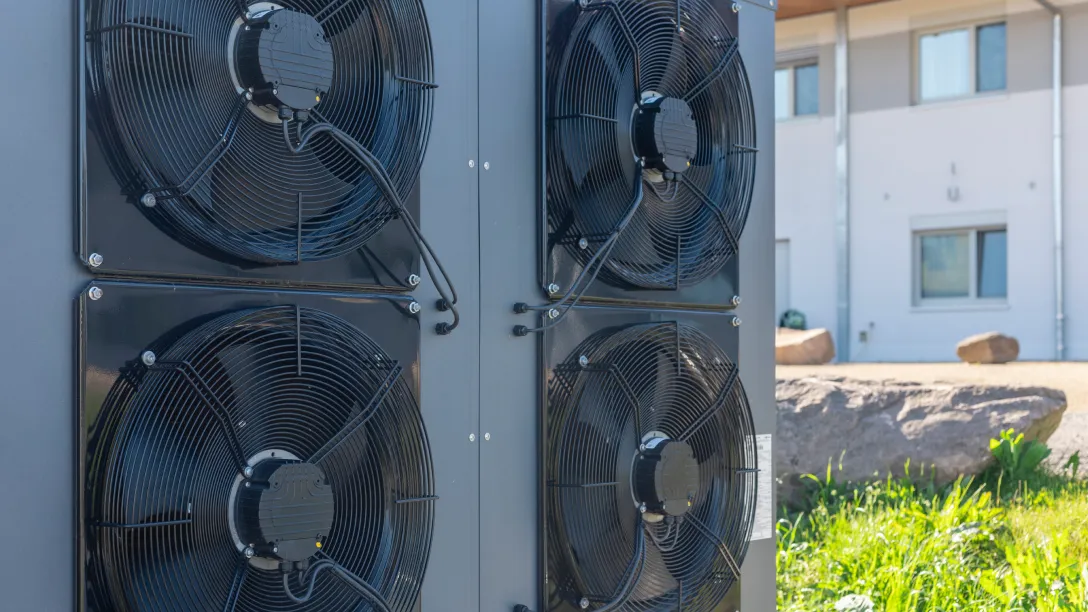
Standard commercial HVAC units waste the thermal energy they extract. Dedicated commercial pool dehumidifiers utilize a sophisticated refrigeration cycle designed specifically for massive latent heat removal and concurrent energy recovery. When the humid natatorium air passes over the dehumidifier's evaporator coil, it is cooled below its dew point. The water condenses out, and the latent heat of vaporization—the massive amount of thermal energy previously utilized to turn that water into vapor—is captured by the circulating refrigerant gas.
Instead of rejecting this captured heat outdoors via a standard condenser, the system recycles it. The cold, dry air leaving the evaporator is routed directly across the hot condenser coil, reheating the air to the required sensible temperature before returning it to the space. This process, known as Hot Gas Reheat, delivers perfectly dehumidified, warm air without requiring secondary heating elements.
Advanced industrial units feature an additional integrated water-cooled condenser. This secondary heat exchanger allows the dehumidifier to reject the captured latent heat directly into the pool water circuit. Because heating the massive volume of pool water represents one of the highest operating costs for an aquatic facility, this energy recovery mechanism provides an exceptional financial return on investment. The system effectively provides free, recycled pool heating whenever the compressor runs to control atmospheric humidity.
Combating Corrosion: Equipment Metallurgy
Deploying standard comfort-cooling equipment in a natatorium guarantees rapid mechanical failure. The atmosphere is heavily laden with chloramines, trihalomethanes, and elevated moisture, which rapidly attack bare copper tubes and aluminum fins. Galvanic corrosion will destroy a standard evaporator coil in a matter of months, resulting in catastrophic refrigerant loss.
Industrial pool dehumidifiers are engineered strictly for this severe metallurgical challenge. Both the evaporator and condenser coils receive comprehensive factory-applied epoxy coatings or electro-coating (e-coat) treatments. These specialized coatings completely seal the dissimilar metals from the corrosive airstream without significantly retarding thermal heat transfer.
Beyond the coils, the entire equipment casing must be structurally protected. Heavy-gauge steel with thick, baked-on powder-coat finishes is mandatory for internal and external panels. Drain pans must be fabricated from heavy-duty stainless steel to handle the continuous flow of corrosive condensate. Furthermore, critical electrical components, compressors, variable frequency drives, and microprocessors must be isolated in a separate, sealed vestibule outside the primary process airstream. This segregation ensures that corrosive pool air never makes contact with sensitive electrical contactors.
Ductwork and Air Distribution Strategy
The highest-capacity dehumidifier will fail to protect the building if the ductwork and air distribution strategy are poorly engineered. Airflow in a natatorium must perform two mechanical functions simultaneously: it must deliver dry air directly to the areas most prone to condensation, and it must thoroughly mix the room air to prevent stratification and isolated microclimates.
Supply air must be directed to continuously wash all exterior glazing and exterior wall surfaces. This high-velocity curtain of warm, dry air physically prevents the localized air layer near the cold glass from reaching the dew point. Return air grilles should ideally be located high in the architectural space to capture the warmest, most humid air accumulating near the ceiling. A properly balanced system operates the natatorium at a slight negative air pressure relative to the adjacent building spaces. This negative pressure ensures that pool odors and moisture do not migrate into dry lobbies, locker rooms, or administrative offices, while maintaining strict positive control over the entire moisture load.
Implement Professional Natatorium Dehumidification
Protecting a commercial indoor pool facility requires precise engineering, robust equipment, and a deep understanding of psychrometrics. Implementing the correct mechanical dehumidification system ensures long-term structural integrity, optimizes facility energy consumption, and provides a safe, comfortable breathing environment for patrons. For specific capacity engineering, ASHRAE evaporation calculations, and system selection for your facility, explore our professional commercial pool dehumidifier solutions engineered for demanding aquatic environments.
Frequently Asked Questions
What is the ideal temperature difference between pool water and room air?
Engineering guidelines dictate maintaining the natatorium air temperature 2°F to 4°F (1°C to 2°C) warmer than the pool water. This minimizes the vapor pressure differential at the water's surface, actively suppressing the baseline evaporation rate. If the air drops below the water temperature, evaporation accelerates dramatically, overwhelming mechanical systems.
Why do standard commercial air conditioners fail in indoor pools?
Standard HVAC units are designed primarily for sensible cooling (temperature reduction) and possess standard bare copper coils. They lack the latent extraction capacity required for massive pool evaporation and lack the metallurgical protection to withstand chlorine-laden air. Operating standard AC in a natatorium leads to rapid galvanic corrosion and catastrophic mechanical failure within months.
What are chloramines and how do they impact dehumidifier design?
Chloramines are chemical byproducts formed when free chlorine binds with nitrogenous organic compounds in the water. They are heavier than air, toxic to inhale, and highly corrosive. Dehumidification systems must integrate with low-level exhaust ductwork to physically extract these stratified chloramines from the bather breathing zone and replace them with fresh make-up air.
How does energy recovery work in a dedicated pool dehumidifier?
When a pool dehumidifier extracts moisture, it captures the latent heat of vaporization in its refrigerant cycle. Instead of rejecting this heat outdoors, the system uses condenser coils to recycle this energy. It can reject the heat back into the supply air (hot gas reheat) to warm the room, or reject it directly into the pool water via a cupronickel heat exchanger, drastically reducing facility heating costs.
Why is a physical vapor barrier necessary if a dehumidifier is operating?
A dehumidifier removes moisture from the air, but vapor pressure still acts as a physical force pushing humidity from the warm interior toward the colder exterior through the building envelope. Without a physical vapor barrier on the warm side of the wall assembly, interstitial condensation will occur inside the walls, destroying insulation and rusting internal structural steel despite the dehumidifier's operation.
What materials are required to prevent equipment corrosion in pool environments?
Pool environments require specific metallurgical protection. Evaporator and condenser coils must feature factory-applied epoxy coatings or electro-coating (e-coat) to seal bare metals. Water heat exchangers require cupronickel construction. Furthermore, electrical components and control boards must be isolated in sealed vestibules completely separated from the corrosive primary airstream.