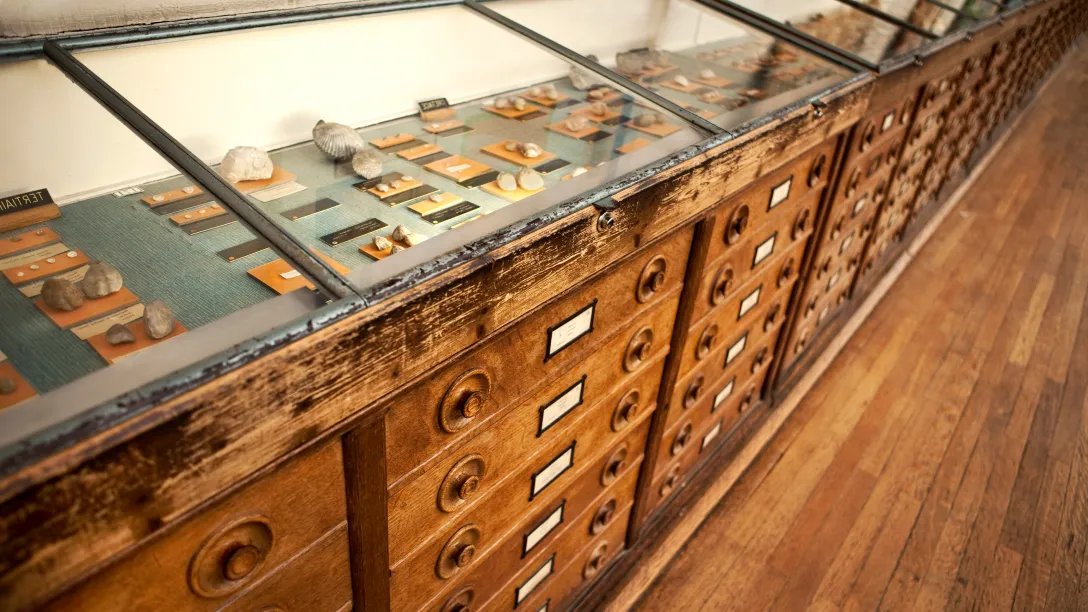
Archival preservation operates on timelines measured in centuries rather than years. For institutions housing irreplaceable artifacts, rare manuscripts, and fine art, atmospheric moisture represents a relentless agent of mechanical and chemical destruction. Organic materials such as wood, canvas, paper, and parchment are inherently hygroscopic. Their cellular structures expand and contract in continuous response to the psychrometric state of the surrounding air. When a facility relies on conventional comfort-cooling equipment, relative humidity inevitably fluctuates, inflicting continuous mechanical stress and accelerating irreversible degradation across the collection.
Establishing a permanent preservation environment requires decoupling moisture removal from temperature control entirely. Facility engineers must manage vapor pressure directly to halt hygroscopic expansion, prevent biological blooming, and stabilize the delicate thermodynamics of historic building envelopes. This technical guide examines the specific degradation mechanisms of archival materials, the thermodynamic failure points of standard HVAC systems, and the engineering necessity of active chemical adsorption in heritage preservation.
Equilibrium Moisture Content and Mechanical Stress
Every organic artifact possesses an Equilibrium Moisture Content (EMC). This physical property dictates that the material will continuously absorb or release water vapor until its internal moisture level perfectly matches the relative humidity of the surrounding atmosphere. This moisture transfer is not a passive event; it forces violent dimensional changes at the cellular level.
When relative humidity spikes, the artifact absorbs moisture and expands. When the humidity drops, it releases moisture and shrinks. In a museum environment governed by standard air conditioning, these fluctuations occur daily. Over time, this repetitive micro-expansion and contraction acts like physical fatigue on metal. Oil paintings on wooden panels experience severe shear stress because the wood expands at a different rate than the rigid paint layer, leading directly to cracking, blistering, and massive paint loss. Antique furniture suffers from failed adhesive joints and warped veneers. To eliminate this mechanical stress, international conservation standards mandate a flat-line relative humidity, typically locked at 50% with an allowable variance of less than 2%. Achieving this requires precision psychrometric intervention that standard cooling simply cannot provide.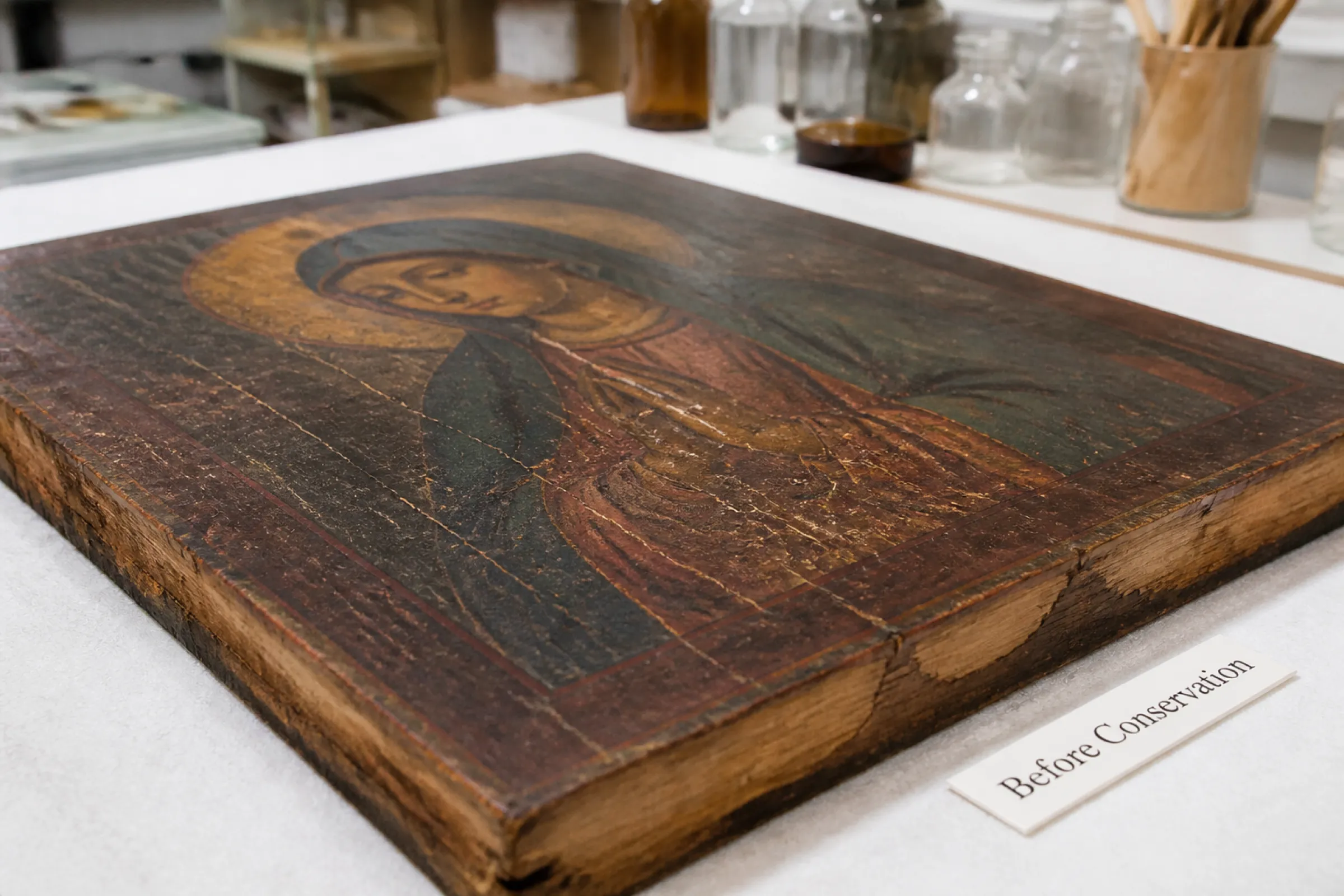
Hydrolysis and the Deterioration of Cellulose
Beyond mechanical stress, elevated humidity acts as an aggressive catalyst for chemical degradation. The vast majority of archival documents and rare books are composed of cellulose. In the presence of moisture and natural atmospheric acids, cellulose undergoes hydrolysis—a chemical reaction that cleaves the long polymer chains of the paper molecules.
As hydrolysis accelerates, the paper loses its tensile strength, turns yellow, and eventually shatters upon handling, a phenomenon known in the conservation field as the "brittle book" problem. A similar, even more aggressive reaction occurs in photographic and cinematic archives. Cellulose acetate film degrades rapidly in humid conditions, releasing acetic acid. This self-catalyzing reaction is universally recognized as "vinegar syndrome." Once initiated, the film shrinks, channels, and emits a strong vinegar odor before dissolving completely.
Chemical degradation rates are fundamentally tied to moisture availability. By artificially crushing the ambient dew point and maintaining a strict, dry environment, facility managers essentially freeze these chemical reactions, extending the viable lifespan of the archives from decades to centuries.
Microclimates and Biological Spore Germination
Airborne fungal spores are ubiquitous in all indoor environments. However, these spores remain dormant until the localized relative humidity exceeds specific biological thresholds, generally identified as 65% RH. Once this threshold is crossed, mold and mildew germinate rapidly, digesting the organic substrates of the artifacts and leaving permanent, unremovable stains.
The engineering challenge lies in microclimates. A wall-mounted sensor in the center of a gallery might read a safe 50% RH. However, the narrow gap of stagnant air behind a large framed painting hanging on an exterior masonry wall operates under different thermodynamics. If the exterior wall is cold, the air in that narrow gap cools, raising its localized relative humidity well past the 65% germination threshold. Active moisture extraction is required to maintain the baseline vapor pressure so low that even inside stagnant microclimates, the humidity remains hostile to biological growth.
The Sensible Heat Ratio Problem in Standard HVAC
Many institutions attempt to manage humidity utilizing high-end commercial air conditioning. This approach consistently fails during the "shoulder seasons" of spring and autumn. Standard HVAC systems remove moisture purely as a byproduct of lowering the air temperature (cooling the air below its dew point via a refrigeration coil).
During a cool but rainy week, the sensible heat load in the building is zero—the room is already cold enough. Because the thermostat is satisfied, the compressor shuts off. However, the latent heat load (the moisture from patrons breathing, wet clothing, and building infiltration) remains massive. With the compressor off, humidity spikes aggressively throughout the facility. If the facilities manager attempts to override the system to force dehumidification, the room becomes uncomfortably freezing, which in turn causes condensation on glass display cases. Overcoming this thermodynamic flaw requires separating the two variables entirely.
Flat-Line Control via Adsorption Technology
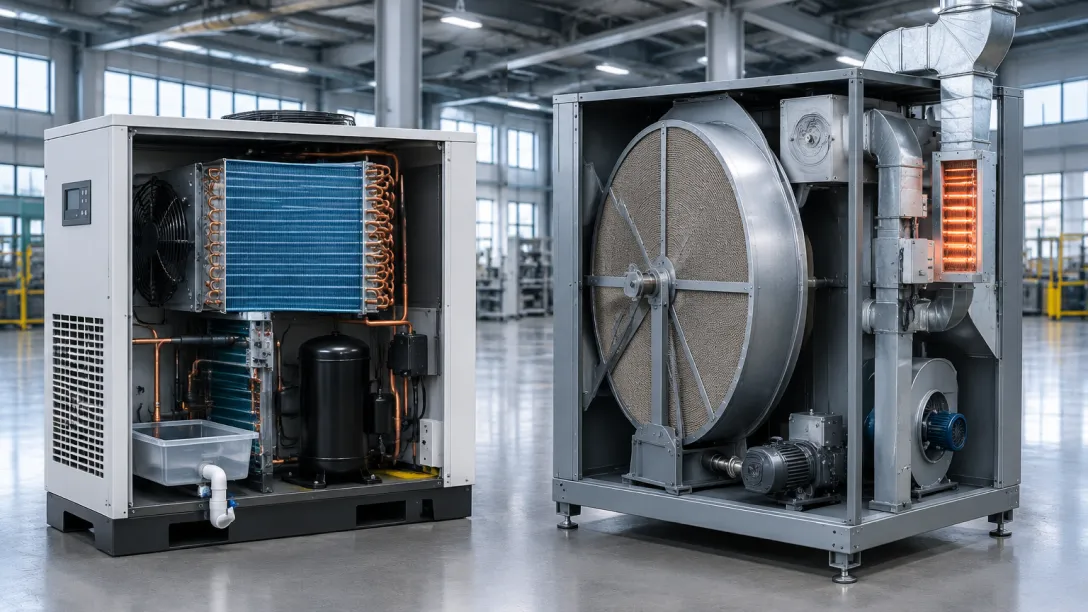
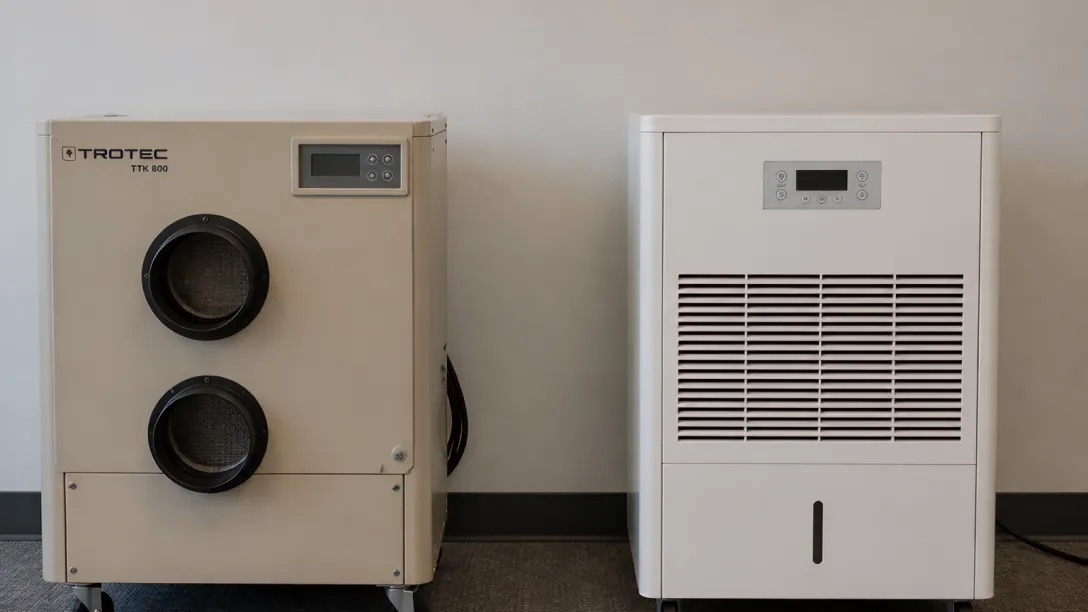
To eliminate this thermodynamic failure, institutions deploy a dedicated desiccant dehumidifier to decouple moisture extraction from temperature control entirely. Rather than relying on condensation, this equipment utilizes a continuously rotating silica gel matrix to adsorb water molecules directly from the airstream via chemical vapor pressure differentials.
Because the adsorption process works independently of the sensible room temperature, the system can extract massive amounts of moisture even when the room is already cool. It provides continuous, uninterrupted latent load removal during rainy shoulder seasons, ensuring the relative humidity never deviates from the 50% setpoint. The result is a perfect, flat-line psychrometric chart that completely stabilizes the collection.
Protecting the Historic Building Envelope
Museums and archives are frequently housed in historic buildings constructed from porous masonry, lacking the continuous vapor barriers mandated by modern building codes. Attempting to condition these buildings poses a severe threat to the architecture itself.
In cold winter months, if the interior is humidified for the artifacts, massive vapor pressure drives moisture outward through the porous brick walls. When this moisture reaches the freezing exterior layer of the masonry, it condenses and freezes inside the brick. This interstitial condensation causes the brick faces to literally spall and blow off the side of the building. Conversely, in summer, exterior moisture drives inward. Deploying an active adsorption system allows engineers to precisely manage internal vapor pressures, ensuring that the HVAC design protects both the irreplaceable artifacts inside and the historic envelope outside.
Acoustic Constraints and Equipment Integration
Museum environments demand near-absolute silence. Mechanical vibrations and blower noise distract patrons and ruin the contemplative atmosphere of a gallery. Consequently, climate control equipment must meet strict Noise Criteria (NC-25 to NC-30 ratings). This acoustic limitation prohibits placing mechanical units directly inside the exhibit halls.
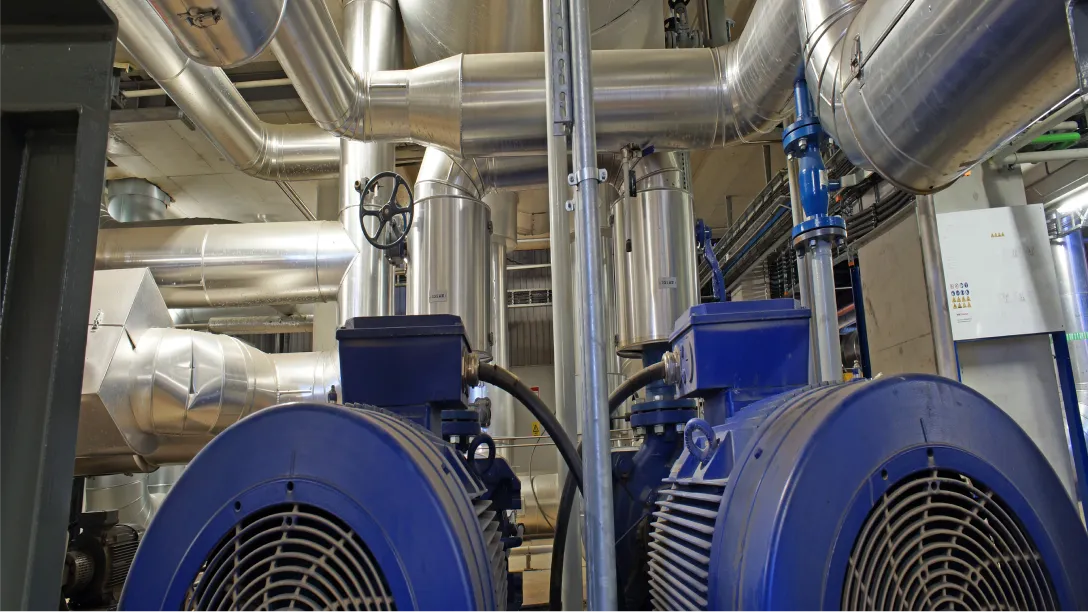
For localized archive vaults or smaller gallery spaces, specifying a compact desiccant dehumidifier ensures precision vapor control without requiring massive mechanical room footprints. These units are typically installed in remote, acoustically isolated service corridors and ducted into the conditioned space using low-velocity diffusers. This engineering strategy provides aggressive moisture removal while maintaining an imperceptible acoustic signature.
Integrate Professional Archival Preservation
Guaranteeing the survival of heritage collections requires abandoning conventional comfort-cooling methodologies and embracing precision psychrometric engineering. By controlling vapor pressure directly, facilities eliminate mechanical stress, halt chemical hydrolysis, and prevent mold germination. For comprehensive latent load calculations, vapor barrier assessments, and equipment specifications, explore our engineered museum climate control solutions designed for permanent, risk-free heritage preservation.
Frequently Asked Questions
Why does fluctuating humidity damage oil paintings?
Oil paintings consist of a rigid paint layer over a flexible canvas or wooden panel. Because wood and canvas are hygroscopic, they expand and contract as ambient humidity changes. The rigid paint layer cannot stretch to accommodate this movement, which causes immense shear stress. Over time, this repetitive stress leads to cracking, blistering, and the permanent flaking of the paint.
What is vinegar syndrome in archival storage?
Vinegar syndrome is the catastrophic chemical degradation of cellulose acetate film, historically used for photography and cinema. In the presence of moisture, the film undergoes an autocatalytic reaction, breaking down and releasing acetic acid (which smells like vinegar). Once started, the film shrinks and dissolves. Maintaining ultra-dry, cold conditions using desiccant technology is the only way to arrest this process.
Why does standard air conditioning fail to control museum humidity in the spring?
Standard AC systems remove moisture only when they are actively cooling the air. During cool, rainy spring weather, the room temperature is already low, so the thermostat shuts the AC compressor off. Because the cooling is off, the system stops removing moisture, allowing the relative humidity from the rain and visitors to spike dangerously inside the gallery.
How do microclimates form behind hanging artwork?
The narrow space between a framed artwork and a wall often experiences poor air circulation. If the painting hangs on a cold exterior wall, the trapped air behind it cools down. Cold air holds less moisture, meaning the localized relative humidity behind the painting spikes much higher than the rest of the room, creating an invisible breeding ground for mold.
What is Equilibrium Moisture Content (EMC)?
Equilibrium Moisture Content is the exact point at which an organic, hygroscopic material (like paper or wood) stops absorbing moisture from the air and stops releasing moisture into the air. If the room's humidity is kept perfectly stable, the artifact reaches its EMC and stops expanding or contracting, achieving total physical stability.
Why are desiccant dehumidifiers preferred for archival vaults?
Desiccant dehumidifiers remove moisture through chemical adsorption rather than condensation. This allows them to operate efficiently at any temperature and maintain exact, flat-line humidity levels without cycling on and off. They decouple moisture removal from sensible cooling, preventing the temperature swings and humidity spikes that destroy fragile documents.