Overview
Data centers and IT infrastructure rooms are among the most thermally demanding occupied spaces in commercial construction. Nearly every watt of electrical power delivered to IT equipment is converted to heat inside the room, and that heat must be removed continuously, every hour of every day, without interruption. Unlike a comfort-cooled office, a server hall cannot drift a few degrees while a compressor cycles or a valve recovers. A cooling interruption measured in minutes can produce a thermal event measured in lost equipment and lost uptime.
Humidity carries equal weight with temperature, though it receives less attention. Too little moisture and electrostatic discharge becomes a silent hardware killer. Too much, and condensation forms on cold surfaces inside live electrical equipment. Climate control for IT infrastructure is a precision discipline with its own standards, its own equipment categories, and its own failure modes. It cannot be delegated to building comfort HVAC.
Why Data Center Cooling Is Different From Comfort Cooling
Comfort air conditioning is designed around people: moderate heat loads, generous tolerances, duty cycles that follow occupancy, and latent loads driven by ventilation air. A data center inverts almost every one of those assumptions.
The load is almost entirely sensible and entirely continuous. Server halls run sensible heat ratios of 0.95 or higher. There are no windows, no occupancy-driven diversity, and no night setback. The load profile at 3 a.m. is the load profile at 3 p.m.
The tolerance band is defined by equipment warranty, not human comfort. The governing reference is ASHRAE TC 9.9's Thermal Guidelines for Data Processing Environments. The current recommended envelope is 18–27°C at the server inlet, with moisture limits expressed as a dew point range of −9°C to +15°C. The wider allowable classes (A1 through A4) are warranty boundaries, not operating targets. Sustained operation at the edge of an allowable class raises server fan power and accelerates component aging.
The measurement point is the server inlet, not the room thermostat. A hall that averages 23°C can still feed 32°C air into a rack trapped in a recirculation pocket. Meeting the envelope on average guarantees nothing at the rack face. This single distinction drives most of the airflow management discipline discussed below.
Redundancy is part of the thermal design, not an option. Uptime tier requirements translate directly into cooling redundancy: N+1 minimum for concurrently maintainable facilities, with standby units required to deliver full capacity instantly. A standby unit with low refrigerant or a drifted sensor is not redundancy. It is a failure scheduled for the day the primary unit goes offline.
Space Types and Their Environmental Requirements
An IT facility is not one environment. Each space type has its own load profile, tolerance, and equipment logic.
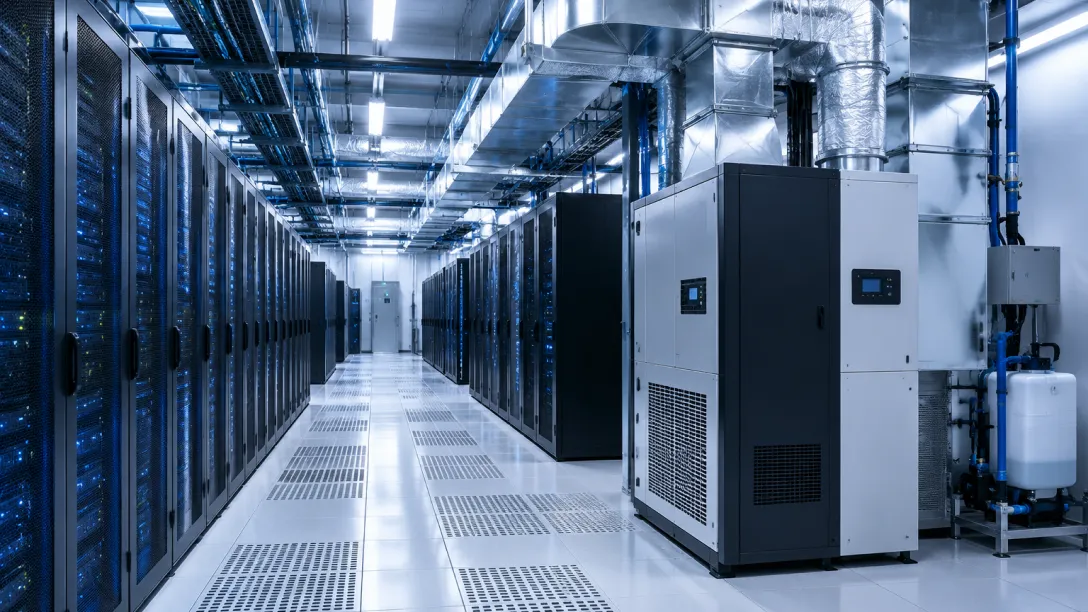
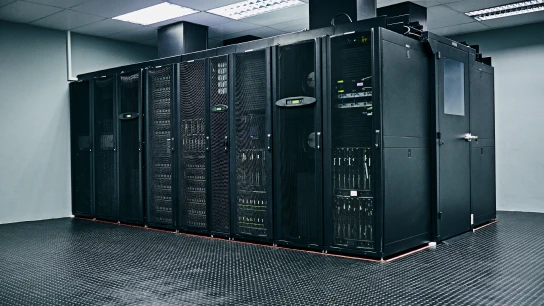
Main server halls (white space): 18–27°C inlet temperature, dew point −9°C to +15°C. This is where rack density, airflow architecture, and containment strategy are decided. Legacy enterprise halls run 3–5 kW per rack; current AI and high-performance computing deployments routinely exceed 20 kW per rack, with some configurations beyond 40 kW, at which point air cooling alone reaches its economic limit and liquid cooling enters the design.
Network and telecom rooms: Typically served by dedicated precision units sized for 24/7 duty. These rooms are frequently an afterthought in building design, end up on shared comfort systems, and fail first during weekend or holiday setbacks. Every network room carrying production traffic deserves its own cooling circuit with its own monitoring.
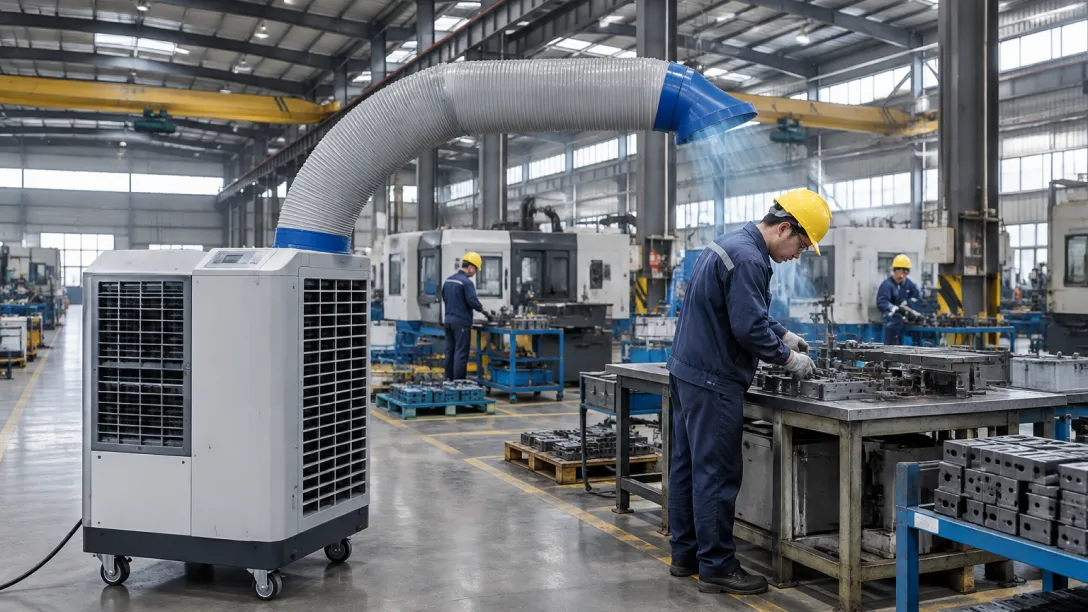
Edge sites and server closets: Small rooms, often under 20 kW total load, in spaces never designed for heat rejection. Building HVAC with an after-hours thermostat is the classic failure pattern. Dedicated split precision units or self-contained spot cooling, with remote alarm reporting, is the correct baseline.
UPS and battery rooms: The batteries that carry the facility through a power event are themselves temperature-sensitive. VRLA battery service life roughly halves for every 10°C sustained above 25°C. A battery room held at 35°C is quietly consuming its own backup capacity. These rooms typically target 20–25°C with modest precision requirements but absolute continuity.
Electrical and switchgear rooms: High sensible loads, zero tolerance for condensation, and strict limits on what can be installed overhead. Cooling equipment and any water-carrying piping must be routed and drained with leak consequences in mind.
Humidity: The Dew Point Discipline
The industry controlled humidity by relative humidity for decades, and ASHRAE has been steering it toward dew point since the 2015 guideline cycle. The reason is practical: dew point tracks absolute moisture, which is what determines both condensation risk and equipment behavior. A room held to a tight RH band will see its dew point swing with temperature, and the humidification system will chase that swing, wasting energy fighting the cooling system.
The low-moisture failure mode is electrostatic discharge. Below the recommended −9°C dew point floor, charge accumulation on personnel, carts, and packaging rises sharply. A discharge that a technician never feels can still damage a component or plant a latent defect that fails months later. Dry winter climates make humidification mandatory, not optional.
The high-moisture failure mode is condensation. Above the +15°C dew point ceiling, any surface colder than the room dew point becomes a condensation site: chilled water piping, liquid cooling loops, cold aisle containment panels in certain failure scenarios. ASHRAE's liquid cooling guidance requires coolant supply temperatures to sit at least 2°C above room dew point for exactly this reason.
Humidification technology choice is an energy decision. Electrode steam humidifiers boil water continuously and dump that heat into the room, where the cooling plant must remove it again. Ultrasonic humidifiers atomize water mechanically, use a small fraction of the electrical energy, and return roughly 0.6–0.7 kW of free evaporative cooling for every kilogram per hour of moisture added. In a facility where power capacity is the binding constraint, that difference is material. Whatever technology is selected, water treatment is not optional: untreated mineral content produces white dust on equipment and scale on atomization surfaces.
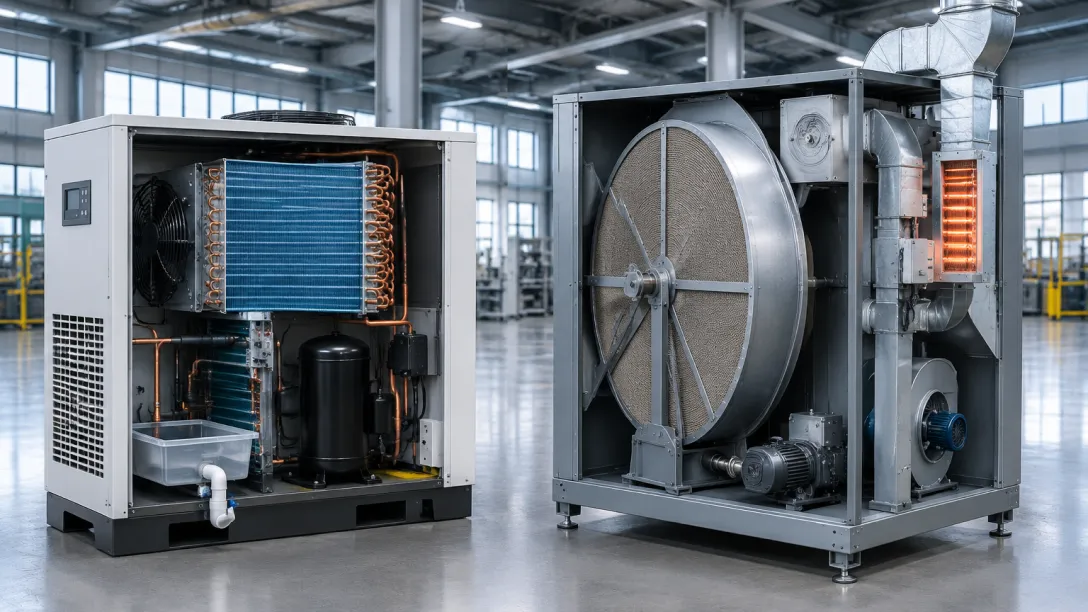
Dehumidification is usually a ventilation problem. The room itself generates almost no moisture. Latent load enters with outdoor ventilation air and door openings, so control strategy should address infiltration and minimum outside air first, before sizing mechanical dehumidification.
Airflow Management: Where Most Cooling Capacity Is Lost
Most existing data centers do not have a cooling capacity problem. They have an airflow problem. Two mechanisms account for the majority of stranded capacity.
Bypass: Conditioned air that returns to the cooling unit without passing through IT equipment. Open floor tiles in hot aisles, gaps under rack rows, and oversized tile cutouts all let cold air short-circuit home.
Recirculation: Hot exhaust air that finds its way back to server inlets, over rack tops, around row ends, and through unblanked rack spaces. Missing blanking panels alone can raise inlet temperatures by several degrees in a high-density row.
Containment addresses both. Cold aisle containment encloses the supply path and is the easier retrofit in legacy raised-floor halls. Hot aisle containment captures exhaust at its hottest point and returns it to the cooling units, improving coil performance and raising economizer hours; it is generally the stronger choice for new, higher-density builds. Either approach, properly executed, typically allows supply temperature setpoints to rise several degrees, and every degree of cold aisle temperature increase returns roughly 2–4% in cooling energy savings.
The discipline extends downward in scale. Edge rooms and small server rooms benefit from the same logic: keep the supply path short, seal the gaps, and never let rack exhaust mix back to the intake.
Equipment Failures Specific to Data Center Environments
Standby unit failure on demand. The most common cause of cooling-related tier incidents. A redundant unit that skipped maintenance cycles fails the moment it is called to carry load. Standby units require the same preventive maintenance frequency as active units, plus scheduled failover testing under controlled conditions, documented rather than assumed.
Sensor drift and control valve wander. A chilled water valve that drifts from its control curve after an unlogged software update, or a return-air sensor off by 2°C, silently degrades capacity for weeks. Discharge temperature creep of 1–2°C over two weeks indicates coil fouling or refrigerant loss. These failures are visible in trend data long before they become thermal events, but only if someone is reading the trends.
Humidifier scaling and white dust. Ultrasonic and high-pressure systems running on inadequately treated water coat their own atomization surfaces and then coat the room. Electrode steam cylinders lose capacity as electrodes scale. Humidifier output should be trended against command signal; a widening gap is the early warning.
Filter loading. Clogged filters reduce airflow, raise fan energy, and create the differential pressure conditions that drive recirculation. Filter changes belong in a logged maintenance plan, not a visual-inspection-when-convenient routine.
Water where it should never be. Chilled water loops, humidifier feeds, and condensate drains all fail eventually. Leak detection under raised floors and at cooling unit bases is a critical-tier alarm, not a warning. Any detection requires immediate inspection.
Energy Considerations
Cooling typically represents 30–40% of total data center energy consumption, which makes it the largest controllable operating cost after the IT load itself.
Raise the setpoint. The legacy habit of running halls at 18–20°C persists without engineering justification. The recommended envelope extends to 27°C, and most operators find real savings between 22°C and 26°C. At roughly 2–4% cooling energy per degree, the arithmetic is direct.
Control humidity by dew point. RH-band control forces humidification and dehumidification systems to fight each other across temperature swings. Dew point control eliminates most of that wasted cycling.
Choose adiabatic over isothermal humidification. Ultrasonic humidification replaces a boiling-water load with a fractional transducer load and subtracts heat from the room instead of adding it. In dry climates with meaningful humidification hours, the operating cost gap between ultrasonic and steam is substantial.
Earn economizer hours. Every degree of supply temperature increase and every improvement in return air temperature extends the hours in which outdoor air or dry coolers can carry the load without compressors. Containment and setpoint discipline pay twice: once in compressor energy, once in free cooling availability.
Plan for density growth. A room-based design adequate at 5 kW per rack will strand at 15 kW and fail at 30 kW. Cooling architecture decisions should assume the rack density of the equipment being purchased next year, not the equipment being retired this year.
Monitoring and Control Requirements
Thermal management fails at the measurement layer more often than at the equipment layer. The monitoring baseline for a serious facility:
Measure at the rack inlet. Fixed sensors at the front face of racks, top middle and bottom positions in high-density rows. Room-average temperature is a reporting metric, not a control metric.
Track dew point, not just RH. Dew point sensors or calculated values from distributed temperature-RH pairs, alarmed against the −9°C and +15°C envelope boundaries.
Tier the alarms. A practical structure: normal operation within the recommended envelope; warning tier at the envelope edge (above 25–26°C inlet, or RH outside 40–60%) triggering investigation; critical tier entering allowable territory (above 27°C, below 30% or above 70% RH) triggering immediate response; emergency tier at throttling temperatures triggering pre-planned load action. Every threshold should be documented with its engineering basis, not inherited from vendor defaults.
Trend the equipment, not just the room. Compressor current draw, discharge temperature, valve position versus command, humidifier output versus signal. A 3–5% rise in compressor current over several weeks precedes most compressor failures. Calendar-based maintenance cannot see these failures coming; trend-based monitoring can.
Test the redundancy. Quarterly failover exercises under controlled load, with results logged. Redundancy that has never been tested is a hypothesis.
About Shishuo
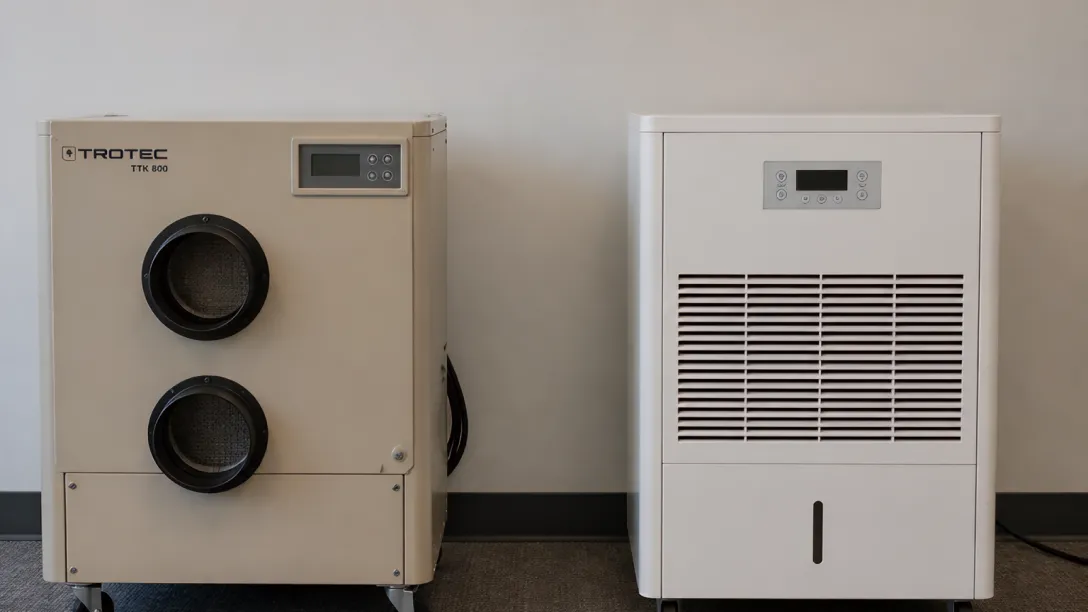
Zhejiang Shishuo Electrical Appliances Co., Ltd. manufactures the core equipment categories required for IT infrastructure climate control: precision air conditioning units with constant temperature and humidity control for server halls and network rooms, industrial spot coolers for edge sites and targeted heat loads, ultrasonic humidifiers for low-energy adiabatic humidification, and refrigerant-based dehumidifiers for spaces where latent control is required.
Shishuo's equipment is designed for continuous industrial operation, with corrosion-protected coils, automatic humidity and temperature control, and safety protection for unattended 24/7 duty. For data center and IT infrastructure projects, the engineering team provides equipment selection based on room load profiles, airflow architecture, and target envelope conditions rather than generalized specifications. Technical documentation is available in English for export projects, and the international business department operates from Shanghai to support coordination with overseas customers, system integrators, and EPC contractors.
Conclusion
Data center climate control is a system discipline. Temperature at the server inlet, moisture at the dew point level, airflow through the rack rather than around it, redundancy that is tested, and monitoring that trends equipment behavior over weeks rather than snapshots it once a day. The standards exist, the failure modes are documented, and the energy mathematics are settled. What separates reliable facilities from incident statistics is execution across all of these at once.
The cost of doing this correctly is visible and budgetable. The cost of doing it partially shows up later, as thermal events, shortened hardware life, and cooling plants that consume 40% of facility energy while still failing to hold the envelope. For project-specific consultations or equipment specifications, contact Shishuo's international team directly.